Sign up with Google
 Sign in with Zoho

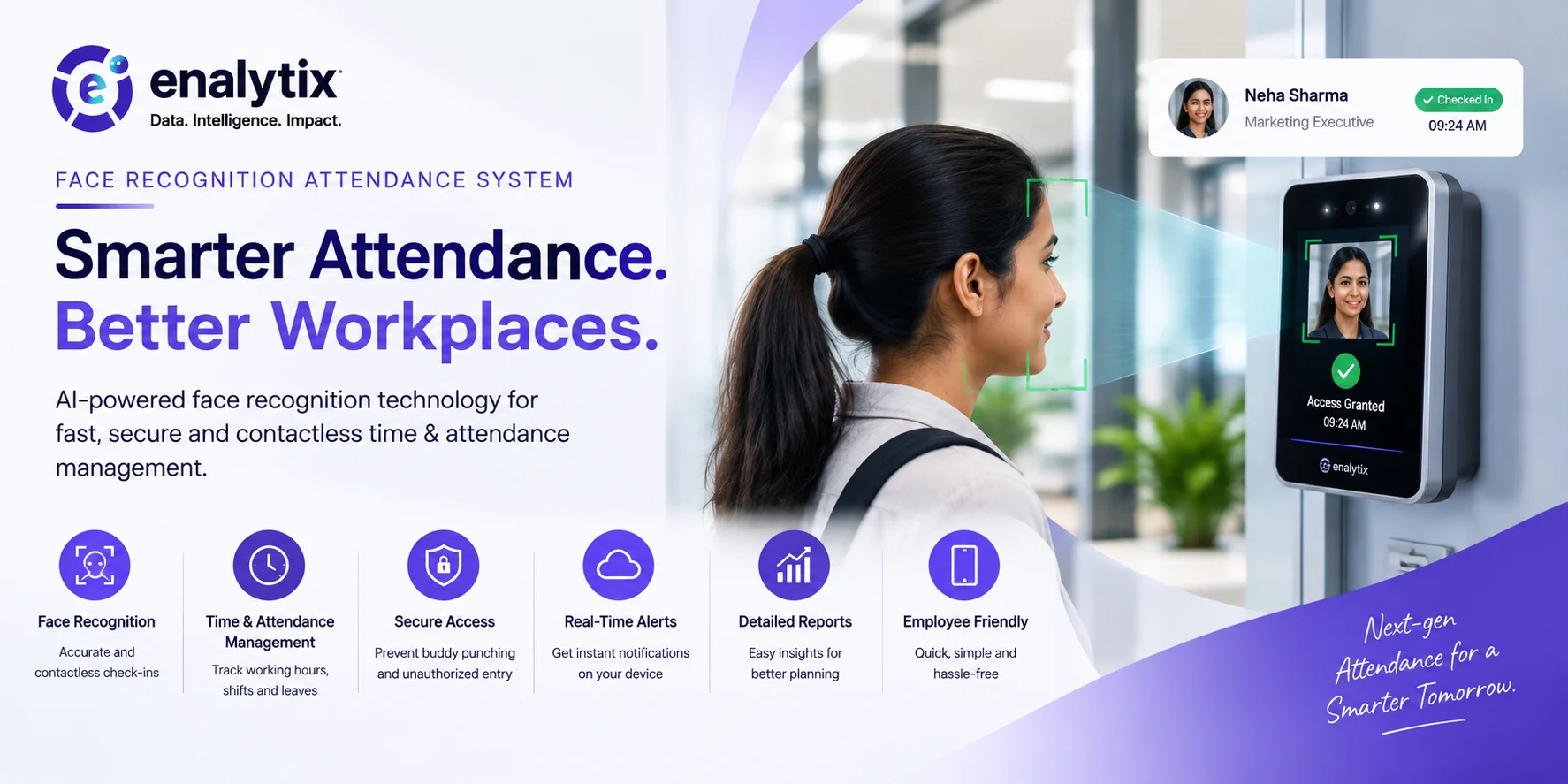
A small office may be able to manage attendance with a simple spreadsheet or traditional biometric machine. But once there are hundreds of employees, multiple shifts, or several locations, keeping everything accurate becomes much harder.
This is where a face recognition attendance system can be useful.
Instead of asking employees to use an access card, enter a number, or rely on a manual attendance register, facial recognition can be used to verify their identity and record attendance.
The basic idea is quite simple. An employee approaches the designated camera or device, the system detects and verifies the face, and an attendance event is recorded against the employee's profile.
For HR teams, the real advantage comes from the software working behind that interaction.
Modern time and attendance software can organize check-in and check-out records, working hours, shifts, late arrivals, early departures, and attendance reports. Having these records digitally available can reduce the amount of manual work involved in preparing attendance information.
A face recognition app for attendance can also make the employee experience easier. There is no card to remember and no need to manually enter attendance details every time.
For larger organizations, another benefit is consistency. Different departments or locations can follow the same attendance process while HR teams have access to centralized information.
An AI based biometric attendance system with face recognition can take this a step further by automating facial verification and connecting recognized employees with attendance workflows.
However, there is an important part that should not be overlooked: privacy.
Facial recognition uses biometric information, so businesses need to think carefully about how employee data is collected, stored, accessed, protected, and retained. Clear policies and appropriate security controls are important when introducing this technology into the workplace.
The technology should also complement HR processes rather than replace them. There will always be situations where an attendance record needs human review, such as an employee working remotely, a shift change, or an unexpected device issue.
The value of a face recognition biometric attendance system is therefore not simply that it can recognize employees.
Its real value is the ability to make a repetitive administrative process easier to manage.
For businesses considering digital transformation, facial recognition can become one part of a broader employee management system. When combined with reliable face recognition attendance software, centralized reporting, and responsible biometric-data practices, it can provide a practical alternative to traditional attendance methods.
The future of workplace attendance is likely to be less about maintaining attendance registers and more about creating automated, connected systems that make everyday workforce management easier.





.webp)