Sign up with Google
 Sign in with Zoho

Retail businesses are increasingly using technology to improve store operations, strengthen security processes and understand activity across their premises. CCTV remains an important part of this environment, but traditional video recording has limitations. When a store has several cameras and operates for long hours, manually reviewing every recording is not always practical.
Intelligent video analytics can help businesses analyse camera footage and identify selected information more efficiently. Facial detection is one of the computer-vision capabilities that organisations may consider as part of this shift.
What Is Facial Detection?
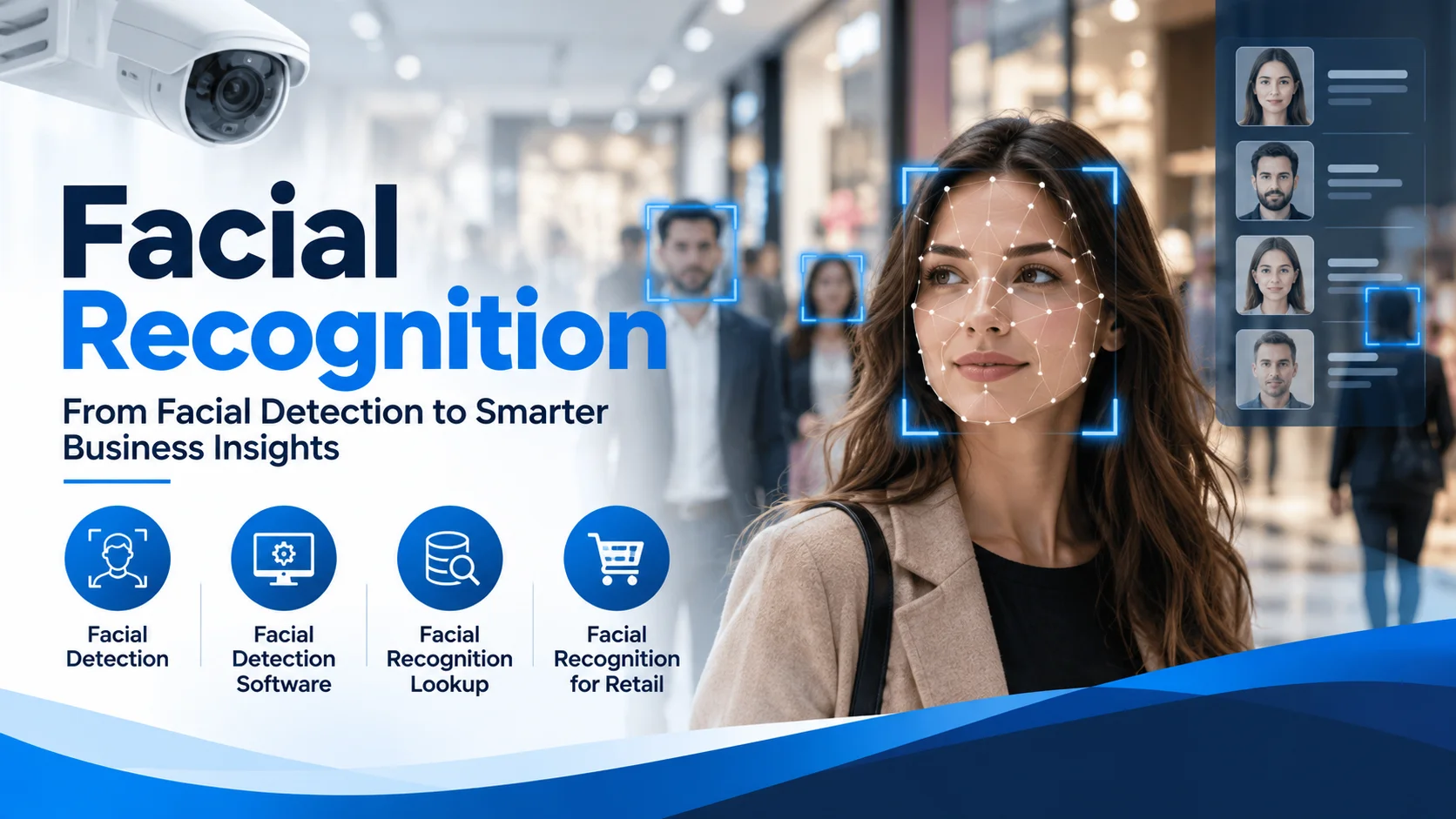
Facial detection is the process of identifying and locating human faces within an image or video stream. A computer-vision system analyses visual patterns and determines whether a face is present in the camera frame.
The technology can identify a face without necessarily identifying the individual. This is a key difference between facial detection and facial recognition.
Facial recognition involves comparing facial characteristics with authorised reference records to assess whether a person matches an existing identity. Since this involves identity-related information, its use requires additional safeguards and a clearly defined purpose.
How Facial Detection Software Supports Video Analytics
Facial detection software processes camera footage and identifies faces within the available visual data. Its performance can vary depending on the environment.
For example, camera resolution, lighting, face visibility, viewing angle and movement can influence results. A system designed for one environment may not perform in the same way in another.
Businesses should therefore test the software under real operating conditions before relying on it. They should also confirm that the camera network and processing infrastructure can support the intended application.
Understanding Facial Recognition Lookup
A facial recognition lookup compares facial characteristics against an authorised database. This may be used in specific identity-verification situations where the organisation has a lawful basis for processing the information.
A lookup result should be handled carefully. Automated matching can be affected by image quality and environmental conditions, and a potential match may require further verification.
Organisations should establish clear rules covering:
- The purpose of the identity-matching process.
- Who is authorised to perform a lookup.
- How facial information is protected.
- How long the information is retained.
- How uncertain or incorrect matches are reviewed.
- What transparency and consent requirements apply.
These measures help prevent the technology from being used beyond its intended purpose.
Facial Recognition for Retail: What Is the Actual Need?
Retailers may explore facial recognition for retail for different reasons, but they should first identify the exact requirement.
A store manager may want to understand visitor traffic, compare busy periods or monitor occupancy in different sections. These requirements do not necessarily require individual identity recognition.
For example, footfall analytics can help retailers understand visitor volumes and identify patterns in store traffic. This type of information can support staffing, store planning and operational decisions without making customer identity the focus.
Where identity verification is genuinely required, retailers should assess the necessity and proportionality of the application and ensure that it meets applicable legal requirements.
The Importance of Camera Compatibility
Retail businesses often operate CCTV systems installed over several years. Before introducing facial detection software, they should assess whether the existing cameras provide suitable footage.
Factors such as camera placement, resolution, lighting, network quality and video-stream compatibility can influence performance. A technical review helps determine whether existing infrastructure can support the planned analytics application.
Responsible Technology Adoption
Facial detection and recognition should be introduced with clear policies. Businesses need to consider privacy, data security, transparency and the rights of individuals whose information may be processed.
A responsible approach includes collecting only the information required for the defined purpose, limiting access, securing data and applying appropriate retention and deletion policies. Organisations should also review system accuracy and maintain a process for handling errors.
Technology should solve a real operational problem while respecting the people who interact with the business.
Conclusion
Facial detection software can help businesses locate faces in video footage, while facial recognition offers a separate capability for authorised identity matching. Retailers and other organisations should evaluate both technologies according to their actual requirements, technical infrastructure and privacy responsibilities. Enalytix offers facial recognition capabilities for businesses exploring intelligent video solutions. More information is available on the Facial Recognition page.