Sign up with Google
 Sign in with Zoho

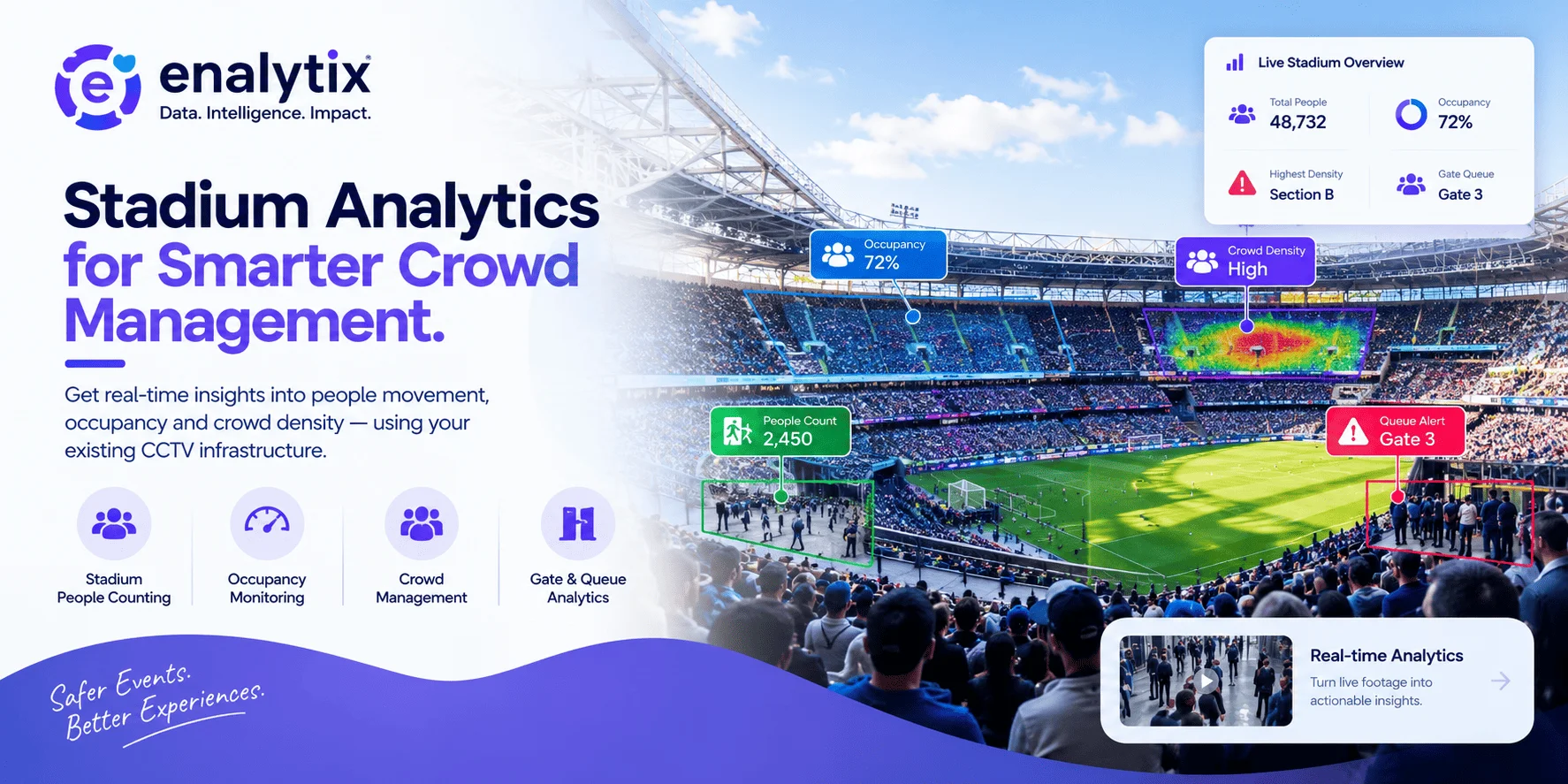
A stadium can have a clearly defined capacity and still experience crowd-management challenges. The reason is simple: people do not remain evenly distributed throughout the venue.
Spectators enter through different gates, gather around food counters, move through concourses, queue at entrances and eventually settle into different sections. A single attendance number cannot explain all of this movement. This is where stadium analytics can provide additional visibility.
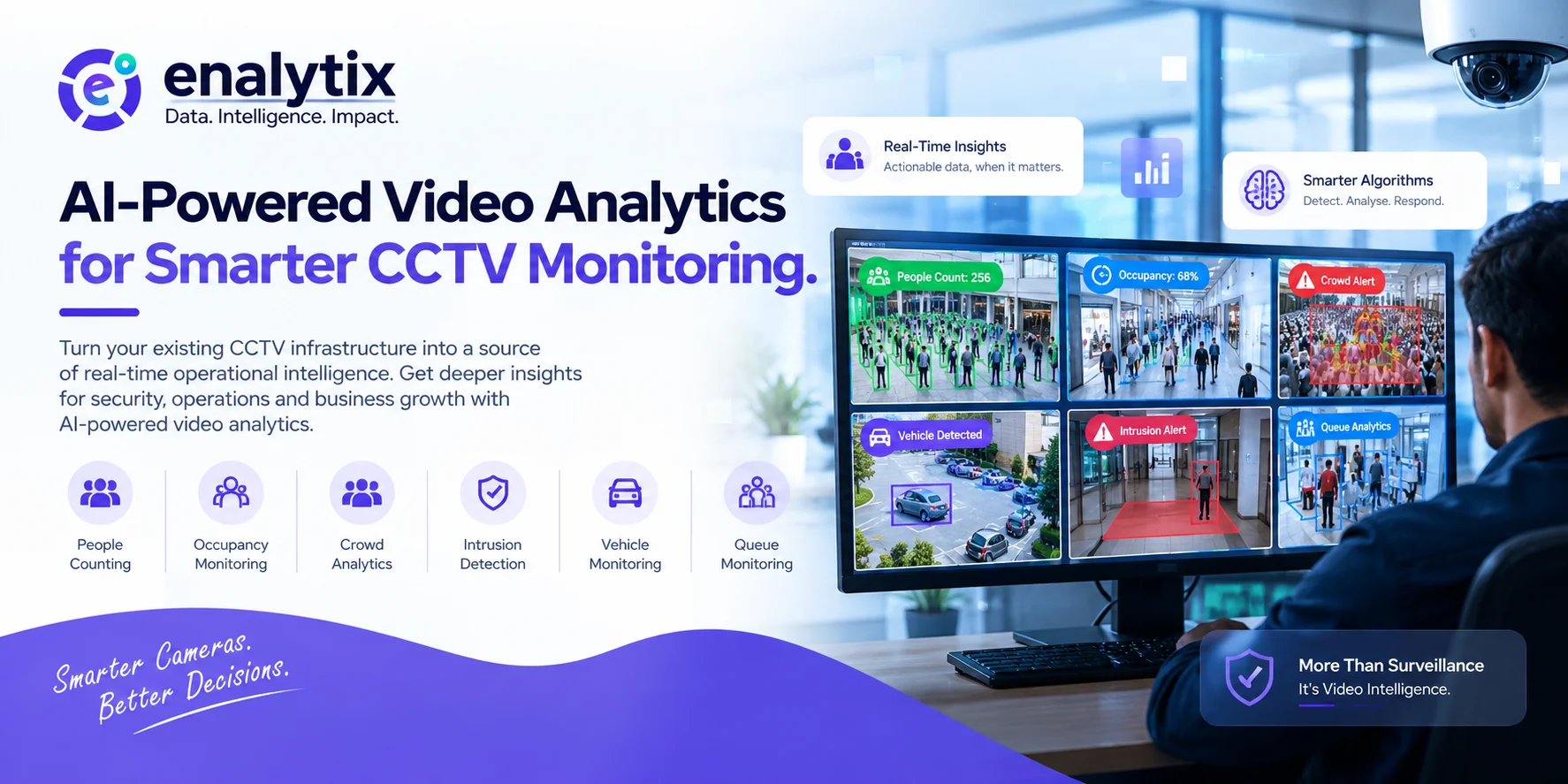
One of the simplest applications is stadium people counting. By monitoring selected entrances and exits, video analytics can provide live information about how many people are moving through each point. This helps stadium operators understand which gates are receiving the most traffic and how quickly attendance is building.
The next layer is stadium occupancy monitoring. Instead of looking only at the total number of spectators inside the venue, operators can define specific areas and monitor their occupancy. This can be particularly useful for concourses, entrances, waiting areas and other locations where crowd density can change quickly.
Crowd management becomes more practical when venue teams have information about movement rather than just attendance. A crowd management stadium solution can monitor density, queues and movement patterns across important areas. If a predefined density threshold is crossed, the relevant team can receive an alert and assess the situation.
This information can also support better staff deployment. If one gate consistently experiences heavier traffic than another, venue managers have a stronger basis for deciding where additional personnel may be required. Similarly, monitoring queues can help teams identify areas where crowd flow needs attention.
The value of stadium analytics does not end when the event is over. Exit flows can be analysed to understand how spectators leave the venue and where bottlenecks tend to occur. These insights can then support planning for future events.
Importantly, video analytics does not replace trained security or event-management teams. A crowd alert does not automatically mean that a dangerous situation exists. It simply provides staff with another useful source of information so they can assess the situation and respond appropriately.
For stadiums that already have extensive CCTV coverage, this distinction is important. The cameras are already observing the venue. Analytics can help convert that observation into actionable information.
Instead of reviewing footage only after something has happened, operators can use live data to understand crowd movement while an event is still underway.
As stadiums become larger and events attract bigger audiences, the ability to see the crowd as a constantly changing flow—not just a final attendance number—can become an important part of modern venue operations.