Sign up with Google
 Sign in with Zoho

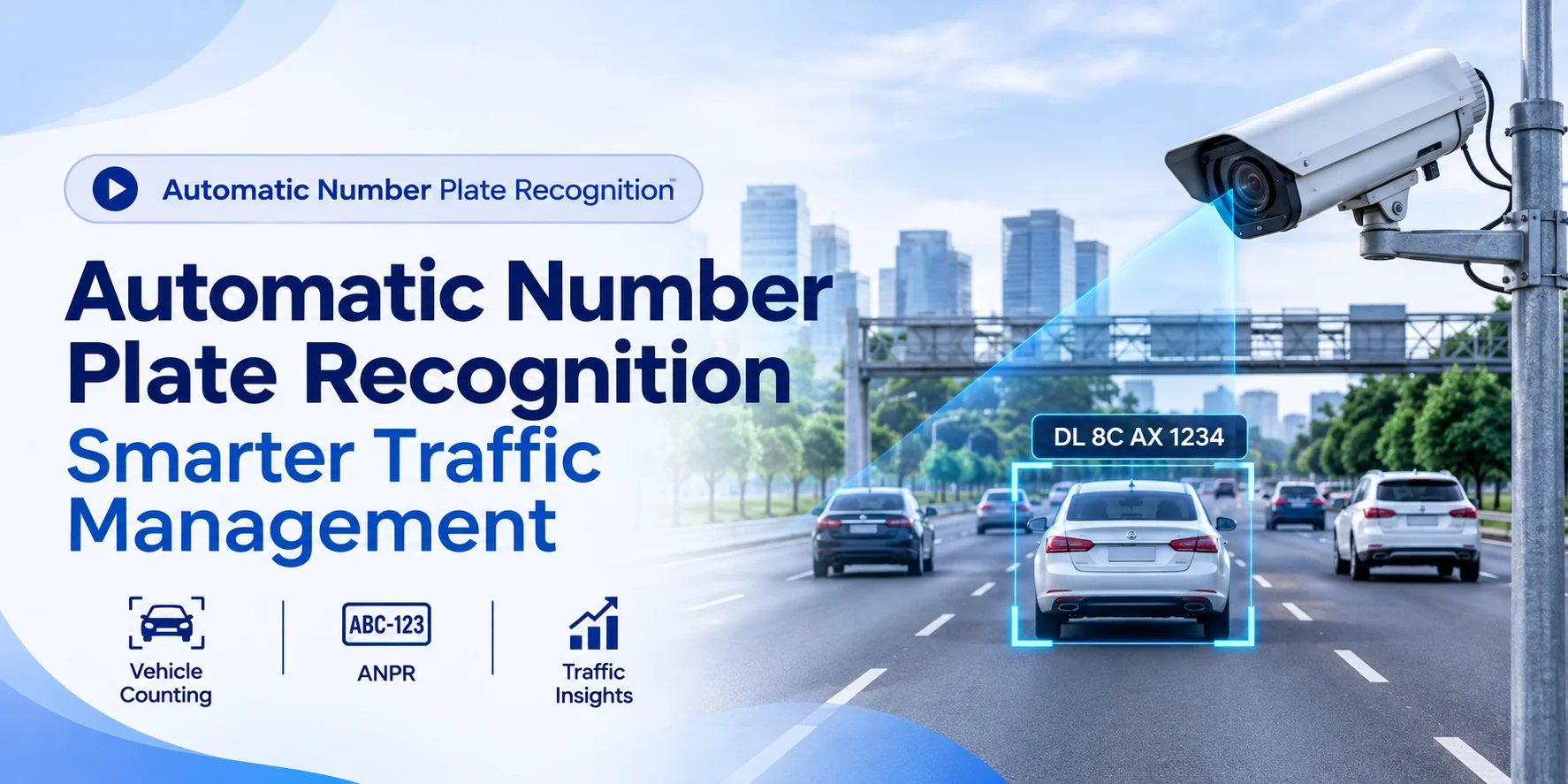
As road networks become busier, managing vehicle movement has become an important challenge for traffic authorities, infrastructure operators and commercial facilities. Operators need to understand how many vehicles are passing through a location, identify specific vehicles when authorised and review activity across different road sections.
Traditional CCTV systems provide useful recordings, but manually reviewing footage can be time-consuming. Automatic Number Plate Recognition (ANPR) offers a way to convert vehicle images into structured registration information, helping organisations manage selected traffic-related processes more efficiently.
Understanding Automatic Number Plate Recognition
Automatic Number Plate Recognition is a technology that detects and reads vehicle registration plates from images or video footage.
The process generally begins with a camera capturing a passing vehicle. The software identifies the number plate, processes the image and extracts the registration characters through optical character recognition. The result can then be stored or compared with authorised records, depending on the intended application.
ANPR can support vehicle identification workflows without requiring staff to manually read every registration plate. However, recognition quality depends on the camera setup, image clarity and surrounding conditions.
How Automatic Number Plate Recognition Software Works
Automatic Number Plate Recognition Software combines camera input, image processing and character recognition.
A typical workflow includes:
- Vehicle image capture: A compatible camera records an image of the vehicle.
- Plate detection: Software locates the number plate in the image.
- Image processing: The plate area is processed to improve visibility where possible.
- Character recognition: The system extracts the registration characters.
- Data handling: The recognised information is stored or compared with authorised records.
- Reporting: Relevant information can be accessed by authorised users for review.
The exact features depend on the platform. Some systems may include additional vehicle classification, search and reporting capabilities.
Selecting an Automatic Number Plate Recognition Camera
The camera is essential to the quality of the ANPR output. An Automatic Number Plate Recognition Camera should be selected based on the environment in which it will operate.
For a highway, the system may need to capture plates from vehicles moving at higher speeds. A parking entrance may involve slower movement, while a toll plaza may require multiple cameras to cover several lanes.
Before installation, operators should consider:
- Resolution and image clarity.
- Mounting height and viewing angle.
- Distance from the vehicle.
- Expected vehicle speed.
- Lighting and night-time conditions.
- Lane coverage and traffic direction.
- Compatibility with the selected software.
A technical assessment at the actual location can help determine whether the camera can consistently capture readable plates.
Vehicle Counting and Traffic-Volume Analysis
Vehicle Counting measures how many vehicles pass through a defined area over a particular period. It can help operators understand traffic volume and identify patterns that may not be obvious from occasional manual observations.
Vehicle counting can support:
- Monitoring daily traffic volume.
- Identifying peak traffic periods.
- Comparing traffic across multiple lanes.
- Analysing vehicle movement at toll plazas.
- Understanding traffic changes over time.
- Supporting infrastructure planning.
Some systems can also classify vehicles by type. This may help operators distinguish between cars, buses, trucks and two-wheelers when the analytics platform supports those categories.
How ANPR and Vehicle Counting Work Together
ANPR and vehicle counting address different traffic-monitoring requirements.
ANPR reads vehicle registration plates and creates registration-related records. Vehicle counting measures how many vehicles pass through a monitored area.
When used together, they can provide complementary information. For example, traffic operators may review vehicle volumes while also accessing authorised registration records from selected camera locations.
The exact level of detail depends on the system configuration, camera coverage and the purpose for which information is collected.
Where Is ANPR Technology Used?
Toll plazas: ANPR can support vehicle identification and authorised toll-related workflows. Vehicle counting can help operators understand traffic distribution across lanes.
Highways: ANPR cameras can capture vehicle registration information at selected points, supporting monitoring and review processes.
Parking facilities: Plate recognition can help maintain vehicle entry and exit records and support authorised parking operations.
Commercial facilities: Businesses can use ANPR at controlled entry points to record vehicle activity.
Traffic enforcement: ANPR may assist authorised enforcement and investigation processes, subject to applicable rules and verification requirements.
The Importance of Video Management
Traffic monitoring often involves multiple cameras and large amounts of recorded footage. Even when an analytics system recognises a number plate, operators may need to review the corresponding video to understand an event or verify information.
A video management system can support the management and retrieval of recordings, depending on the platform's features and integrations. This can help authorised teams access relevant footage as part of their operational workflows.
Common Deployment Challenges
ANPR performance can be affected by environmental and technical conditions. Some of the most common challenges include:
Low lighting: Poor illumination can make registration characters difficult to read.
Glare: Reflections from headlights, sunlight or wet road surfaces can reduce image clarity.
Vehicle speed: Fast movement can create blur if camera settings are unsuitable.
Plate condition: Damaged, dirty or obscured plates can affect recognition.
Camera positioning: Incorrect angles and distances can prevent the system from capturing a clear plate image.
A well-planned installation should include site assessment, camera testing and performance review under realistic conditions.
Data Security and Responsible Use
Vehicle registration information should be collected and processed only for a defined and lawful purpose. Organisations should establish access controls, protect stored records and define how long information will be retained.
They should also consider how recognition errors will be reviewed. Where ANPR outputs are used for enforcement or other consequential decisions, appropriate verification and accountability procedures are essential.
Conclusion
Automatic Number Plate Recognition Software can turn camera footage into structured vehicle registration information, while Vehicle Counting helps organisations understand traffic volume and movement patterns. Together, these technologies can support traffic operations across highways, toll plazas, parking facilities and commercial premises. Organisations interested in intelligent traffic analytics can explore the capabilities offered by Enalytix on its Traffic Intelligence & Enforcement page.