Sign up with Google
 Sign in with Zoho

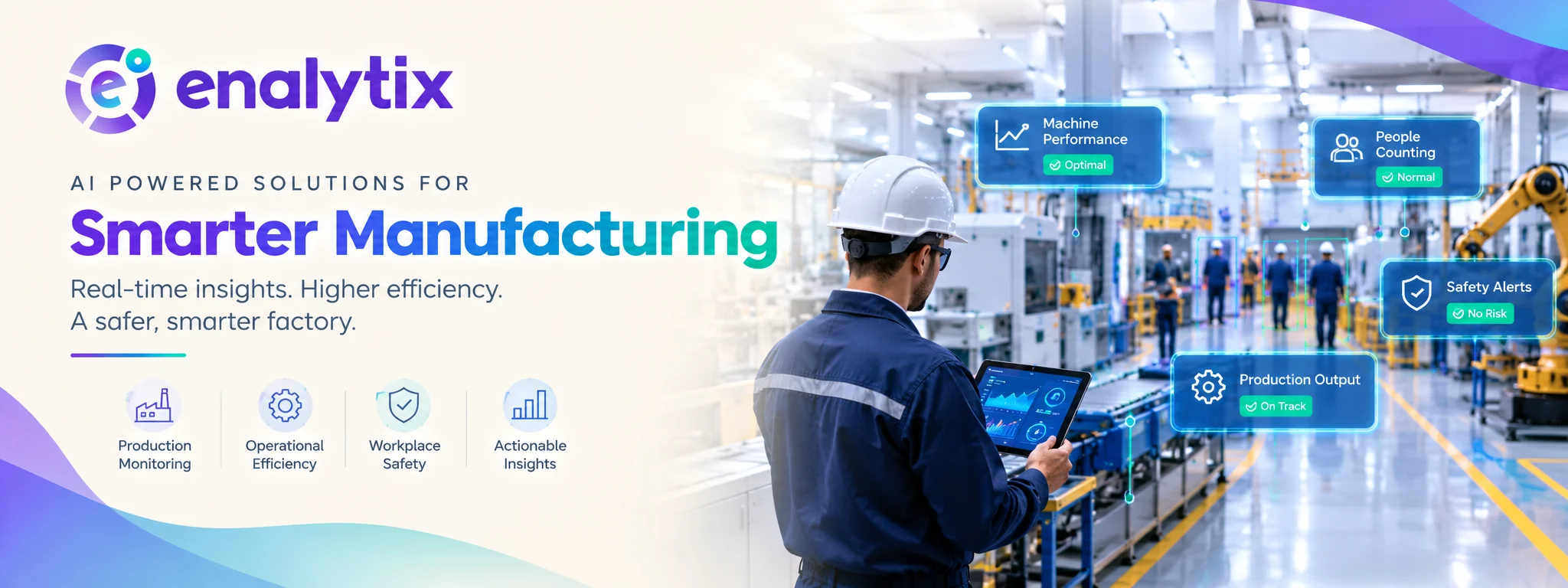
Walk through a modern manufacturing facility and there is a lot happening at once. Raw materials move between areas, finished goods are prepared for dispatch, vehicles enter and leave the premises, employees work across production zones, and equipment keeps production moving.
The challenge is not a lack of information. The challenge is being able to see and understand everything happening across a facility.
This is where artificial intelligence in manufacturing is becoming increasingly useful.
AI Is Moving Beyond Production Automation
When people talk about AI in manufacturing, the conversation often focuses on robotics, automated machines and predictive maintenance.
But there is another practical application: using AI to analyse what cameras are already seeing.
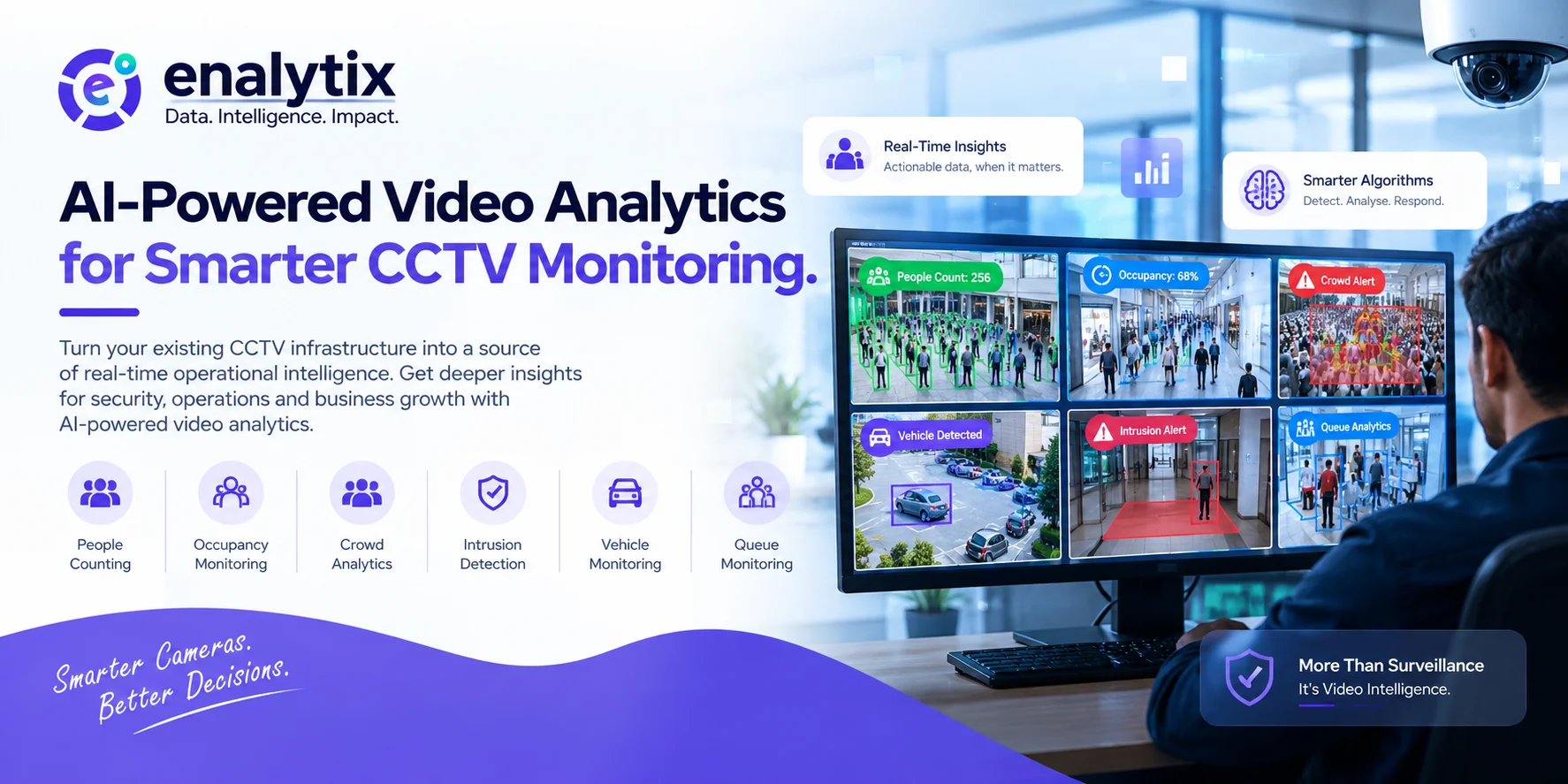
Manufacturing facilities often have CCTV coverage across production floors, loading areas, entrances and restricted zones. AI-powered video analytics can add an intelligence layer to these existing video feeds.
Instead of relying only on recorded footage, organisations can use analytics to identify specific activities and events.
From Raw Material Movement to Finished Goods
Material movement is an important part of manufacturing operations.
AI video analytics can help monitor the movement of raw materials from storage areas towards the shopfloor. Similar technology can also be used to identify and count ready goods while they are being loaded onto trucks.
These applications provide another way to gain visibility into physical movement within a facility.
For manufacturers dealing with multiple production and dispatch areas, this type of information can become useful when reviewing day-to-day operations.
Monitoring People and Work Areas
Manufacturing operations depend on people as much as machines.
Video analytics can provide insights into staff movement, idle time and task-related activity. It can also help identify unattended workstations during operating hours.
This does not mean replacing human supervision. Instead, it gives operational teams another source of information that can help them identify situations that deserve attention.
The same approach can be used to monitor crowding in defined areas where the number of people needs to remain within a certain limit.
Security Is Another Part of the Picture
Manufacturing facilities often contain restricted areas, valuable equipment and materials.
AI-based intrusion detection can help identify movement into restricted zones after working hours. Vehicle movement can also be monitored using automated number plate recognition.
Safety-related events are another important area. Video analytics can help identify situations involving fire, smoke or unusual heat patterns.
Together, these applications show how AI solutions for manufacturing can extend beyond production and into security and safety monitoring.
Turning Video Into Manufacturing Analytics
Every manufacturing facility already produces data through machines, software systems and business processes.
Video can be another source.
Manufacturing analytics can become more useful when visual information is included alongside other operational information. For example, understanding material movement, vehicle activity, workstation occupancy and production-floor activity can provide additional context when reviewing operations.
Conveyor monitoring is another example. AI video analytics can help identify conveyor stoppages, jams or unsafe behaviour, allowing teams to focus on specific events instead of continuously watching camera feeds.
The Practical Side of Manufacturing AI
The value of AI does not always come from introducing a completely new system.
Sometimes, it comes from making existing infrastructure more useful.
Manufacturers already have cameras installed across many parts of their facilities. Adding an analytics layer can help convert those video feeds into actionable alerts and operational information.
This is the idea behind modern AI solutions for manufacturing—using artificial intelligence to improve visibility across physical operations without treating CCTV as only a recording system.
Enalytix provides AI-powered video analytics for manufacturing environments, supporting use cases such as raw material movement, ready goods counting, vehicle monitoring, intrusion detection, fire and smoke detection, workforce monitoring, unattended workstations and conveyor monitoring.
As manufacturing becomes more data-driven, the ability to understand what is happening on the factory floor can become just as important as the data generated by the machines themselves.