Sign up with Google
 Sign in with Zoho

Why Customs Disputes Are Becoming a Business-Critical Issue
For an importer or exporter, a customs dispute is rarely just a legal problem. A disputed classification, unexpected duty demand, valuation objection or detained shipment can affect inventory, production schedules, customer commitments and working capital.
This is why businesses increasingly look for professional customs litigation services India providers that understand both the regulatory side of customs and the practical realities of cargo movement.
Customs matters can involve assessment, examination, documentation, valuation, classification, exemption notifications, confiscation, penalties, duty recovery and appeals. The Customs Act, 1962 provides specific mechanisms for adjudication and appeals, including proceedings before the Commissioner (Appeals) and the Customs, Excise and Service Tax Appellate Tribunal (CESTAT).
The important point is simple: a customs dispute should not be treated as something to address only after a final order is passed. Early document review, factual analysis and a structured response can make a significant difference.
What Are Customs Litigation Services in India?
Customs litigation services India generally refer to professional assistance in managing disputes arising under Indian customs law. Depending on the matter, support may include reviewing a Show Cause Notice (SCN), analysing classification or valuation disputes, preparing factual submissions, coordinating hearings, assisting with appeals and managing documentation required during the dispute lifecycle.
A customs dispute may begin with a relatively simple query from Customs and eventually develop into a formal adjudication or appeal.
Common areas include:
The Customs Act also contains provisions concerning recovery of duties not levied or short-paid, including procedures around Show Cause Notices.
When Should a Business Seek Customs Representation Services?
One of the biggest mistakes businesses make is waiting until a dispute becomes complicated.
Businesses should consider customs representation services India when they receive a customs notice, face repeated queries regarding an import or export declaration, encounter a valuation or classification objection, or have goods detained or seized.
Early intervention is particularly useful when the matter involves significant commercial value.
For example, imagine an importer has brought specialised machinery into India based on a particular tariff classification. Customs subsequently questions that classification and proposes a higher duty. If the importer simply pays without reviewing the technical description, applicable tariff heading and supporting documents, the immediate shipment may be released, but the underlying classification issue may remain unresolved.
A structured review can instead examine the product specifications, technical literature, historical treatment, applicable notifications and customs records before deciding the appropriate response.
That is where professional customs legal services India and customs compliance support can become valuable.
The Most Common Customs Disputes Businesses Face
1. Customs Classification Disputes
Classification determines the applicable tariff treatment for many imported goods. A disagreement over the appropriate Harmonized System (HS) classification can therefore have a direct financial impact.
Businesses dealing with machinery, electronics, chemicals, components, automotive products, medical equipment and specialised industrial products may face classification questions where technical specifications are important.
A strong response should not rely solely on a product name. It should connect the actual characteristics and use of the product with the applicable classification framework.
2. Customs Valuation Disputes
Customs may question the declared value of imported goods in circumstances where the transaction value or supporting documentation requires further examination.
Businesses should maintain consistent commercial records, invoices, agreements, payment evidence and related-party documentation where applicable.
A valuation dispute should be addressed through facts and documentation rather than assumptions.
3. Show Cause Notices and Duty Demands
A Show Cause Notice can represent a significant escalation. It may relate to alleged short payment of duty, incorrect declaration, exemption-related issues, classification, valuation or other customs provisions.
Under Section 124 of the Customs Act, before confiscation or imposition of certain penalties under the relevant chapter, the concerned person must be given notice of the grounds and an opportunity to make a representation and be heard.
The response should therefore be carefully prepared, factually consistent and supported by relevant documents.
4. Detention, Seizure and Clearance Problems
For businesses importing time-sensitive products, a customs hold can quickly become a commercial emergency.
Storage costs, demurrage, production interruptions and customer penalties can sometimes exceed the original customs issue.
This makes customs compliance representation especially important for companies that frequently import or export goods.
What Does a Strong Customs Dispute Strategy Look Like?
A professional approach starts with understanding the entire transaction rather than responding to one isolated document.
Step 1: Review the Customs Record
The first stage should identify what Customs has questioned and why. Relevant documents may include the Bill of Entry, Shipping Bill, commercial invoice, packing list, purchase order, technical literature, certificates, declarations and previous correspondence.
Step 2: Identify the Actual Dispute
Is the issue classification, valuation, exemption, documentation, origin, eligibility or alleged non-compliance?
Identifying the precise dispute prevents businesses from submitting lengthy but unfocused responses.
Step 3: Build the Evidence
A persuasive submission is usually supported by documents that directly answer the customs objection.
For technical goods, product catalogues, specifications, diagrams, manuals and end-use information may be important. For commercial valuation matters, contracts, invoices and payment records can become relevant.
Step 4: Prepare the Representation
The response should clearly explain the business position, address the allegations and connect the facts with the applicable legal provisions.
Step 5: Monitor the Appeal or Adjudication Process
If the matter proceeds beyond the initial representation, deadlines and procedural requirements become increasingly important.
Under Section 128, an aggrieved person may appeal certain customs orders to the Commissioner (Appeals), generally within 60 days from communication of the decision or order, subject to the statutory provisions concerning extension.
Further appellate remedies may become available depending on the nature of the order and jurisdiction. Section 129A provides for specified appeals to the Appellate Tribunal.
Why Customs Compliance Representation Is More Valuable Than Reactive Dispute Handling
Modern international trade is highly documentation-driven. A company may have dozens or hundreds of import and export transactions, making consistency essential.
A business that maintains strong customs compliance practices can reduce the probability of disputes and respond more effectively when questions arise.
This means customs compliance representation should not be viewed only as litigation support. It can include preventive document review, classification checks, valuation analysis, regulatory coordination and assistance in responding to customs queries.
For frequent importers, this preventive approach can be commercially more valuable than addressing every issue after cargo has already been stopped.
How a Customs Appeal Consultant India Can Help
Businesses often search for a customs appeal consultant India when an adverse order has already been issued.
The first priority should be determining:
- What order has been passed?
- Which authority issued it?
- When was the order communicated?
- What is the applicable appeal mechanism?
- What amount of duty, interest or penalty is involved?
- What documents support the business position?
- Are there procedural or natural-justice concerns?
- What are the applicable filing and pre-deposit requirements?
The answer will vary according to the facts and the particular statutory provision involved. Professional review is therefore preferable to using a generic appeal format.
For matters requiring formal legal representation, businesses should also ensure that appropriately qualified legal professionals are involved where necessary.
Customs Law Consultancy India for Importers and Exporters
A reliable customs law consultancy India approach should connect legal requirements with operational trade realities.
For example, a logistics or manufacturing company may not need a lengthy legal discussion. It needs to know:
What is the issue? What evidence is required? What is the commercial risk? What needs to be filed? What is the next deadline? Who will coordinate with Customs?
This practical approach can make complex customs matters easier for management teams to understand and act upon.
Why Businesses Choose Cargomate Logistics for Customs Support
Cargomate Logistics combines logistics knowledge with customs documentation and compliance coordination to help businesses manage customs-related challenges more systematically.
Its support can be particularly relevant for importers, exporters, manufacturers, trading companies, e-commerce businesses and organisations with regular international shipments.
The objective is not simply to move cargo. It is to help businesses identify documentation gaps, coordinate customs requirements and reduce avoidable delays.
For complex disputes, Cargomate Logistics can also help coordinate the documentation and operational side of the matter while businesses obtain specialised legal advice where required.
A Better Way to Handle a Customs Dispute
When customs raises an objection, the worst approach is usually panic followed by an incomplete response.
A better approach is:
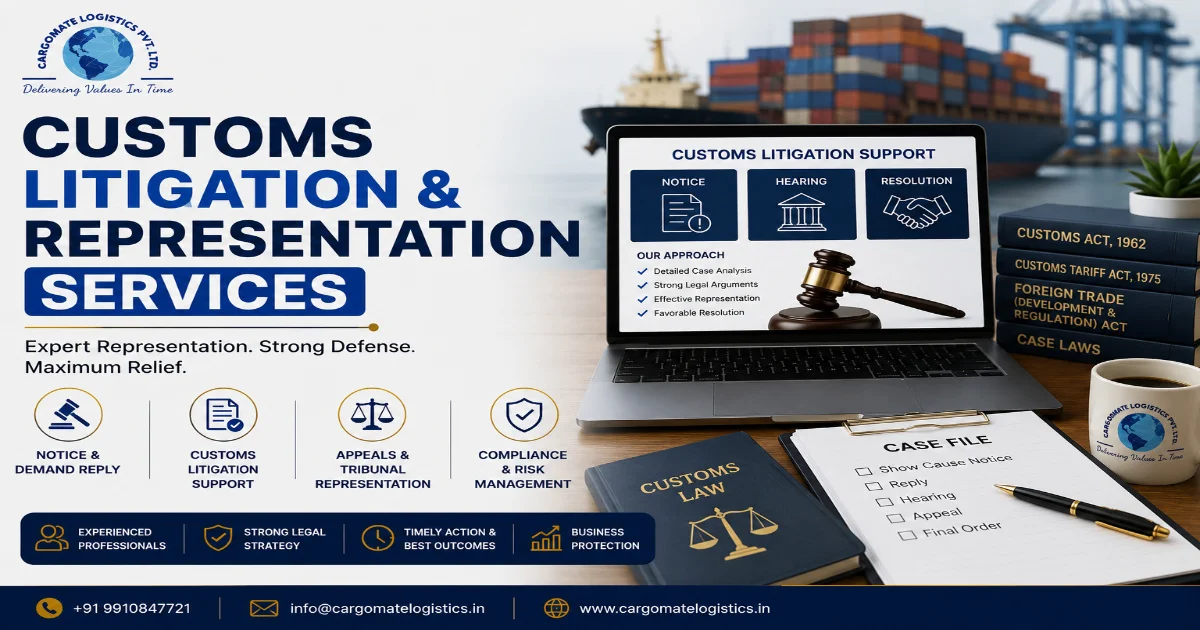
Notice received → Facts reviewed → Documents collected → Issue identified → Legal position analysed → Representation prepared → Hearing/appeal monitored → Resolution implemented.
This structured process helps management understand the dispute and prevents important details from being overlooked.
Businesses should also maintain a central customs record containing declarations, invoices, correspondence, technical documents, previous decisions and compliance records. This creates a stronger foundation for future disputes and audits.
Frequently Asked Questions About Customs Litigation in India
What are customs litigation services India?
Customs litigation services India involve assistance with customs disputes, adjudication, representations, appeals, duty demands, classification and valuation matters, confiscation or penalty proceedings and related customs compliance issues.
Can a customs dispute delay my shipment?
Yes. Depending on the nature of the issue, customs queries, examination, detention or documentation problems can delay clearance. The commercial impact may include storage costs, delivery delays and disruption to production or customer commitments.
What should I do after receiving a Customs Show Cause Notice?
Do not ignore it. Review the allegations, identify the relevant transaction and collect supporting documents immediately. The response should be prepared within the applicable statutory framework and timelines.
How does a customs appeal work in India?
The appropriate appellate route depends on the authority and type of order. Section 128 provides for appeals to the Commissioner (Appeals) in specified cases, while Section 129A provides for specified appeals to the Appellate Tribunal.
Can a logistics company help with customs disputes?
A logistics company with customs expertise can assist with documentation, customs coordination and operational compliance. Where formal legal representation or specialised legal opinions are required, appropriately qualified legal professionals should be engaged.
Why is customs compliance important for importers?
Good compliance can help businesses identify documentation, classification, valuation and procedural risks before they become expensive disputes. It can also make responses to customs queries more organised and evidence-based.
Conclusion: Resolve Customs Issues Before They Become Business Problems
Customs disputes can quickly become expensive when they interrupt cargo movement, increase duty exposure or create prolonged compliance uncertainty. Businesses therefore need more than a reactive approach.
Whether the issue involves a customs notice, valuation objection, classification dispute, cargo detention or appeal, the right response begins with accurate facts, complete documentation and a clear understanding of the applicable customs process.
For companies looking for customs representation services India, customs dispute resolution services, customs compliance representation and practical customs support, Cargomate Logistics can help coordinate the operational and documentation requirements involved in resolving customs-related challenges.
Facing a customs notice, cargo hold, duty dispute or appeal? Get the issue reviewed before it affects your supply chain.
Contact Cargomate Logistics Today📞 +91 99108 47721✉️ [email protected]🌐 www.cargomatelogistics.in