Sign up with Google
 Sign in with Zoho

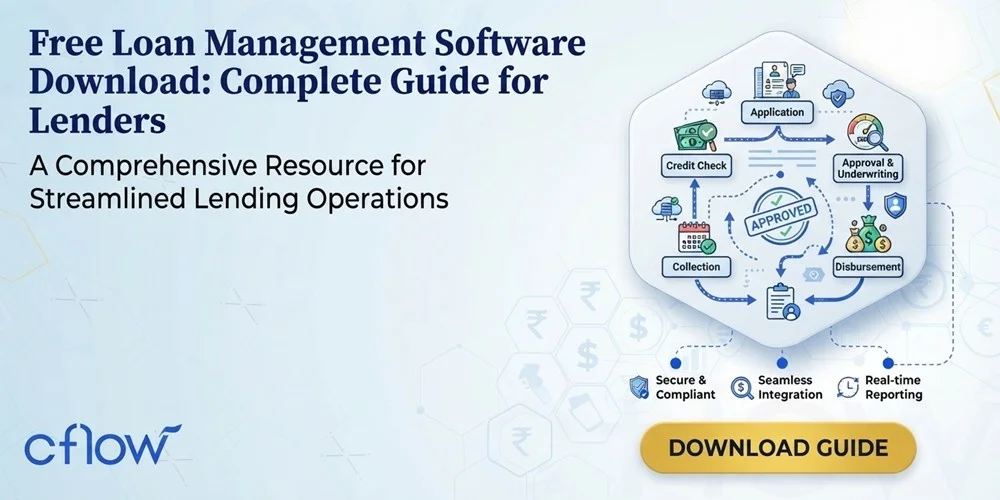
Why So Many People Search for "Free" Loan Management Software
If you run a lending business — a small NBFC, a microfinance operation, a gold loan shop, or a growing fintech — chances are you've typed some version of "free loan management software download" into Google at least once. It's a completely reasonable search. Loan management systems (LMS) are expensive-sounding enterprise tools, and when you're trying to keep costs down while you're still proving out your lending model, "free" sounds like exactly what you need.
But here's the honest truth that most search results won't tell you upfront: a genuinely free, downloadable loan management software that is also secure, compliant, and reliable enough to run real borrower money through is extremely rare — and in most cases, what looks free ends up costing far more in security risk, compliance exposure, and lost time than a properly priced cloud platform ever would.
This guide walks through what "free" loan management software actually tends to mean in practice, the specific risks of downloadable/on-premise LMS tools, what you should actually be evaluating before you commit to any platform, and how a modern, usage-based cloud alternative like Roopya compares.
What People Usually Mean by "Free Loan Management Software Download"
When this phrase shows up in search results, it typically leads to one of a few very different things, and it's worth knowing which one you're actually looking at:
● Free/open-source desktop software — small, often outdated Excel-based templates or standalone desktop applications. These can track basic loan schedules but usually have no cloud backup, no multi-user access control, no audit trail, and no regulatory reporting capability.
● "Free" trials of paid SaaS platforms — cloud-based loan management systems that offer a limited free trial period or a free tier capped on loan volume, users, or features, with paid plans required to actually run a live lending book.
● Cracked or pirated enterprise software — unauthorized copies of commercial LMS software shared through forums or file-sharing sites. This category is genuinely dangerous for a financial business and is covered in detail below.
● Freemium loan calculators or spreadsheets — simple tools that calculate EMIs, amortization schedules, or interest, but do not manage an actual loan portfolio, disbursements, collections, or compliance.
None of these fully match what most lending businesses actually need once they're handling real borrower funds, KYC data, repayment schedules, and regulatory obligations.
Why Downloadable "Free" LMS Software Is Risky for a Real Lending Business
This is the part that matters most, because the stakes with lending software are higher than with most other business tools — you are handling other people's money and sensitive financial data.
● 1. Data security and borrower privacy. Loan management involves KYC documents, bank details, income proof, and repayment history. A downloaded, unsupported piece of software running on a local machine has no enterprise-grade encryption, no access logging, and no defense against data breaches — putting both your borrowers and your business license at risk.
● 2. No regulatory or compliance updates. Lending regulations — RBI guidelines for NBFCs, digital lending norms, data localization rules — change regularly. Free downloaded software is rarely, if ever, updated to reflect new compliance requirements, which can expose a lender to penalties or license issues.
● 3. No audit trail or accountability. Regulators and auditors expect a clear, tamper-evident trail of every loan action — origination, disbursement, repayment, restructuring, write-off. Basic downloaded tools typically don't offer this, which becomes a serious problem during an audit or inspection.
● 4. Pirated software is a direct legal and security liability. Cracked versions of commercial lending software often contain malware, keyloggers, or backdoors, and using unlicensed software exposes a financial business to legal liability well beyond the cost of a legitimate subscription.
● 5. No support, no uptime guarantee, no backups. If free software crashes, loses data, or simply stops working, there is no one to call. For a business whose core operation is tracking money owed to and by real people, this is not a minor inconvenience — it's an existential risk.
● 6. It doesn't scale. Even if a free spreadsheet-based system works for 20 loans, it typically breaks down entirely at 200 or 2,000 loans — multi-branch operations, multiple loan products, and collections workflows quickly outgrow anything free and manual.
What to Actually Evaluate When Choosing Loan Management Software
Rather than searching for "free," a more useful question is: what is the lowest-cost, lowest-risk way to get a properly functioning, compliant loan management system running quickly? Here's what to check:
● Pricing model — look for platforms with zero or low upfront cost and usage-based (pay-as-you-go) pricing rather than large upfront licensing fees. This gets you most of the benefit of "free" without the risk of unsupported software.
● Setup and go-live time — a modern cloud LMS should let you go live in days, not months, without needing a dedicated IT or development team.
● Security and compliance certifications — data encryption, access controls, and alignment with applicable lending regulations should be built in, not bolted on later.
● Loan product flexibility — the system should support the specific loan products you offer (personal, gold, business, payday, vehicle, etc.) without custom development.
● Integration ecosystem — pre-built integrations with credit bureaus, KYC/verification providers, and payment gateways save significant implementation time and cost.
● Collections and early warning capability — a good LMS should help you manage repayments and flag risk early, not just record data after the fact.
● No-code configurability — the ability for business teams (not just developers) to configure loan products, rules, and workflows keeps ongoing costs low even as your business changes.
A Zero-Upfront-Cost Alternative: How Roopya Approaches This
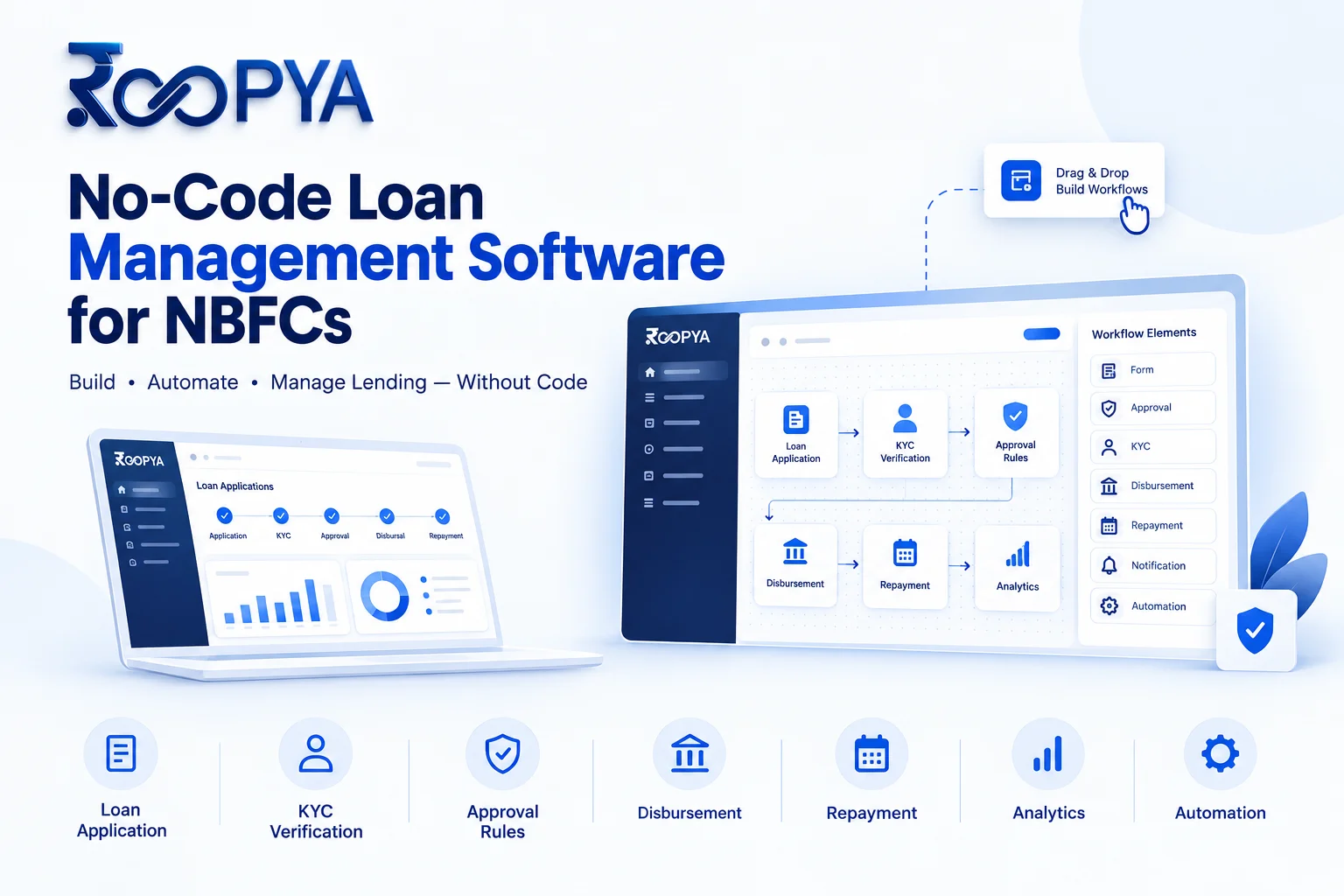
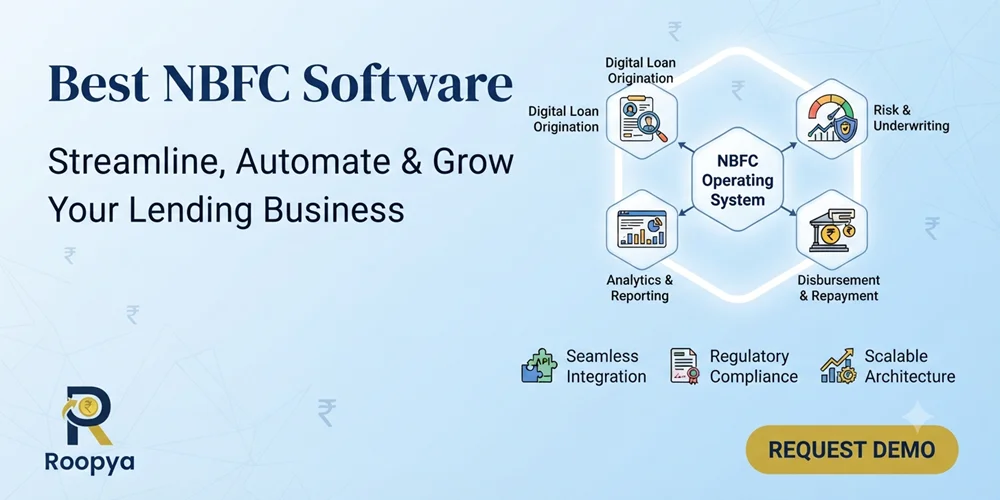
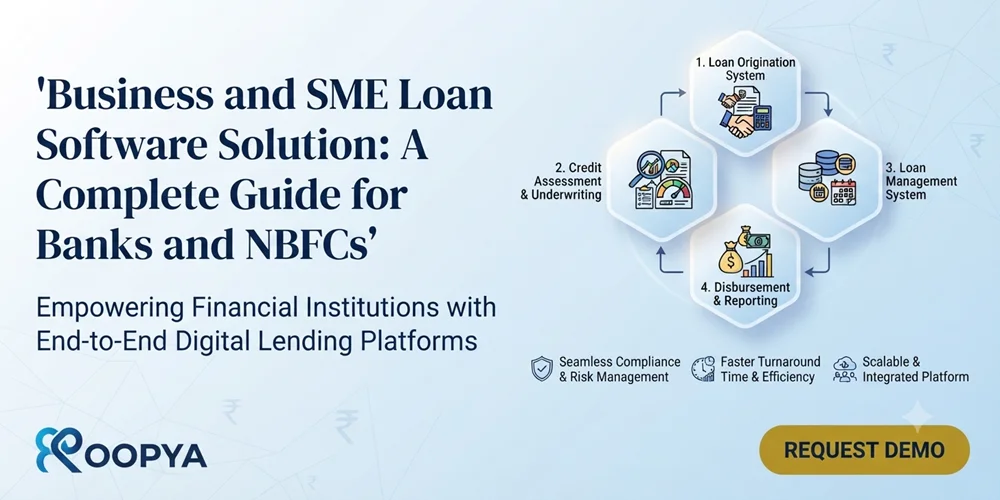
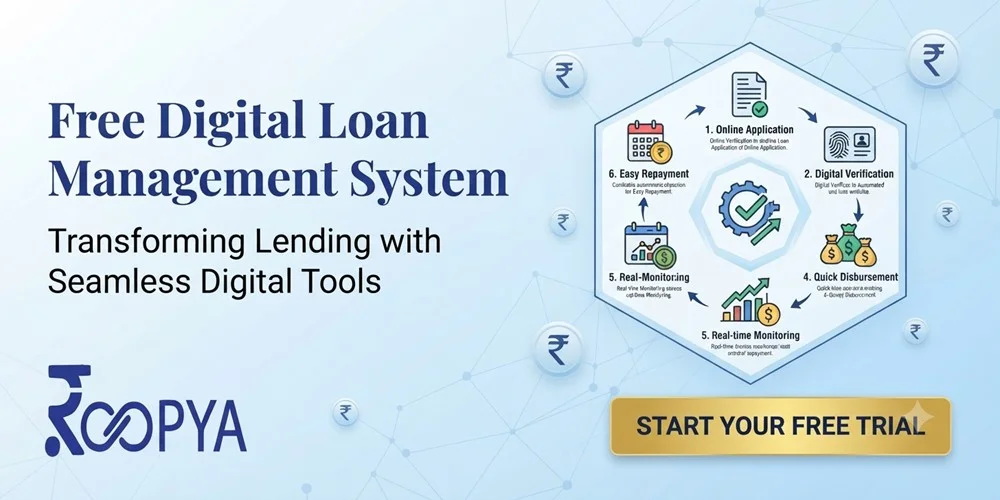
Roopya is built around the same instinct that drives the "free software" search in the first place: lenders shouldn't have to pay large amounts of money upfront just to find out whether a platform works for them. Instead of a download, Roopya is a cloud-based, no-code lending infrastructure covering origination, loan management, collections, and early warning — accessible through sign-up and a guided demo rather than a software installer.
A few specifics worth knowing if you're comparing this against a "free download" option:
● Zero upfront cost, pay-as-per-use pricing — you're not paying a large licence fee before you've processed a single loan.
● Reported go-live in as little as one day, thanks to a plug-and-play, no-code setup.
● 300+ pre-integrated APIs across credit bureaus, verification services, and payment gateways, so you're not building integrations from scratch.
● 20+ pre-configured loan products, from personal and gold loans to business, home, auto, and payday loans.
● AI-powered document analysis and fraud detection built into the platform rather than added on separately.
● A no-code business rule engine so credit policies and approval workflows can be configured by business users, not just developers.
● Continuous compliance updates as a managed cloud platform, rather than a static file that stops evolving the day you download it.
This isn't a claim that Roopya is "free" in the download sense — it's a direct answer to the underlying need behind that search: getting a fully functional, secure, compliant loan management system running without a large upfront investment or long implementation timeline.
Free Tools You Can Legitimately Use Alongside a Proper LMS
To be genuinely helpful rather than just steering every answer toward a paid product: there are free tools worth using at different stages of a lending business, even if they're not a substitute for a full LMS once you're live:
● EMI and amortization calculators — free online calculators are perfectly adequate for early-stage product planning and customer-facing estimates.
● Spreadsheet templates — genuinely fine for modeling a handful of test loans before launch, but not for live operations with real disbursed capital.
● Free trials of established SaaS LMS platforms — a legitimate way to evaluate a real platform's fit before committing, as long as you understand the trial's limits on volume, users, or duration.
The line to watch for is simple: free is fine for planning, modeling, and evaluation. Once real borrower money, KYC data, and regulatory obligations are involved, the cost of "free" downloaded software is almost always higher than it looks.
Making the Decision
If you're comparing a free download against a properly licensed, cloud-based platform, the real comparison isn't "free vs. paid" — it's "unsupported risk vs. managed, usage-based cost." A zero-upfront-cost, pay-as-you-use platform gets you nearly all of the financial relief that drew you to "free" in the first place, without the security, compliance, and scalability risks that come with unsupported or pirated software. For most lending businesses, that trade-off is worth taking seriously before choosing based on price alone.
Frequently Asked Questions (FAQ)
1. Is there genuinely free loan management software available for download?
Basic free or open-source tools exist, mostly spreadsheet-based or very limited in scope. Fully-featured, secure, compliant loan management systems are rarely offered as a true free download — most legitimate LMS platforms are cloud-based and use free trials or usage-based pricing instead.
2. Is it safe to download loan management software from third-party or torrent sites?
No. Pirated or cracked lending software carries a high risk of malware and data breaches, and using unlicensed software exposes a lending business to legal and regulatory liability well beyond any cost savings.
3. What's the difference between a free trial and free downloadable software?
A free trial gives time-limited or volume-limited access to a real, supported, regularly updated cloud platform. Free downloadable software is usually a standalone, unsupported file with no updates, no compliance maintenance, and no vendor accountability.
4. Can I run a small lending business on a spreadsheet instead of an LMS?
For a handful of test loans during early planning, a spreadsheet can work. Once you're managing real disbursed capital, multiple borrowers, repayment schedules, and regulatory reporting, a spreadsheet quickly becomes a liability rather than a convenience.
5. Does Roopya offer a free download?
No. Roopya is a cloud-based, no-code lending platform accessed through sign-up and a guided demo rather than a software installer, with a pay-as-per-use pricing model and zero upfront cost.
6. How quickly can a cloud-based loan management system go live compared to installing free software?
A modern no-code cloud LMS can be configured and go live in as little as a day, since it comes with pre-integrated APIs and pre-configured loan products, compared to the manual setup and ongoing maintenance burden of standalone free software.
7. What should I check before choosing any loan management software, free or paid?
Prioritize data security, regulatory compliance support, audit trails, vendor support and uptime, integration capability, and how easily the system scales as loan volume grows — not just the upfront price tag.