Sign up with Google
 Sign in with Zoho

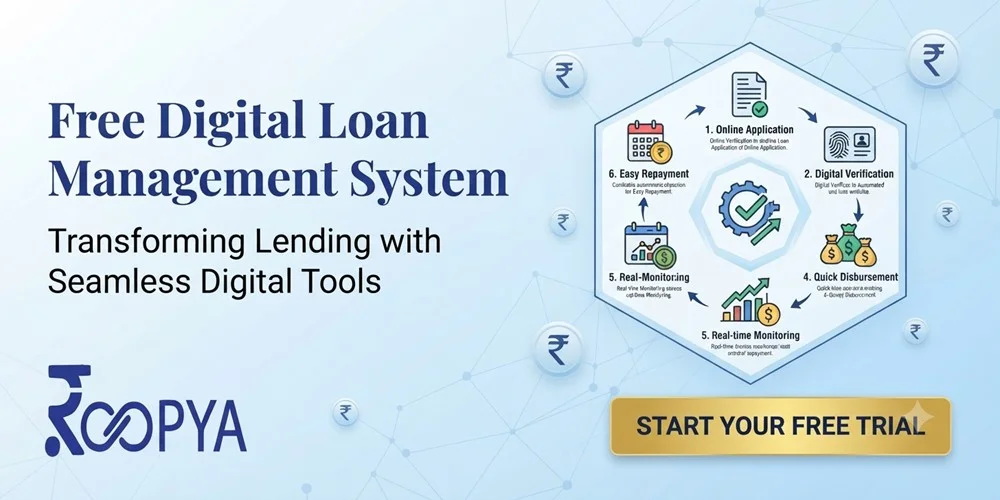
A modern lending business needs more than a spreadsheet for tracking loans. As portfolios grow, lenders must manage repayment schedules, interest calculations, collections, customer communication, reconciliation, reporting, and compliance with accuracy and speed. A digital Loan Management System (LMS) brings these activities into one connected platform.
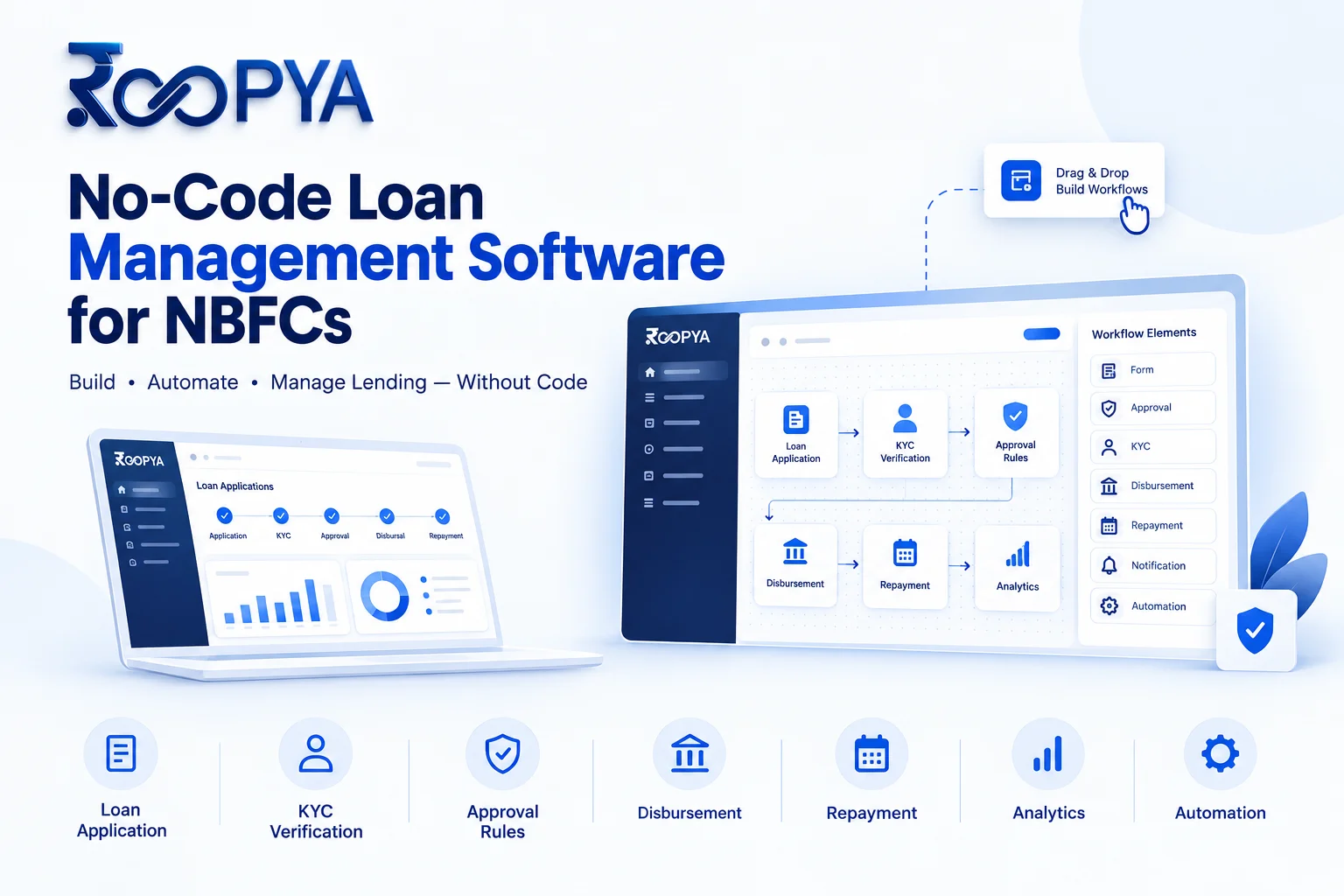
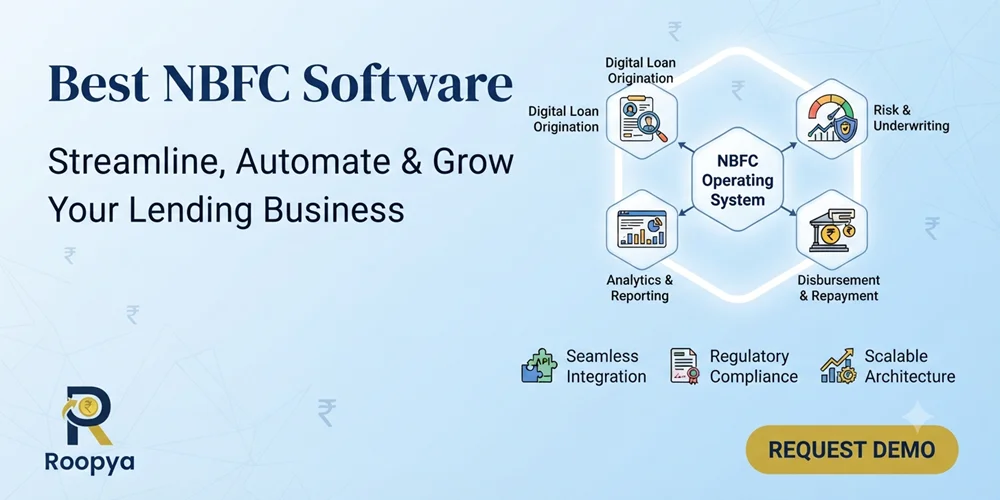
Roopya is a no-code lending infrastructure platform designed for banks, NBFCs, MFIs, fintech companies, and other modern lenders. Its platform brings together loan origination, loan management, collections, early-warning capabilities, analytics, and reporting so lending teams can operate from a unified technology layer.
For businesses exploring a free digital loan management system, the goal should not simply be to find software that costs nothing. The more important question is whether the platform can reduce manual work, improve visibility, support responsible lending, integrate with existing systems, and scale as the loan book grows. Roopya’s approach combines configurable workflows, pre-integrated APIs, automation, and cloud-based infrastructure to help lenders modernize their operations.
What Is a Digital Loan Management System?
A Digital Loan Management System is software that manages the operational lifecycle of a loan after—or alongside—origination. It can maintain borrower and loan records, generate amortization schedules, calculate dues, record repayments, manage collections, support customer servicing, reconcile transactions, and produce portfolio reports.
A traditional process may rely on spreadsheets, email approvals, manual calculations, separate payment systems, and disconnected collection tools. This creates duplicated data and makes it harder for teams to know the current status of each account. A digital LMS replaces many of these disconnected steps with configurable workflows and a centralized source of information.
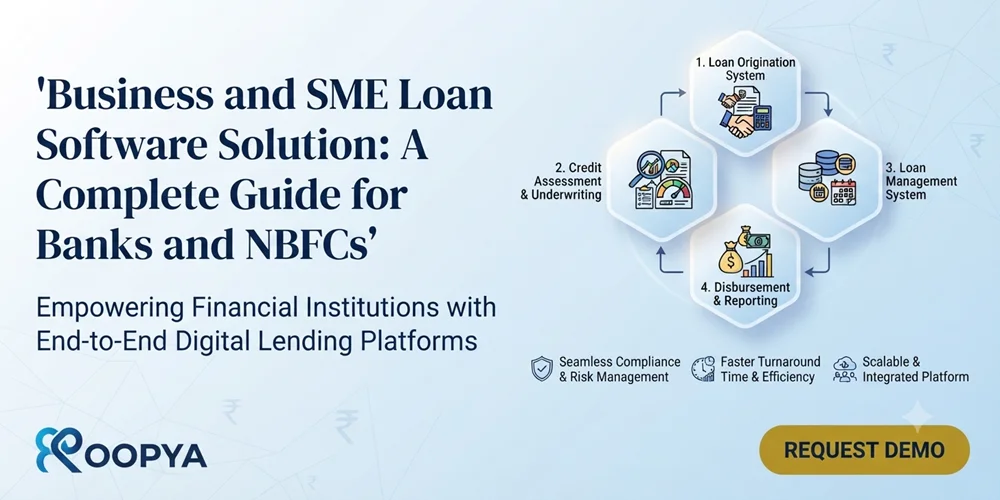
A complete lending technology stack can connect a Loan Origination System (LOS) with an LMS. The LOS manages application capture, verification, underwriting, and sanctioning. The LMS manages servicing and portfolio operations. When these systems communicate smoothly, information can move from application to disbursement and then through repayment and closure without unnecessary re-entry.
Why Lenders Need Digital Loan Management Software
Lending operations become increasingly complex as loan volume increases. Even a small portfolio can contain different interest methods, repayment frequencies, fees, moratoriums, prepayments, overdue accounts, settlements, and customer-service requests. Manual handling makes consistency difficult.
A digital LMS can help lenders: • Reduce repetitive data entry and calculation work. • Standardize repayment and servicing workflows. • Give operations teams a current view of portfolio performance. • Automate reminders and collection tasks. • Improve reconciliation between payments and loan accounts. • Generate management and regulatory reports more efficiently. • Connect lending workflows with external systems through APIs. • Give borrowers clearer access to account information. • Create an auditable trail of important operational activities.
The best system is not simply a digital replacement for paper files. It should help teams make lending operations more measurable, configurable, and responsive.
What Does a Free Digital Loan Management System Include?
The exact capabilities of a free or entry-level plan vary by provider, so lenders should review usage limits, integrations, support, security, and commercial terms before adopting a platform. A useful digital LMS should cover the core servicing functions required to operate a loan portfolio.
1. Loan Account Management Centralize borrower, loan, repayment, and account information. Teams can access relevant account details without searching across multiple spreadsheets or systems.
2. EMI and Amortization Management Automate repayment schedules and support configurable loan structures. Accurate schedules help reduce manual calculation errors and make customer communication easier.
3. Payment Processing and Reconciliation A modern LMS should connect payment workflows with loan accounts, help track successful and failed payments, and support reconciliation so that finance and operations teams can identify exceptions quickly.
4. Collections Management Collection teams need visibility into overdue accounts, due dates, borrower status, assigned agents, payment plans, and follow-up activity. Automated reminders and configurable workflows can help teams prioritize work.
5. Customer Servicing Borrowers may need statements, repayment details, outstanding balances, or support during the loan tenure. A customer-facing portal or integrated communication layer can reduce dependency on manual responses.
6. Reporting and Analytics Portfolio dashboards can help management monitor disbursements, collections, overdue accounts, portfolio performance, and operational trends.
7. API Integrations Lending businesses rarely operate in isolation. APIs can connect an LMS with payment gateways, credit bureaus, verification services, CRMs, ERPs, accounting systems, and other financial infrastructure.
8. Configurable Workflows A no-code approach lets business users configure product rules, workflows, and approval processes without relying on developers for every operational change.
How Roopya Helps Modernize Loan Management
Roopya positions its platform as a unified, no-code lending infrastructure for the full lending lifecycle. Its website highlights a Loan Management System with portfolio management, payment processing, amortization schedules, and customer portal capabilities. The broader platform also includes loan origination, collections, early-warning capabilities, lending analytics, and advanced reporting.
Roopya’s platform highlights a one-day go-live approach, pay-as-you-use pricing, no-code configuration, 300+ pre-integrated APIs, 20+ pre-configured loan products, an open API architecture, and an AI-powered fraud detection layer. These are product claims made by Roopya and should be evaluated against the lender’s specific requirements before implementation.
For teams looking for a free digital loan management system, a practical starting point is to map the current process first: how applications arrive, how loans are sanctioned, how disbursements are recorded, how schedules are generated, how payments are reconciled, how overdue accounts are assigned, and which reports management needs. The platform can then be configured around those workflows rather than forcing the business into a rigid process.
Key Benefits of a Digital Loan Management System
· Faster Operations
· Automation can reduce repetitive tasks such as schedule creation, payment updates, reminders, and reporting. This can allow teams to spend more time on exceptions and customer needs.
· Better Accuracy
· Centralized calculations and workflows can reduce the risk of inconsistent spreadsheet formulas or duplicate data entry. For lending businesses, even small calculation errors can affect customer balances and financial reporting.
· Improved Portfolio Visibility
· A unified system gives managers a clearer picture of active loans, repayments, delinquency, collections, and portfolio trends.
· Scalable Lending Operations
· Digital infrastructure can support increasing loan volumes without requiring every operational step to grow at the same rate.
· Better Customer Experience
· Borrowers expect timely information. Digital statements, payment updates, reminders, and self-service capabilities can make the loan journey easier to understand.
· Stronger Operational Control
· Role-based workflows, audit trails, configurable rules, and standardized processes can improve accountability across lending teams.
· Smarter Collections
· A digital collection workflow can help prioritize accounts, assign tasks, schedule follow-ups, and track recovery activity.
Digital Loan Management for Banks, NBFCs, MFIs and Fintechs
Different lenders have different products and operating models, but the need for reliable servicing technology is common.
· Banks can use digital loan management infrastructure to improve portfolio servicing and integrate lending operations with their existing technology environment.
· NBFCs can benefit from configurable product workflows, automated servicing, collections, reporting, and integrations as they scale their loan books.
· Microfinance institutions often manage high-volume portfolios with frequent repayments and field collections. Digital workflows can help teams maintain consistent records and improve collection visibility.
· Fintech lenders need API-first infrastructure and fast product configuration to respond to changing market requirements. A no-code platform can reduce dependency on engineering teams for routine workflow changes.
· SME and business lenders may need more flexible repayment structures, document workflows, and portfolio analytics. A configurable LMS can help support product-specific requirements.
Free vs. Paid Loan Management Software: What Should You Check?
“Free” should always be understood in the context of the provider’s commercial model. Some platforms offer free trials, limited free plans, or demos, while others use usage-based pricing. Before moving a production loan portfolio to any platform, evaluate:
· • Number of active loans supported.
· • Number of users and roles.
· • API and integration limits.
· • Data storage and retention terms.
· • Security controls and access management.
· • Backup and disaster-recovery arrangements.
· • Reporting capabilities.
· • Customer support and implementation assistance.
· • Data export and portability.
· • Contractual and regulatory responsibilities.
· • Upgrade and pricing terms after the free period or free tier.
Roopya’s website currently describes a pay-as-you-use approach and zero upfront cost for its broader platform. Prospective users should confirm current pricing, eligibility, limits, and commercial terms directly with Roopya before relying on any “free” offering.
Security, Privacy and Responsible Digital Lending
Loan management systems process sensitive financial and personal information, so technology selection should include security and responsible data practices—not just features.
In India, RBI’s digital lending framework emphasizes customer protection, transparency, data privacy, and responsible conduct for regulated entities and relevant lending arrangements. RBI guidance states that borrower data collection should be need-based and based on prior explicit consent, with an audit trail. It also addresses disclosure of loan costs through the Key Fact Statement and other borrower protections.
Technology alone does not make a lending business compliant. The regulated entity remains responsible for meeting applicable regulatory obligations, and lenders should validate their processes, contracts, data flows, access controls, vendor arrangements, and reporting requirements with their compliance and legal teams.
When evaluating an LMS, ask how data is encrypted, who can access it, how access is logged, how long data is retained, how consent is managed, how third-party integrations are controlled, and how data can be exported or deleted when appropriate.
How to Choose the Right Digital Loan Management System
Start With Your Loan Lifecycle Document the current process from sanction to closure. Identify every manual handoff, spreadsheet, approval, calculation, payment update, and report.
Define Must-Have Features Prioritize repayment scheduling, payment processing, reconciliation, collections, customer servicing, reporting, integrations, and auditability.
Check Configuration Flexibility Loan products change. Choose a system where business teams can configure products and workflows without extensive custom development.
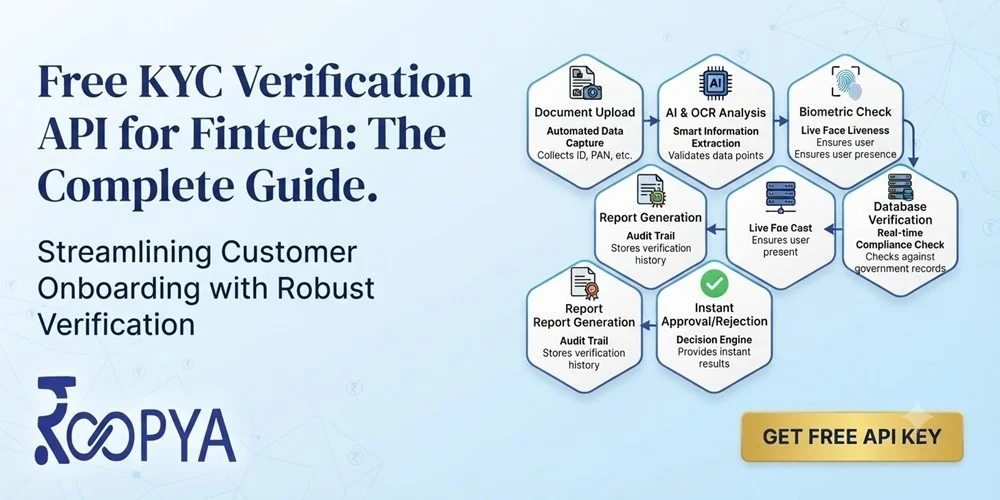
Evaluate Integrations Confirm that the platform can connect to the services you already use or plan to use, including payment gateways, credit bureaus, KYC providers, accounting systems, and CRMs.
Test With Realistic Scenarios Do not evaluate only a standard EMI loan. Test prepayments, overdue accounts, failed payments, reversals, moratoriums, settlements, restructuring, and other scenarios relevant to your products.
Review Security and Compliance Assess security architecture, access controls, audit logs, data handling, vendor due diligence, and applicable regulatory responsibilities.
Measure Business Outcomes Track turnaround time, reconciliation exceptions, collection productivity, servicing workload, reporting time, and customer-support volume before and after implementation.
Why a No-Code LMS Can Be Valuable
Traditional lending software often requires developers for product changes, workflow modifications, and business-rule updates. A no-code LMS moves more configuration capability into the hands of business and operations teams.
For example, an operations team may need to change an approval workflow, introduce a new loan product, modify a collection rule, or add a new data field. With a configurable no-code platform, these changes can potentially be handled through visual configuration rather than a full software-development cycle.
This does not remove the need for technology governance. Production changes should still be controlled, tested, documented, approved, and monitored. No-code is most valuable when it combines business agility with proper governance.
The Future of Digital Loan Management
Loan management is moving toward connected, automated, data-driven operations. Future-ready platforms are likely to combine workflow automation, real-time integrations, analytics, AI-assisted decision support, and stronger customer self-service.
Roopya’s platform already brings together origination, loan management, collections, analytics, reporting, and AI-oriented capabilities in a unified lending infrastructure. Its website also describes AI-powered document analysis, intelligent credit decisioning, analytics, and fraud detection.
For lenders, the strategic objective is straightforward: build an operating model where reliable data moves through the loan lifecycle, routine tasks are automated, exceptions receive human attention, customers receive transparent information, and management has timely portfolio intelligence.
A free digital loan management system can be a useful starting point for lenders testing digital workflows. But the long-term value comes from choosing infrastructure that can support the institution’s products, portfolio size, integrations, governance, and regulatory responsibilities as it grows.
Conclusion: Build a More Efficient Lending Operation With Roopya
A Digital Loan Management System can turn fragmented lending operations into a connected workflow. From loan accounts and amortization to payments, collections, customer servicing, analytics, and reporting, the right platform helps lenders operate with greater consistency and visibility.
Roopya offers a no-code, cloud-based lending platform designed for modern lenders in India. Its broader infrastructure connects loan origination, management, collections, analytics, and reporting, with integrations and configurable workflows intended to support different lending models.
If you are comparing free digital loan management solutions, start with the business problem rather than the price tag. Identify the manual tasks you want to remove, the loan products you need to support, the integrations you require, and the controls your compliance team expects. Then test the platform with realistic loan scenarios.
For lenders ready to modernize, Roopya can be evaluated through a product walkthrough or demo to understand how its platform could fit your lending lifecycle.
FAQs
What is a free digital loan management system?
It is software that helps lenders manage loan accounts, repayment schedules, payments, collections, servicing, and reporting. Free may mean a free plan, trial, or zero-upfront-cost model, so providers should be checked for current limits and terms.
Who can use a digital loan management system?
Banks, NBFCs, MFIs, fintech lenders, and other organizations involved in lending can use an LMS, subject to their operational, technology, and regulatory requirements.
What is the difference between LOS and LMS?
An LOS primarily manages loan application, verification, underwriting, and sanctioning. An LMS manages loan servicing after sanction or disbursement, including schedules, repayments, collections, and portfolio reporting.
Can Roopya manage loan repayments and collections?
Roopya’s published platform information includes payment processing, amortization schedules, portfolio management, automated reminders, collection workflows, payment plans, and agent management.
Is Roopya a no-code platform?
Yes. Roopya describes its lending infrastructure as a no-code platform that lets business users configure lending products, rules, and workflows without writing code.
Does a digital LMS support APIs?
Modern LMS platforms commonly use APIs to connect with payment gateways, verification services, credit bureaus, CRMs, ERPs, and other systems. Roopya states that it offers 300+ pre-integrated APIs and an open API architecture.
Is a free LMS suitable for a production loan portfolio?
It can be, but only after checking portfolio limits, security, integrations, support, data handling, uptime, compliance requirements, and commercial terms.
How does an LMS improve customer experience?
It can provide faster payment updates, clearer account information, digital statements, reminders, and self-service access while reducing manual servicing delays.
Does using an LMS make a lender RBI compliant?
No. Software can support compliant processes, but regulatory responsibility remains with the regulated entity and relevant parties. Lenders should validate their implementation with their compliance and legal teams.
How can I evaluate Roopya for my lending business?
Start by mapping your lending lifecycle, defining required products and integrations, and testing realistic servicing and collections scenarios. Roopya offers a demo request through its website.