Sign up with Google
 Sign in with Zoho

Every lender eventually hits the same wall. Loan volumes grow, but the team reviewing applications, chasing documents, and manually approving loans doesn't grow at the same pace. Add in shifting RBI compliance requirements, rising borrower expectations for instant decisions, and the constant threat of fraud, and it's easy to see why so many banks, NBFCs, and MFIs are rethinking how lending gets done from the ground up.
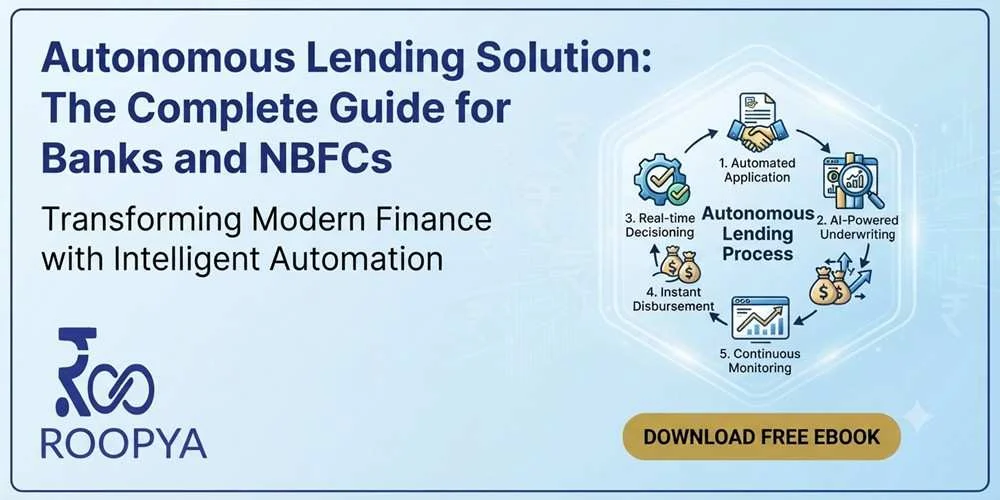
An autonomous lending solution is the answer many lenders are turning to. Rather than stitching together spreadsheets, legacy core banking modules, and manual credit checks, an autonomous lending solution uses AI, business rule engines, and pre-built integrations to run the entire loan lifecycle — from the moment a borrower applies to the moment their loan is fully repaid — with minimal manual intervention.
This guide explains what an autonomous lending solution actually is, why traditional lending infrastructure struggles to keep up, the core components every serious platform needs, and how to evaluate one for your own lending business.
What Is an Autonomous Lending Solution?
An autonomous lending solution is a technology platform that automates the majority of decisions and workflows across the loan lifecycle — origination, underwriting, disbursal, servicing, collections, and risk monitoring — using a combination of business rules, machine learning models, and pre-integrated third-party data sources (credit bureaus, bank statement analyzers, KYC and fraud-check APIs, and payment gateways).
The word "autonomous" doesn't mean humans are removed from lending. It means the platform handles the repetitive, data-heavy, time-sensitive work automatically, while your credit and operations teams focus on policy design, exceptions, and strategic decisions. A well-built autonomous lending solution typically lets a lender:
• Accept and process loan applications digitally, 24/7, without manual data entry
• Pull credit bureau, bank statement, and alternative data automatically at the point of application
• Apply credit policy through a configurable business rule engine (BRE) instead of hard-coded logic
• Detect fraud and document tampering in real time using AI-based checks
• Service the loan portfolio — EMIs, amortization, restructuring — without manual reconciliation
• Trigger collections and early-warning workflows automatically based on borrower behavior
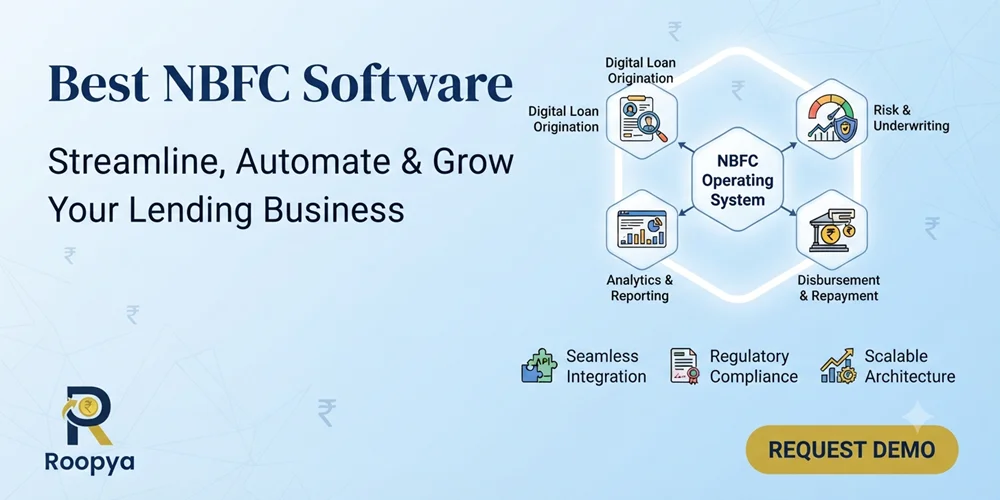
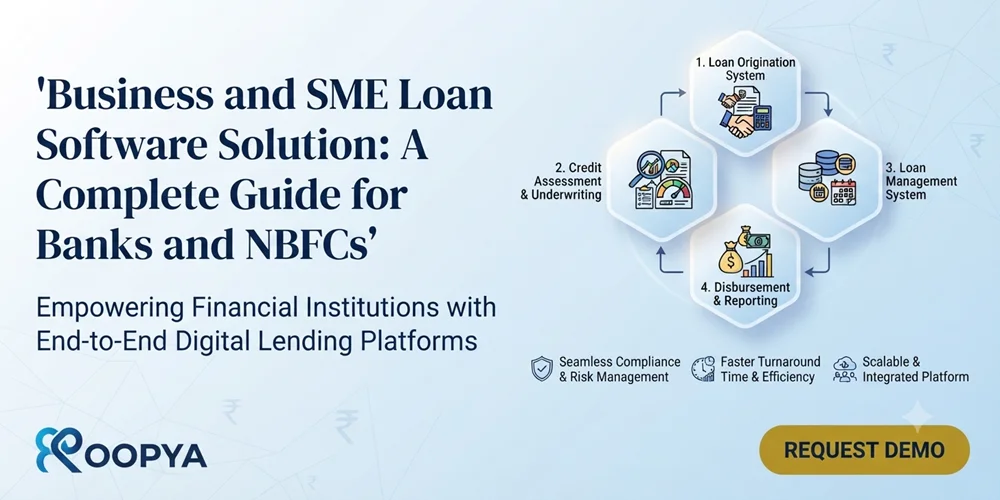
In practice, this is delivered as a unified lending infrastructure — usually a Loan Origination System (LOS) and Loan Management System (LMS) working together on one platform, rather than as separate tools that need custom integration work.
Why Traditional Lending Infrastructure Falls Short
Most lenders don't set out to build inefficient systems — they simply outgrow what they started with. A few patterns show up again and again:
1. Manual underwriting doesn't scale
When credit decisions depend on an analyst manually reviewing bank statements, ITRs, and bureau reports, turnaround time is directly tied to headcount. As application volume rises, either approval times slip or credit quality suffers because reviewers are rushing.
2. Legacy systems are rigid
Older loan management systems were often built for a single loan product and a fixed process. Launching a new product — say, a gold loan or a merchant cash advance — can mean months of development work rather than a configuration change.
3. Integrations are custom, one-off projects
Connecting to a credit bureau, an e-KYC provider, a payment gateway, or a fraud-check vendor individually is slow and expensive. Without a pre-integrated ecosystem, every new data source becomes its own IT project.
4. Compliance is a moving target
RBI's digital lending guidelines, data localization rules, and fair-practice code requirements change frequently. Platforms that aren't built with compliance as a core layer put lenders at ongoing regulatory risk.
5. Collections and risk monitoring happen too late
Many lenders only find out a borrower is struggling after they've already missed a payment. Without behavioral or early-warning analytics, collections becomes reactive instead of preventive.
An autonomous lending solution is designed specifically to remove these bottlenecks — not by adding more people, but by re-architecting how the workflow runs.
Core Components of an Autonomous Lending Solution
A genuinely autonomous platform is built from several interlocking systems. Here's what each one does and why it matters.
Loan Origination System (LOS)
The LOS is the borrower's first touchpoint — digital application forms, automated credit scoring, document verification, and real-time decisioning. A strong LOS reduces the application-to-approval journey from days to minutes by pulling bureau and bank-statement data automatically instead of asking the borrower to submit paperwork that a human then keys in manually.
Loan Management System (LMS)
Once a loan is disbursed, the LMS takes over: portfolio management, payment processing, amortization schedules, and a self-service customer portal. This is where day-to-day servicing accuracy matters most — a single miscalculated amortization schedule can cascade into compliance and customer-trust issues.
No-Code Business Rule Engine (BRE)
The BRE is what makes a platform "autonomous" rather than just "digital." It lets credit and risk teams configure eligibility rules, cut-offs, and approval workflows visually — without writing code or waiting on engineering. This means policy changes (say, tightening a debt-to-income cut-off) can go live the same day, not the same quarter.
Collections System
Automated reminders, structured collection workflows, flexible payment plans, and agent management help recover dues without over-relying on manual calling. Well-designed collection workflows also protect the borrower relationship by escalating gradually and respecting fair-practice norms.
Early Warning System (EWS)
Predictive analytics flag borrowers who show early signs of stress — irregular repayment patterns, bounced EMIs, or behavioral changes — before they default. Catching this early gives lenders room to restructure or intervene rather than simply write off the loan later.
Lending Analytics & Reporting
Portfolio analytics, performance metrics, and regulatory reporting give lenders real-time visibility into how the book is performing — which products, geographies, or borrower segments are driving risk or growth — instead of relying on month-end MIS reports.
How AI Powers Lending Autonomy
Automation alone gets you digital workflows. AI is what gets you genuinely autonomous decisioning. Here's where it typically does the heavy lifting:
AI-Powered Document Analysis
Optical character recognition (OCR) combined with natural language processing (NLP) extracts and verifies data from identity documents, bank statements, and income proofs in seconds, while flagging tampering or inconsistencies that a manual reviewer might miss under time pressure.
Intelligent Credit Decisioning
Machine learning models can evaluate far more than a traditional bureau score — transaction patterns, cash-flow stability, and other alternative data — to assess risk for borrowers who may be thin-file or new-to-credit, while still keeping the underlying logic auditable for regulators.
Self-Learning Business Rules
Rather than a static rule set, an AI-enhanced BRE can analyze historical approvals, rejections, and downstream defaults to suggest rule refinements — while keeping a human in the loop to approve any change before it goes live.
AI-Driven Analytics
Natural-language reporting tools let risk and business teams ask plain-English questions about portfolio performance and get instant answers, cutting down hours of manual report-building into seconds.
Used together, these AI layers are what allow a lending platform to make thousands of consistent, policy-compliant decisions per day — something no manual team, however skilled, can match at scale.
Business Benefits of an Autonomous Lending Solution
For banks, NBFCs, and MFIs evaluating a shift to autonomous lending infrastructure, the returns typically show up in five areas:
• Speed to market — launching a new loan product or entering a new segment can take days on a configurable, no-code platform instead of months of custom development.
• Lower cost per loan — automated document checks, credit scoring, and servicing reduce the manual effort (and headcount cost) needed per application.
• Better credit quality — consistent, data-driven decisioning reduces the variability and bias that comes with manual underwriting.
• Stronger fraud defense — AI-based document and identity checks catch fraud patterns that are difficult for humans to spot manually at volume.
• Improved collections and recovery — early-warning signals and automated, behavior-based collection workflows help recover dues before an account slips into serious delinquency.
None of this replaces sound credit judgment — it simply gives your credit and risk teams better tools and more time to apply that judgment where it matters most: policy design, exceptions, and portfolio strategy.
How to Choose the Right Autonomous Lending Platform
Not every platform that claims to be "AI-powered" or "autonomous" is built the same way. A few questions are worth asking before you commit:
• Is the platform genuinely no-code, or does every rule change still require a developer?
• How many credit bureaus, KYC providers, and payment gateways are pre-integrated out of the box?
• Does it support multiple loan products (personal, business, gold, payday, home, auto) on one platform, or will you need separate systems as you diversify?
• How is compliance with RBI's digital lending guidelines and data localization requirements built into the platform, rather than bolted on?
• What's the actual go-live timeline — weeks, or genuinely days?
• Is pricing usage-based, or does it require heavy upfront capital investment before you process a single loan?
These questions tend to separate platforms that are truly built for autonomy from those that have simply added a chatbot or a scoring model on top of a legacy LOS/LMS.
How Roopya Delivers Autonomous Lending
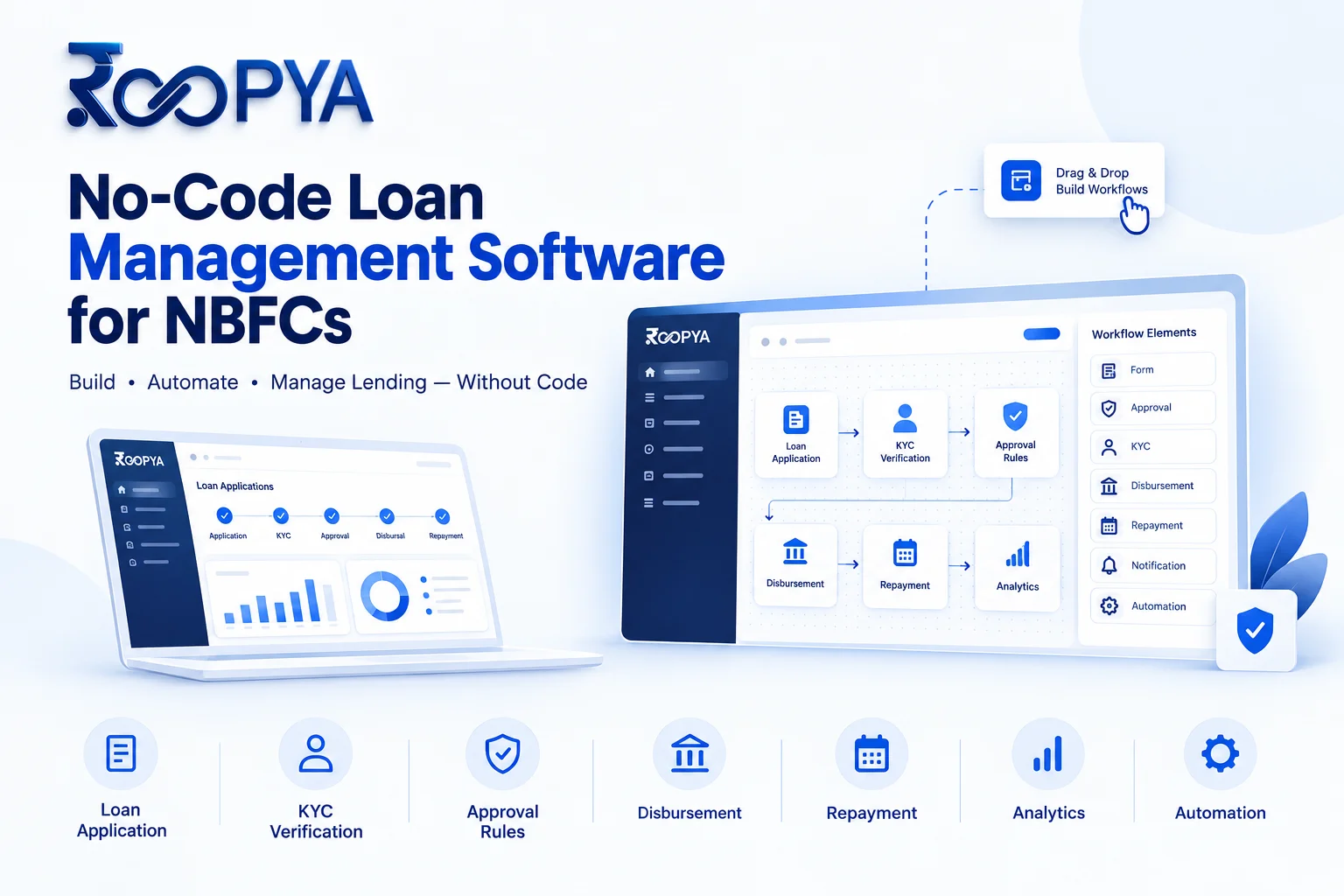
Roopya (roopya.money) is a unified, no-code lending infrastructure built for banks, NBFCs, and MFIs that want to move fast without compromising on compliance or control. The platform brings origination, underwriting, servicing, collections, early warning, and analytics onto a single system, backed by over 300 pre-integrated APIs and more than 20 pre-configured loan products.
A few specifics worth knowing:
• Fast go-live — lenders can go live in as little as one day using Roopya's plug-and-play infrastructure, rather than months of implementation.
• Usage-based pricing — no heavy upfront cost; lenders pay for what they actually use as their book grows.
• AI-powered document analysis — automated OCR and NLP-based verification with fraud and anomaly detection built in.
• Self-learning business rule engine — credit policies are configured visually and refined continuously using historical approval and default data, with human oversight retained.
• Intelligent credit decisioning — risk models evaluate alternative data and real-time indicators for more accurate, personalized credit decisions.
• Open API architecture — integrates with your existing CRM, ERP, and core banking systems instead of forcing a rip-and-replace.
Lenders already using the platform have reported meaningfully faster document processing, improved scoring accuracy, and better collection outcomes compared to manual, legacy workflows — the kind of measurable gains that matter when a lending book is scaling quickly.
Getting Started
If you're a bank, NBFC, or MFI evaluating a move to autonomous lending infrastructure, the typical path looks like this: start with a single loan product or portfolio segment, connect your existing credit policy into the platform's business rule engine, run it alongside your current process to validate decisioning accuracy, and then expand product-by-product as confidence builds. Most lenders don't need to migrate their entire book on day one — the value of a no-code, API-first platform is that you can scale into it gradually.
Lending is ultimately a data and decisioning business, and the lenders that win over the next decade will be the ones who can make accurate, compliant credit decisions faster and cheaper than their competitors. An autonomous lending solution — combining a unified LOS/LMS, a no-code business rule engine, AI-powered decisioning, and integrated collections and early-warning systems — is how that becomes achievable without proportionally scaling headcount or IT spend.
Whether you're a new-age NBFC launching your first loan product or an established lender modernizing legacy infrastructure, the shift toward autonomous lending isn't really optional anymore — it's a question of when, not if.
Frequently Asked Questions
What is an autonomous lending solution?
An autonomous lending solution is a technology platform that automates the loan lifecycle — origination, underwriting, disbursal, servicing, collections, and risk monitoring — using AI, business rule engines, and pre-integrated data sources, reducing the need for manual intervention at every step.
How is an autonomous lending solution different from a regular Loan Management System (LMS)?
A traditional LMS mainly handles loan servicing after disbursal. An autonomous lending solution goes further, combining origination, underwriting, servicing, collections, early warning, and analytics into one AI-driven platform that can make and act on decisions with minimal manual input.
Is an autonomous lending solution suitable for small NBFCs and MFIs, or only large banks?
Modern autonomous lending platforms are usually built to be modular and usage-based, which makes them accessible to small and mid-sized NBFCs and MFIs, not just large banks with big IT budgets. Lenders can start with one loan product and scale up as their book grows.
How long does it take to implement an autonomous lending platform?
This varies by vendor and by how many custom integrations are required. No-code, API-first platforms with pre-built integrations — like Roopya — can go live in as little as a day, while legacy systems that need custom development can take several months.
Does using AI in lending decisions create compliance risk?
Not when the platform is built with compliance as a core layer. A well-designed autonomous lending solution keeps AI-driven decisions auditable and explainable, retains human oversight over rule changes, and stays updated with regulations such as the RBI's digital lending guidelines.
Can an autonomous lending solution support multiple loan products?
Yes. Platforms built for autonomy are typically product-agnostic and configurable, supporting personal loans, business loans, gold loans, payday loans, home loans, and auto loans on a single infrastructure rather than requiring a separate system per product.
What does it cost to switch to an autonomous lending solution?
Cost models differ by provider. Many modern platforms, including Roopya, use usage-based pricing with no heavy upfront cost, so lenders pay in proportion to the loan volume they actually process rather than a large fixed licensing fee.