Sign up with Google
 Sign in with Zoho
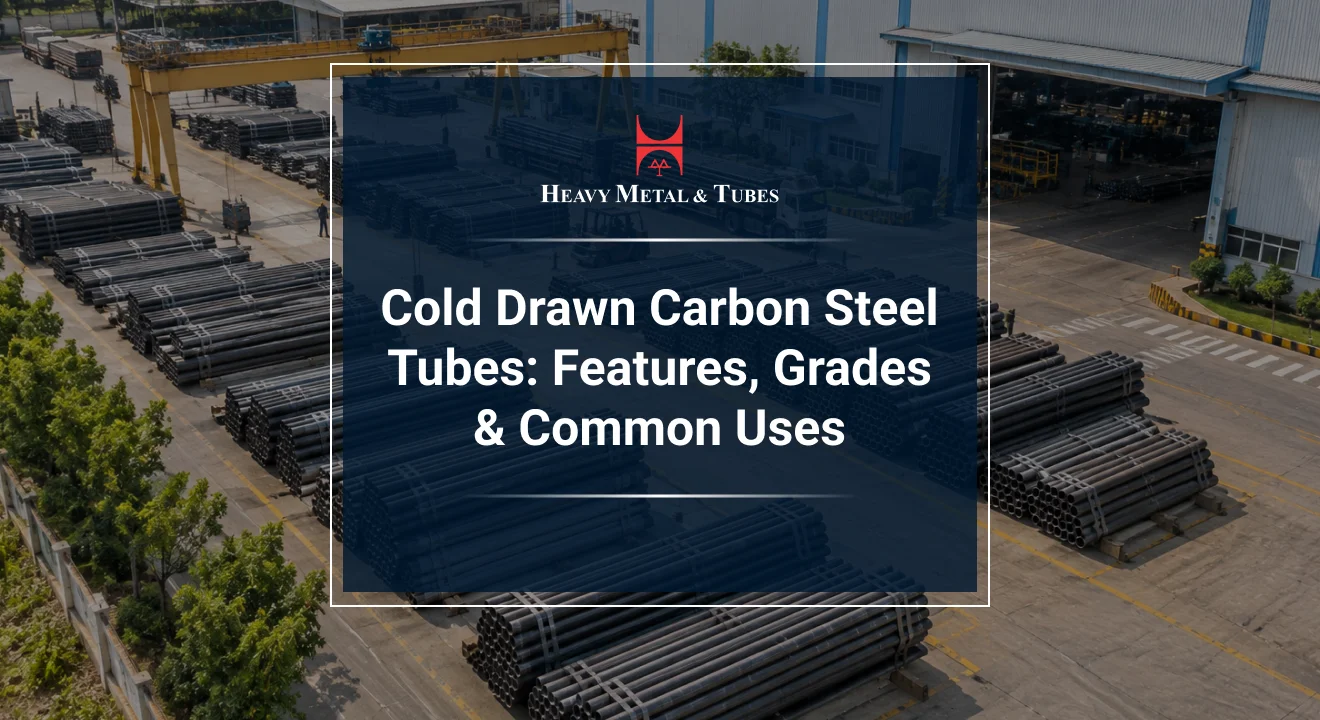
If you work in engineering, automotive, hydraulics or power generation, you've almost certainly come across cold drawn carbon and alloy steel products. They're the usual choice when a job calls for tight tolerances, steady mechanical properties and a clean surface finish. Picking the right tube isn't complicated, but it does help to know what these tubes can and can't do. Here's a practical look at their features, common grades and applications, so engineers, manufacturers and buyers can choose with confidence.
What Are Cold Drawn Carbon Steel Tubes?
Take a tube that has already been formed and pull it through a die. That shrinks its outside diameter or wall thickness, and the process is called cold drawing. The result is better dimensional accuracy and, often, a nicer surface.
That makes these tubes a good fit wherever dimensions must be exact and quality has to stay consistent from piece to piece. What you end up with still depends on the steel grade, how the tube was made, any heat treatment and the delivery condition.
Key Features of Cold Drawn Carbon Steel Tubes
Here's what makes them a favourite for precision engineering and industrial work:
- Dimensional accuracy: Drawing holds tolerances close, so parts fit and assemble cleanly.
- Smooth surface finish: A better surface makes machining and other downstream operations easier.
- Consistency: Controlled manufacturing keeps outside diameter and wall thickness within what you specified.
- Mechanical properties: Cold working can raise strength and hardness, though how much depends on the material and the final processing condition.
- Range of options: Grades, sizes, lengths and wall thicknesses vary, so you can match the tube to the project.
For manufacturers who care about precision and repeatable material quality, that mix is hard to ignore.
Common Grades and Standards
The grade you choose drives performance and service life, and each one is built for particular mechanical, thermal and industrial demands. These are the specifications you'll see most often:
- ASTM A179: Seamless cold-drawn low-carbon steel tubes for heat exchangers and condensers.
- ASTM A192: Seamless carbon steel boiler tubes for high-pressure service.
- ASTM A210: Seamless medium-carbon steel boiler and superheater tubes.
- ASTM A519: Seamless carbon and alloy steel mechanical tubing.
The right one depends on operating temperature, pressure, chemical composition, mechanical properties and testing requirements. If the codes feel like alphabet soup, a guide to steel standards for seamless pipes can help buyers tell material specifications apart from other engineering requirements.
Industrial Applications of Cold Drawn Carbon Steel Tubes
Wherever dimensional control and dependable performance matter, you'll find these tubes at work:
- Automotive and mechanical engineering: Precision components, machine parts and assemblies that need consistent dimensions.
- Hydraulic and pneumatic equipment: Systems where tolerances and surface characteristics affect performance.
- Heat exchangers and condensers: Suitable grades, used according to the applicable specification.
- Boilers and power generation: Certain carbon steel grades are made for boiler and superheater duty, where temperature and pressure need careful control.
- General industrial equipment: Machinery, fabricated components and engineering systems that call for specific dimensions and material properties.
In every case, suitability comes down to the application, the operating conditions and the relevant product standard.
Carbon Steel Tubes vs. Stainless Steel Tubes
The two differ in composition, corrosion resistance, cost and typical use. Carbon steel is often chosen for mechanical strength and general industrial work, while stainless steel tends to win when corrosion resistance is the main concern.
Your decision should come from the operating environment, exposure to moisture or chemicals, temperature, maintenance needs and project specifications. For a closer comparison, look at the difference between stainless steel and carbon steel pipes, which can help engineers and purchasing teams make a more informed call.
Why Are Carbon Steel Seamless Pipes Important?
Many industrial systems need pipes that perform reliably under defined operating conditions, and that's where carbon steel seamless pipes come in. With no weld seam, they can offer an advantage in applications involving pressure and mechanical loads, as long as the product is properly designed and specified.
To see how they fit into manufacturing, energy, engineering and infrastructure projects, it helps to understand the role of carbon steel seamless pipes. When sourcing them, look at the manufacturer's capabilities, quality-control procedures, available specifications, inspection requirements and material traceability.
How to Choose the Right Cold Drawn Steel Tubes
Start with the application and work backwards. Before you buy, check these:
- Application requirements: Operating conditions, mechanical loads, pressure and temperature.
- Material grade: One that meets the chemical composition and mechanical properties you need.
- Dimensions and tolerances: Outside diameter, wall thickness, length and permissible variation.
- Manufacturing condition: Heat treatment and delivery condition requirements.
- Testing and certification: Applicable inspection, testing and documentation.
- Supplier capability: Product range, technical expertise, quality systems and the ability to meet your specifications.
An experienced carbon steel seamless pipe manufacturer can help you narrow down products that match your requirements and procurement specifications.
Conclusion
Cold drawn carbon steel tubes bring dimensional accuracy, controlled surface quality and solid mechanical properties to a wide range of industrial jobs. How they perform depends on the grade, manufacturing condition, dimensions and the standard they're made to. Weigh those factors carefully, and engineers and procurement teams can choose tubes that meet their technical requirements and run reliably in automotive, machinery, power generation and other engineering work.
Heavy Metals & Tubes (India) Pvt. Ltd. provides cold drawn carbon and alloy steel tube solutions for industrial applications, helping buyers find products that suit their specified requirements.