Sign up with Google
 Sign in with Zoho

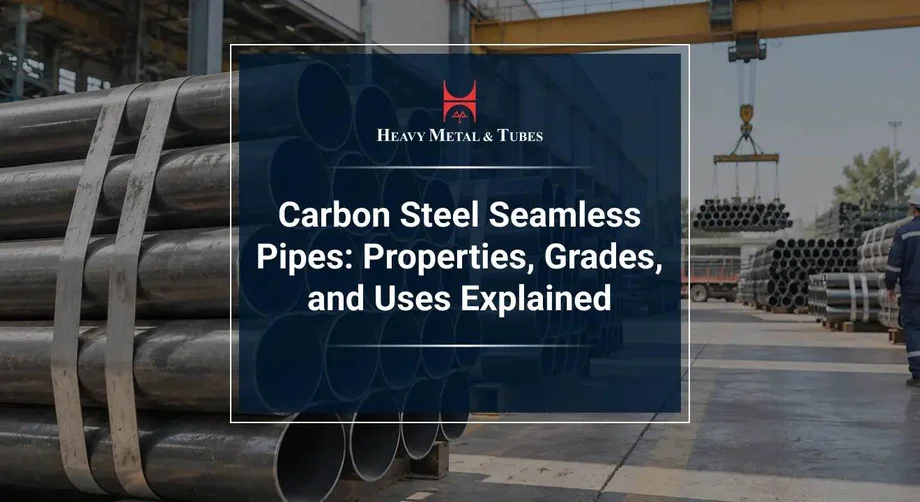
Industrial piping systems require materials that can handle pressure, temperature, and mechanical stress reliably. Carbon steel seamless pipes are widely used for applications where strength, durability, and dependable performance are important. Depending on dimensional and application requirements, buyers may also consider Cold drawn carbon & alloy steel products. Choosing an experienced carbon steel seamless pipe manufacturer can also help businesses source pipes according to required grades, dimensions, testing, and industry standards.
What Are Carbon Steel Seamless Pipes?
A carbon steel seamless pipe is produced from a solid steel billet rather than joining a steel plate or strip through welding. During manufacturing, the billet is heated and pierced to create a hollow section. It is then rolled, sized, and processed to achieve the required diameter, wall thickness, and mechanical properties.
The absence of a longitudinal welded seam is a key feature of a seamless carbon steel pipe. This makes seamless pipes suitable for various applications where pressure handling, strength, and consistent construction are important.
Carbon steel primarily consists of iron and carbon, along with controlled quantities of elements such as manganese, silicon, sulfur, and phosphorus. The exact chemical composition varies according to the selected grade and applicable specification.
How Are Seamless Carbon Steel Pipes Manufactured?
The manufacturing process generally begins with a round steel billet. The billet is heated to a suitable temperature and then pierced to form a hollow shell. The shell passes through rolling and sizing operations to achieve the required dimensions.
Depending on the product specification, additional processes such as heat treatment, cold drawing, straightening, cutting, and end finishing may be carried out. Pipes are then inspected and tested according to the applicable specification.
This controlled manufacturing process allows manufacturers to produce seamless pipes in different sizes, wall thicknesses, grades, and finishes for industrial applications.
Properties of Carbon Steel Seamless Pipes
Carbon steel seamless pipes are selected for several useful properties:
High Strength
Carbon steel can provide good tensile and yield strength, making it suitable for piping systems exposed to mechanical loads and demanding service conditions.
Pressure Resistance
Seamless construction can be beneficial in applications where reliable pressure-containing pipe is required. However, pressure suitability depends on factors such as grade, diameter, wall thickness, temperature, and design requirements.
Good Toughness
Appropriately selected carbon steel grades can provide a useful balance between strength and toughness, which is important for many industrial applications.
Fabrication Compatibility
Carbon steel can generally be cut, formed, and welded using suitable procedures. Fabrication requirements should always be evaluated according to the specific material grade and applicable standards.
Versatility
Carbon steel seamless pipes are available in various grades and dimensions, allowing engineers to select products according to application-specific requirements.
Common Carbon Steel Pipe Grades
Understanding carbon steel pipe grades is important when selecting piping materials. Different grades provide different chemical compositions and mechanical properties.
Some commonly referenced carbon steel specifications include ASTM A106, ASTM A53, ASTM A179, ASTM A192, and ASTM A210. For example, ASTM A106 seamless carbon steel pipe is commonly associated with high-temperature service, while specific carbon steel tube specifications such as ASTM A179 and ASTM A192 are used in heat exchanger and boiler applications.
The appropriate grade should always be selected according to the actual operating conditions, required mechanical properties, dimensions, temperature, pressure, and applicable project specification.
Carbon Steel Pipe Specifications
Clear carbon steel pipe specifications help manufacturers and buyers understand exactly what product is required. Important specification details can include:
- Material grade and specification
- Outside diameter or nominal pipe size
- Wall thickness or schedule
- Pipe length
- Heat treatment requirements
- End preparation
- Dimensional tolerances
- Testing requirements
- Inspection requirements
- Certification and documentation
- Surface finish requirements
Providing these details during procurement can help avoid misunderstandings and ensure the supplied pipe matches the engineering requirements.
Carbon Steel Pipe Standards
Understanding carbon steel pipe standards is another important part of pipe selection. Standards establish requirements related to material composition, manufacturing, dimensions, mechanical properties, testing, and acceptance criteria.
ASTM and ASME standards are commonly referenced in industrial applications, although the exact standard required depends on the product and project. Buyers should verify the applicable specification, standard edition, testing requirements, and certification requirements before placing an order.
For a broader explanation of the relationship between ASTM and ASME requirements, see steel standards for seamless pipes.
Difference Between Stainless Steel and Carbon Steel Pipes
A seamless carbon steel pipe can be used in many industrial sectors where its material properties and specifications meet the application requirements.
Oil and Gas Industry
Carbon steel seamless pipes are used in various piping and process systems within oil and gas facilities. The required grade and dimensions depend on pressure, temperature, fluid characteristics, and project specifications.
Refineries and Petrochemical Plants
Refineries and petrochemical facilities use piping systems for transporting process fluids, hydrocarbons, steam, water, and other utilities. Carbon steel pipes can be used where the material is compatible with the operating environment.
Power Generation
Power generation facilities require piping systems capable of handling different pressure and temperature conditions. Suitable carbon steel grades can be used for applications where their mechanical and thermal properties meet the design requirements.
Boilers and Heat Exchangers
Specific carbon steel tube grades are commonly used in boilers, heat exchangers, condensers, and related equipment. Selection depends on pressure, temperature, heat-transfer requirements, and applicable standards.
General Engineering
Carbon steel seamless pipes are also used in machinery, fabrication, engineering systems, construction-related applications, and industrial equipment.
Difference Between Stainless Steel and Carbon Steel Pipes
Carbon steel and stainless steel pipes differ in chemical composition and corrosion resistance. Carbon steel is generally selected when strength, availability, and application requirements make it suitable, while stainless steel is often considered when greater corrosion resistance is required.
The correct material depends on factors such as fluid characteristics, temperature, pressure, corrosion conditions, maintenance requirements, and project specifications. For a detailed comparison, read about the difference between stainless steel and carbon steel pipes.
Role of Carbon Steel Seamless Pipes
The role of carbon steel seamless pipes is important across industrial piping systems where strength and dependable fluid transportation are required.
However, seamless construction alone does not determine whether a pipe is appropriate for a particular application. Engineers should consider the material grade, wall thickness, dimensions, operating conditions, applicable standards, and testing requirements together.
How to Choose the Right Carbon Steel Seamless Pipe
Before purchasing a carbon steel seamless pipe, buyers should evaluate several factors.
Service conditions: Identify the fluid or gas being transported along with operating pressure and temperature.
Material grade: Select a grade that meets the required chemical and mechanical properties.
Dimensions: Confirm outside diameter, nominal size, wall thickness, schedule, and length.
Standards: Identify the applicable ASTM, ASME, API, EN, DIN, or other project standards.
Testing: Check whether hydrostatic, ultrasonic, eddy current, mechanical, chemical, or other testing is required.
Documentation: For critical applications, review material test certificates, inspection records, heat numbers, and traceability documents.
Why Choose a Carbon Steel Seamless Pipe Manufacturer?
Choosing the right carbon steel seamless pipe manufacturer is important for maintaining product consistency and meeting project requirements. Buyers should evaluate a manufacturer's ability to supply the required grades, dimensions, testing, inspection, and documentation.
A reliable supplier should understand applicable material specifications and be able to provide products according to the technical requirements of the project. Buyers should also verify quality-control processes, testing capabilities, certifications, traceability, and delivery requirements before finalizing a supplier.
Conclusion
Carbon steel seamless pipes offer a combination of strength, versatility, and reliable performance for a wide range of industrial applications. Their use across oil and gas, refineries, power generation, boilers, heat exchangers, and general engineering makes proper material selection especially important.
By evaluating carbon steel pipe grades, specifications, dimensions, standards, testing requirements, and operating conditions, businesses can select piping products that are appropriate for their intended application.
Heavy Metals & Tubes (HMTL) supports industrial requirements with carbon steel and alloy steel products, helping customers source suitable piping solutions with attention to quality, specifications, and documentation.