Sign up with Google
 Sign in with Zoho


NBFCs operate in a lending market where speed, accuracy, customer experience and compliance increasingly determine how efficiently a business can grow. Borrowers expect simple digital applications, quick status updates and convenient repayment options, while lenders need strong controls over credit assessment, documentation, disbursement, servicing and collections.
Digital Lending Software for NBFCs brings these activities into connected digital workflows. Instead of depending on spreadsheets, paper files, email approvals and disconnected applications, an NBFC can use a unified platform to capture applications, verify information, apply credit policies, manage documents, coordinate approvals, disburse loans and monitor repayment performance.
For an NBFC evaluating technology, the objective should not be automation for its own sake. The better goal is to create a lending process that is easier for borrowers, more controlled for employees and more measurable for management. A modern platform should support business rules, integrations, audit trails, role-based access and configurable products while allowing the institution to retain human oversight over important credit decisions.
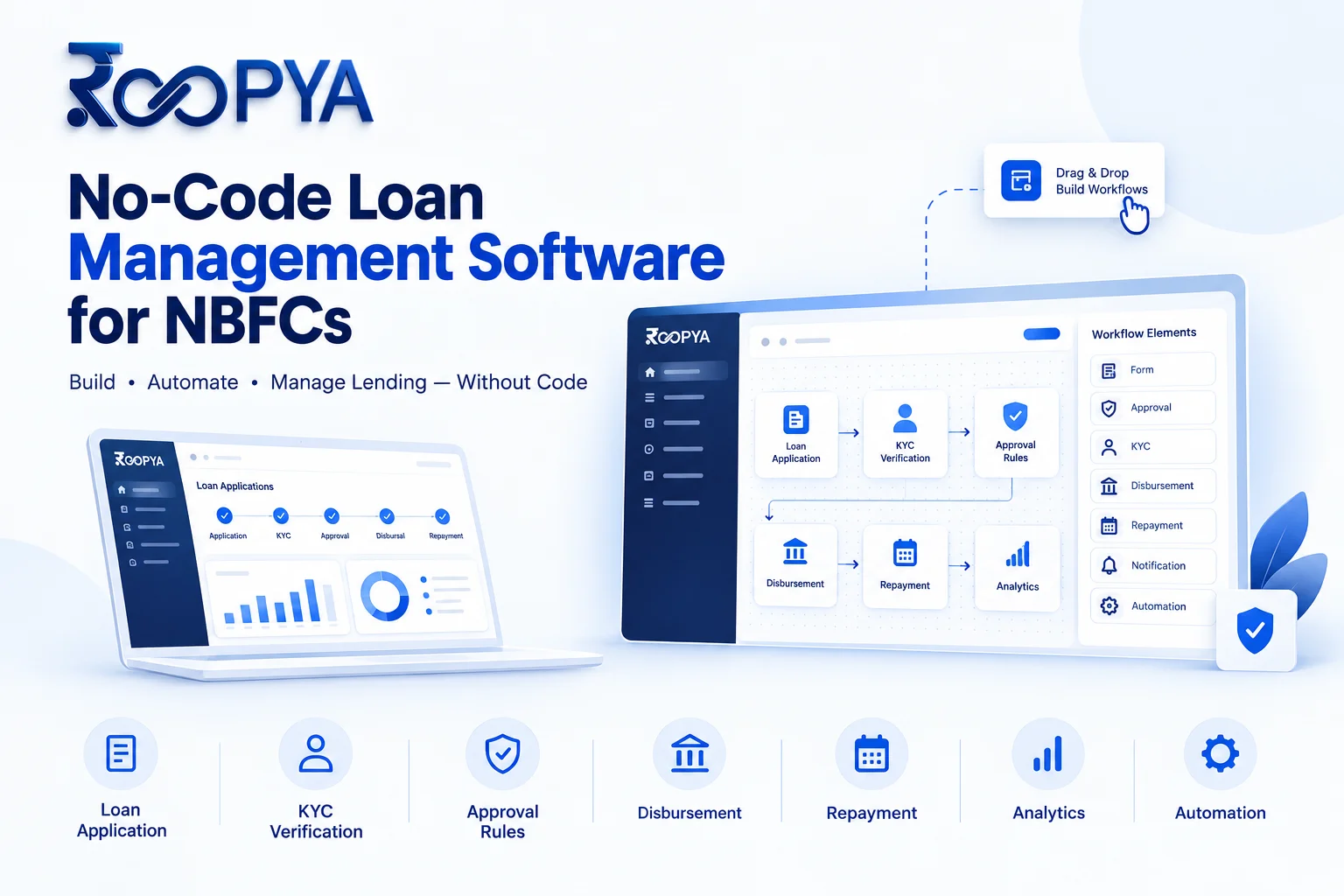
Roopya positions itself as a no-code unified lending infrastructure platform for modern lenders. Its website describes capabilities across loan origination, loan management, collections, analytics, digital applications, document management, automated credit scoring and pre-integrated APIs. Roopya also highlights rapid implementation, pay-as-you-use pricing and configurable lending workflows.
What Is Digital Lending Software for NBFCs?
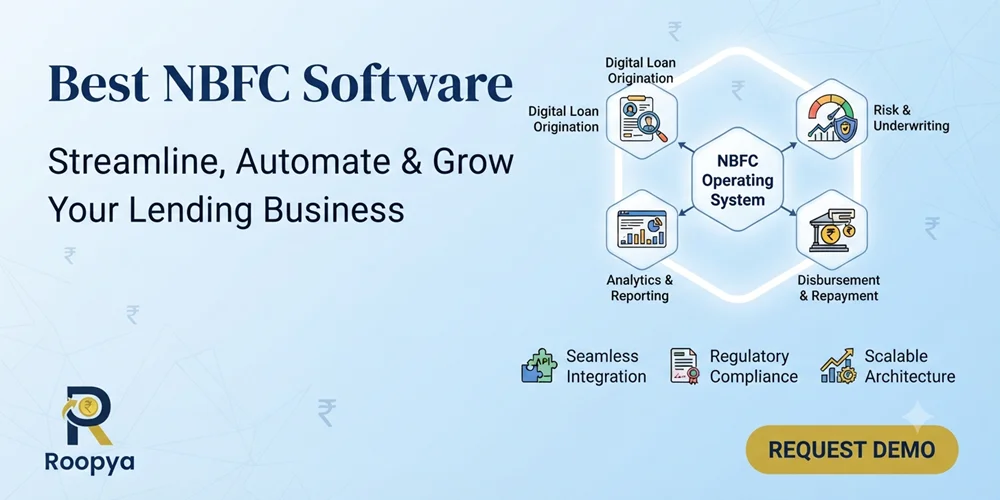
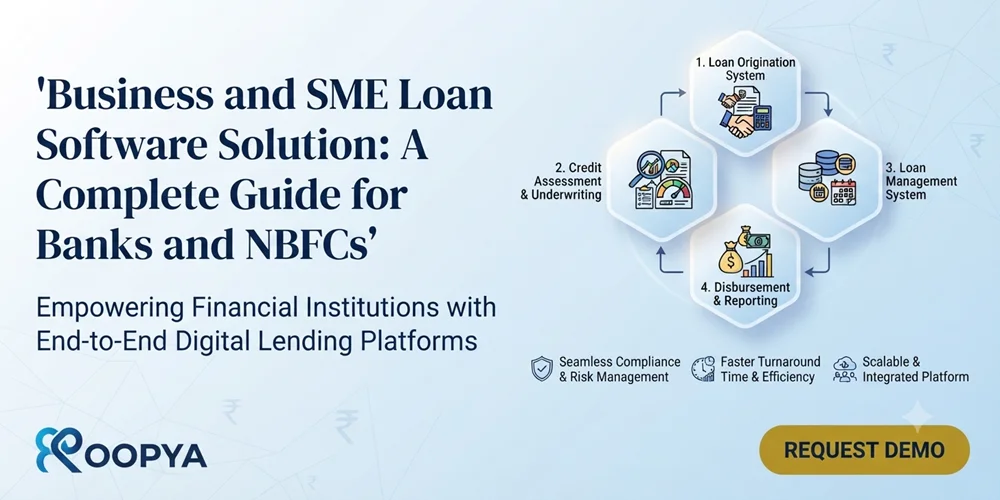
Digital lending software for NBFCs is a technology platform that digitizes and coordinates the loan lifecycle. Depending on the platform, this can include borrower acquisition, application intake, KYC and document verification, credit bureau checks, underwriting, approval, sanction, eSign, disbursement, repayment management, collections, reporting and portfolio analytics.
The key difference between a basic loan application tool and a complete digital lending platform is connected workflow. Data entered at the beginning should be reusable throughout the loan lifecycle, subject to appropriate consent, access controls and regulatory requirements. A borrower should not have to repeatedly submit the same information, while the lender should have a traceable record of actions and decisions.
A strong NBFC lending platform therefore acts as an operational layer between people, policies, data sources and financial systems. It can help operations teams reduce repetitive work, help credit teams apply consistent policies, help compliance teams maintain records, and help management understand portfolio performance.
Why NBFCs Are Moving Toward Digital Lending
Digital transformation has become strategically important for NBFCs for several reasons.
First, borrower expectations have changed. Customers increasingly prefer mobile-first journeys and want to know what is happening with an application without repeated calls to a branch or loan officer.
Second, lending volumes can grow faster than manual teams. When application volumes rise, manual data entry, document checks and follow-ups can become bottlenecks. Automation can allow teams to handle more applications without increasing every operational activity in direct proportion.
Third, credit decisions increasingly rely on multiple data sources. A modern platform can orchestrate bureau information, KYC verification, bank or financial data where permitted, document information and internal policy rules.
Fourth, management needs timely visibility. Digital workflows can produce dashboards and reports around applications, approval rates, turnaround time, disbursements, overdue accounts and portfolio trends.
Finally, digital lending operates within a regulatory environment that requires careful governance. RBI guidance for regulated entities engaged in digital lending includes requirements around borrower disclosures, consent, data collection, privacy, storage and oversight of lending service providers. Technology can support these controls, but software alone does not make an NBFC compliant; governance, policies and operational practices remain essential.
Key Features to Look for in Digital Lending Software for NBFCs
1. 1. Digital Loan Application and Intake
2. The platform should provide configurable application forms for different products and borrower segments. Conditional fields can reduce unnecessary questions and improve data quality.
3. 2. Digital KYC and Verification
4. A modern workflow can connect to appropriate identity and verification services. The objective is to reduce repetitive manual checks while maintaining consent, auditability and exception handling.
5. 3. Document Management
6. Every application should have a structured digital file for documents, verification results, approvals and related records. Version control, access permissions and audit trails are important for operational discipline.
7. 4. Credit Bureau and Credit Decisioning
8. The platform should support bureau integrations and configurable eligibility rules. Credit teams should be able to define policies such as score thresholds, income criteria, exposure limits and other product-specific conditions.
9. 5. Business Rule Engine
10. A business rule engine allows lenders to change policy logic without rebuilding the entire application. This is especially useful when products, risk appetite or approval matrices change.
11. 6. Automated Workflows
12. Tasks such as document requests, verification, approval routing, sanction generation and notifications can be automated. Exceptions should be routed to the appropriate employee rather than disappearing into an automated process.
13. 7. Digital Sanction and Documentation
14. eSign-enabled workflows and digital documentation can reduce turnaround time and paper dependency where the relevant legal and operational requirements are satisfied.
15. 8. Disbursement Management
16. The platform should connect approved loans with appropriate disbursement workflows and maintain a clear record of the transaction.
17. 9. Loan Management
18. After disbursement, the system should support schedules, repayments, interest calculations, part-payments, closures and customer servicing.
19. 10. Collections Management
20. Digital collections workflows can help prioritize overdue accounts, assign tasks, send reminders and track outcomes.
21. 11. Analytics and Reporting
22. Dashboards should provide useful information about funnel performance, turnaround time, approvals, disbursements, delinquency and portfolio trends.
23. 12. Integrations and APIs
24. An API-first architecture makes it easier to connect bureaus, KYC providers, eSign services, payment systems, accounting platforms and other approved ecosystem services.
Benefits of Digital Lending Software for NBFCs
A well-designed digital lending platform can improve the economics and control of lending operations.
Faster processing: Automated workflows can remove avoidable handoffs and reduce repetitive data entry.
Lower operational friction: Employees spend less time searching for documents, updating spreadsheets and manually moving applications between teams.
Better borrower experience: Digital forms, application tracking, notifications and electronic documentation can make the journey easier to understand.
Consistent credit policy execution: Rule-based workflows can apply defined criteria consistently while still allowing controlled human review.
Improved visibility: Managers can see where applications are stuck, how long stages take and how products or channels are performing.
Scalability: A digital operating model can support growing volumes without requiring every process to become increasingly manual.
Stronger auditability: System logs, approval histories and structured records can make it easier to understand who performed an action and when.
Better portfolio management: Integrated origination and servicing data can give teams a more complete view from application through repayment.
These benefits depend on implementation quality. A poorly configured platform can simply digitize a bad process. NBFCs should first map their lending journeys, policies, exception cases and compliance requirements, then configure technology around those needs.
How Digital Lending Software Supports the Loan Lifecycle
A typical digital lending journey begins with lead or application capture. The borrower provides the required information through a web, mobile, partner or branch-assisted interface.
The next stage is verification. Depending on the product and applicable requirements, the workflow may include KYC, document checks, bureau pulls, income assessment, bank-data analysis and fraud controls.
The credit engine then applies eligibility and underwriting rules. Straightforward applications may progress automatically, while cases that need additional review can be routed to credit officers.
Once approved, the platform can generate sanction and documentation workflows. Where appropriate, electronic signing can reduce turnaround time.
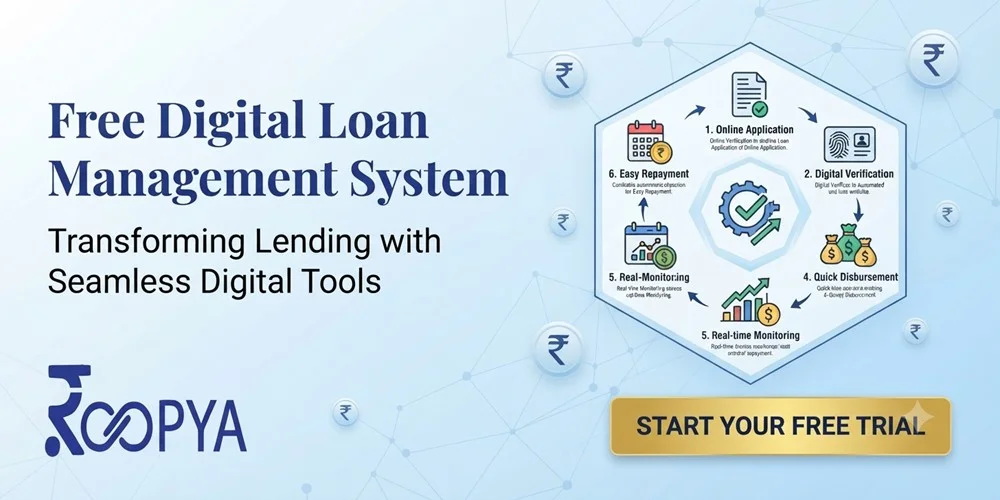
Disbursement follows the lender's approved process. After disbursement, the loan moves into servicing, where the platform manages schedules, receipts, customer communication and account status.
If an account becomes overdue, collections workflows can prioritize action, allocate cases and track follow-ups. At portfolio level, analytics can help management identify trends and risk signals.
The value comes from continuity: one controlled digital journey rather than separate systems that require repeated data entry and manual reconciliation.
Compliance, Data Governance and Responsible Digital Lending
NBFCs should evaluate digital lending technology with compliance and governance in mind from the beginning. RBI materials on digital lending identify requirements including disclosure of the all-inclusive cost of credit through Annual Percentage Rate (APR), appropriate handling of fees paid to Lending Service Providers, need-based data collection, explicit borrower consent, privacy policies, restrictions around storage of personal information, India-based data storage requirements and oversight of LSPs.
A technology platform can help operationalize these requirements through configurable consent flows, audit trails, role-based access, controlled data capture and reporting. However, the NBFC remains responsible for establishing appropriate policies, controls and oversight.
Before selecting a vendor, teams should ask: - Where is borrower data stored? - What data is collected at each stage and why? - How is consent captured and recorded? - Can the organization audit data access and workflow actions? - How are third-party integrations governed? - Can compliance teams configure or monitor required disclosures? - What controls exist for user permissions and sensitive documents? - How are changes to credit policies approved and recorded?
Responsible lending should remain the foundation. Automation should make good processes stronger, not make questionable processes faster.
Why Roopya Can Be Considered for NBFC Lending Operations
Roopya's platform is positioned around a unified, no-code lending infrastructure for modern lenders. Its website highlights a combination of Loan Origination System (LOS), Loan Management System (LMS), collections and analytics capabilities.
For NBFCs, several platform characteristics may be particularly relevant. Roopya states that it supports digital application forms, automated credit scoring, document verification, real-time decisioning, digital loan files and lending analytics. It also highlights 300+ pre-integrated APIs and 20+ pre-configured loan products.
Roopya also emphasizes rapid deployment and business-user configuration. A no-code approach can be useful when credit and operations teams need to change workflows or policies without waiting for a conventional software development cycle.
The platform's website states that it can support lending products such as personal loans, business loans, home loans, gold loans, auto loans, payday or salary advances, MSME/SME loans and microfinance loans. NBFCs should validate the exact features, integrations, commercial terms, security controls and compliance responsibilities applicable to their specific use case before implementation.
For lenders that want a single environment connecting origination and downstream lending operations, this unified approach can reduce fragmentation and create a more consistent borrower and employee experience.
How to Choose the Right Digital Lending Software for an NBFC
Start with business requirements rather than a feature checklist. Map the full journey for each major loan product and identify manual steps, bottlenecks, duplicate data entry and common exceptions.
Next, assess configurability. Lending products evolve, and the software should allow business teams to adjust fields, workflows, rules, approval levels and communications without constant custom development.
Integration capability is equally important. Ask for details about API documentation, supported providers, integration ownership, failure handling and reconciliation.
Security and governance should be evaluated carefully. Review access controls, encryption practices, audit logs, data retention, backups, disaster recovery and vendor access.
Also assess the customer experience. A technically powerful system can still perform poorly if application forms are confusing or borrowers cannot track their status.
Finally, test real scenarios. Do not rely only on a product demonstration. Ask the vendor to show a complete journey including a normal application, an exception, a rejected application, a document mismatch, a failed integration and an overdue account.
Implementation Roadmap for NBFCs
A practical implementation can follow five stages.
Stage 1: Process discovery. Document products, borrower journeys, approval matrices, documents, integrations and reporting needs.
Stage 2: Configuration. Set up products, fields, workflows, rules, user roles, notifications and approval structures.
Stage 3: Integration. Connect required KYC, bureau, eSign, payment, banking, accounting and communication services.
Stage 4: Testing. Test functional workflows, data validation, exception handling, access permissions, reporting and operational reconciliation.
Stage 5: Rollout and optimization. Start with a controlled launch, monitor turnaround time and error rates, collect feedback, and improve workflows based on actual usage.
Training is important throughout. Credit, operations, collections, compliance and management users need role-specific guidance. A successful implementation is not simply a technology deployment; it is a change in the operating model.
Conclusion
Digital Lending Software for NBFCs is becoming an important part of a scalable lending operating model. The right platform can connect origination, verification, underwriting, documentation, disbursement, servicing, collections and analytics while reducing unnecessary manual work.
For NBFCs, the best solution is not necessarily the platform with the longest feature list. It is the platform that fits the institution's products, risk policies, borrower journeys, integrations and governance requirements.
Roopya offers a no-code, API-oriented lending infrastructure designed for Indian lenders, with capabilities spanning loan origination, loan management, collections and analytics. Its focus on configurable workflows and pre-integrated services makes it worth evaluating for NBFCs seeking to modernize their lending operations.
The most effective digital lending strategy combines technology with responsible lending, strong credit governance, data discipline and continuous process improvement. When these pieces work together, NBFCs can build lending journeys that are faster for customers, more efficient for teams and easier to manage at scale.
Frequently Asked Questions
25. 1. What is digital lending software for NBFCs?
26. It is software that digitizes and connects the loan lifecycle, including application intake, verification, underwriting, approval, documentation, disbursement, servicing, collections and reporting.
27. 2. What features should NBFC digital lending software include?
28. Core capabilities typically include digital applications, KYC and verification integrations, document management, credit bureau connectivity, business rules, workflow automation, eSign, disbursement, loan servicing, collections, analytics and APIs.
29. 3. Can digital lending software automate credit decisions?
30. Yes. Platforms can apply configurable eligibility and credit rules and can route cases for human review. Automated decisioning should operate within the NBFC's approved credit policy and governance framework.
31. 4. Is digital lending software useful for small and growing NBFCs?
32. Yes. Configurable cloud platforms can help smaller lenders avoid building every capability from scratch and can provide a path to scale operations as volumes increase.
33. 5. Does digital lending software replace an LMS?
34. A complete digital lending platform may include both origination and loan management capabilities. An LMS generally focuses on post-disbursement servicing, while digital lending software can cover a broader lifecycle.
35. 6. Can digital lending software integrate with KYC, bureau and payment providers?
36. API-based platforms can integrate with external services. The exact providers and integrations depend on the vendor, product and lender requirements.
37. 7. Is digital lending software automatically RBI compliant?
38. No. Software can support compliance controls, but the NBFC remains responsible for regulatory compliance, policies, governance, vendor oversight and responsible lending practices.
39. 8. How does digital lending software improve customer experience?
40. It can simplify application forms, reduce repeated document requests, provide digital status updates, enable electronic documentation and support faster processing.
41. 9. What is no-code lending software?
42. No-code lending software allows business users to configure workflows, fields, rules and other processes through visual interfaces rather than relying on custom programming for every change.
43. 10. How can an NBFC evaluate Roopya?
44. An NBFC can review Roopya's digital lending capabilities, request a demonstration, map its own loan journeys against the platform, validate required integrations and assess security, compliance, pricing and implementation requirements.