Sign up with Google
 Sign in with Zoho

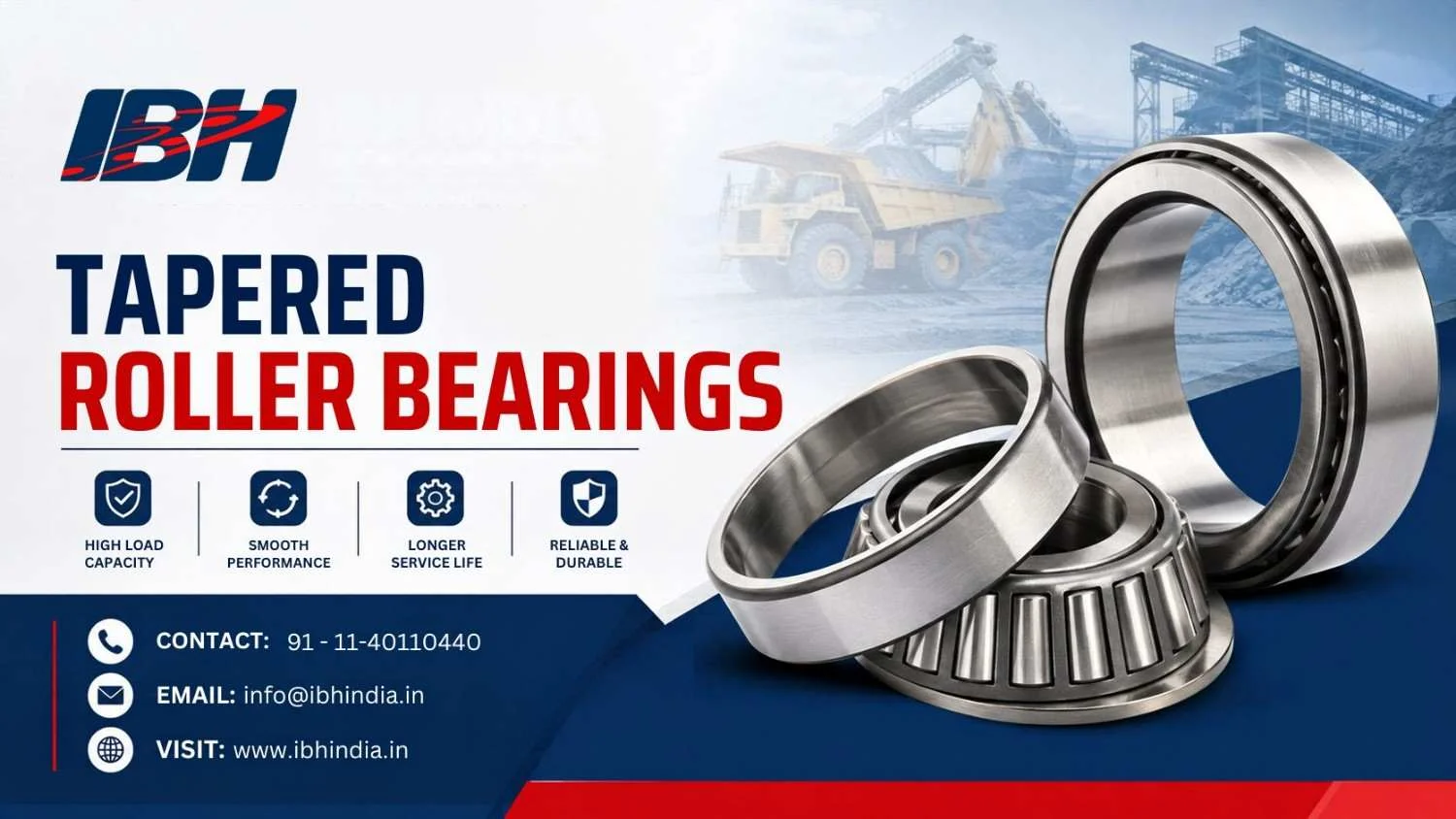
A crane wheel bearing in a scrapyard outside Bhilai lasted eleven months before it needed replacing, and the maintenance head there was convinced that was just how long bearings lasted on that equipment. It wasn't. It was the wrong bearing for the combined radial and thrust load that wheel assembly actually carried. Tapered roller bearings exist for exactly that kind of load profile, and when they're specified correctly, they outlast a mismatched substitute by a wide margin. The gap between what a bearing could do and what it actually delivers usually comes down to one decision made early and never revisited.
What Makes the Tapered Design Suited to Heavy Combined Load
The angled raceway on a tapered roller bearing lets the rollers carry radial load and thrust load through the same contact surface simultaneously. That's structurally different from a straight cylindrical roller bearing, where radial capacity is the main strength and axial load handling is limited to specific flanged configurations.
Where Heavy Combined Load Shows Up
- Crane wheels and gantry systems — radial load from the structure's weight combined with axial thrust from lateral movement and braking forces
- Vehicle and wheel hub assemblies — cornering forces generate axial load on top of the constant radial load from vehicle weight
- Rolling mill roll necks — heavy radial load from the rolling process combined with axial thrust from material feed direction
- Large gearbox pinion shafts — helical gear meshing generates axial thrust that a straight radial bearing simply isn't built to absorb alongside the radial component
The Capacity Detail Buyers Often Miscalculate
Load rating charts list dynamic and static capacity, and most buyers stop there. What gets missed is that dynamic capacity assumes a specific speed and lubrication regime — push a heavily loaded bearing toward its rated capacity while running slower than the rating assumes, or with marginal lubrication, and effective life drops well below the calculated figure. A bearing rated for a theoretical service life under ideal conditions is not the same bearing under a dusty, high-vibration crane environment running intermittent duty cycles. Buyers who select purely off the static load number without adjusting for actual operating conditions are working from a number that doesn't reflect their equipment.
What Getting This Right Protects Financially
Choosing correctly on heavy-load applications isn't about a vague reliability claim. It ties directly to costs that show up on your maintenance ledger whether anyone's watching or not.
Extended service life on crane wheels, roll necks, and gearbox pinions reduces the frequency of shutdowns that heavy equipment maintenance schedules are already tight around, since these components often require crane access or partial disassembly just to reach the bearing. Correct load-direction matching also reduces collateral wear on adjacent components — a bearing struggling under axial load it wasn't designed for transmits extra stress into the housing and shaft, accelerating wear across parts that had nothing to do with the original selection mistake. There's a safety consideration specific to heavy-load applications too: bearing failure on a crane wheel or lifting mechanism carries risk beyond downtime, and getting the spec right the first time isn't optional in the way it might be on lighter equipment. Genuine, traceable stock protects your warranty position when a heavy-load failure does get investigated, since grey-market bearings rarely hold up to that scrutiny. And standardizing correctly specified bearings across similar heavy equipment reduces the SKU sprawl your stores team otherwise ends up managing.
Why Sourcing Location Matters More on Heavy-Load Equipment
Heavy-load bearings tend to be larger, heavier to ship, and slower-moving stock for most Nachi Tapered Roller Bearings Distributors. That combination makes location a real factor in how fast you're back in operation.
Being based in India, with reach into the industrial corridors across the north and central belt, keeps realistic transit times for buyers running steel operations in Chhattisgarh and Jharkhand, crane and material handling equipment across industrial hubs in Punjab and Haryana, and paper mill gearboxes scattered through Uttar Pradesh. A supplier further away might quote a comparable price, but larger tapered bearings often need special freight handling due to weight, and that adds real days to a delivery window a stalled crane can't absorb. Regional stock also limits the transit exposure that can damage a heavy bearing before it even reaches the site — vibration and rough handling over longer routes are harder on a large tapered bearing than on smaller industrial components.
About Us
We supply premium bearings across India, and heavy-load applications — crane systems, rolling mill roll necks, and large gearbox assemblies — make up a real share of what our steel and heavy engineering customers order. Our stock in the larger tapered series grew specifically because that's where sourcing gets harder for most buyers, not easier.
Conclusion
Tapered roller bearings earn their reputation on heavy-load equipment because the design carries radial and axial load together, but only when the selection accounts for actual duty cycle and load direction, not just a catalog capacity number. Buyers who match the bearing to real operating conditions get the extended service life the design is capable of. Get that match right, and heavy-load equipment stops losing time to bearings that were never built for the job they were given.
Frequently Asked Questions
Why do tapered roller bearings handle heavy combined loads better than other bearing types?
The angled raceway design lets the rollers carry radial and axial load through the same contact points simultaneously, which most other bearing types can't do without a specialized configuration. That makes them a natural fit wherever thrust and radial force arrive together, which is common on crane wheels, roll necks, and gear-driven equipment.
Are you Nachi Tapered Roller Bearings Suppliers in India?
Yes, we operate as Nachi Tapered Roller Bearings Suppliers in India, and the larger heavy-load series we stock carry the same traceable sourcing as the rest of our range.
How do I verify a heavy-load bearing supplier is genuine and not selling unverified stock?
Ask for batch-level documentation on that specific shipment, not a general assurance about quality. Established Nachi Tapered Roller Bearings Distributors in India provide this without resistance, and on heavy-load equipment, that traceability matters even more given the cost of a failure.
Can a smaller tapered roller bearing be used on heavy equipment if the load technically fits within its static rating?
Technically fitting within a static rating isn't the same as being correctly specified for continuous heavy duty. Actual service life depends on duty cycle, speed, and lubrication too, and a bearing running near its static limit continuously wears out far faster than one selected with real operating margin.
What's the typical lead time for larger heavy-load tapered bearing sizes?
For sizes we hold in current stock, dispatch generally happens within a few business days. For less common oversized series, it takes longer, and we'll say that clearly upfront rather than commit to a date we can't guarantee.