Sign up with Google
 Sign in with Zoho

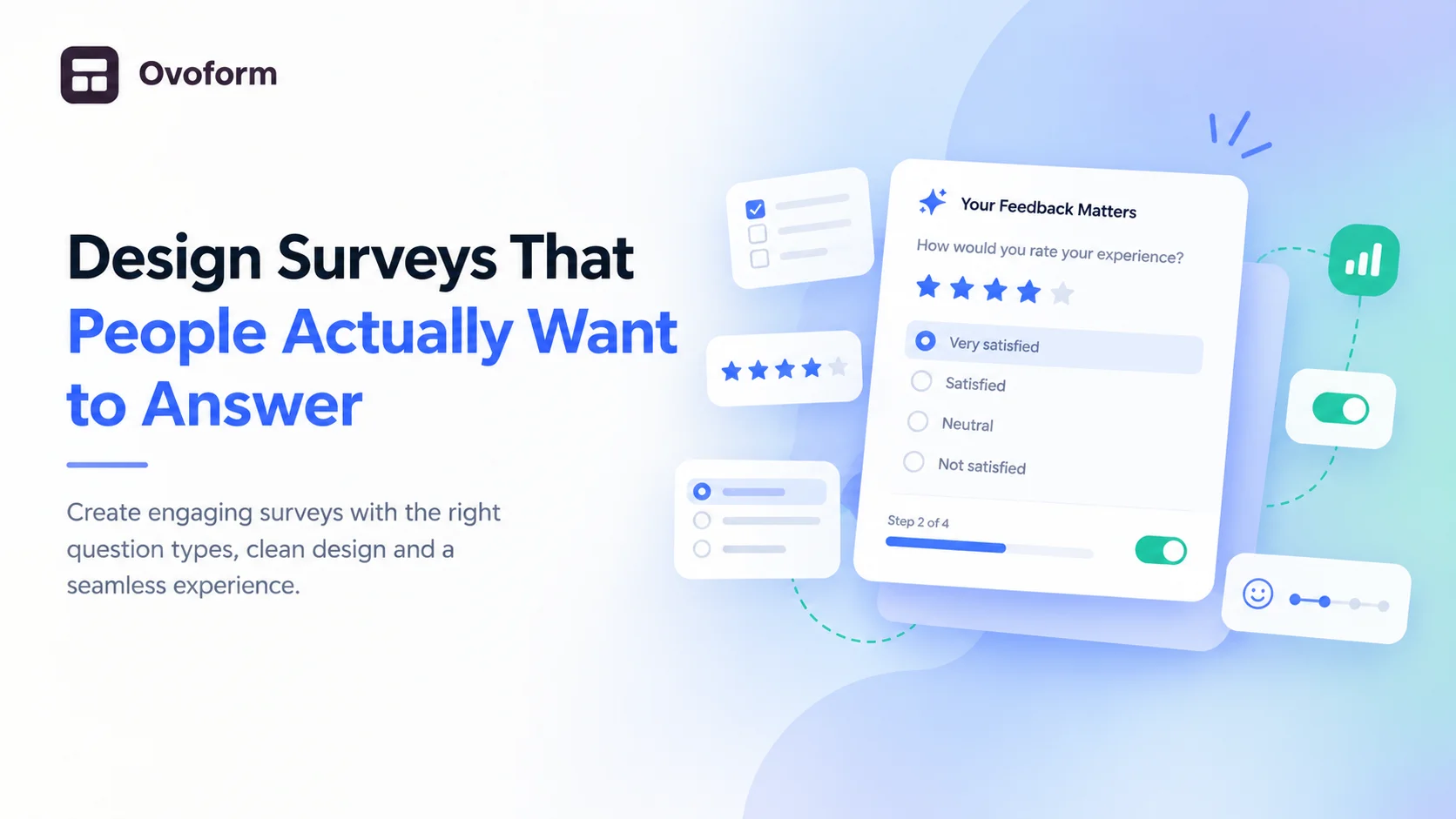
Ever filled out a survey and given up halfway? That's usually not your fault — it's a sign of poor survey design. Whether you're a business owner, researcher, or marketer, how you design your survey directly affects the quality (and honesty) of the responses you get.
Good survey design isn't just about asking questions — it's about asking the right questions, in the right way, at the right time.
What is Survey Design?
Survey design refers to the process of planning and structuring a survey so it collects accurate, unbiased, and actionable data. It covers everything from question wording and order, to format, length, and visual layout.
Why Survey Design Matters
A poorly designed survey leads to:
- Low completion rates
- Biased or misleading answers
- Confused respondents
- Data you can't actually use
A well-designed survey, on the other hand, feels quick, clear, and even engaging — which means people are more likely to finish it and answer honestly.
Core Principles of Good Survey Design
- Keep it short and focused – Every question should have a clear purpose. Cut anything that doesn't directly serve your goal.
- Use simple, neutral language – Avoid leading or loaded questions (e.g., "Don't you agree that...?").
- Logical question flow – Start with easy, general questions before moving to specific or sensitive ones.
- Mix question types – Combine multiple-choice, rating scales, and open-ended questions to keep respondents engaged.
- Mobile-friendly layout – Most people fill out surveys on their phones, so the design must adapt to smaller screens.
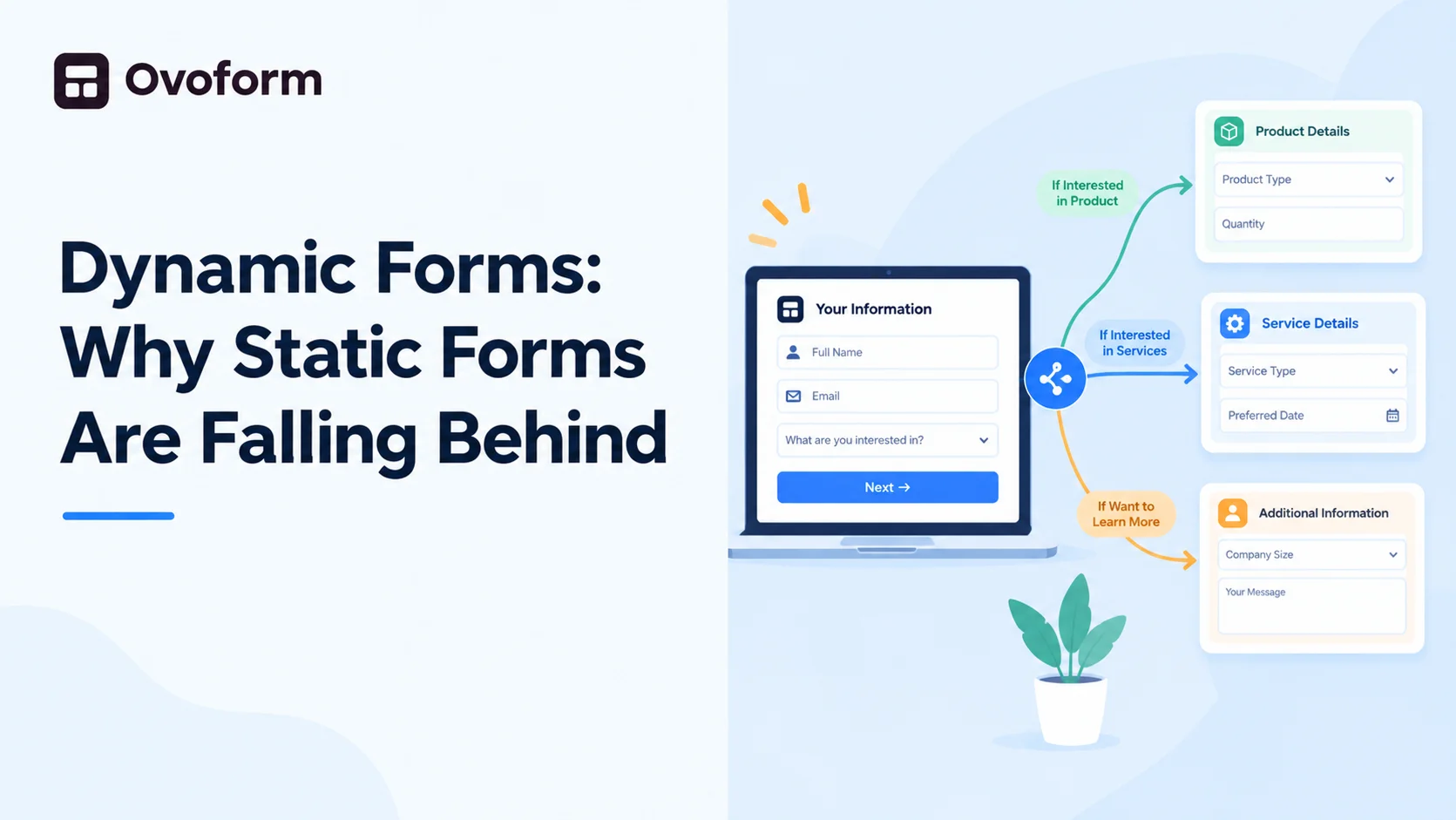
- Use conditional logic – Show relevant follow-up questions based on previous answers, instead of a one-size-fits-all form.
- Test before you launch – Run your survey with a small group first to catch confusing or biased questions.
Common Survey Design Mistakes to Avoid
- Asking two questions in one ("How satisfied are you with our price and quality?")
- Using jargon or technical terms
- Making every question mandatory
- Ignoring visual hierarchy and spacing
- Skipping a thank-you or confirmation message at the end
How AI is Changing Survey Design
Modern tools now use AI to auto-generate survey questions, suggest branching logic, and even flag potentially biased wording. Platforms like Ovoform are leading this shift — making it easier for anyone to build a professional, effective survey without needing a research background.
Final Thoughts
Great survey design isn't complicated — it just needs intention. Focus on clarity, brevity, and empathy for the person answering, and your response rates (and data quality) will improve dramatically. If you want to experience how simple good survey design can be, tools like Ovoform are a great starting point.