Sign up with Google
 Sign in with Zoho

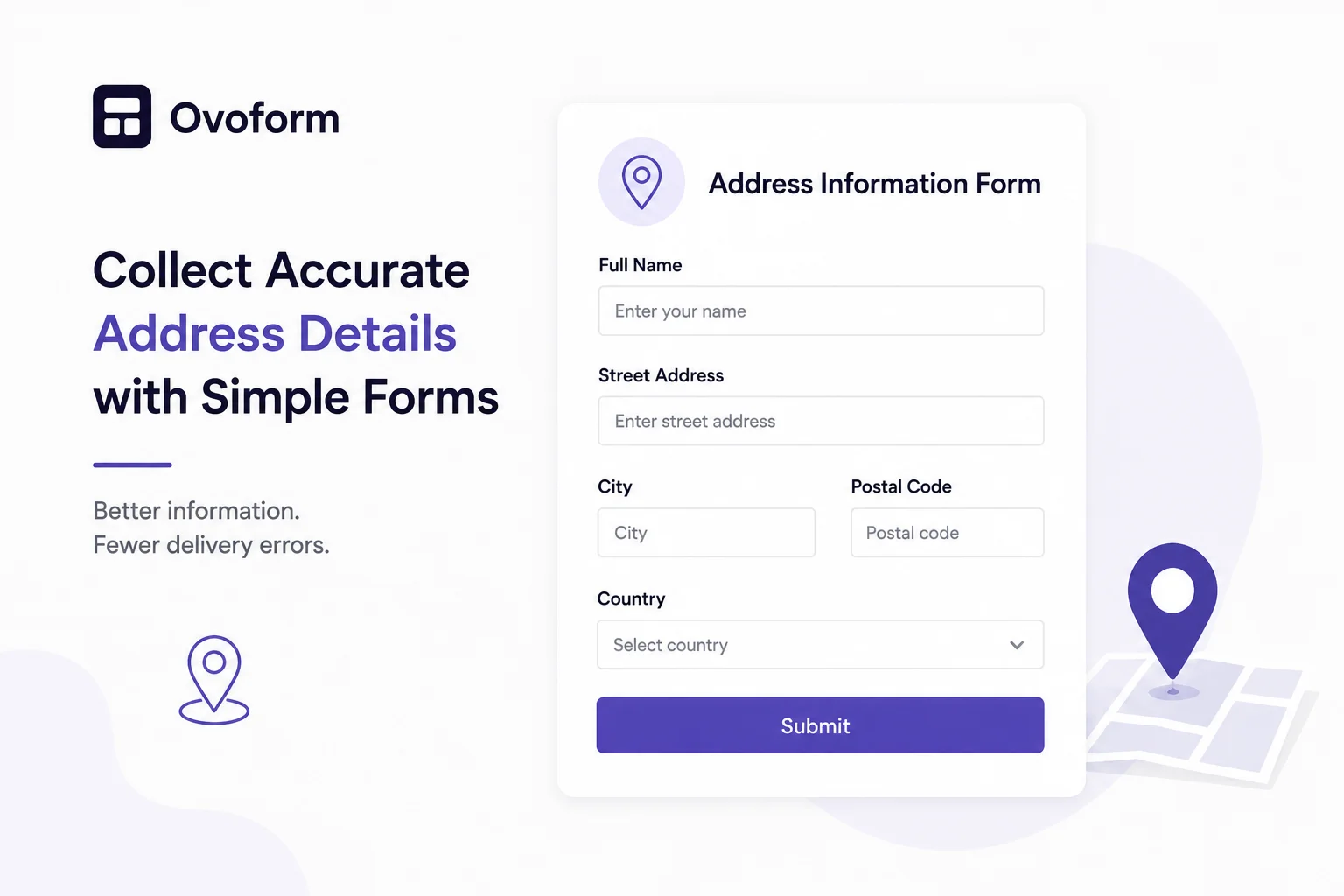
Getting a customer's address sounds simple, but it can become a headache when the details are incomplete or entered incorrectly.
Think about a delivery address with a missing apartment number, or a postal code with one wrong digit. A small mistake like that can lead to a delayed delivery or a follow-up call.
This is where a well-planned address form can help.
Ask for What You Actually Need
The first step is deciding which details are important for your business.
For most businesses, an address form may ask for:
- Full name
- Street address
- Apartment or unit number
- City
- State or region
- Postal code
- Country
- Phone number
You don't necessarily need every field for every customer. If a piece of information isn't useful for your process, there's no reason to make people enter it.
Make Every Field Easy to Understand
Nobody wants to stop halfway through a form because they're unsure what a question means.
Labels such as Street Address, City, and Postal Code are straightforward and familiar. They tell people exactly what to enter.
If you work with customers from different countries, a country selection can also help keep the information consistent.
The goal is simple: customers should be able to look at a field and immediately know what belongs there.
Give Each Part of the Address Its Own Space
Addresses are often shared in different formats when people send them through email or chat.
One person might write everything on one line. Another might leave out a unit number or put the postal code in the wrong place.
A form avoids some of this confusion by giving each part of the address its own field. It also makes the final information much easier for a team to read and use.
Don't Forget About Phone Users
A lot of people fill out forms from their phones. If they have to pinch, zoom, or struggle to select a field, they may decide not to finish.
Keep the layout clean and make the fields comfortable to use on a smaller screen. There's also no need to fill the form with questions that aren't relevant.
A shorter form is often a better form.
Keep the Information in One Place
Once a business starts receiving addresses from many customers, managing them manually can become difficult.
Having a consistent format makes it easier to find customer details when they're needed for deliveries, invoices, service visits, or records.
An Address Information Form can give businesses a starting point instead of building the whole process from scratch.
Keep It Flexible
Your information needs may change as your business grows. You might start serving customers in another country or decide that you need one more detail during checkout.
That's why it helps to use a form that can be changed when needed.
With Ovoform, businesses can create and customize online forms for address collection and other everyday workflows.
Final Thoughts
There isn't anything complicated about collecting an address. The challenge is collecting it correctly and consistently.
A clear form can make that easier for both sides. Customers know what to enter, while businesses receive information in a format that's easier to use.
Sometimes, improving a small part of the customer journey—like an address form—can save a surprising amount of time later.













.webp)