Sign up with Google
 Sign in with Zoho

Modern electronic systems must process more information, respond more quickly, and support increasingly specialised functions. Fixed-function hardware remains useful, but it can become restrictive when engineers need to modify system behaviour or integrate new features. This is where programmable logic offers a significant advantage.
By allowing digital functions to be configured within a semiconductor device, programmable logic gives designers greater freedom to build control systems, communication interfaces, processing engines, and specialised hardware. This flexibility supports industries ranging from industrial automation and transportation to telecommunications, instrumentation, and embedded computing.
How Do Programmable Logic Circuits Give Engineers More Design Freedom?
Programmable Logic Circuits allow engineers to define the behaviour of digital hardware according to the needs of a particular application. Instead of selecting many separate logic components and physically connecting them to create a function, designers can configure internal resources within one programmable device.
This makes it possible to adjust the system as requirements evolve. Logic functions, signal paths, timing behaviour, and digital interfaces can often be changed through a revised configuration rather than a complete redesign of the printed circuit board.
The result is a more adaptable development process that can support testing, optimisation, and future expansion.
Why Is Reconfigurable Hardware Different From Fixed Hardware?
Fixed digital components are designed to perform predetermined functions. Their internal architecture generally remains unchanged throughout their working life.
Programmable hardware offers a different approach. Its internal logic can be arranged according to the required design, allowing one device family to serve many different applications.
This flexibility may help engineers:
- Reduce dependence on multiple fixed-function ICs
- Adapt hardware to different product versions
- Introduce new digital functions more easily
- Correct or improve logic during development
- Create application-specific processing structures
- Simplify complex control architectures
These advantages are especially valuable when product requirements may change over time.
What Digital Functions Can Programmable Logic Perform?
Programmable devices can perform a wide variety of digital operations, from basic switching decisions to sophisticated data processing.
How Can Logic Operations Control a System?
Basic Boolean operations form the foundation of programmable digital hardware. AND, OR, NOT, XOR, and related logic functions can be combined to create complex decision-making structures.
These structures can monitor multiple inputs and determine how outputs should respond under specific conditions.
How Can Timing Functions Improve Control?
Programmable devices can also implement counters, timers, clock dividers, pulse generators, and sequencing logic.
Precise timing is particularly important in industrial automation, communications, data acquisition, and embedded systems where devices must operate in a coordinated manner.
Why Are PLDs Useful for Simpler Designs?
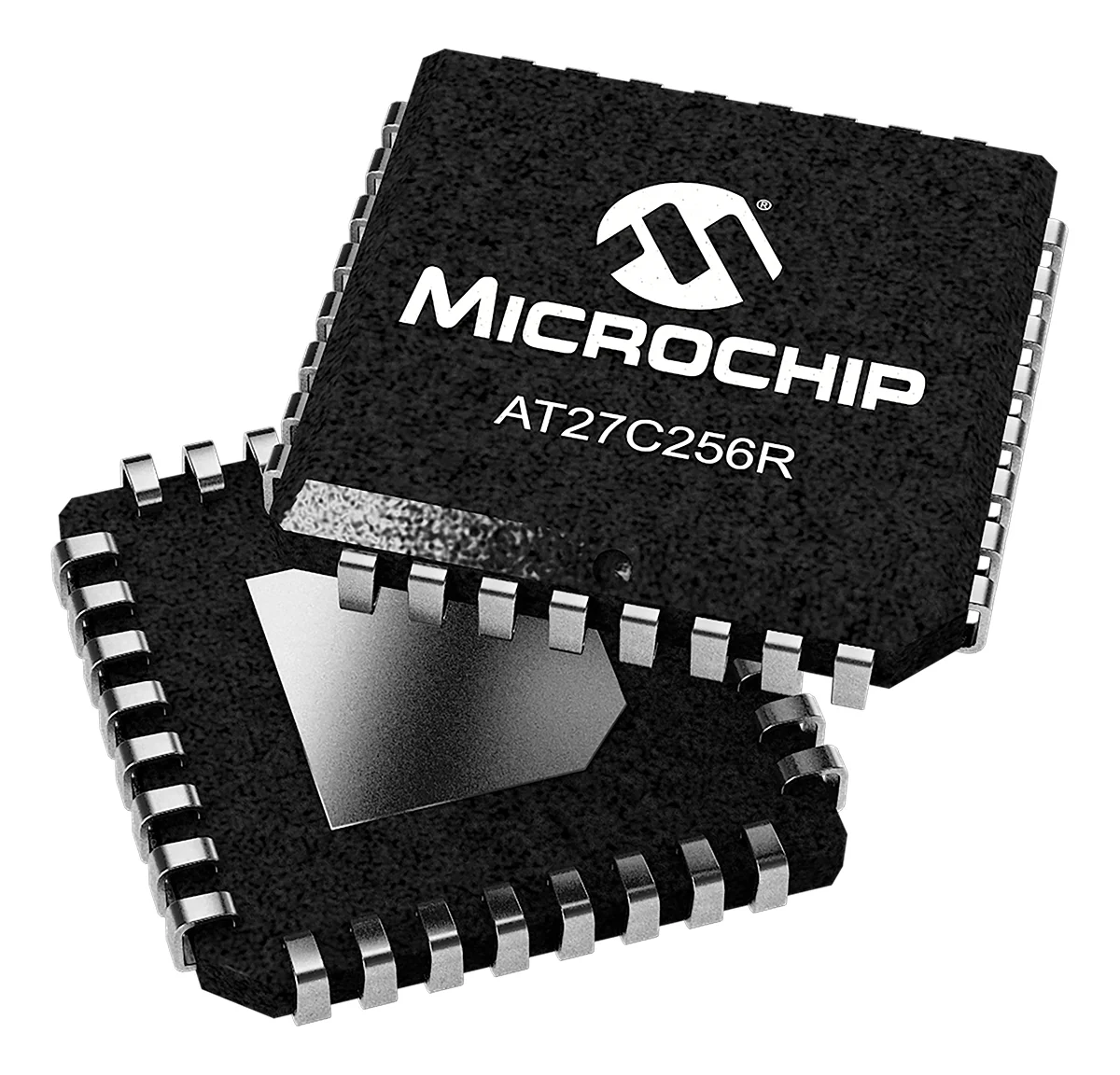
Programmable Logic Devices are suitable for applications where the required digital logic is relatively straightforward.
They can be used to replace several basic logic components while maintaining a compact circuit design. Common tasks include signal decoding, address selection, interface control, and basic sequencing.
PLDs can be especially practical when engineers need a customised function but do not require the capacity of a larger programmable device.
How Do CPLDs Handle More Complex Control?
Complex Programmable Logic Devices provide additional logic resources compared with basic PLDs.
They contain multiple programmable blocks connected through internal routing networks, allowing designers to implement more sophisticated control functions.
CPLDs are often used for:
- Power-up sequencing
- Interface conversion
- Communication management
- Digital system supervision
- Industrial control
- Embedded hardware coordination
Their predictable operating characteristics can be valuable in systems requiring reliable timing.
Why Do FPGAs Offer Greater Processing Capability?
Field Programmable Gate Arrays are designed for more demanding applications.
An FPGA can contain a large number of configurable logic resources alongside memory, arithmetic processing blocks, clock-management circuits, and high-speed interfaces. Some devices also integrate processor cores and specialised acceleration resources.
Their architecture allows many processing operations to occur simultaneously rather than waiting for one instruction stream to complete.
How Does Parallel Processing Improve Performance?
Parallel processing is one of the most important advantages of programmable hardware.
A conventional processor normally executes instructions according to a sequence. Programmable logic can create several independent hardware paths that operate at the same time.
This capability is particularly valuable for:
- Real-time video processing
- Machine vision
- High-speed communication
- Industrial measurement
- Digital signal processing
- Motor control
- Network packet handling
- Data acquisition
Parallel execution can increase throughput while reducing delays in time-sensitive applications.
Where Are Programmable Logic Devices Used in Real Systems?
Programmable logic appears in many types of electronic equipment because its functionality can be tailored to individual applications.
Common sectors include:
- Factory automation
- Telecommunications
- Automotive systems
- Aerospace electronics
- Medical instrumentation
- Test and measurement
- Networking equipment
- Robotics
- Energy systems
- Security technology
- Embedded computing
In each case, programmable hardware can provide customised digital control while supporting the specific timing and processing requirements of the system.
How Can Programmable Logic Improve Industrial Machinery?
Industrial machines often need to monitor several inputs and control numerous outputs at once.
A programmable device can receive data from sensors, process encoder signals, manage communication links, generate control signals, and coordinate different sections of a machine simultaneously.
This hardware-level response can be useful in applications where predictable timing is important, including robotic equipment, automated inspection systems, motion-control platforms, and high-speed production machinery.
Why Can Programmable Logic Reduce Hardware Complexity?
A traditional digital design may require multiple logic ICs to perform separate functions. Every additional component adds connections, board space, and potential design complexity.
Programmable logic can combine many of these operations inside one device.
Potential benefits include:
- Lower component count
- Reduced PCB space
- Simplified signal routing
- Easier hardware modification
- Better functional integration
- Fewer interconnections between separate ICs
The actual benefit depends on the size and requirements of the application, but integration can significantly simplify suitable designs.
What Factors Should Be Considered Before Selecting a Device?
Selecting programmable logic requires careful evaluation because different applications demand different levels of capacity and performance.
Engineers should examine:
- Logic resource requirements
- Number of input and output pins
- Internal memory capacity
- Required clock speed
- Power consumption
- Supported communication standards
- Operating voltage
- Temperature range
- Package size
- Development software support
Future expansion should also be considered. Choosing a device with some unused resources may make later upgrades easier.
How Can Programmable Logic Support Smarter Electronic Products?
Connected and intelligent devices increasingly need to process information close to where it is generated.
Programmable hardware can perform low-latency processing directly within the electronic system, making it useful for edge computing, machine vision, intelligent sensors, industrial networking, and autonomous equipment.
It can also work alongside processors. The processor may handle software and higher-level decisions while programmable logic performs specialised hardware operations.
What Role Could Programmable Logic Play in Future Technologies?
The demand for faster processing, real-time control, and specialised computing continues to grow.
Programmable hardware is well positioned to support artificial intelligence acceleration, advanced networking, autonomous systems, smart manufacturing, and high-performance embedded computing. Its ability to create customised processing architectures allows engineers to optimise hardware for specific workloads.
As electronic systems continue to evolve, adaptability will become increasingly important.
Why Are Programmable Logic Circuits Important for the Next Generation of Electronics?
Programmable Logic Circuits provide a powerful combination of flexibility, speed, and hardware-level customisation. They allow designers to create specialised digital systems without being permanently restricted by fixed-function circuitry.
From simple control logic to advanced parallel processing, programmable devices can support a wide range of modern applications. Their capacity to adapt, integrate multiple functions, and deliver predictable performance makes them an important technology for developing smarter, faster, and more scalable electronic systems.