Sign up with Google
 Sign in with Zoho

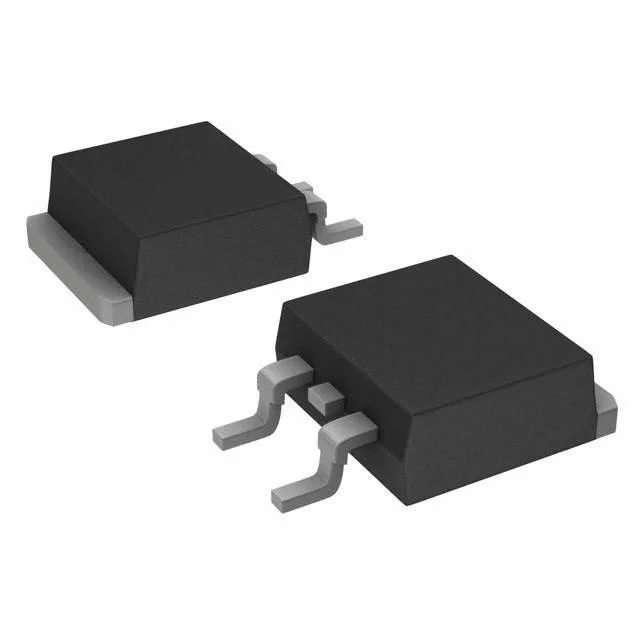
Modern electronic systems rely on delicate semiconductor components that can be affected by even very short voltage disturbances. A sudden spike caused by electrostatic discharge, switching activity, unstable power, or an external electrical event may exceed the safe operating limit of a circuit before conventional protection can react.
TVS Diodes are designed to deal with this exact problem. These components provide fast transient suppression by limiting excessive voltage and redirecting surge current away from sensitive electronics. Their compact construction and rapid response make them suitable for a wide variety of applications, from communication interfaces and industrial controls to vehicle electronics and consumer devices.
For designers who need dependable overvoltage protection without introducing unnecessary circuit complexity, TVS diodes offer a highly practical solution.
Why Are Voltage Surges a Serious Design Concern?
A transient voltage surge is a short-duration electrical event in which voltage rises rapidly beyond its expected level.
Unlike a permanent overvoltage condition, a transient may last for only a very short time. However, its peak energy can still be large enough to damage sensitive electronic components.
Common sources include:
- Human electrostatic discharge
- Switching of relays and contactors
- Motors starting and stopping
- Inductive load interruption
- Power supply instability
- Long cable connections
- Electrical fast transients
- Nearby lightning activity
- Vehicle electrical switching
These events can cause immediate component failure or create hidden damage that reduces reliability over time.
TVS diodes help prevent this by creating a controlled route for transient energy.
How Do TVS Diodes Control Excessive Voltage?
The operating principle of a TVS diode is based on rapid conduction when voltage rises beyond a defined level.
Under normal electrical conditions, the diode has little effect on the circuit. When a surge occurs, the voltage across the device increases until the TVS diode reaches its breakdown region.
At this point, it begins conducting heavily.
The resulting current path helps prevent the voltage from continuing to rise unchecked.
The process typically involves:
- Normal voltage remains within a safe range
- A transient enters the circuit
- Voltage rises sharply
- The TVS diode activates
- Surge current is redirected
- Voltage is restricted to a clamping level
- The electrical disturbance ends
- The diode returns to its normal state
This fast operation is particularly useful for protecting components that cannot tolerate high-voltage exposure, even briefly.
What Does a TVS Diode Protect Against?
TVS diodes can help protect electronics from several different electrical threats.
Electrostatic Discharge
Electrostatic discharge can occur when a charged person or object touches an exposed connector or conductive surface.
The resulting pulse can reach extremely high voltages for a very short period.
TVS protection is commonly added to external interfaces to reduce the risk of ESD reaching integrated circuits.
Switching Transients
Relays, motors, solenoids, and other inductive devices can create large voltage spikes when current flow changes suddenly.
TVS diodes can suppress these spikes and help protect control electronics.
Power-Line Disturbances
Electronic equipment connected to external power supplies can experience fluctuations caused by switching loads, unstable supplies, or electrical infrastructure.
A properly rated TVS diode can help limit these disturbances before they affect downstream circuits.
How Does TVS Protection Differ From a Fuse?
TVS diodes and fuses serve very different purposes.
A fuse protects primarily against excessive current over a longer period. When current becomes too high, the fuse element heats up and eventually opens the circuit.
A TVS diode, by contrast, reacts to sudden voltage spikes.
Key differences include:
- Fuses respond mainly to overcurrent
- TVS diodes respond mainly to overvoltage transients
- Fuses may take milliseconds or longer to operate
- TVS diodes respond extremely quickly
- A blown fuse usually requires replacement
- A TVS diode normally returns to standby after a transient
For comprehensive protection, both devices may sometimes be used within the same system because they address different electrical risks.
What Does TVS Protection Differ From a MOV?
Metal oxide varistors, commonly called MOVs, are also used for surge suppression, but their characteristics differ from TVS diodes.
MOVs are commonly found in mains-powered equipment where higher-energy surge events may occur.
TVS diodes are often preferred in lower-voltage electronic systems where fast response and more tightly controlled clamping are important.
Typical differences include:
- TVS diodes offer very fast response
- MOVs may handle larger energy in some applications
- TVS diodes are widely used on PCB-level electronics
- MOVs are frequently used across AC power lines
- TVS devices are available with low capacitance for data signals
- MOV characteristics can change after repeated surge exposure
The appropriate choice depends on voltage, surge energy, response requirements, and circuit type.
Why Are TVS Diode Arrays Important?
Some modern systems need protection across several signal lines at the same time.
Installing an individual diode on every line may require additional PCB space.
TVS diode arrays solve this problem by integrating several protection elements into one package.
They are often used in:
- USB ports
- Ethernet interfaces
- HDMI connections
- Memory card interfaces
- Display ports
- Communication buses
- Multi-channel sensors
Arrays can simplify board design while providing coordinated protection for multiple conductors.
How Are TVS Diodes Used in Portable Electronics?
Portable equipment faces a high risk of electrostatic discharge because users frequently touch ports, switches, and external connectors.
TVS protection may be found in:
- Mobile accessories
- Portable test equipment
- Handheld control units
- Battery-powered devices
- Wearable electronics
- Charging equipment
- Portable communication hardware
Compact low-capacitance TVS diodes are particularly useful in these products because they offer protection without consuming excessive board space.
Why Is Leakage Current Important?
When a TVS diode is below its breakdown voltage, a small amount of current can still pass through it.
This is known as leakage current.
In many applications, the value is so small that it has little practical effect. However, leakage can become important in:
- Battery-powered products
- High-impedance measurement circuits
- Precision sensing equipment
- Low-power electronics
- Energy-harvesting systems
Selecting a device with suitable leakage characteristics can help minimise unnecessary power consumption and measurement errors.
What Role Does Temperature Play in TVS Performance?
TVS diode behaviour can vary with temperature.
Parameters such as breakdown voltage, leakage current, and power-handling capability may change as operating temperature rises or falls.
This is especially important in environments such as:
- Vehicle engine compartments
- Industrial control cabinets
- Outdoor electronics
- Power conversion systems
- Aerospace equipment
Designers should therefore evaluate the full operating temperature range rather than relying only on room-temperature specifications.
How Can Designers Select the Right TVS Diode?
The best TVS diode is one that matches the electrical and environmental demands of the circuit.
Important factors include:
- Normal operating voltage
- Maximum allowable device voltage
- Breakdown level
- Clamping voltage
- Expected surge current
- Pulse duration
- Required peak power
- Signal frequency
- Device capacitance
- Leakage current
- Operating temperature
- Package size
The manufacturer's datasheet should be reviewed carefully because ratings are usually based on specific surge waveforms and test conditions.
Why Are TVS Diodes Valuable for Long-Term Reliability?
Circuit protection is not only about preventing immediate catastrophic failure.
Repeated transient exposure can also weaken electronic components gradually. A circuit may continue to function after a minor surge while suffering internal damage that appears later as instability or premature failure.
By limiting repeated electrical stress, TVS diodes can help improve:
- Equipment lifespan
- Circuit stability
- Data reliability
- System uptime
- Product durability
- Maintenance performance
This makes them useful not only in high-risk applications but also wherever dependable long-term operation is required.
How Can TVS Diodes Strengthen Modern Electronic Designs?
Modern electronics depend on increasingly sensitive devices, high-speed interfaces, and compact circuitry. Protecting these systems against transient voltage is therefore an important part of responsible electronic design.
TVS diodes provide fast, compact, and effective suppression of short-duration electrical disturbances. They can protect power rails, communication ports, external connectors, sensor interfaces, and other vulnerable parts of a circuit.
By selecting the correct voltage rating, pulse capability, capacitance, leakage level, and package type, engineers can use TVS diodes to improve the resilience of electronic systems without adding unnecessary complexity.
Whether used in portable electronics, industrial equipment, communication hardware, automotive systems, or power electronics, TVS diodes continue to provide an essential layer of protection against the unpredictable voltage events that occur in real-world electrical environments.