Sign up with Google
 Sign in with Zoho

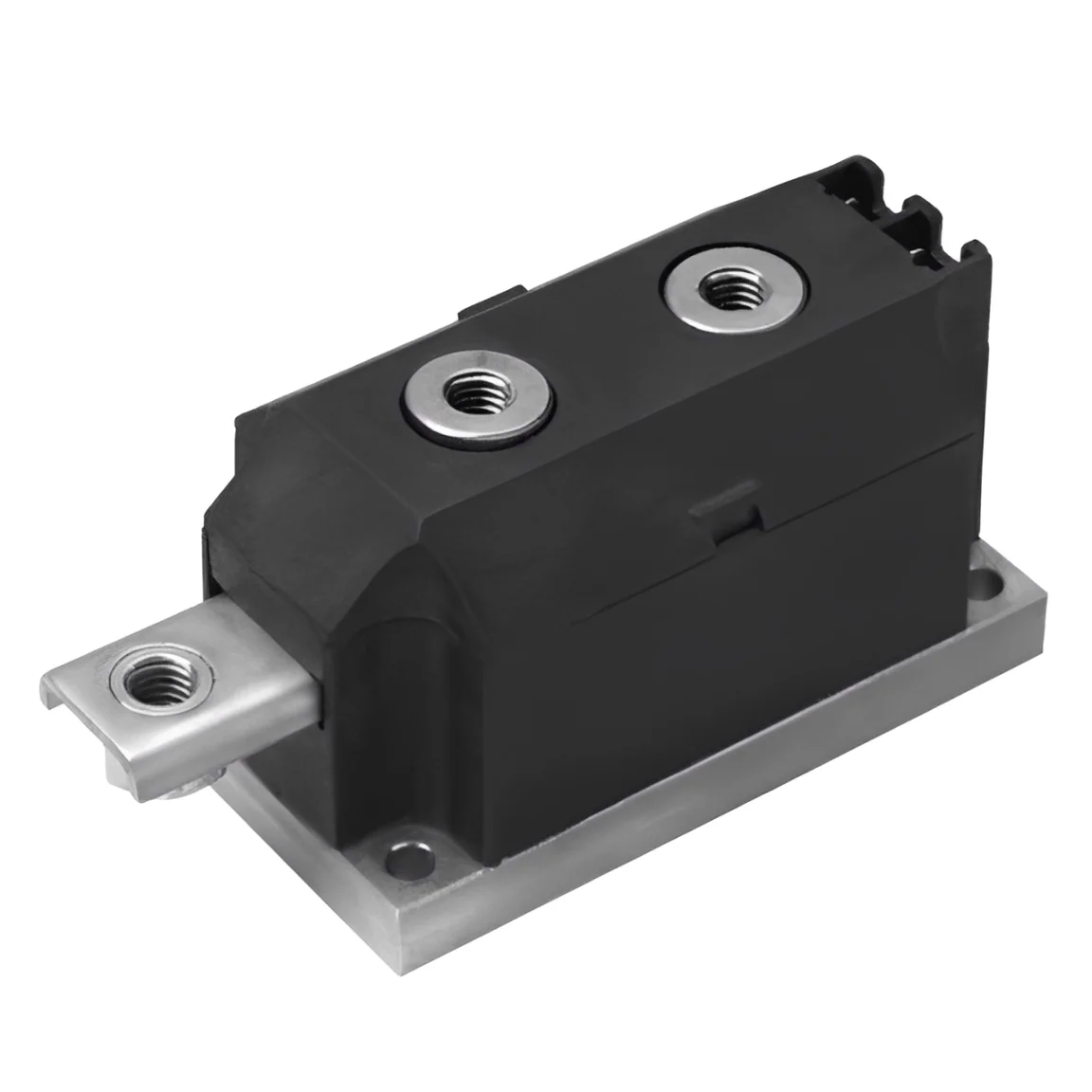
Reliable power control is essential in industrial environments where equipment must operate for long periods under demanding electrical conditions. SCRs - Modules are widely used in these systems because they combine high-current handling with controlled semiconductor switching in a compact and durable package.
Rather than acting simply as an on-off component, SCR modules allow engineers to manage the delivery of power with greater precision. This makes them useful in applications where equipment performance, electrical stability, and operational consistency are important.
Their use extends across manufacturing plants, industrial heating equipment, motor-control systems, power converters, rectifiers, charging systems, and process-control equipment.
What Are SCRs - Modules Designed to Do?
SCRs - Modules are based on silicon-controlled rectifiers, a type of thyristor used to control current flow in electrical circuits.
An SCR remains non-conductive until an appropriate trigger signal is applied to its gate terminal. Once triggered, it enters a conducting state and allows current to pass between its main terminals.
This controlled behaviour gives engineers a practical way to manage high-power circuits using relatively low-power control signals.
SCR modules may be used to:
- Switch large electrical loads
- Regulate power to industrial equipment
- Control rectified DC output
- Manage heating elements
- Support motor starting functions
- Improve process stability
- Coordinate power with automated control systems
The module format simplifies the use of SCR technology in equipment that must handle substantial levels of power.
Why Is Reliability Important in SCR Applications?
Industrial systems often operate continuously, meaning a single component failure can interrupt production, create maintenance costs, or reduce equipment availability.
For this reason, SCR module selection should focus on more than basic voltage and current values.
A reliable design must account for:
- Electrical overloads
- Repetitive switching
- Temperature variation
- Supply disturbances
- Load characteristics
- Cooling conditions
- Mechanical mounting
- Protection requirements
SCR modules are capable of long service life when they are operated within appropriate electrical and thermal limits.
How Can SCR Modules Improve System Stability?
One of the strengths of SCR technology is its predictable switching behaviour.
In many industrial applications, uncontrolled application of power can create sudden electrical and mechanical stress. SCR-based systems can introduce or regulate power in a more controlled way.
For example, gradual application of voltage in a motor soft starter can reduce abrupt current demand during startup.
Similarly, controlled energy delivery to a heater can help maintain more stable operating temperatures.
Benefits may include:
- Reduced electrical stress
- Smoother equipment operation
- Lower mechanical shock
- Better load management
- Improved process consistency
- Reduced unnecessary switching wear
These advantages can contribute to better overall equipment reliability.
What Role Do SCRs - Modules Play in Process Control?
Many industrial processes depend on precise control of temperature, current, voltage, or power.
SCR modules can act as the power interface between an electronic controller and a high-power load.
For example, a temperature controller may measure a process temperature and determine that more heat is required. The controller sends the appropriate trigger signal, while the SCR module handles the much larger load current supplied to the heating element.
This approach is commonly used in:
- Industrial furnaces
- Drying systems
- Plastic moulding machinery
- Heat-treatment equipment
- Packaging systems
- Environmental chambers
- Laboratory equipment
- Manufacturing lines
The separation between low-power control electronics and high-power switching helps make automation systems more practical and manageable.
How Do Load Characteristics Affect SCR Module Selection?
Not all electrical loads behave in the same way.
A resistive heater behaves differently from a motor, transformer, or other inductive load. These differences can influence voltage spikes, current surges, switching behaviour, and protection requirements.
Resistive loads generally produce predictable current flow, while inductive loads may create transient voltages when current changes.
Designers should therefore identify whether the load is:
- Resistive
- Inductive
- Capacitive
- Motor-driven
- Transformer-based
- Mixed
Understanding the load type allows more accurate selection of voltage rating, current capacity, snubber networks, and protective devices.
Why Is Current Derating Important?
Operating a semiconductor continuously at its absolute maximum rating is rarely good engineering practice.
SCR module current ratings are often specified under particular thermal and cooling conditions. Real-world installations may have higher ambient temperatures, restricted airflow, or less effective heatsinks.
Derating provides additional safety margin.
Factors that may require derating include:
- High ambient temperature
- Poor ventilation
- Repetitive surge loading
- Continuous heavy-duty operation
- Limited heatsink performance
- Enclosed control cabinets
Selecting a module with suitable reserve capacity can improve long-term dependability.
How Does Temperature Influence SCR Performance?
Temperature is one of the most important factors affecting semiconductor life.
Each SCR module has a maximum junction temperature that should not be exceeded. Internal temperature rises as the device conducts current and dissipates electrical losses.
If heat is not removed effectively, the junction temperature can approach unsafe levels.
Reliable cooling may involve:
- Properly sized heatsinks
- Thermal interface materials
- Forced-air ventilation
- Cooling fans
- Temperature sensors
- Adequate cabinet airflow
Monitoring thermal conditions can also help maintenance teams detect cooling problems before they cause component failure.
Why Are Gate Signals Important for Reliable Switching?
The gate circuit determines when the SCR turns on.
A weak or poorly controlled trigger signal can cause unreliable switching, especially under changing temperature or electrical conditions.
A good gate-drive circuit should deliver enough current for dependable triggering while maintaining electrical isolation where required.
Gate systems may include:
- Pulse transformers
- Optocouplers
- Dedicated trigger modules
- Isolated control circuits
Stable gate control helps ensure that the SCR fires at the intended point during operation.
What Protection Devices Are Commonly Used?
SCR modules are robust, but they must still be protected from abnormal electrical conditions.
Fast transients, short circuits, overheating, and excessive current can damage the semiconductor if suitable protection is not included.
Common protective components include:
- High-speed semiconductor fuses
- RC snubber networks
- Surge suppression devices
- Thermal switches
- Overcurrent monitoring
- Voltage clamps
- Protective relays
The protection strategy should be matched to the specific load and power-system design.
How Can Maintenance Extend SCR Module Life?
SCR modules generally require less mechanical maintenance than contact-based switching devices, but the surrounding system should still be inspected periodically.
Maintenance teams should check for:
- Loose electrical terminals
- Signs of overheating
- Damaged insulation
- Blocked ventilation
- Dust accumulation
- Fan failure
- Degraded thermal compound
- Abnormal operating temperature
Loose connections are especially important because added electrical resistance can generate localised heat.
Regular inspection can reduce the risk of unexpected downtime.
How Do SCR Modules Support Energy Management?
SCR modules can contribute to more efficient energy use by controlling how and when power is delivered.
Instead of operating equipment continuously at full output, a control system can adjust power according to actual demand.
In heating systems, for instance, power can be reduced once the required process temperature is reached.
This type of control may help:
- Reduce unnecessary energy consumption
- Improve temperature accuracy
- Lower electrical stress
- Improve process efficiency
- Reduce excessive thermal cycling
Efficient control becomes increasingly important in industrial facilities seeking better energy performance.
When Are SCR Modules Most Suitable?
SCRs - Modules are especially suitable when an application requires high-power control at relatively low switching frequencies.
They are often preferred where the priorities include:
- High current capacity
- Strong voltage capability
- Reliable conduction
- Controlled AC power
- Industrial durability
- Simple triggering requirements
Other semiconductor technologies may be more appropriate for very high-frequency switching, but SCRs remain highly effective for many line-frequency and heavy-power applications.
Why Are SCRs - Modules Still Widely Used?
The continuing use of SCRs is largely due to their proven performance.
They offer a combination of high electrical capability, robust operation, and straightforward control that remains well suited to many industrial systems.
Their established characteristics make them practical in applications where engineers value predictability and long-term serviceability.
Conclusion
SCRs - Modules are important components for reliable power control in industrial electrical systems. Their ability to manage high voltage and current, operate with controlled triggering, and integrate with automated equipment makes them useful across heating, motor control, rectification, charging, and power-conversion applications.
However, reliable operation depends on correct design decisions. Current derating, load characteristics, thermal management, gate control, electrical protection, and maintenance all influence long-term performance.
When SCR modules are selected with suitable operating margins and supported by proper cooling and protection, they can deliver stable, efficient, and dependable power control in demanding industrial environments.