Sign up with Google
 Sign in with Zoho

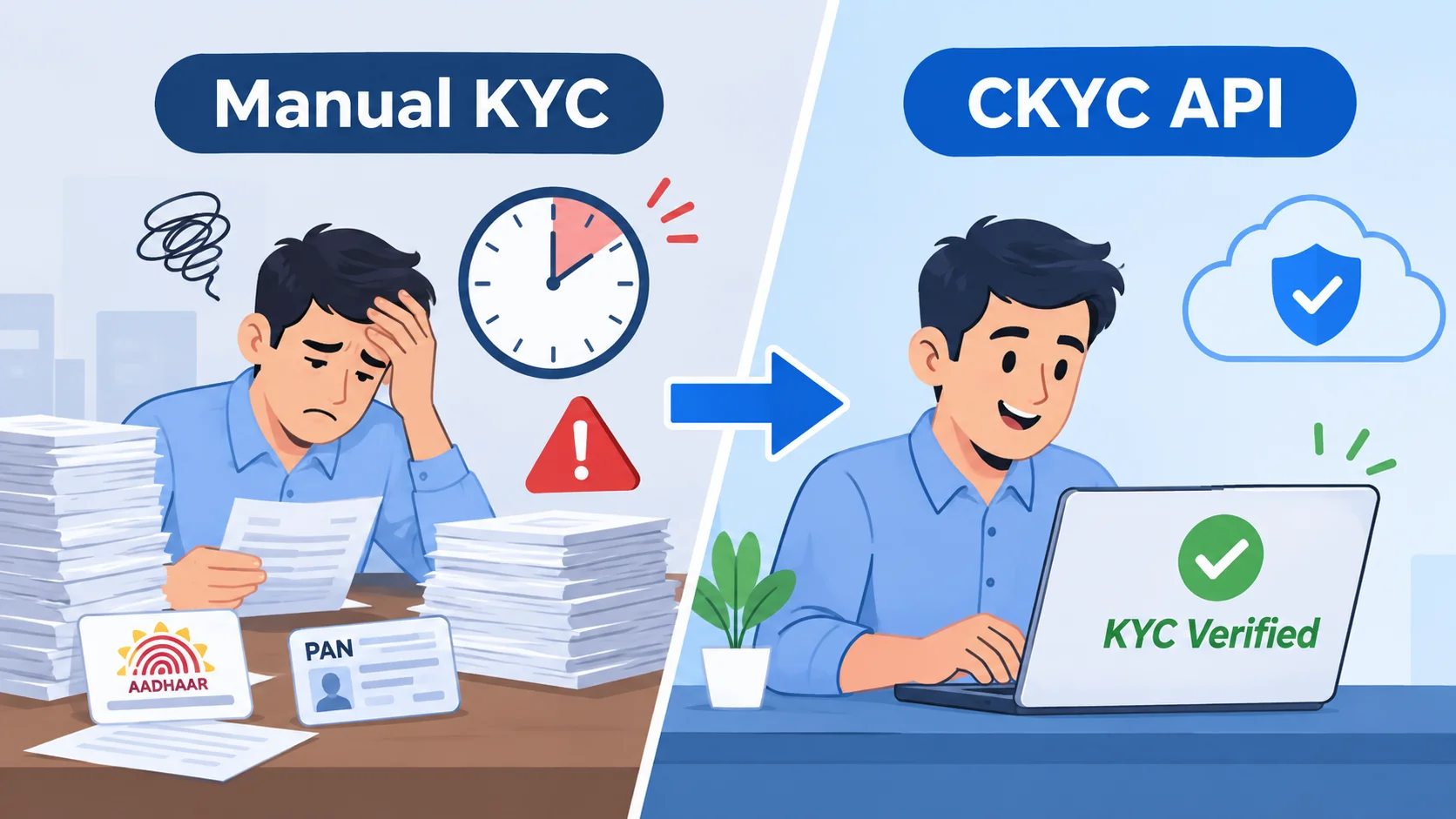
Picture a loan officer at a small lending company on a busy Monday morning. Twelve new applicants are waiting. Each one has handed over a PAN card, an Aadhaar copy, a photo and a signed form. Someone has to check every document, type the details into the system, scan the papers and file them away. Tomorrow, the same thing starts again.
(This is a made-up scenario, but if you work in lending, insurance, wealth or fintech, it probably feels familiar.)
Manual KYC works. Nobody is saying it doesn't. But it is slow, it costs more than most teams realise, and it leaves plenty of room for small mistakes that turn into big headaches later.
Let's look at why, and what a better option looks like.
What manual KYC really involves
On paper, KYC sounds simple: confirm who your customer is before you do business with them. In practice, a single customer usually means:
- Collecting identity and address documents
- Checking that the documents look genuine
- Typing details into your system by hand
- Matching the name, date of birth and address across documents
- Storing copies safely
- Fixing errors when something doesn't match
Each step is small. Together they eat up a lot of someone's day. And if the customer already completed KYC with another bank or lender last month, your team still starts from zero. The customer gets frustrated too, because they're asked for the same papers yet again.
The hidden costs of doing it by hand
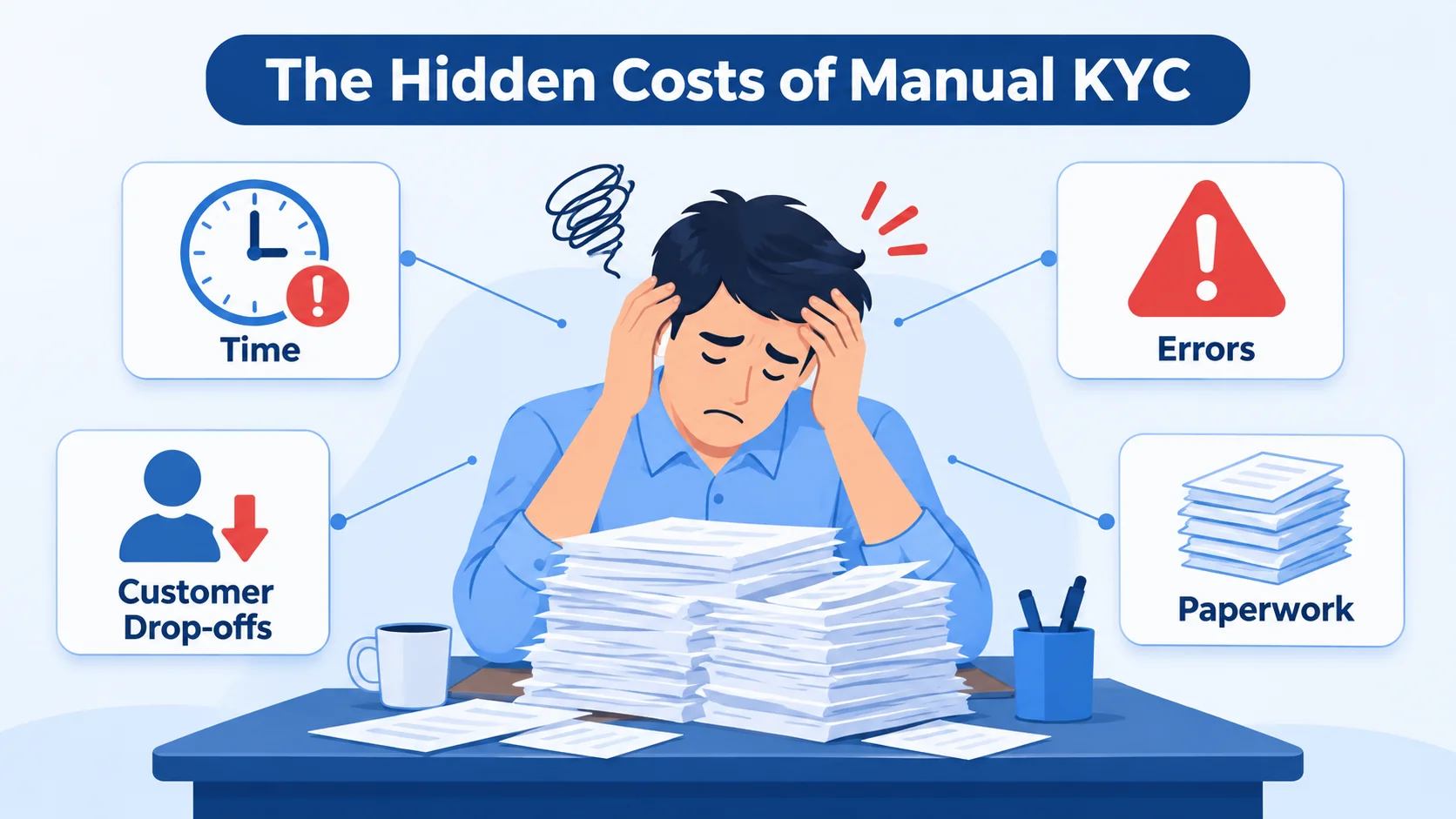
When people think about KYC cost, they usually think of salaries. That's only part of it.
Time. A manual check can take anywhere from a few minutes to a few days, depending on how clean the documents are and how busy your team is. Every hour spent on one customer is an hour not spent on another.
Errors. Typing the same details again and again leads to typos. A wrong digit in a date of birth or a misspelt name can cause a mismatch, and mismatches mean delays, rework and sometimes rejected applications.
Drop-offs. Customers don't enjoy waiting. If onboarding takes too long or asks for too many uploads, some of them simply leave. You paid to acquire them, and then lost them at the finish line.
Storage and paperwork. Physical files need space. Scanned files need secure servers. Both need someone to look after them, and both create risk if they are not handled carefully.
Compliance pressure. Rules around KYC are strict, and records must be accurate and easy to retrieve. Messy manual files make audits stressful.
A quick look at CKYC
India has a central system for this problem. The Central KYC Records Registry, or CKYC, is a national database that stores KYC records in one place. When a customer completes KYC with one regulated institution, the record can be uploaded and given a unique KYC identification number. Other regulated institutions can then fetch that record instead of collecting everything again.
The idea is simple: verify once, reuse many times.
The catch is how you reach that database. You can search and download records manually through a portal, one customer at a time. That's better than starting from scratch, but it's still manual work, and it still doesn't scale when you onboard hundreds or thousands of customers.
Where the API comes in
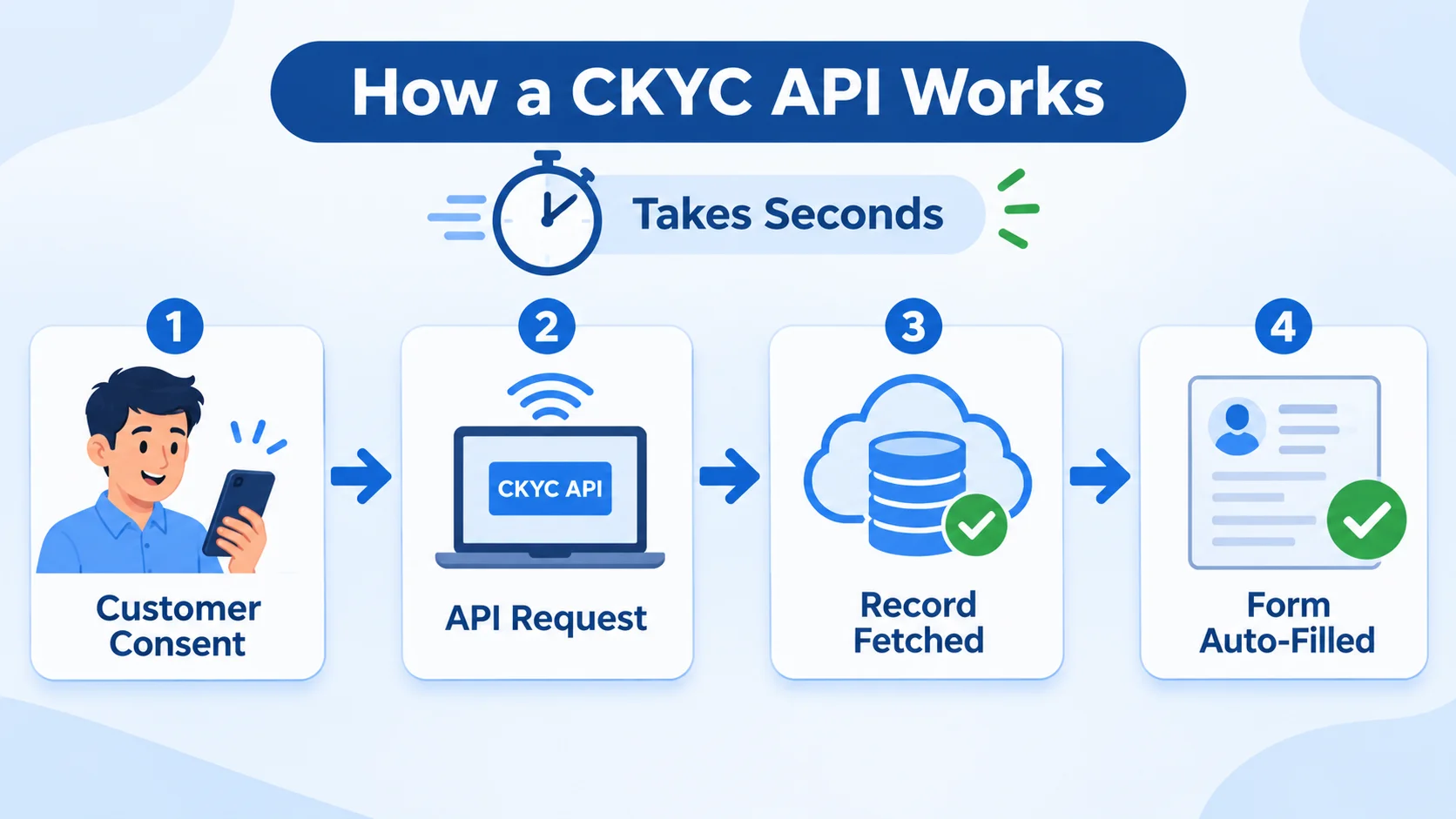
This is where a CKYC API makes a real difference. An API is just a way for two software systems to talk to each other directly. Instead of a person logging in, searching and copying details, your own application sends a request and gets the customer's KYC data back in seconds.
Here's how it usually works in everyday terms:
- Your customer shares their PAN or other identifier and gives consent.
- Your system sends a request through the API.
- The registry record comes back and fills in your onboarding form automatically.
- Your team reviews anything unusual instead of typing everything.
No re-keying. No chasing scans. No switching between tabs.
Where you save time
The biggest win is speed. What used to take a team member several minutes per customer can happen in a few seconds. Over a month, that adds up to a lot of hours.
Onboarding also feels smoother to the customer. They share fewer documents, wait less and finish faster. That usually means fewer people abandoning the process halfway.
Your team benefits as well. Instead of doing repetitive data entry, they can focus on the cases that actually need a human eye, like mismatched details or high-risk profiles. That's a better use of skilled people.
Where you save money
Time and money are closely linked here. Less manual effort means you need fewer hours of work per customer, which lowers your cost per onboarding. As your customer numbers grow, you don't have to grow your KYC team at the same pace.
There are quieter savings too. Fewer typing errors mean less rework. Less paper means lower printing and storage costs. Faster onboarding means revenue starts sooner. And cleaner records make audits quicker and less painful, which saves effort from the compliance side.
None of this requires a huge technology overhaul. For most teams, integration is a matter of connecting one more service to the onboarding flow they already use.
A simple example
Take a digital lending app that onboards a few hundred customers a day. With manual checks, it needs a group of people just to read documents and enter details, and customers wait hours or even a day for approval.
Now imagine the same app fetching records automatically while the customer is still on the screen. The form fills itself in. The customer confirms the details, and the application moves forward in minutes. The team only steps in when something looks off.
Same customers, same rules, far less friction.
Things to check before choosing a provider
Not every provider is equal, so ask a few plain questions first:
- Is it reliable? Look for stable response times and good uptime.
- Is it secure? Personal data needs strong protection, encryption and clear access controls.
- Does it support consent? With India's data protection rules, you should capture and record customer consent properly.
- Is the documentation clear? Good docs make integration faster for your developers.
- Can it grow with you? Pick something that works for 100 customers and for 100,000.
- Is support available? When something breaks at 6 pm on a Friday, you want a real person to answer.
Getting started
You don't need to switch everything overnight. Many teams start small. They pick one product line or one customer journey, connect the API, measure how much time it saves and then expand from there.
Final thoughts
KYC isn't going away, and it shouldn't. It protects your business and your customers. But the way we do it can change.
Doing everything by hand once made sense, because there was no other choice. Today there is. If your team is still copying details from scanned papers into forms, it may be worth asking how much time, money and customer goodwill that habit is costing you.
Small changes in onboarding can add up fast. Start with one step, measure the result and build from there.