Sign up with Google
 Sign in with Zoho
Why Retailers Are Looking Beyond Sales Data
A sales report tells you what happened at the checkout counter. It doesn't always tell you what happened before the customer got there.
Maybe the store was packed for two hours in the evening. Maybe one section had plenty of visitors while another stayed almost empty. Perhaps the weekend looked unusually quiet compared with the previous one.
For a store manager, these details matter.
This is one reason retailers are starting to look at real-time store monitoring alongside their usual sales and operational reports. Instead of relying only on numbers from the billing system, they can also get a better idea of how people are actually using the store.
And that's where video analytics comes in.
Your Cameras Can Tell You More Than You Think
Most retail stores already have cameras installed. Traditionally, those cameras have had a fairly straightforward job: security, monitoring, and recording footage.
If something happens, someone can go back and check what the camera captured.
The problem is that nobody has the time to sit and watch hours of footage every day.
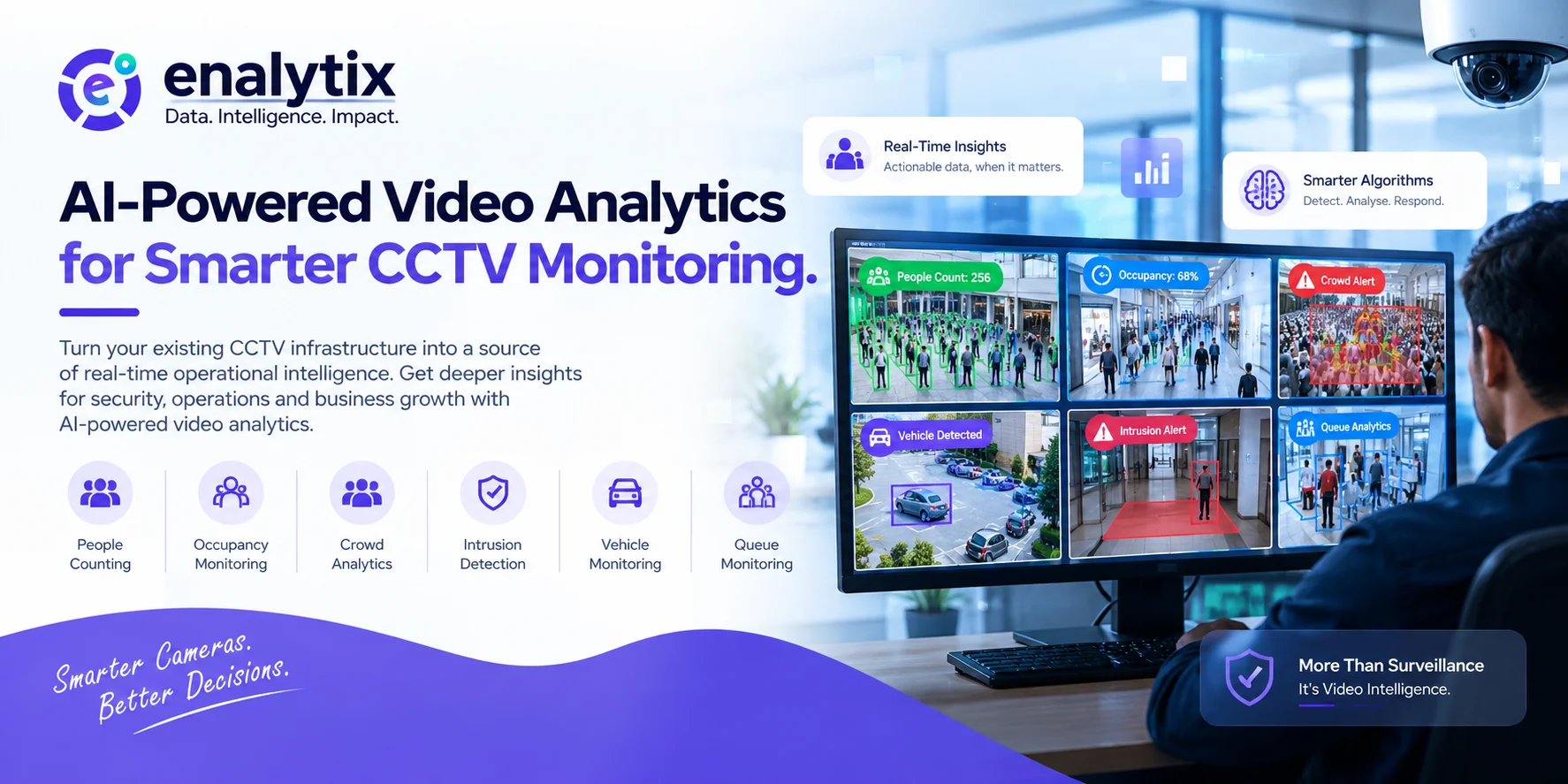
AI-powered video analytics approaches this differently. Rather than treating the camera as something that simply records video, it can be used to pick out specific information from what's happening in the store.
One simple example is people counting.
How Many People Are Actually Visiting Your Store?
Walk into a busy shop and it's easy to get a rough sense of how crowded it is. But estimating visitor numbers by looking around isn't particularly accurate.
An automated people-counting system can give retailers a much clearer picture.
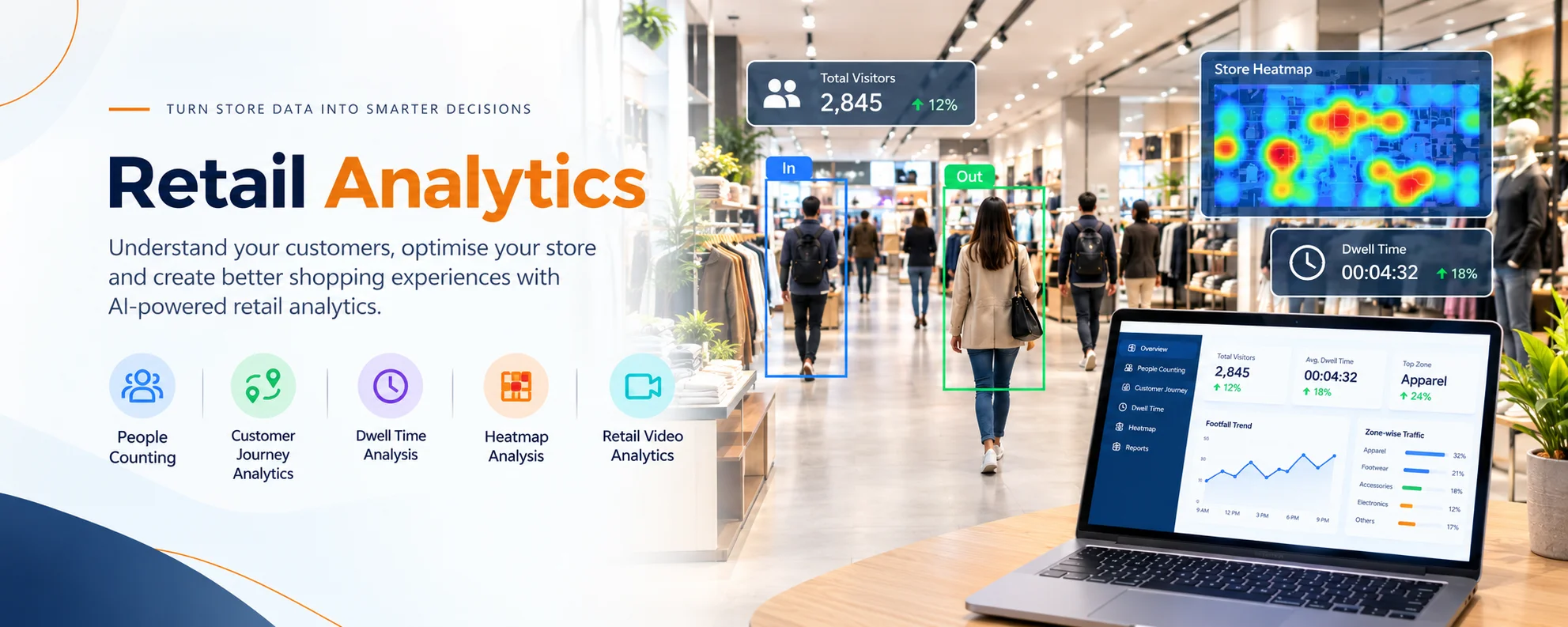
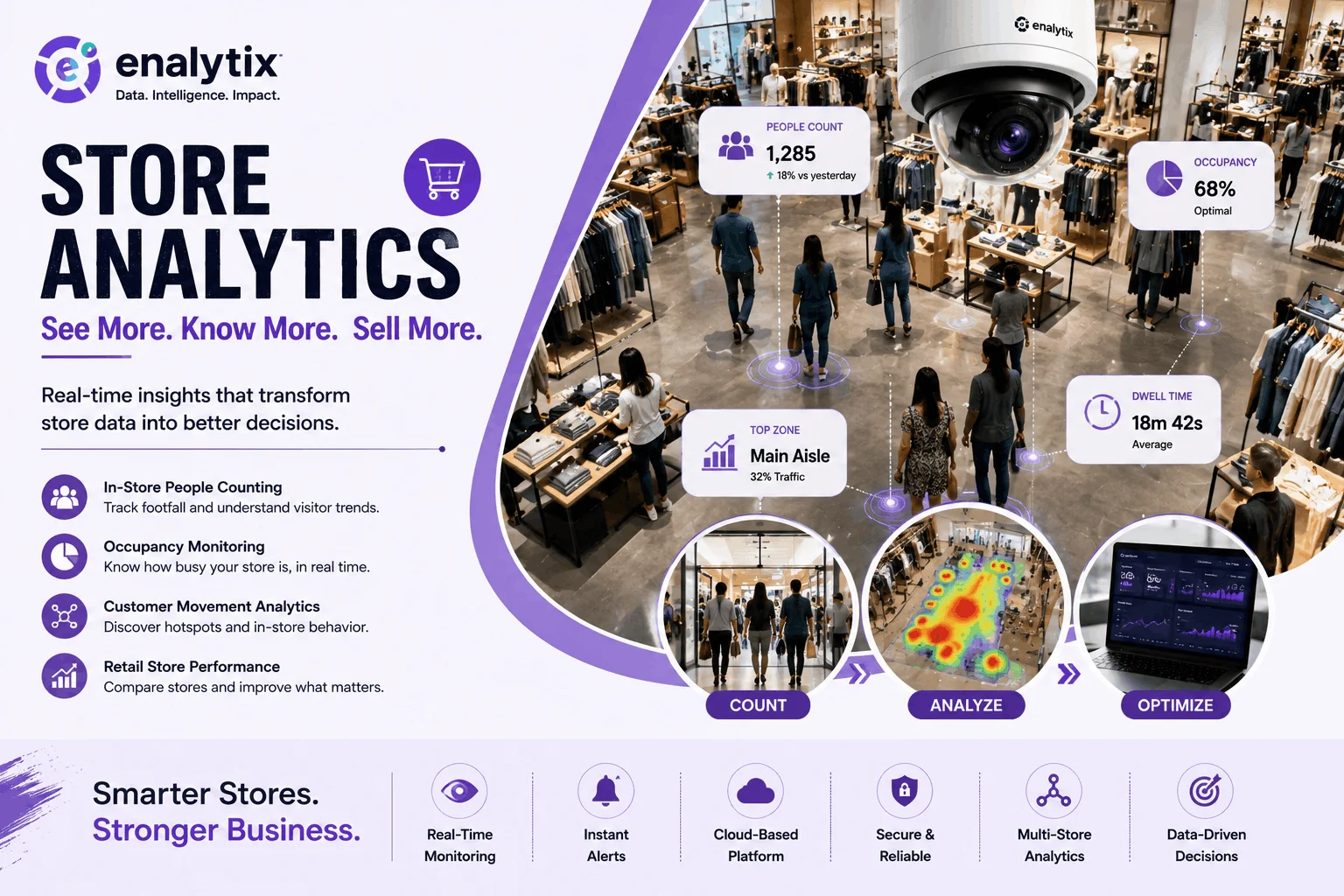
It can show how many people entered the store, how visitor numbers changed during the day, and when footfall was at its highest.
Let's say a retailer notices that customer traffic starts picking up around 5 PM and remains high until 8 PM.
That's useful information.
The store manager may decide that this is the time when additional staff should be available on the floor. On a quieter morning, the staffing arrangement might look very different.
It's a fairly simple use case, but it can make day-to-day store management easier.
It's Not Just About Counting Visitors
Retail store analytics can go a little deeper than footfall.
Depending on the system, retailers can look at things such as occupancy, movement patterns, and traffic across different areas of a store.
This can raise some interesting questions.
Why does one section get plenty of traffic while another hardly gets noticed?
Is a particular display attracting attention?
Are customers naturally moving through the store in the way the retailer expected?
Sometimes the answer may be obvious. Sometimes it isn't.
Having actual store-traffic data gives retailers something concrete to work with when they're reviewing layouts, displays, signage, or product placement.
Every Store Doesn't Perform the Same Way
This becomes even more interesting for retail businesses with multiple locations.
A chain might have ten stores in different areas, all selling similar products. Yet their visitor patterns can be completely different.
One location could see a steady flow of customers throughout the day. Another might have very high evening traffic. A third could suddenly experience a drop in footfall.
In-store analytics can help bring these differences to light.
Of course, the data doesn't automatically explain why something changed. Managers still need to look at local conditions, promotions, opening hours, store layout, and other factors.
But it gives them a useful starting point.
Helping Store Teams Make Better Decisions
There is also a practical side to real-time monitoring.
When managers have a better idea of where and when customers are gathering, they can make more informed decisions about staff allocation and store operations.
For instance, if one area regularly becomes crowded during certain hours, having an employee nearby may help keep things moving smoothly.
These are relatively small operational decisions. Over time, though, several small improvements can make a noticeable difference to the way a store runs.
Making Existing CCTV More Useful
This is where platforms such as Enalytix come into the picture.
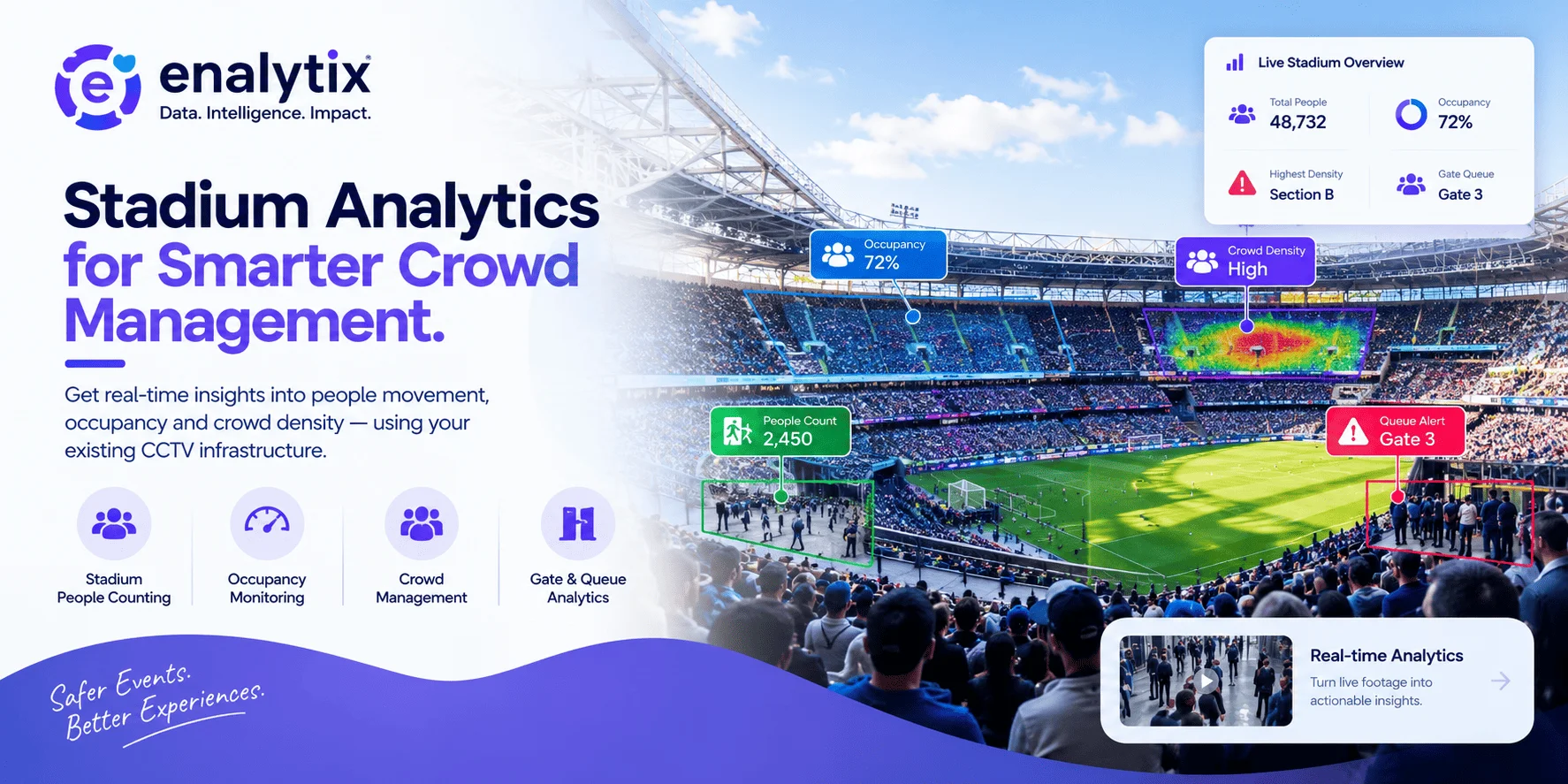
Enalytix uses AI-powered video analytics for use cases such as people counting, occupancy monitoring, retail intelligence, and real-time store monitoring.
The idea isn't necessarily to replace the cameras a retailer already has.
Instead, the focus is on getting more useful information from the visual data those cameras are already collecting.
There's a big difference between having thousands of hours of recorded footage and actually being able to learn something from it.
There Is Still a Responsibility That Comes With It
Retail analytics isn't just about installing cameras and collecting data.
Businesses also need to think about where cameras are placed, what information is being processed, how that information is handled, and what privacy requirements apply to their particular use case.
The technology should have a clear purpose, and retailers need to use it responsibly.
The Bigger Picture
There isn't one piece of technology that can tell a retailer everything about store performance.
Sales still matter. So do pricing, products, location, customer service, staffing, and plenty of other factors.
But there's another side to the story: what actually happens inside the store.
That's something traditional sales reports can't fully capture.
With real-time store monitoring and AI-powered video analytics, retailers can get another layer of information—one that helps them understand visitor traffic, store activity, and customer movement in a more practical way.
As physical retail continues to evolve, that extra visibility could become increasingly useful for businesses trying to make smarter decisions about their stores.