
 Sign up with Google
 Sign in with Zoho

Running a business across several locations sounds straightforward until you actually have to keep track of everything happening at each site.
A store can open late. A customer can wait at the counter without getting assistance. Someone can enter the premises after closing. None of these situations necessarily show up immediately in a manager's daily report.
This is one reason businesses are looking at video analytics as more than a security technology.
Traditional CCTV is useful because it records what happens. But someone still needs to look through that footage when an incident occurs. When there are multiple stores or cafés, that becomes difficult to manage manually.
AI powered video analytics takes a different approach. Instead of relying entirely on someone watching screens, an intelligent system can analyze camera feeds and identify specific events based on predefined rules.
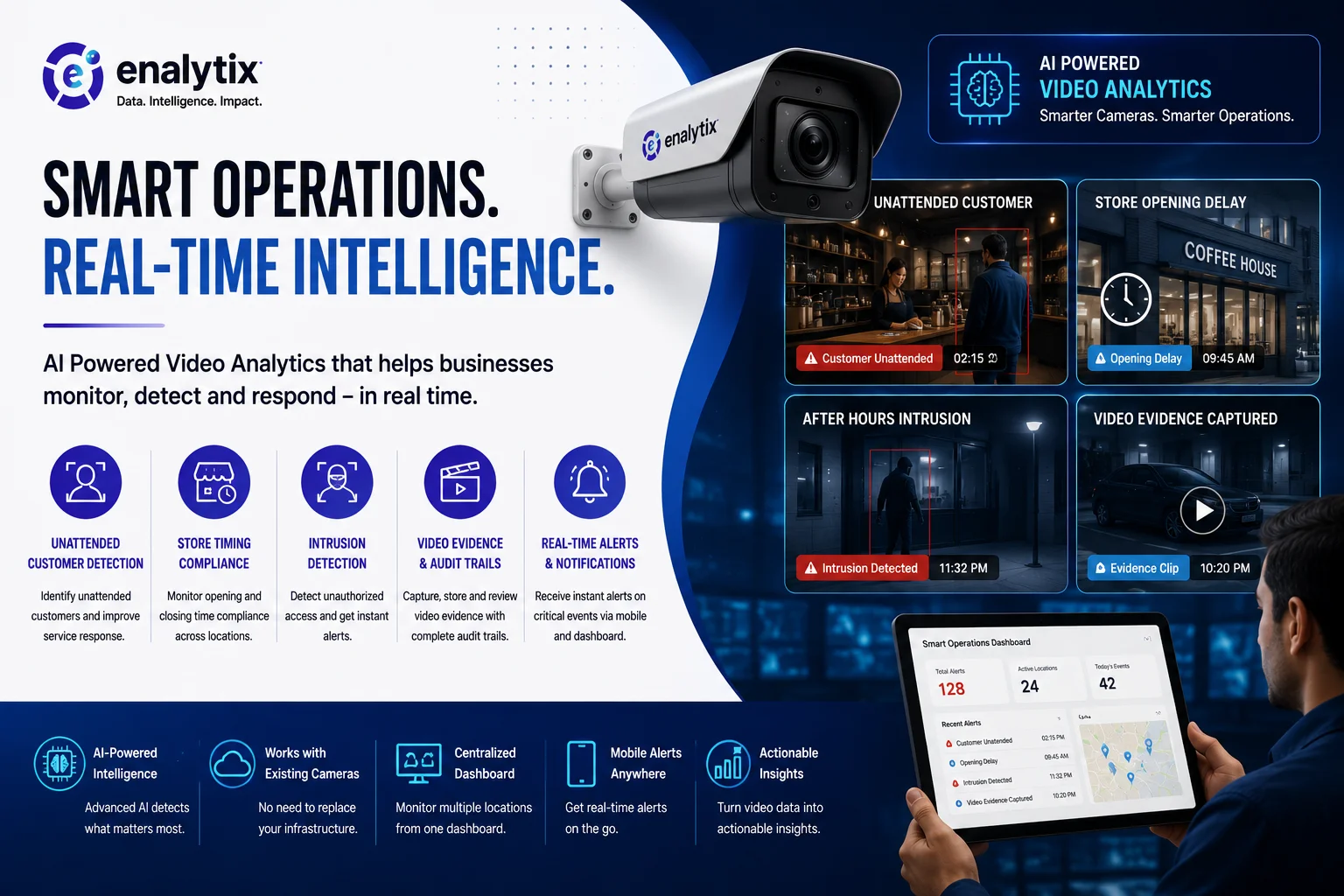
For example, a business could configure alerts for an unattended customer at a counter. It could also monitor whether a location opened or closed according to schedule. After-hours movement could trigger an intrusion alert, while important incidents could be accompanied by a short video clip for easier review.
That changes the role of CCTV.
The camera is no longer simply collecting footage in the background. It becomes another source of operational information.
There is also a practical advantage for businesses that already have cameras installed. Solutions such as Enalytix's Smart Operations platform are designed to connect with existing camera feeds, allowing organizations to add AI-based monitoring without treating the entire surveillance setup as a new project.
Of course, technology alone doesn't solve every operational problem. The quality of alerts depends on how the system is configured and how teams respond to them. A useful alert is one that reaches the right person at the right time and provides enough context to understand what happened.
This is where smart video analytics can become valuable.
Instead of asking employees to constantly watch cameras, businesses can focus their attention on events that actually require action. Managers can review timestamped evidence, identify recurring problems, and use the information to improve operational processes.
The idea is fairly simple: businesses already have a large amount of visual information available through their cameras. AI can help turn some of that information into something more useful.
For multi-location businesses, that extra visibility can make everyday operations easier to manage.
Conclusion
As businesses continue to operate across multiple locations, maintaining consistent visibility and operational standards becomes increasingly important. AI-powered video analytics offers a practical way to bridge that gap by turning existing camera infrastructure into a source of real-time operational insights.
Rather than replacing human oversight, smart video analytics can help teams focus on the situations that genuinely need their attention. From identifying unattended customers and monitoring opening or closing times to detecting after-hours activity, these systems can provide timely information that supports faster and more informed decisions.
Ultimately, the value of AI video analytics is not simply in watching more footage. It is in making the information captured by cameras more actionable. For businesses managing multiple sites, that can mean better visibility, quicker responses, and more consistent day-to-day operations.










.webp)