Sign up with Google
 Sign in with Zoho

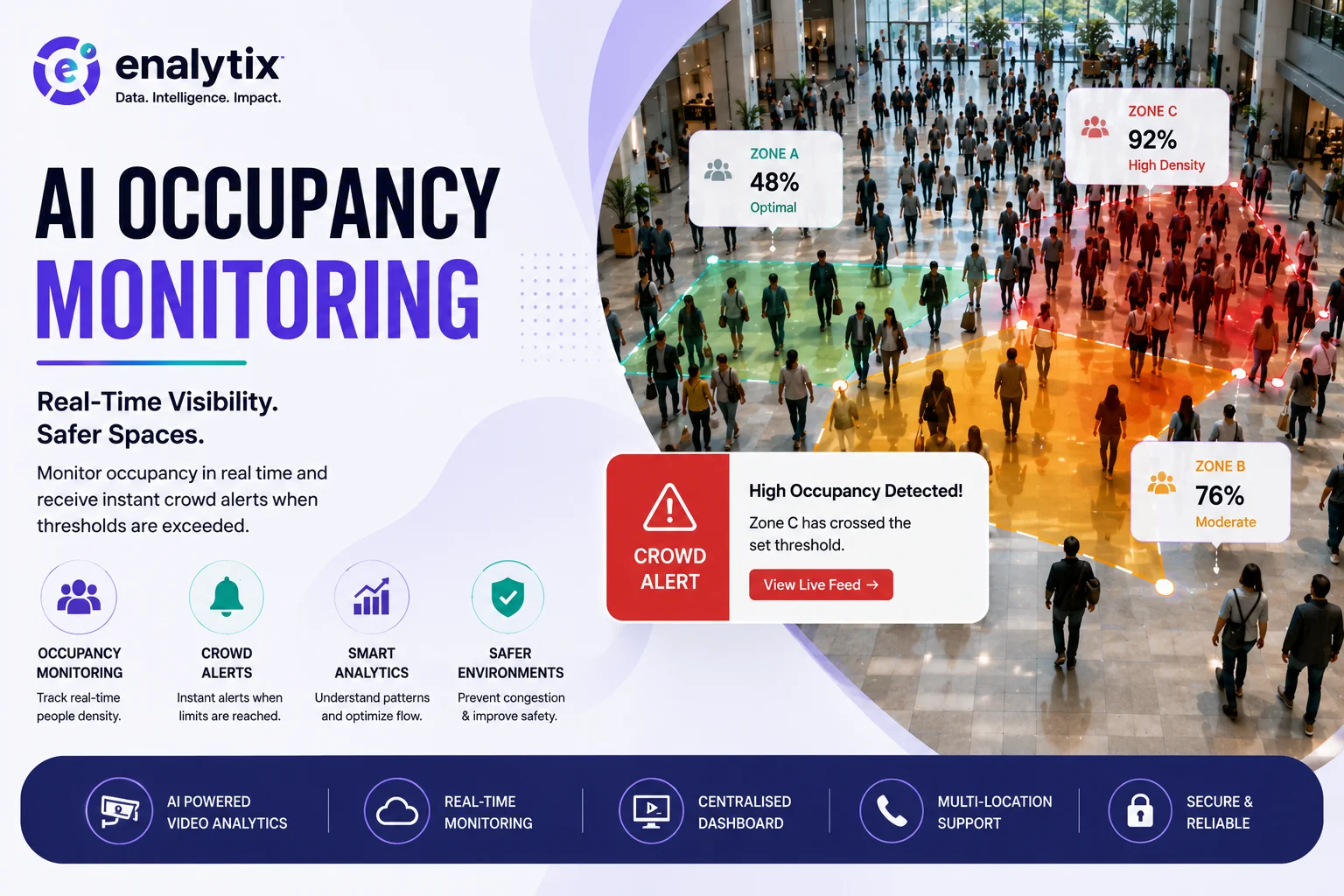
The number of occupants in a physical space can also be a challenge to manage. Areas like retail spaces, offices, stadiums, hospitals, shopping centers, and other event venues can easily become crowded over short periods of time. An space that seemed empty minutes before could be full in short order.
Being able to monitor these shifts is difficult when staff are watching cameras in multiple locations. This is where AI powered occupancy monitoring comes in handy.
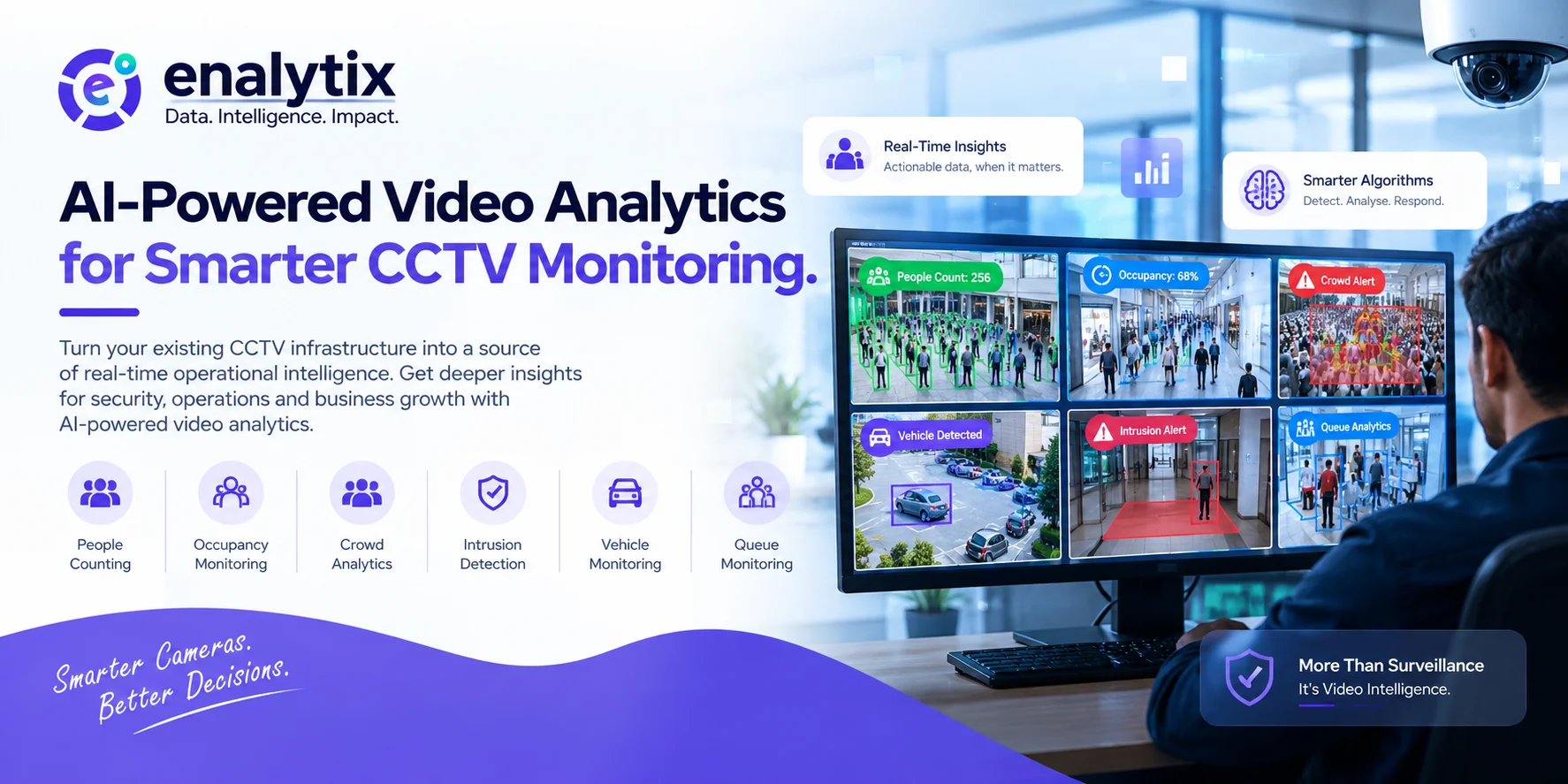
With the help of cameras and computer vision technology, occupancy monitoring tools can determine the number of people occupying an area. Instead of staff watching cameras all day, systems can determine the level of people in any space, in turn providing an alert when the space has reached an occupancy level that should be monitored.
Useful with monitoring systems is alert settings. Owners or managers of a physical space can set maximum occupancy levels for a given area. When the number of people in that space reaches the specified limit, an alert will notify facility staff that people should perhaps be sent to that area.
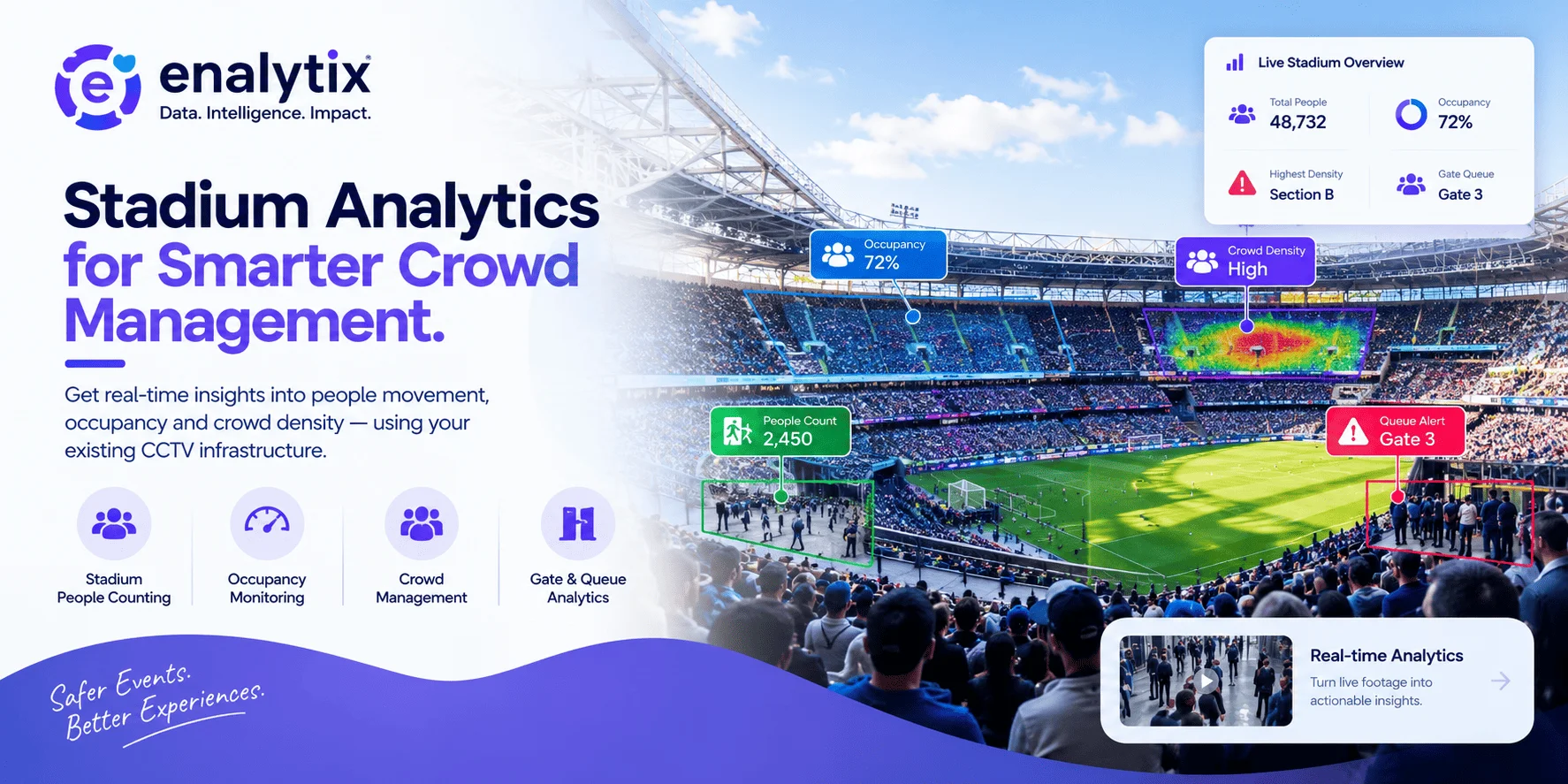
This can be particularly useful with stadiums or large event spaces where operators wish to monitor people in entrances, food areas, corridors, or seating areas while people are still allowed in.
With a store, these levels can allow monitoring managers of busy sections in the commons. Even, the event planner could monitor multiple sections within their venue while guests are present.
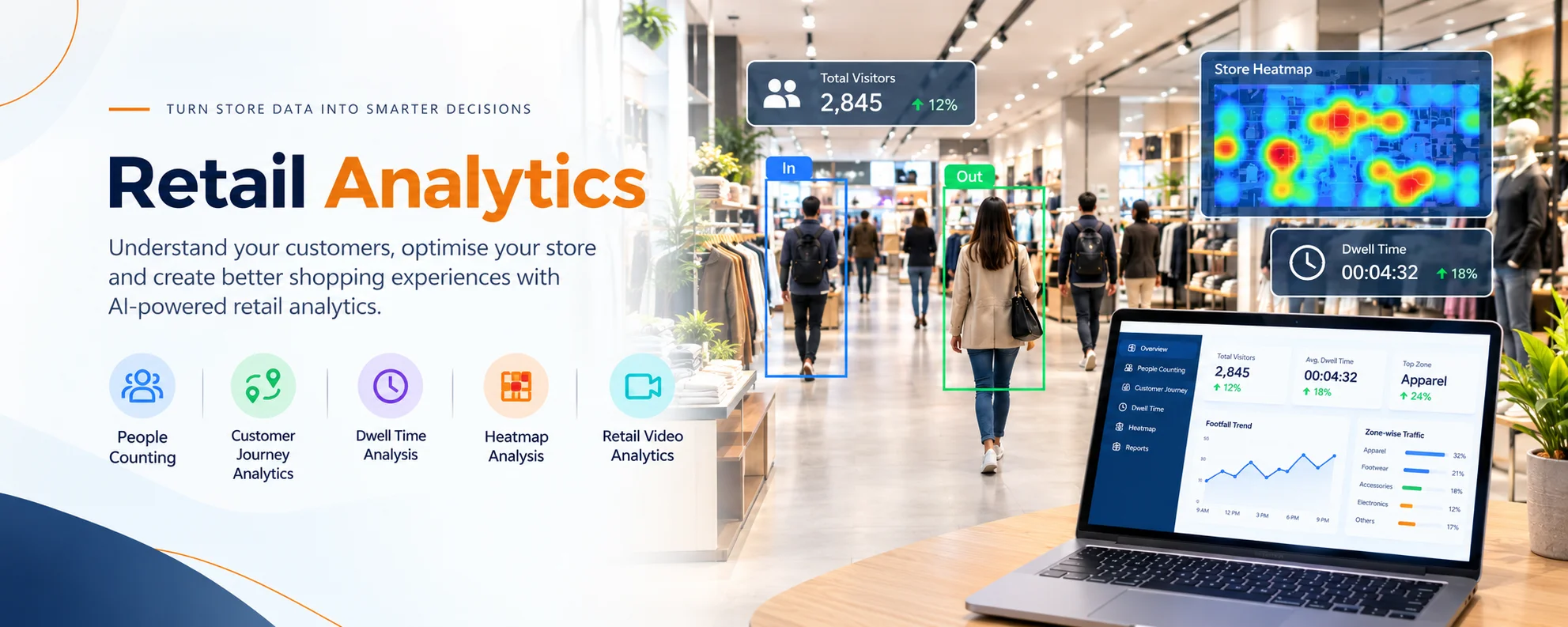
In addition to tracking how many people are in a particular area, occupancy can help you determine how spaces are being used. In offices, for example, managers might realize that certain conference rooms are often filled while other areas, such as offices themselves, often see low occupancy. This insight can prompt managers to move offices, or other utilized areas, to accommodate the needs of staff members. In a store, retailers can use people-counting capabilities in their stores in order to analyze how much traffic is in the stores, while when supplemented by other forms of data analytics can offer new insights into how traffic moves through a store's interior.
A good feature of these systems is the ability to utilize multiple cameras or be deployed on an enterprise level. Organizations can determine the number of cameras needed for their designated space as well as have their space being monitored as a whole from one platform. The Enalytix platform offers AI based video analytics that are applicable in these cases, among other scenarios: people-counting, crowd alerts, and facility intelligence.
While these technologies are implemented for ease of operation and staff efficiency they are not designed to replace staff; the purpose of these systems is to streamline work flow and prevent the need for manual check-ins by staff members. The human aspect of responding to events is still vital to the management aspect, so if, for example, an event space becomes too overcrowded to staff should always ensure guests are safe.
Before implementing a occupancy monitoring system it is important for businesses to consider other factors as well that can help increase and enhance their systems performance: placement of the camera, lighting in the area being monitored, environment and conditions of the location, alert sensitivity, and detection accuracy. Furthermore, responsible and ethical handling of data collected is critically important as well. Businesses or organizations looking to implement these systems need to carefully evaluate their environment and the demands of that specific system rather than a one-size-fits all perspective.
With more fluctuating traffic becoming more popular, real-time occupancy data will become even more useful in managing physical spaces, it will take the place of someone checking to ensure an space is full to notifying a manager or staff member that the space is nearing maximum capacity in order to better manage people's flow to make spaces safer, more orderly and more efficient overall.