Sign up with Google
 Sign in with Zoho

Security cameras have become a standard part of modern facilities. Businesses use them across warehouses, offices, factories, retail stores, construction sites, public venues, and other environments to monitor activity and protect physical assets.
However, traditional CCTV has one major limitation: someone generally needs to watch the footage or review it later to understand what happened.
An intrusion detection system can add an intelligent layer to this process.
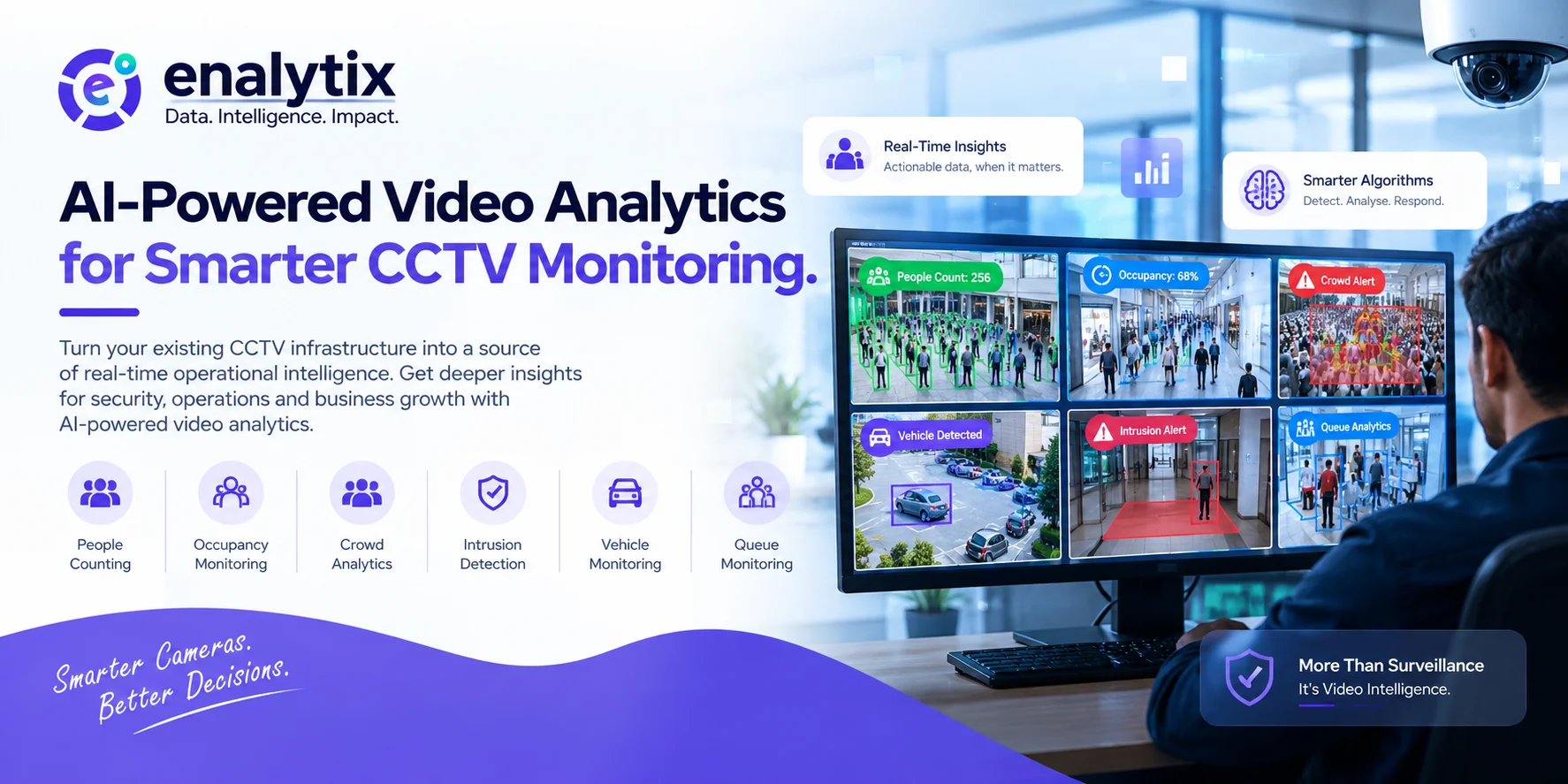
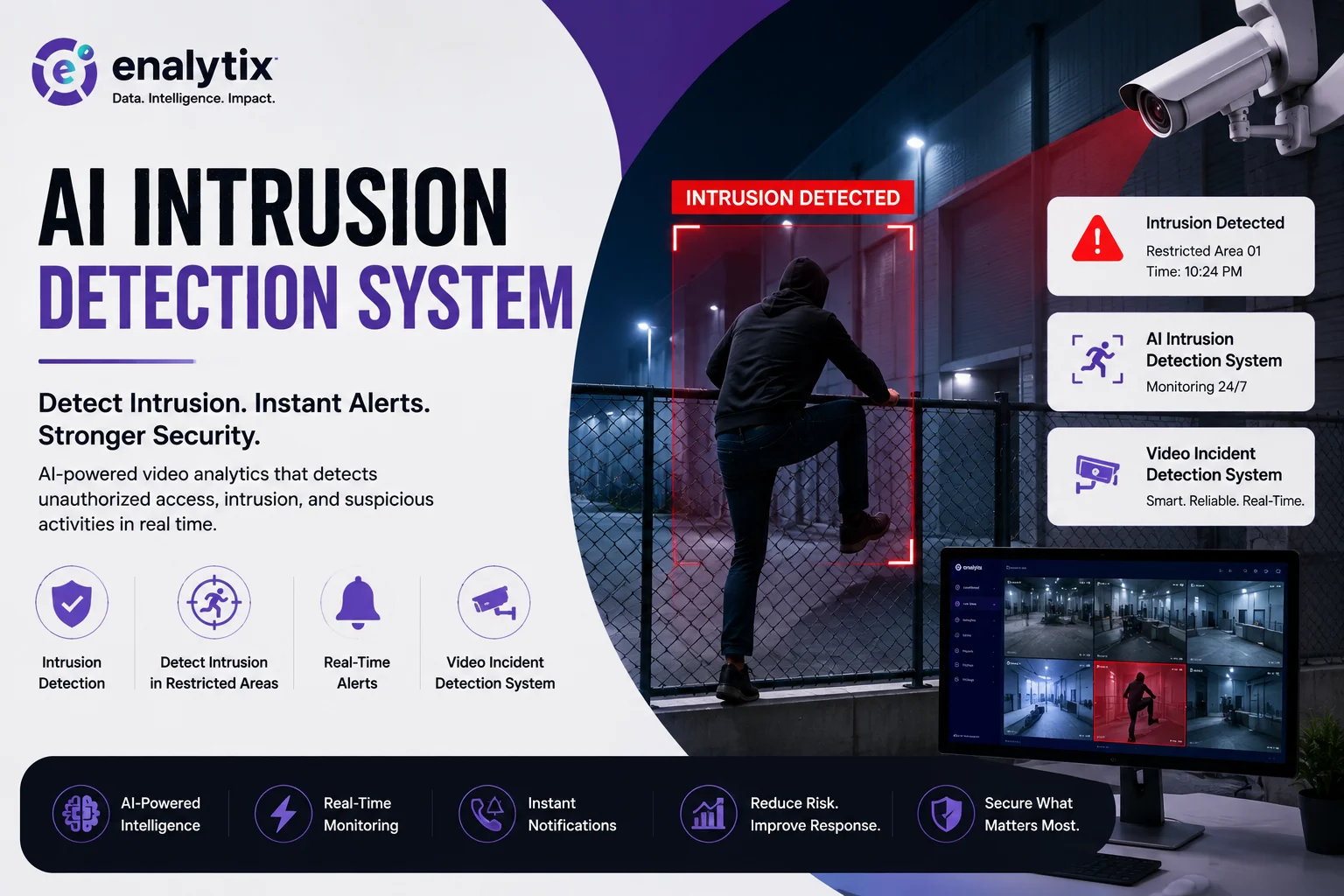
Modern AI-powered video analytics can analyze live camera feeds and identify predefined events. One of the most common applications is the ability to detect intrusion into restricted or protected areas.
For example, a business may define a virtual boundary around a warehouse entrance or sensitive equipment area. If a person crosses that boundary, the system can recognize the event and generate an alert.
This can help security teams become aware of potentially unauthorized activity much faster.
An AI intrusion detection system can be especially useful in large facilities where there may be dozens or hundreds of cameras. Continuously watching every camera is difficult for humans, and important events can easily be missed.
AI-based monitoring can continuously analyze these feeds and highlight events that match predefined conditions.
Another important application is a Video Incident Detection System. Instead of limiting analytics to unauthorized entry, organizations can use video intelligence to identify different types of predefined incidents depending on their operational requirements.
This approach can make surveillance more proactive.
Traditional CCTV primarily answers the question, "What happened?"
AI-powered video analytics can help answer another question: "Is something important happening right now?"
That difference can be valuable for security teams.
Intrusion detection can also support perimeter monitoring. Facilities with large outdoor areas may need to identify movement across specific boundaries or restricted zones. AI analytics can help monitor these areas continuously and generate alerts when configured conditions are met.
The technology can be useful across many industries.
Warehouses can monitor restricted storage areas. Construction sites can identify unauthorized movement after working hours. Offices can protect sensitive zones. Retail businesses can monitor staff-only areas. Public venues can monitor restricted access points.
Platforms such as Enalytix use AI-powered video analytics for intrusion detection, incident monitoring, restricted-area monitoring, and other security applications.
However, an AI detection system should not be treated as a complete replacement for human security teams. Alerts still need to be reviewed, verified, and acted upon according to the organization's security procedures.
The effectiveness of an intrusion detection system also depends on practical factors such as camera positioning, lighting conditions, environmental changes, detection zones, and system configuration.
Responsible implementation is equally important. Organizations should define clear monitoring objectives and follow applicable privacy and data-handling requirements.
When implemented correctly, AI-based intrusion detection can provide security teams with another useful layer of information.
Instead of relying entirely on someone noticing suspicious movement on a camera screen, organizations can use automated analytics to identify specific events and bring them to the attention of the appropriate team.
As physical security becomes increasingly connected with AI and computer vision, the role of cameras is evolving from passive recording devices into intelligent monitoring tools.
The future of video security is therefore not only about recording more footage. It is about identifying relevant events faster and helping people respond with better information.