Sign up with Google
 Sign in with Zoho
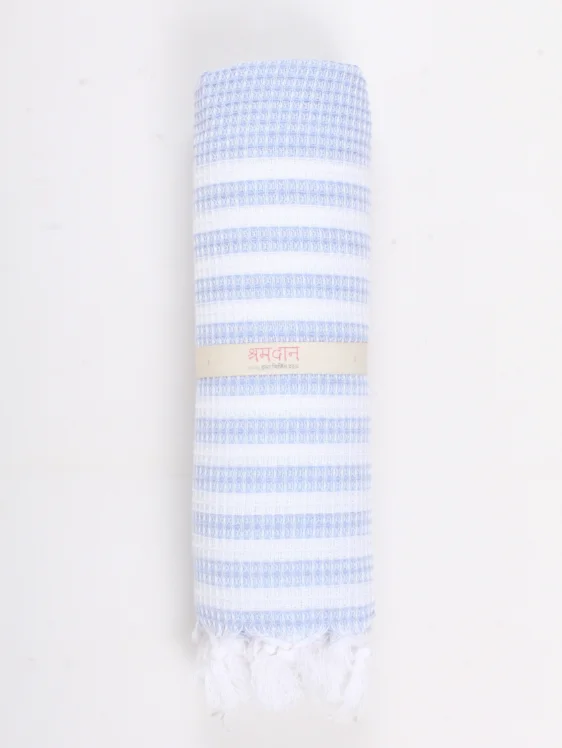
When shopping for new bath towels, many of us have been taught to equate weight with quality. The common wisdom suggests that a heavier, denser towel is inherently more luxurious and absorbent. While there is some truth to this, it’s a significant oversimplification. Focusing solely on heaviness means overlooking other critical factors that define a truly excellent towel. The weight, often measured in GSM, is just one piece of the puzzle. The quality of the cotton, the construction of the weave, and the overall finish play an equally important role in creating durable and effective cotton bath towels that feel great and perform well over time.
Understanding GSM (Grams per Square Metre)
Before we explore the factors beyond weight, it's helpful to understand the industry standard for measuring it: GSM, or Grams per Square Metre. This metric indicates the density of the fabric. A higher GSM means more cotton fibre is packed into each square metre of the towel, making it heavier and, in theory, more absorbent.
Generally, towel weights can be categorised as follows:
● 300–400 GSM: These are lightweight towels. They are thinner and dry very quickly, making them ideal for the gym, the beach, or as a travel accessory.
● 400–600 GSM: This is the medium-weight range, representing the perfect balance for everyday use. These towels offer good absorbency without becoming overly heavy or taking too long to dry.
● 600–900 GSM: Considered heavyweight or luxury, these towels are exceptionally plush, dense, and absorbent. However, their significant weight means they require much longer drying times and can feel cumbersome to some users.
While a high GSM often indicates a premium feel, it is not the sole determinant of a superior towel.
Why Weight Isn't the Whole Story
A high GSM number on a label can be misleading if the underlying quality of the materials and craftsmanship is poor. A well-made, medium-weight towel will easily outperform a poorly constructed heavy one. Here are the other crucial elements to consider.
The Importance of Cotton Fibre Quality
The single most important factor in a towel's performance is the quality of the cotton itself. Cotton fibres are known as staples, and their length is paramount. Towels made from long-staple cotton have longer, stronger, and finer fibres. When these are spun into yarn, they create a smoother, more durable, and more absorbent fabric. This type of construction ensures that the cotton bath towels feel soft against the skin and shed less lint after washing. Conversely, a heavy towel made from short-staple cotton may feel coarse, shed excessively, and become less absorbent over time as the fibres break down.
The Weave and Construction
How a towel is woven is just as vital as the material it is made from. Most towels feature a terry cloth weave, which creates the characteristic loops that absorb water. The density and integrity of these loops determine how effective the towel is. A well-constructed bath towel cotton will have tightly packed, uniform loops that stand up from the base fabric. Furthermore, high-quality towels are often made from combed cotton, a process where the shortest fibres are removed before spinning, leaving only the longest and strongest ones. This results in a superior yarn and a more resilient towel.
Absorbency vs. Drying Time
There is a fundamental trade-off between a towel's absorbency and its drying time. A thick, 800 GSM towel will certainly hold a lot of water, but it will also retain that moisture for a long time. In a humid bathroom environment, a persistently damp towel can develop a musty odour and become a breeding ground for bacteria. Finding the best bath towels for your home often means striking a balance. A medium-weight towel might be the ideal choice, offering excellent absorbency for daily use while also drying completely between showers.
How to Choose the Right Towel for You
When you next decide to buy cotton bath towels, look beyond the weight and consider the complete picture. Whether you are browsing in a shop or looking at cotton bath towels online, keeping these points in mind will help you make a better choice.
● Assess the Fibre: Look for descriptions that mention long-staple or combed cotton for superior softness and durability.
● Examine the Loops: The loops should be dense, even, and stand upright. Avoid towels with sparse loops or visible bald patches in the weave.
● Check the Hems: The edges of the towel should be neatly finished with double-stitched hems, which prevent fraying and ensure the towel lasts longer.
● Balance GSM with Your Lifestyle: Consider your climate and bathroom ventilation. If your space is prone to dampness, a medium-weight towel (around 500-600 GSM) will likely serve you better than a heavyweight one.
Conclusion: Redefining Towel Quality
Ultimately, the belief that heavier means better is a myth worth dispelling. While GSM is a useful starting point, it doesn’t tell the full story of a towel's quality. True excellence lies in the thoughtful combination of premium raw materials, meticulous construction, and a design that balances plushness with practicality. By understanding the importance of fibre length, weave density, and the trade-off between absorbency and drying time, you can make a more informed decision and choose a towel that offers lasting comfort and performance.
For those interested in exploring towels crafted with these principles in mind, Shramdaan offers a collection where quality construction and balanced design are paramount. You can discover more about our approach and view our range of products at https://shramdaan.in/.