Sign up with Google
 Sign in with Zoho

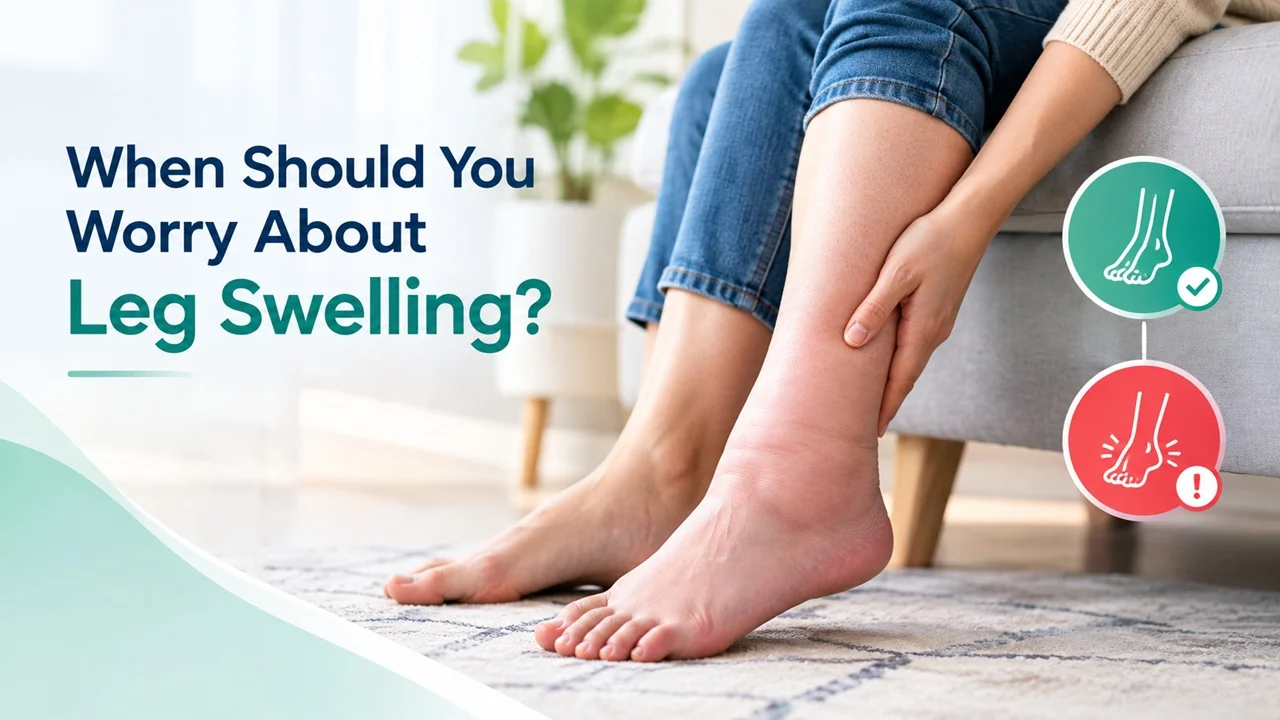
Your ankles look a little puffier than usual after a long flight or a day spent standing. Most of the time, this is completely ordinary and nothing to panic about.
But sometimes, leg swelling is your body’s way of signalling something that actually needs attention and knowing the difference can genuinely matter. Here’s a plain-language guide to help you understand when swelling is likely harmless, and when it’s worth taking seriously.
Why Legs Swell in the First Place
Leg swelling, medically known as edema, generally happens when fluid builds up in the tissues of the leg. This can happen for many ordinary reasons sitting or standing for long periods, warm weather, eating salty food, or minor injuries and often resolves on its own once the underlying cause is addressed.
In other cases, swelling can be linked to circulation issues, vein problems, or how well the body is managing fluid overall, which is where it becomes worth paying closer attention.
Common, Usually Harmless Causes
• Standing or sitting for long stretches, especially during travel
• Warm weather causing blood vessels to expand slightly
• Eating a particularly salty meal
• Minor injuries, sprains, or insect bites
• Pregnancy, which commonly causes mild swelling in the later stages
• Wearing tight clothing or footwear that restricts circulation
Swelling from these causes is usually mild, affects both legs relatively evenly, and improves with rest, elevation, or movement.
Signs That Are Worth Getting Checked
Some patterns of swelling are worth mentioning to a doctor, even if they’re not necessarily an emergency:
• Swelling that doesn’t improve after a day or two of rest and elevation
• Swelling that keeps coming back regularly without an obvious cause
• Swelling accompanied by skin that looks shiny, tight, or discoloured
• Noticeable swelling in only one leg, without a clear injury to explain it
• Swelling along with unexplained weight gain or puffiness elsewhere in the body
These patterns don’t necessarily mean something serious is happening, but they’re a reasonable reason to get things checked rather than waiting it out.
Signs That Need Urgent Medical Attention
Certain combinations of symptoms should be treated as a medical emergency rather than something to monitor at home:
• Sudden swelling in one leg, especially with pain, warmth, or redness this can sometimes indicate a blood clot
• Leg swelling along with shortness of breath, chest pain, or a rapid heartbeat
• Sudden, severe swelling accompanied by difficulty breathing
If you notice this combination of symptoms, seek medical care immediately rather than waiting to see if it improves. These particular signs are the kind doctors take very seriously, since early treatment can make a significant difference.
Who Should Be More Cautious About Leg Swelling
Certain people have a higher chance of swelling being linked to an underlying issue rather than something ordinary, including those who:
• Have recently had surgery or a long period of immobility, such as a long flight or bed rest
• Have a personal or family history of blood clots
• Are pregnant or recently gave birth
• Have existing heart, kidney, or liver conditions
• Are taking certain medications known to affect fluid retention
If you fall into one of these groups, it’s worth being more attentive to new or unusual swelling rather than assuming it’s ordinary.
What You Can Do for Mild, Everyday Swelling
For swelling that seems ordinary and mild, a few simple steps often help:
• Elevating your legs above heart level for short periods
• Moving around regularly if you’ve been sitting or standing for a long time
• Reducing salty food temporarily
• Wearing comfortable, non-restrictive footwear and clothing
If swelling doesn’t improve with these basic steps within a couple of days, it’s worth mentioning to a doctor rather than continuing to wait.
Frequently Asked Questions
Q1. Is leg swelling always something to worry about?
No. Mild swelling from standing, travel, or warm weather is very common and usually resolves on its own. It becomes more worth attention when it’s sudden, one-sided, painful, or paired with other symptoms like shortness of breath.
Q2. What does it mean if only one leg is swollen?
One-sided swelling, especially if it comes on suddenly with pain, warmth, or redness, can sometimes point to a blood clot and is worth getting checked promptly rather than waiting, particularly if it doesn’t have an obvious explanation like an injury.
Q3. Can leg swelling be a sign of a heart or kidney problem?
Yes, in some cases. Swelling linked to heart, kidney, or liver conditions often affects both legs, tends to be persistent, and may come with other symptoms like unexplained weight gain or shortness of breath, which is worth discussing with a doctor.
Q4. When should I go to the emergency room for leg swelling?
If swelling comes on suddenly, is limited to one leg with pain or warmth, or is accompanied by chest pain, shortness of breath, or a rapid heartbeat, seek emergency care immediately rather than waiting to see if it improves.
Final Thought
Most leg swelling is ordinary and resolves quickly on its own. But certain patterns sudden onset, one-sided swelling, or swelling paired with breathing difficulty are worth taking seriously and acting on quickly rather than waiting. When in doubt, it’s always safer to get it checked.
Disclaimer
This article is for general information only and is not a substitute for professional medical advice. If you’re experiencing concerning symptoms, please seek medical attention promptly.