Sign up with Google
 Sign in with Zoho

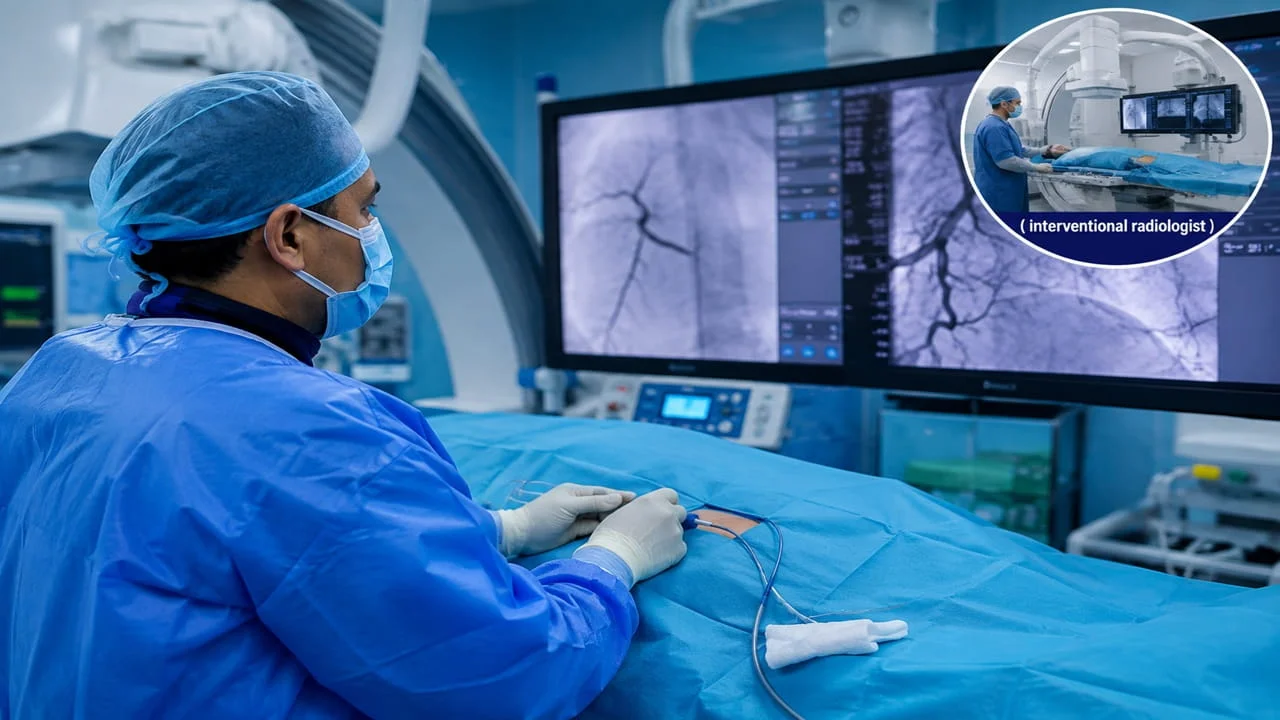
There is a moment that many patients describe in a very similar way. A doctor tells them they need surgery. They go home, open a browser, and start searching for alternatives. They are not necessarily afraid of surgery itself they are afraid of the cut, the scar, the weeks of recovery, and the feeling of helplessness that comes with being under general anaesthesia for hours.
What most of them do not find easily enough is this: for a large and growing number of medical conditions, that surgery can be avoided entirely. Not through medication. Not through waiting. Through a field of medicine called interventional radiology.
What Exactly Is an Interventional Radiologist?
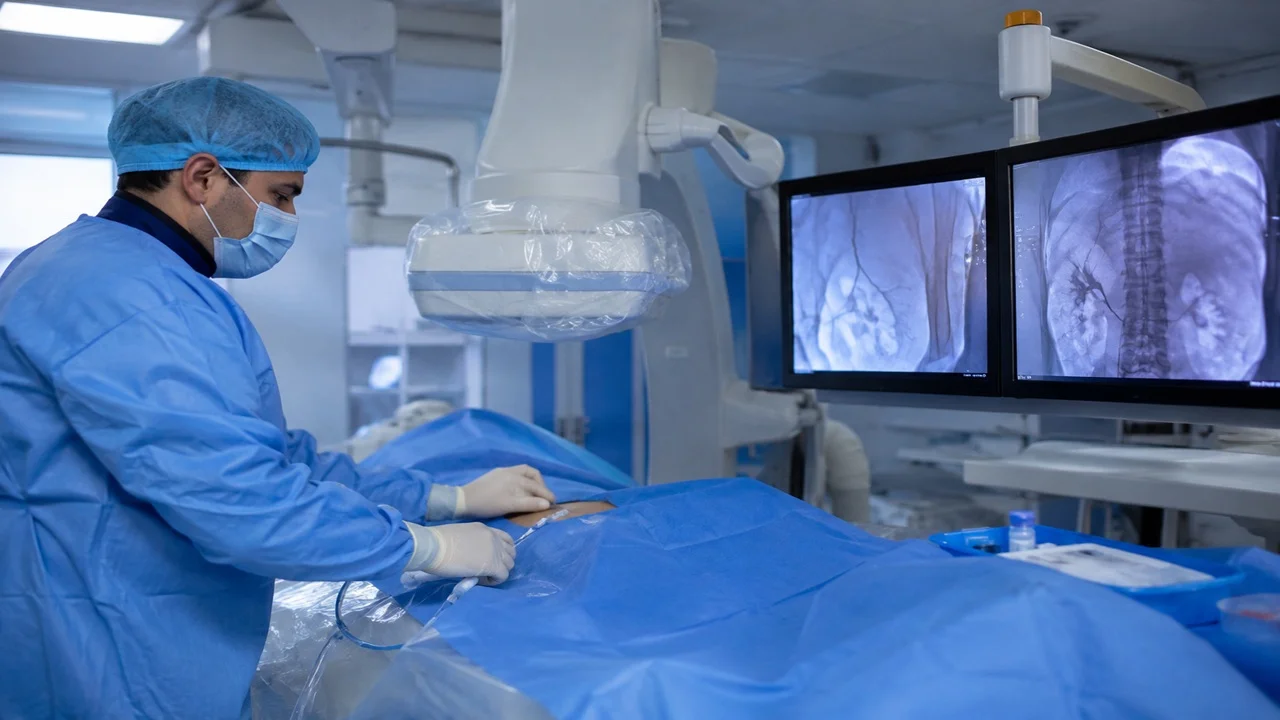
An interventional radiologist is a doctor who treats disease using imaging instead of a scalpel. Real-time pictures ultrasound, CT, or fluoroscopy guide a needle or catheter through a tiny opening in the skin, right to the problem, whether that's a blocked artery, a fibroid, or a tumor.
There's no large cut, and often no general anaesthesia either. Most patients are awake, comfortable, and home the same day or the next morning.
It's a strange kind of surgery, if you can even call it that. The "operating table" is an imaging suite. The instruments are catheters, not scalpels. And the recovery, for most patients, is measured in days rather than weeks.
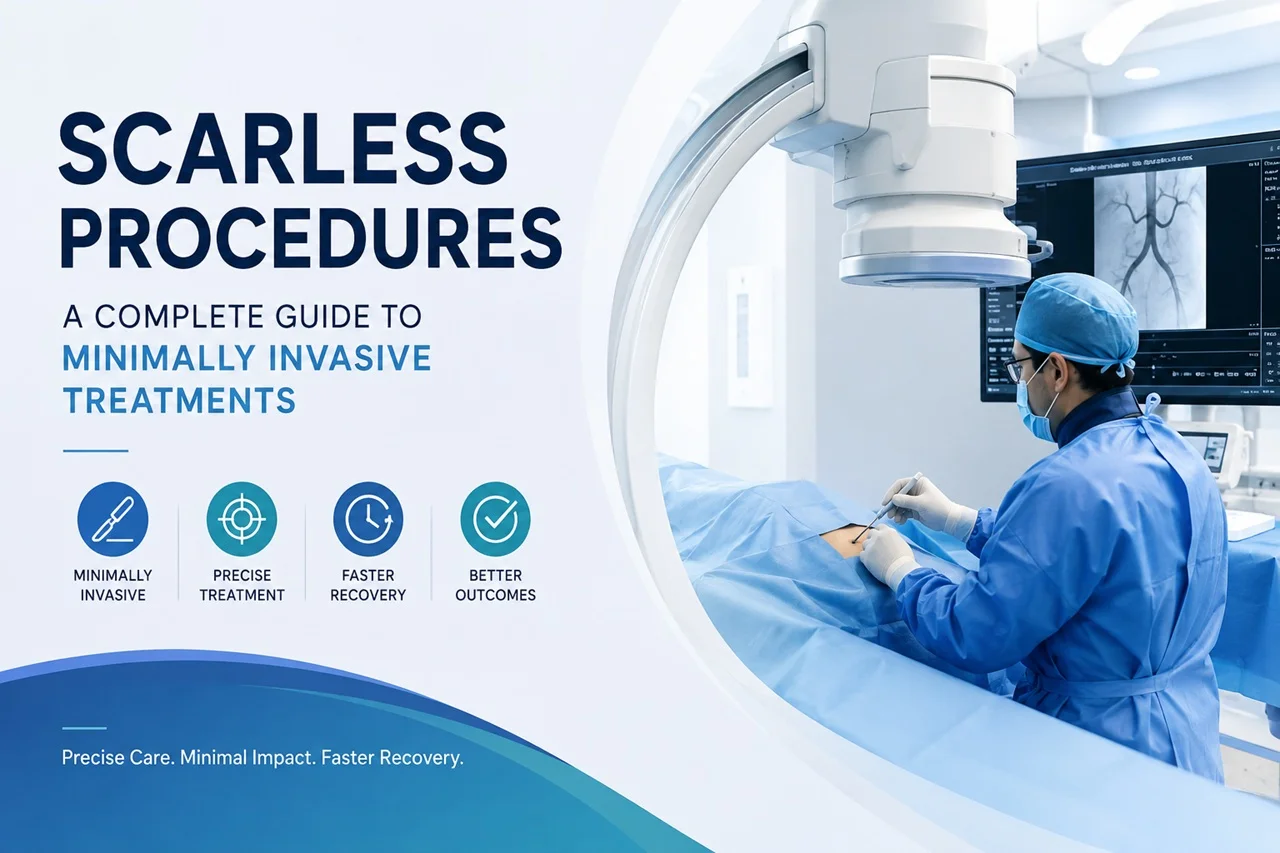
This is why the procedures are often called scarless procedures or minimally invasive pinhole procedures. The patient sees no large wound, needs no general anaesthesia in most cases, and goes home the same day or within 24 hours.
The Difference Between Diagnostic Radiology and Interventional Radiology
Diagnostic radiologists read scans. Interventional radiologist act on what those scans reveal.
A diagnostic radiologist might look at your CT scan and say, "This liver lesion is suspicious for HCC." An interventional radiologist then treats that lesion directly using image guidance to destroy it with heat, freeze it, or cut off its blood supply without a surgeon ever making a single large incision.
It is a distinction worth understanding, because many patients are referred to the wrong specialist or are simply never told that interventional options exist.
Which Conditions Can an Interventional Radiologist Treat?
This is where most people are surprised. The range of conditions treatable through interventional radiology is far broader than most patients or even some referring physicians realise. Here is a clear breakdown.
Vascular Conditions
Peripheral artery disease (PAD): When arteries in the legs become blocked, causing pain, cramping, and in severe cases, tissue death, interventional radiologists perform balloon angioplasty and stenting. A tiny balloon is inflated inside the blocked artery to restore blood flow. Most patients walk normally within 24 to 48 hours.
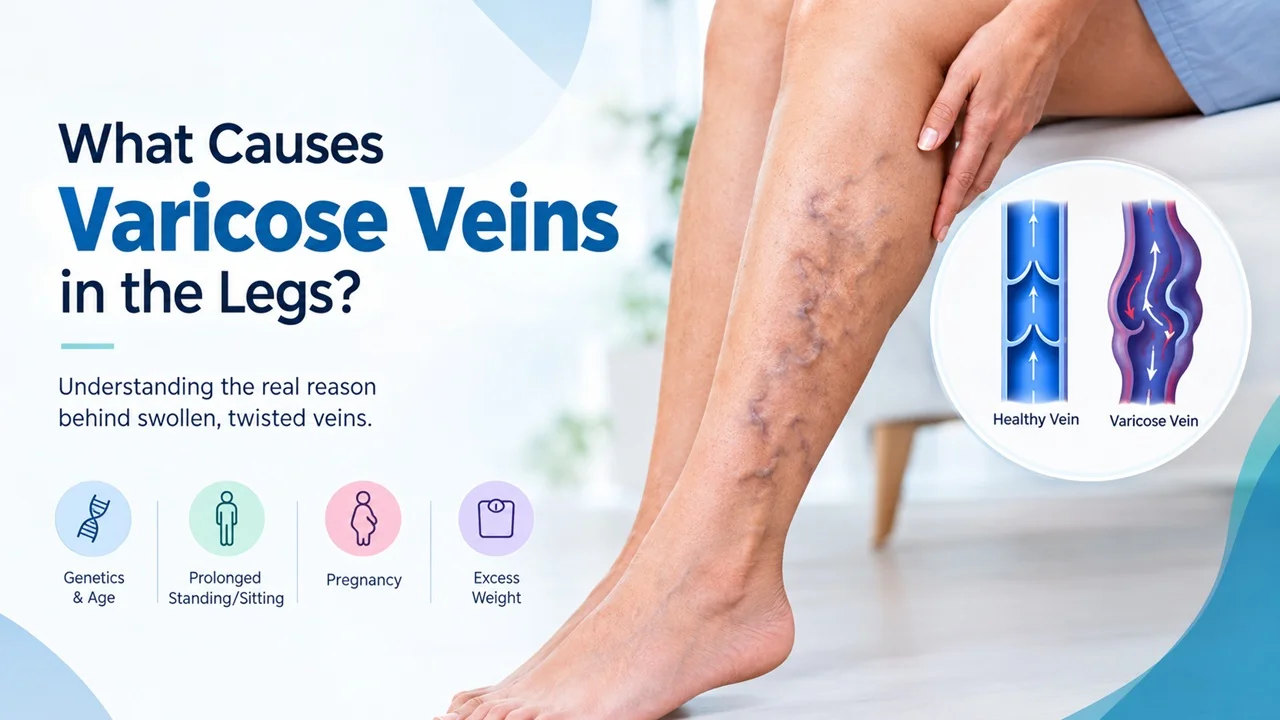
Varicose veins: Swollen, painful leg veins can be eliminated using laser ablation, microwave ablation, or medical glue all delivered through a needle puncture. There is no stripping, no stitches, and no long recovery. Patients routinely return to work the next day.
Deep vein thrombosis (DVT): In cases of severe DVT especially with high clot burden or risk of post-thrombotic syndrome catheter-directed thrombolysis (CDT) delivers clot-dissolving medication directly to the blockage, preventing long-term damage to the vein.
Embolization Therapies
Embolization is perhaps the most powerful tool in interventional radiology. It involves deliberately blocking blood vessels to treat a wide range of conditions.
Uterine artery embolization (UAE): For women with symptomatic fibroids, UAE offers a uterus-preserving alternative to hysterectomy. We reduce the blood supply to the fibroids, causing them to shrink. Most women experience dramatic relief from heavy bleeding and pelvic pain within two to three menstrual cycles.
Prostate artery embolization (PAE): Men with benign prostatic hyperplasia (BPH) an enlarged prostate causing urinary difficulties can now be treated without surgery. PAE shrinks the prostate by reducing its arterial supply. No incision, no catheter left behind, and no risk of the sexual side effects associated with surgical procedures.
Varicocele embolization: Varicocele dilated veins in the scrotum is a leading but treatable cause of male infertility. Through a small nick in the groin, a coil or glue is placed to seal the abnormal vein. The procedure takes under an hour, and the patient goes home the same afternoon.
Emergency bleed embolization: In trauma or post-surgical haemorrhage, interventional radiologists can stop life-threatening bleeding in minutes by blocking the responsible vessel a critical, life-saving alternative to emergency open surgery.
Interventional Oncology (Cancer Care)
This subspecialty within IR is growing rapidly, and for good reason. Many patients with cancer particularly liver, kidney, lung, and bone tumours are not surgical candidates due to age, overall health, or tumour location. Interventional oncology offers them treatment.
Trans-arterial chemoembolization (TACE): Used primarily for hepatocellular carcinoma (liver cancer), TACE delivers chemotherapy drugs directly into the tumour's blood supply while simultaneously blocking it. The result is concentrated drug delivery to the tumour with minimal systemic side effects.
Trans-arterial radioembolization (TARE / SIRT): Tiny radioactive beads are delivered directly into liver tumours, irradiating them from within. This is particularly effective for tumours not amenable to surgery or standard chemotherapy.
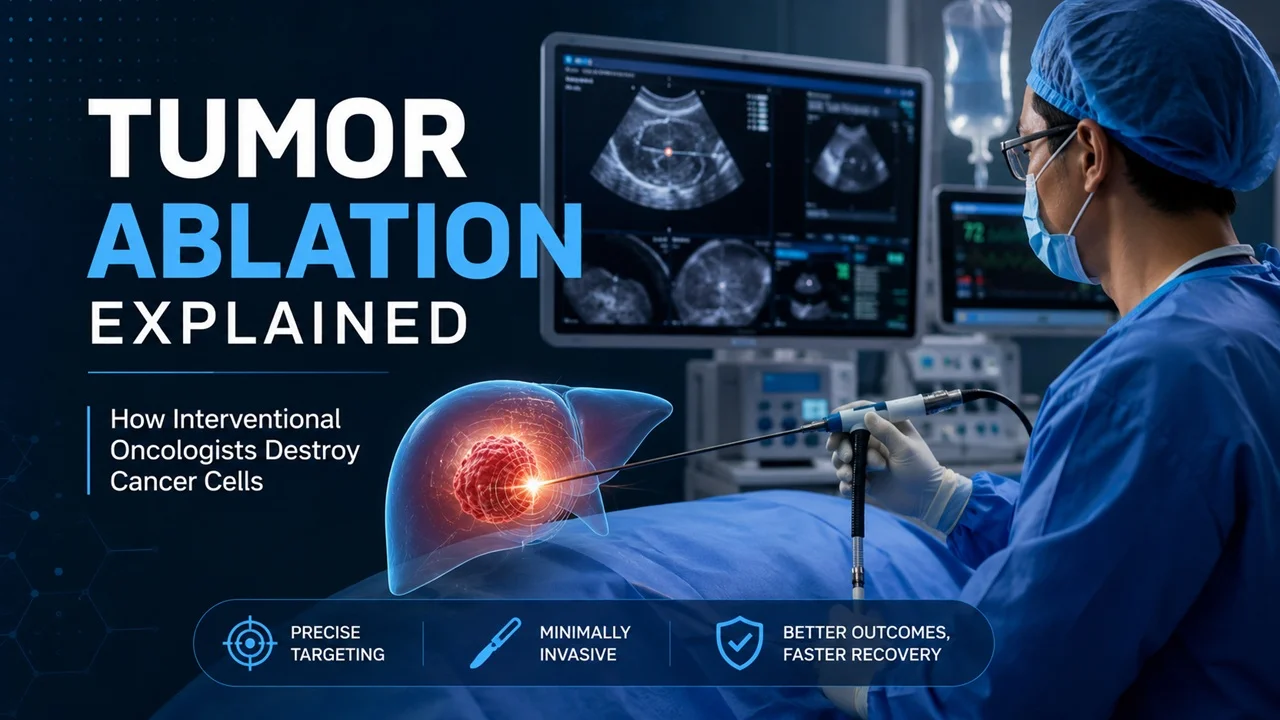
Tumour ablation (RFA, MWA, Cryoablation): Radiofrequency ablation and microwave ablation use heat to destroy tumours in the liver, kidney, lung, and bone. Cryoablation uses extreme cold. All are delivered through needle-sized probes guided precisely to the tumour. For selected early-stage liver and kidney cancers, these techniques offer outcomes comparable to surgery.
As an interventional oncologist, my role is not to replace oncologists it is to complement them, offering local tumour control when systemic therapies alone are insufficient or when the patient cannot tolerate surgery.
Reproductive and Women's Health
Fallopian tube recanalisation: For women with fallopian tube blockages causing infertility, a guided catheter can open the tube without surgery a procedure that takes minutes and is done under mild sedation.
Adenomyosis treatment: A condition often dismissed or misdiagnosed, adenomyosis causes severe pelvic pain and heavy bleeding. It can now be treated with the same embolization techniques used for fibroids, sparing the uterus.
Hepatobiliary Conditions
Complex liver and bile duct conditions that once required major surgery now have minimally invasive alternatives.
TIPS (Transjugular Intrahepatic Portosystemic Shunt): For patients with liver cirrhosis and portal hypertension causing dangerous complications variceal bleeding or refractory ascites TIPS creates an internal shunt to reduce pressure. It is performed entirely through the jugular vein, with no abdominal incision.
PTBD and biliary stenting: For obstructed bile ducts due to tumours, stones, or strictures a small drain or stent is placed percutaneously to restore drainage. Patients can go from severe jaundice and infection to relief within hours.
What to Expect: The Patient Experience
For patients considering an interventional radiology procedure, understanding the experience often relieves the anxiety far more than any list of benefits.
Before the procedure: You will meet with the interventional radiologist not just a coordinator or nurse to review your imaging, understand your specific anatomy, and discuss the plan in detail. You will understand exactly what is happening and why.
On the day: Most procedures are performed under local anaesthesia with mild sedation. You are awake and comfortable, not unconscious. The procedure room uses live imaging, which means the radiologist sees exactly where every instrument is at every moment.
The access point: A needle puncture typically in the groin, wrist, or neck is all that is needed to access the vascular system. There is no cutting, no stitching, and no wound to dress.
After the procedure: Recovery is measured in hours, not weeks. Most patients rest for two to four hours in the procedure room or a short-stay bay. Many go home the same day. Pain is typically mild and controlled with oral medications.
Follow-up: Imaging follow-up usually ultrasound or CT is performed at one month, three months, and six months to confirm the procedure's success and monitor response.
Why Interventional Radiology Is Particularly Valuable in India Right Now
India's medical landscape is changing. An ageing population, rising cancer incidence, and increasing rates of lifestyle diseases peripheral artery disease, liver disease, diabetes-related vascular complications mean a growing number of patients need treatment options that work around their comorbidities and limited recovery capacity.
Open surgery for an 80-year-old with liver cancer and heart disease is often not safe. A TACE procedure under sedation, targeted precisely to the tumour, is.
Beyond the elderly, there is the working-age population. A professional in their 40s diagnosed with uterine fibroids should not have to take six weeks off work for a hysterectomy. A UAE gets them back to a desk in five to seven days.
And there is the question of fertility. Surgical removal of fibroids or varicoceles carries risks to future fertility. Interventional alternatives preserve organs and function with documented outcomes in peer-reviewed literature.
In cities like Delhi, Noida, and Gurgaon, access to advanced interventional radiology has improved significantly. Hospitals with dedicated cath labs and trained interventional radiologists now offer procedures that were, a decade ago, available only in a handful of centres globally.
Common Misconceptions About Minimally Invasive Procedures
"Minimally invasive means less effective." This is the most persistent and most inaccurate belief. For the right indication, interventional procedures match or exceed surgical outcomes. TACE for intermediate-stage HCC, UAE for symptomatic fibroids, and PAE for BPH are all supported by robust randomised controlled trial evidence.
"It is only for people who cannot have surgery." Not at all. Many patients who are perfectly eligible for surgery choose interventional alternatives because the outcomes are equivalent and the recovery is dramatically shorter.
"There are no scars, so there are no risks." Every medical procedure carries risk, and interventional radiology is no exception. Access site complications, non-target embolization, post-procedural syndrome (fever, pain), and organ injury are all possible, though rates are low in experienced hands. Transparency about risk is fundamental to good care.
"Any radiologist can do this." Interventional radiology is a dedicated subspecialty requiring a fellowship or postdoctoral course after MD/DNB in radiodiagnosis. Training institutions like PGIMER Chandigarh and ILBS Delhi produce IR specialists who are distinct from general diagnostic radiologists.
How to Find the Right Interventional Radiologist
If you are searching for an Interventional radiologist in delhi, Noida, or Gurgaon, here is what to look for.
Training and credentials: Look for MBBS + MD or DNB in Radiodiagnosis, followed by a dedicated fellowship or PDCC in Interventional Radiology. Membership in ISVIR (Indian Society of Vascular & Interventional Radiology) or RSNA is a marker of professional engagement.
Hospital infrastructure: The procedures require a cath lab (angiography suite) with DSA (digital subtraction angiography) capability, post-procedure monitoring, and access to emergency surgery if needed. A hospital like BLK-MAX Superspeciality Hospital, which offers all of this under one roof, provides the safety net that outpatient-only setups cannot.
First consultation quality: A good interventional radiologist will review your imaging personally, tell you clearly whether you are a candidate for an IR procedure, and discuss alternatives including surgery. Be wary of any specialist who does not discuss surgical alternatives or who recommends intervention before reviewing your scans.
Peer-reviewed research: An IR who contributes to academic literature is one who is current with evidence and engaged with the global community of the specialty.
Frequently Asked Questions
What is the difference between an interventional radiologist and a vascular surgeon? Both treat blood vessel conditions, but through different approaches. Vascular surgeons work through open or laparoscopic incisions. Interventional radiologists access blood vessels percutaneously through needle punctures using imaging guidance. Many conditions can be treated by either specialist, and the best outcomes often come from collaborative decision-making between both.
Is interventional radiology painful? Most procedures involve local anaesthesia at the access site and IV sedation for comfort. Patients report pressure or warmth during the procedure but not sharp pain. Post-procedure discomfort is typically mild and managed with oral analgesics.
How long does it take to recover from an embolization procedure? Post-embolization syndrome mild fever, fatigue, and localised pain is common for three to seven days after embolization procedures like UAE or PAE. Most patients resume normal activities within one to two weeks.
Can interventional radiology cure cancer? IR procedures like tumour ablation (RFA/MWA) can be curative for small, early-stage liver or kidney cancers. For more advanced disease, TACE and TARE are used as disease-control measures slowing tumour growth and extending survival as part of a multidisciplinary oncology plan.
How do I know if I am a candidate for an IR procedure? You need a consultation with an interventional radiologist who will review your imaging, clinical history, and reports. Self-referral is possible you do not always need a referring surgeon. A direct consultation ensures you get an expert opinion on all available options.
A Final Word
Interventional radiology does not ask patients to choose between getting well and getting back to their lives quickly. It offers both. A woman can be treated for a uterine fibroid and be at her child's school play the following week. A man with liver cancer can receive a TACE procedure and continue working part-time through treatment. A patient with varicose veins can have lunch at a restaurant the same afternoon as their procedure.
That is not a marketing promise. That is what happens when medicine evolves to respect the whole patient not just the condition.
If you are in Delhi NCR and exploring your options, I invite you to consult with Dr. Akash Bansal at BLK-MAX Superspeciality Hospital. You can learn more about all available procedures and book a direct consultation.