Sign up with Google
 Sign in with Zoho
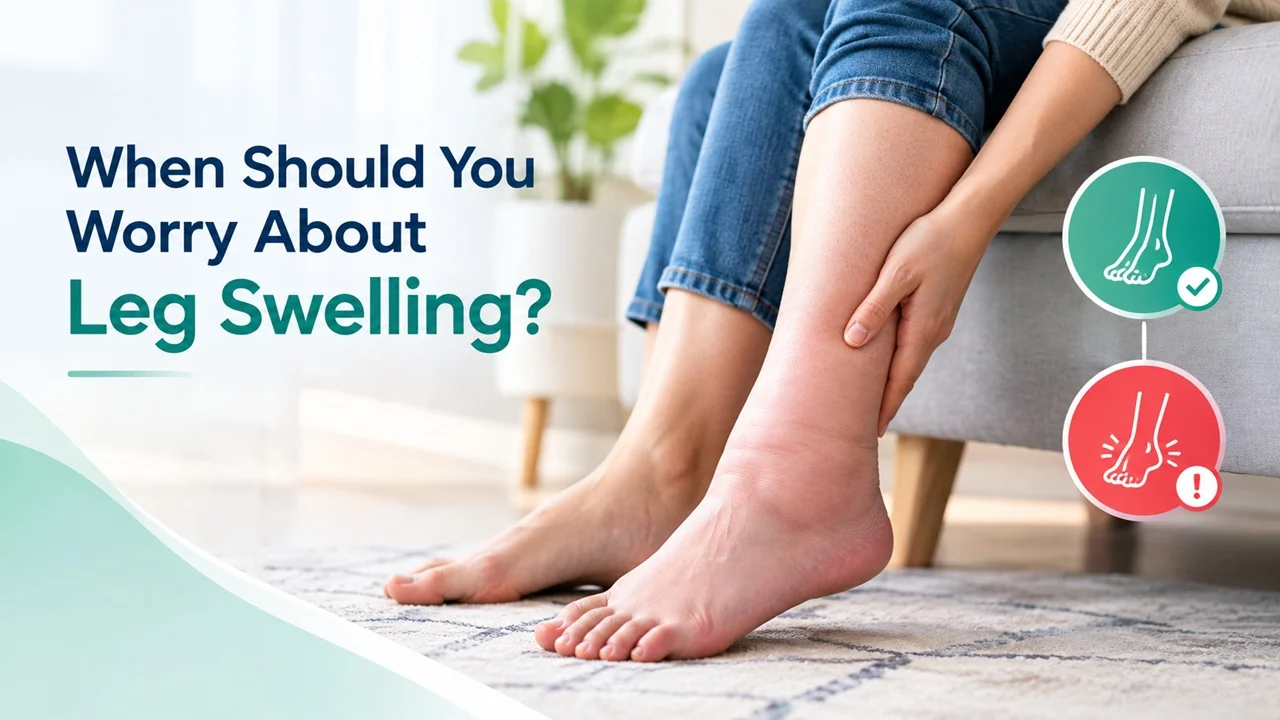
You catch a glimpse of your legs at the end of a long day and notice a vein that looks more raised, more twisted, and more visible than it used to.
It wasn’t always like this. And now you’re wondering is this just how legs change over time, or is something actually going wrong underneath?
This is one of the most common health questions people search for, and for good reason. Varicose veins are extremely common, especially as people get older, but very few people actually understand why they happen in the first place. Here’s a plain-language explanation.
What Are Varicose Veins, Exactly?
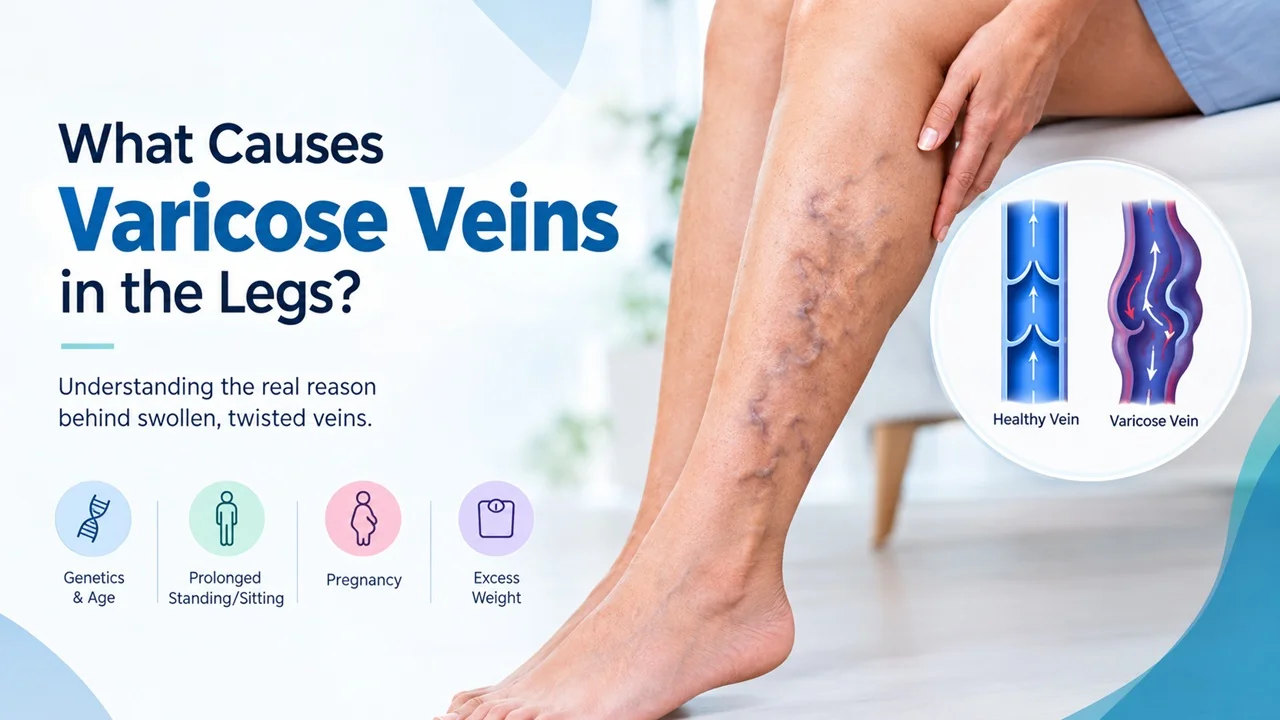
Varicose veins are veins, usually in the legs, that have become swollen, twisted, and enlarged enough to see clearly under the skin. They often look dark blue or purple, and can bulge slightly above the skin’s surface.
They’re different from spider veins, which are smaller, finer, and closer to the surface. Varicose veins tend to be larger, more raised, and more likely to cause discomfort.
How Healthy Veins Normally Work
To understand why varicose veins happen, it helps to understand how veins are supposed to work in the first place.
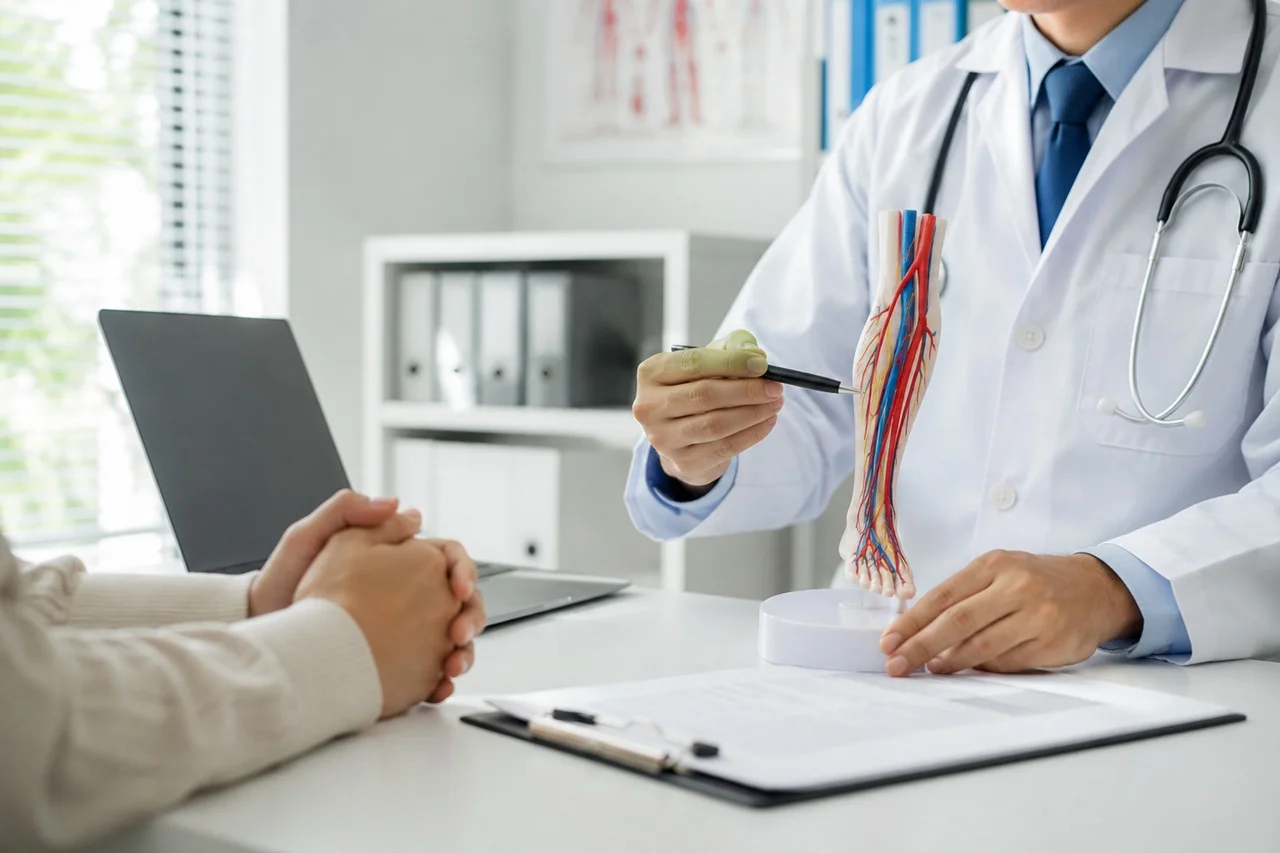
Veins carry blood back up toward the heart, which means blood in your leg veins has to travel upward, against gravity. To manage this, veins have tiny one-way valves inside them that open to let blood flow upward, then close to stop it from flowing backward and pooling.
As long as these valves work properly, blood keeps moving in the right direction, and everything stays looking normal.
What Actually Causes Varicose Veins
1. Weak or damaged vein valves
This is the main cause behind almost every case. When these one-way valves become weak or damaged, blood doesn’t move upward as efficiently. Instead, some of it flows backward and pools inside the vein, causing it to stretch, swell, and eventually bulge outward.
2. Prolonged standing or sitting
Jobs or habits that involve standing or sitting in one position for long stretches make it harder for blood to move efficiently back up the legs, putting extra pressure on the vein valves over time.
Age. As people get older, veins naturally lose some of their elasticity, and valves can weaken simply from years of everyday use, making varicose veins more common with age.
3. Pregnancy
Pregnancy increases the total volume of blood in the body and puts extra pressure on leg veins, while hormonal changes can also affect vein walls, which is why varicose veins often appear or worsen during pregnancy.
4. Family history
If close family members have had varicose veins, there’s a noticeably higher chance of developing them too, suggesting a genetic factor in how strong or weak vein valves tend to be.
5. Excess body weight
Carrying additional weight puts extra pressure on leg veins, making it harder for blood to flow back up efficiently, which can accelerate valve wear over time.
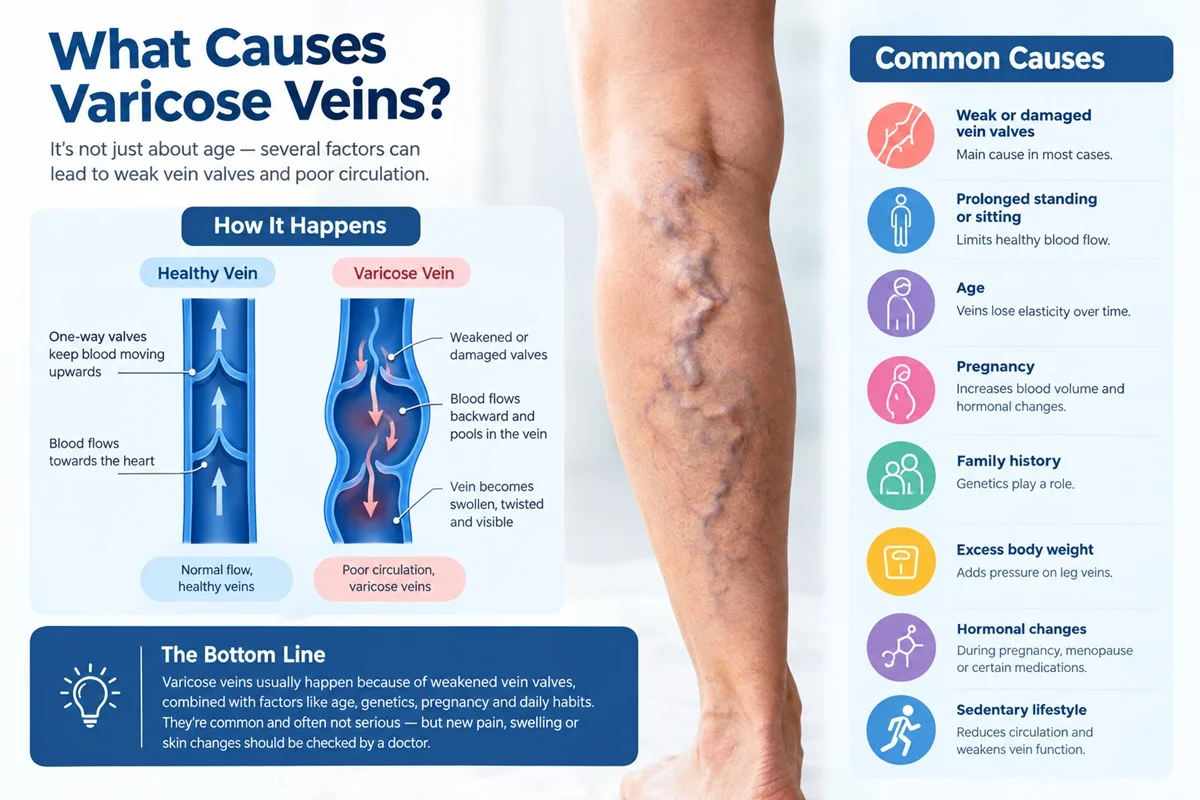
6. Hormonal changes
Hormonal shifts during pregnancy, menopause, or from certain medications can affect the strength and elasticity of vein walls, making them more prone to weakening.
7. A sedentary lifestyle
Regular movement helps the muscles in your legs support healthy blood flow back toward the heart. A lack of physical activity over time can contribute to poorer circulation and weaker vein function.
Who Is More Likely to Get Varicose Veins?
Certain factors make varicose veins more likely, though having one or more of these doesn’t guarantee they’ll develop:
• Getting older, especially past midlife
• Being female, partly due to hormonal factors and pregnancy
• Having a job that involves long periods of standing
• Having close family members with varicose veins
• Being overweight
• Having a history of multiple pregnancies
Common Signs and Symptoms
Beyond the visible, twisted appearance of the veins themselves, some people also notice:
• Aching or heaviness in the legs, especially after standing for a while
• Swelling around the ankles or lower legs
• Mild itching or discomfort near the affected vein
• Skin that looks slightly discoloured near larger varicose veins
Not everyone with varicose veins experiences discomfort for many, it’s purely a visible, cosmetic concern.
Can Varicose Veins Be Prevented?
While some causes, like genetics and age, can’t be controlled, a few habits may help reduce the risk or slow their progression:
• Taking breaks to move around if your work involves long periods of standing or sitting
• Maintaining a healthy body weight
• Staying physically active to support healthy circulation
• Elevating your legs periodically if you’re on your feet for long stretches
• Avoiding tight clothing that restricts blood flow in the legs
These habits support overall vein health, though they can’t guarantee varicose veins won’t develop, especially where family history plays a strong role.
When to See a Doctor
It’s worth speaking to a doctor if a varicose vein becomes painful, swollen, warm to the touch, or if the skin around it changes colour or starts to break down. It’s also worth getting checked if the appearance of the veins is affecting your confidence or daily comfort, since there are treatment options available depending on the severity.
A proper evaluation can also rule out other underlying circulation issues that might need separate attention.
Frequently Asked Questions
Q1. Are varicose veins dangerous?
In most cases, varicose veins are a cosmetic and comfort issue rather than a dangerous one. In rarer cases, they can be linked to more significant circulation problems, which is why it’s worth getting new or worsening symptoms checked by a doctor.
Q2. Can varicose veins go away on their own?
Varicose veins generally don’t disappear on their own once they’ve formed, since the underlying valve damage doesn’t repair itself naturally. Some mild cases stay stable for years, while others gradually worsen over time.
Q3. Do varicose veins run in families?
Yes, family history is one of the stronger risk factors. If your parents or close relatives have had varicose veins, you have a higher chance of developing them as well.
Q4. Does standing all day cause varicose veins?
Prolonged standing doesn’t directly cause varicose veins on its own, but it does increase pressure on leg veins over time, which can contribute to valve weakening, especially when combined with other risk factors like genetics or age.
Final Thought
Varicose veins are usually the result of weakened vein valves struggling to keep blood moving in the right direction, influenced by factors like age, genetics, pregnancy, and daily habits. They’re extremely common and, in most cases, not a cause for alarm but any new pain, swelling, or skin changes are always worth having checked by a doctor.
Disclaimer
This content is for general information only and is not a substitute for professional medical advice, diagnosis, or treatment.