Sign up with Google
 Sign in with Zoho

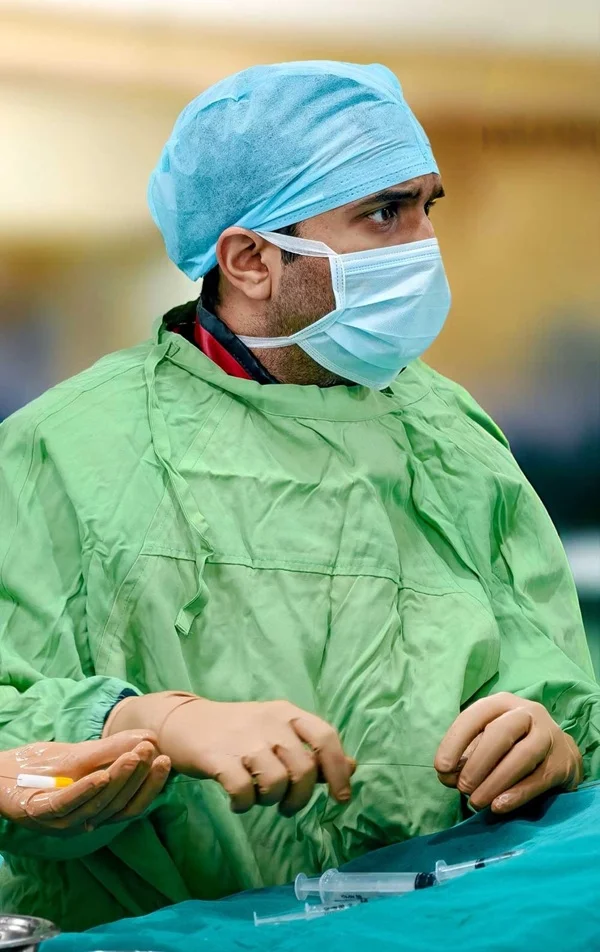
If your doctor has just mentioned "interventional radiology" and sent you off to research it on your own, you're not alone. It's one of those specialties that touches an enormous number of conditions from blocked arteries to fibroids to liver tumors yet most patients have never heard of it until they need it.
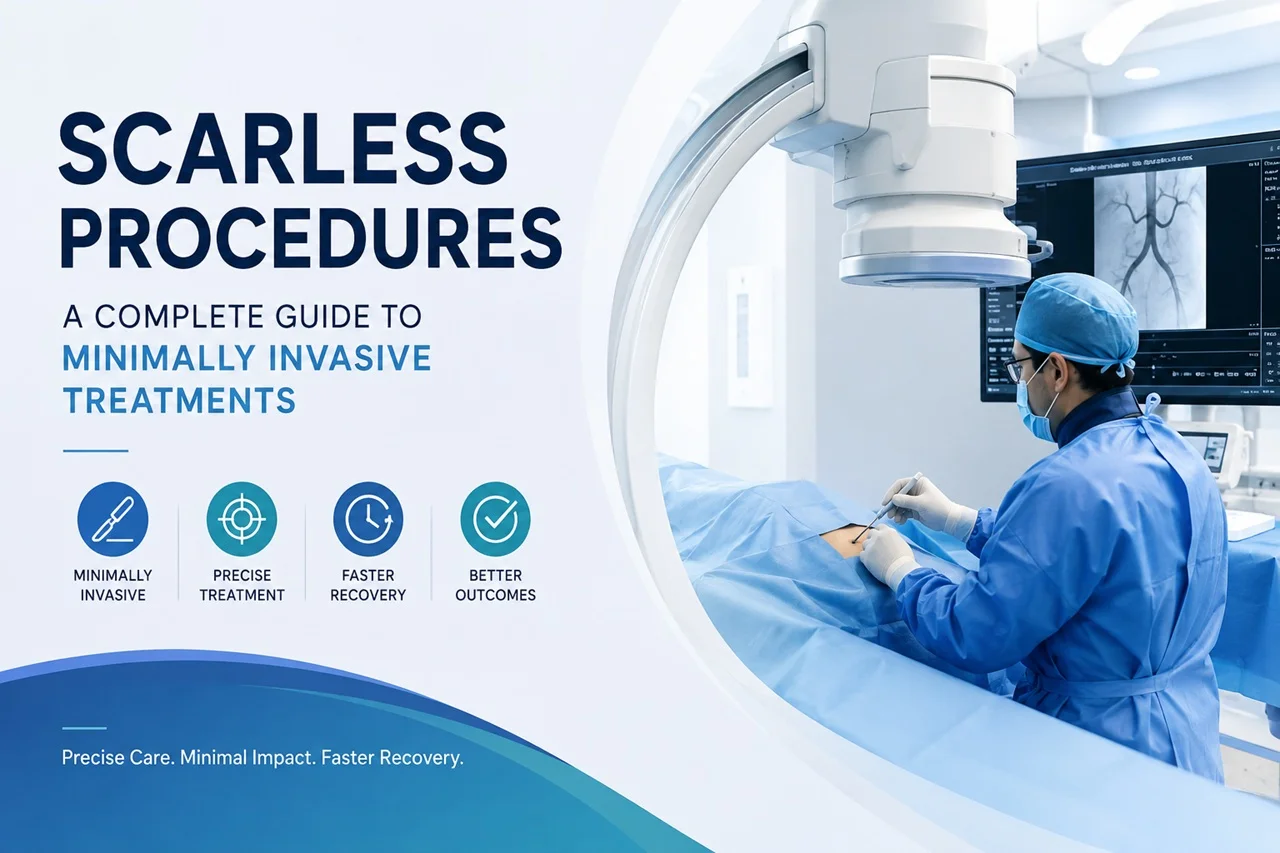
So, what does an interventional radiologist do, exactly? In short: they're the doctors who treat disease from the inside, using imaging technology to guide tiny instruments through the body instead of opening it up with a scalpel. This guide breaks down what that actually looks like in practice, what conditions they treat, and what you can expect if you're referred to one.
What Is an Interventional Radiologist?
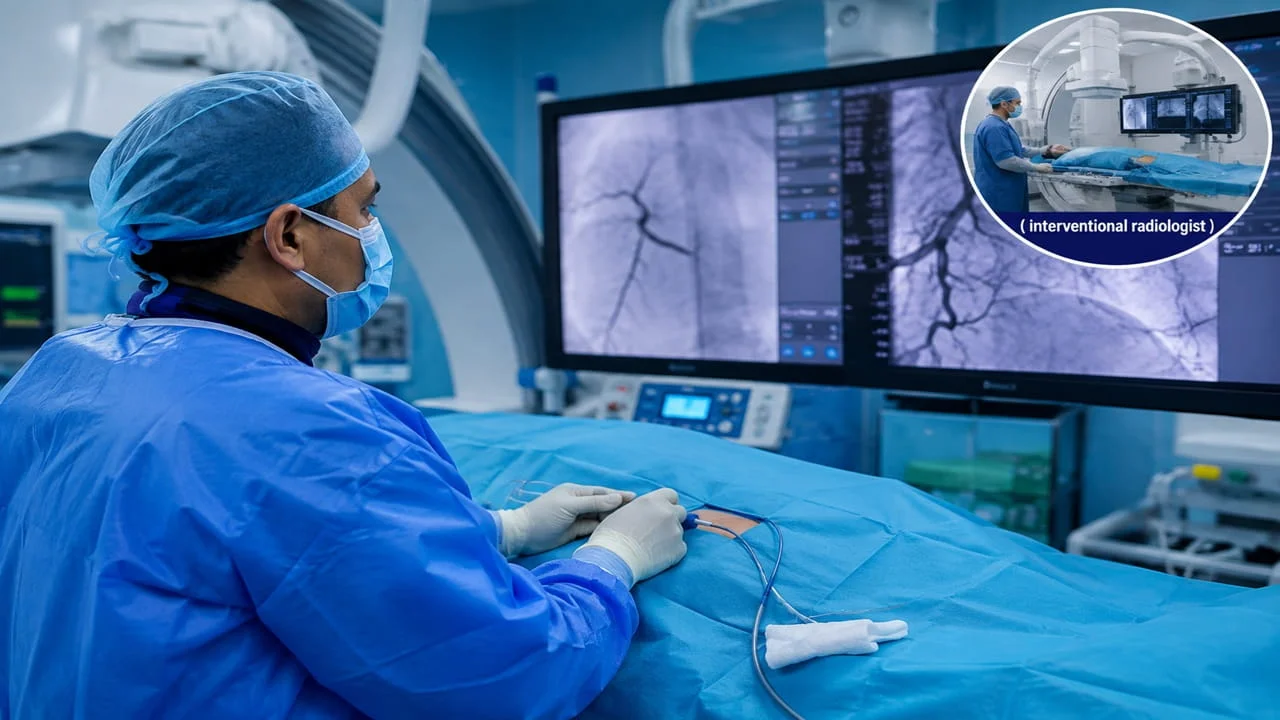
An Interventional Radiologist is a physician who specializes in diagnosing and treating conditions using image-guided procedures meaning they use tools like X-ray, ultrasound, CT, or MRI to see inside the body in real time while they work.
Think of it this way: a diagnostic radiologist reads your scans and tells your doctor what's wrong. An interventional radiologist goes a step further they use that same imaging to actually treat the problem, often through a small needle puncture or a catheter no wider than a strand of spaghetti, rather than a surgical incision.
To become one, a doctor completes medical school, a radiology residency, and then additional fellowship training specifically in interventional techniques. It's a specialty that sits at the crossroads of radiology, surgery, and internal medicine.
What Does an Interventional Radiologist Do, Day to Day?
On any given day, an interventional radiologist might:
- Thread a catheter through a blood vessel to open a blockage or stop internal bleeding
- Guide a needle into a tumor to destroy it with heat or cold, without surgery
- Place a drain to relieve a painful or infected fluid collection
- Insert a filter or stent to keep a vessel open or protect against clots
- Perform a biopsy to help diagnose cancer or other disease
- Treat uterine fibroids or an enlarged prostate by cutting off their blood supply
What ties all of this together is the how, not just the what. Every one of these procedures is done through a tiny access point usually in the wrist, groin, or directly through the skin while the radiologist watches their exact movements on a live imaging screen. That's the essence of interventional radiology: precision guided by real-time pictures, not by opening the body up to see directly.
Common Interventional Radiology Procedures
Interventional radiology procedures cover a surprisingly wide range of the body. Some of the most common include:
Angioplasty and stenting Widening a narrowed or blocked artery, often in the legs or kidneys, and holding it open with a small mesh tube.
Embolization Deliberately blocking blood flow to a specific area, used to stop internal bleeding, shrink fibroids, treat certain tumors, or manage abnormal blood vessel growths.
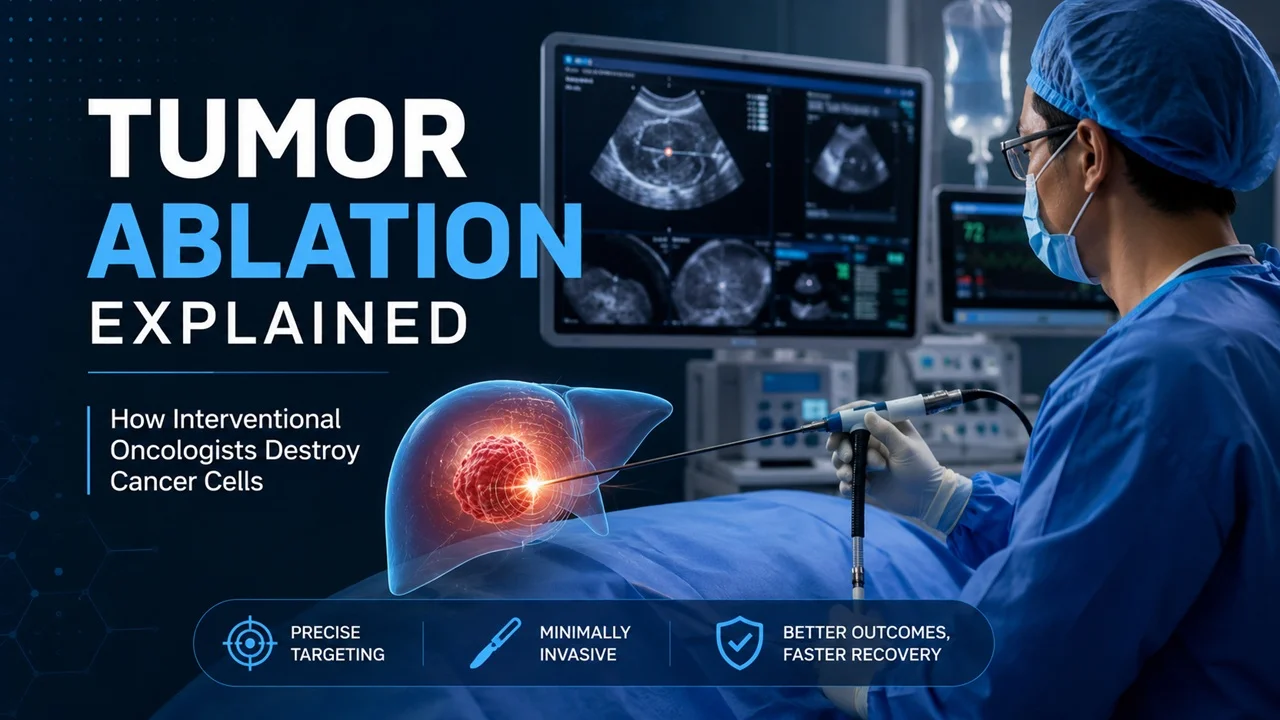
Tumor ablation Using heat (radiofrequency or microwave) or extreme cold to destroy small tumors in the liver, kidney, lung, or bone without removing the organ.
Image-guided biopsy Taking a tissue sample from a lump or organ using a needle guided precisely by ultrasound or CT, avoiding a larger surgical biopsy.
Drainage procedures Placing a thin tube to drain an abscess, fluid collection, or blocked bile duct.
Varicose vein treatment Closing off problem veins in the legs using heat or medical adhesive, done in under an hour with local anesthesia.
Uterine fibroid embolization (UFE) A non-surgical alternative to hysterectomy or myomectomy for women with symptomatic fibroids.
Conditions Treated by an Interventional Radiologist
People are often surprised how broad this list is. Conditions treated by an interventional radiologist include:
- Peripheral artery disease and poor circulation
- Uterine fibroids
- Enlarged prostate (BPH)
- Liver, kidney, and lung tumors
- Varicose veins and deep vein thrombosis (DVT)
- Kidney and gallbladder stones (in select cases)
- Internal bleeding after trauma or surgery
- Blocked bile ducts or abscesses
- Spinal compression fractures (via vertebroplasty)
If a condition can be reached through a blood vessel or with a needle under imaging guidance, there's a decent chance an interventional radiologist can treat it.
Why Minimally Invasive, Image-Guided Procedures Matter
The biggest reason patients are referred for these treatments is what they avoid: a large surgical incision, general anesthesia in many cases, and a long hospital stay.
Because minimally invasive procedures work through a small puncture rather than an open incision, patients typically experience:
- Less pain after the procedure
- Lower risk of infection
- Shorter hospital stays many procedures are done as day cases
- Faster return to normal activity, often within days rather than weeks
That doesn't mean these procedures are risk-free or right for everyone. Your interventional radiologist will review your scans, your overall health, and your specific condition before recommending a treatment path and will walk you through the alternatives, including surgery, if that's a more appropriate option.
What to Expect During an Interventional Radiology Procedure
Most procedures follow a similar rhythm, even though the details vary by condition:
- Consultation You'll discuss your symptoms, scans, and options before anything is scheduled.
- Local anesthesia (usually) Many procedures use local numbing rather than general anesthesia, so you stay awake but comfortable.
- Small access point A needle or thin catheter is inserted through the skin, typically in the wrist, groin, or directly over the target area.
- Live imaging guidance The radiologist watches a real-time screen to navigate precisely to the problem area.
- Treatment The specific fix is applied: opening a vessel, closing one off, taking a biopsy, or destroying a tumor.
- Short recovery Many patients go home the same day, with a follow-up visit to check healing and results.
It's worth asking your radiologist directly what recovery will look like for your specific procedure, since this can range from a few hours of rest to a few days of reduced activity.
Finding an Interventional Radiologist in Delhi
Delhi is home to several major hospitals with dedicated interventional radiology departments, reflecting how much demand there is for these non-surgical treatment options in a large metro population. If you're searching for an interventional radiologist in Delhi, it helps to look specifically for a center that performs a high volume of the procedure you need whether that's fibroid embolization, varicose vein treatment, or tumor ablation rather than a general radiology department, since outcomes and experience tend to track closely with case volume. Ask how many procedures the specific doctor performs each year for your condition, and don't hesitate to get a second opinion before committing to a treatment plan.
Frequently Asked Questions
Is an interventional radiologist a surgeon? Not exactly. They're trained physicians who perform procedures, but through image-guided, minimally invasive techniques rather than open surgery. Many conditions that once required a surgeon now go to an interventional radiologist first.
Do I need a referral to see one? Usually, yes most patients are referred by their primary doctor, gynecologist, oncologist, or vascular specialist after imaging shows a condition that could be treated this way.
Is the procedure painful? Most procedures use local anesthesia and mild sedation, so patients report pressure or minor discomfort rather than significant pain. Recovery discomfort is generally much lower than after open surgery.
How do I find an interventional radiologist near me? Start by asking your referring doctor for a recommendation, or check with major hospitals in your city for their interventional radiology or vascular and interventional department. Confirm the specialist's experience with your specific condition before scheduling.
How long is recovery after an interventional radiology procedure? It varies widely by procedure some patients return to normal activity within 24–48 hours, while others need a week or so. Your radiologist will give you a recovery timeline specific to your treatment.
This article is intended for general educational purposes and is not a substitute for professional medical advice, diagnosis, or treatment. Always consult a qualified physician about your specific condition.