Sign up with Google
 Sign in with Zoho


A woman in her late fifties once told me something that stuck with me for a long time. She'd been dealing with painful, swollen legs for nearly three years before she finally saw someone about it. When I asked why she waited so long, she said she genuinely didn't know who she was supposed to see. Her family doctor mentioned "maybe a surgeon," a relative suggested a "vein doctor," and somewhere in that confusion, three years passed.
That conversation is part of why I wanted to write this. Finding the right vascular specialist in Delhi shouldn't be this confusing, and yet for a lot of patients, it genuinely is. There's no single, obvious door to walk through vascular problems can fall under general surgery, cardiology, radiology, or a dedicated vascular specialty, depending on where you happen to ask. So let's actually untangle this properly.
What Does a Vascular Specialist Actually Treat?
Vascular conditions cover anything involving your blood vessels arteries, veins, and the circulatory system as a whole. This is a wider net than people usually assume. It includes varicose veins, blocked arteries in the legs (peripheral artery disease), blood clots like DVT, dialysis access problems, aneurysms, and conditions like varicocele that affect fertility.
What ties all of these together isn't the organ involved it's the blood vessel involved. A vascular specialist is trained specifically to understand how blood moves through the body, where circulation problems originate, and how to fix them at the source rather than just treating the symptom that shows up somewhere downstream.
Why "Vascular Specialist" Actually Covers More Than One Type of Doctor
Here's where the confusion usually starts, and I think it's worth being upfront about it rather than glossing over it.
A vascular surgeon typically treats blood vessel problems through traditional surgical approaches incisions, grafts, bypass procedures. This is the older, more established path, and it's still absolutely necessary for certain complex cases.
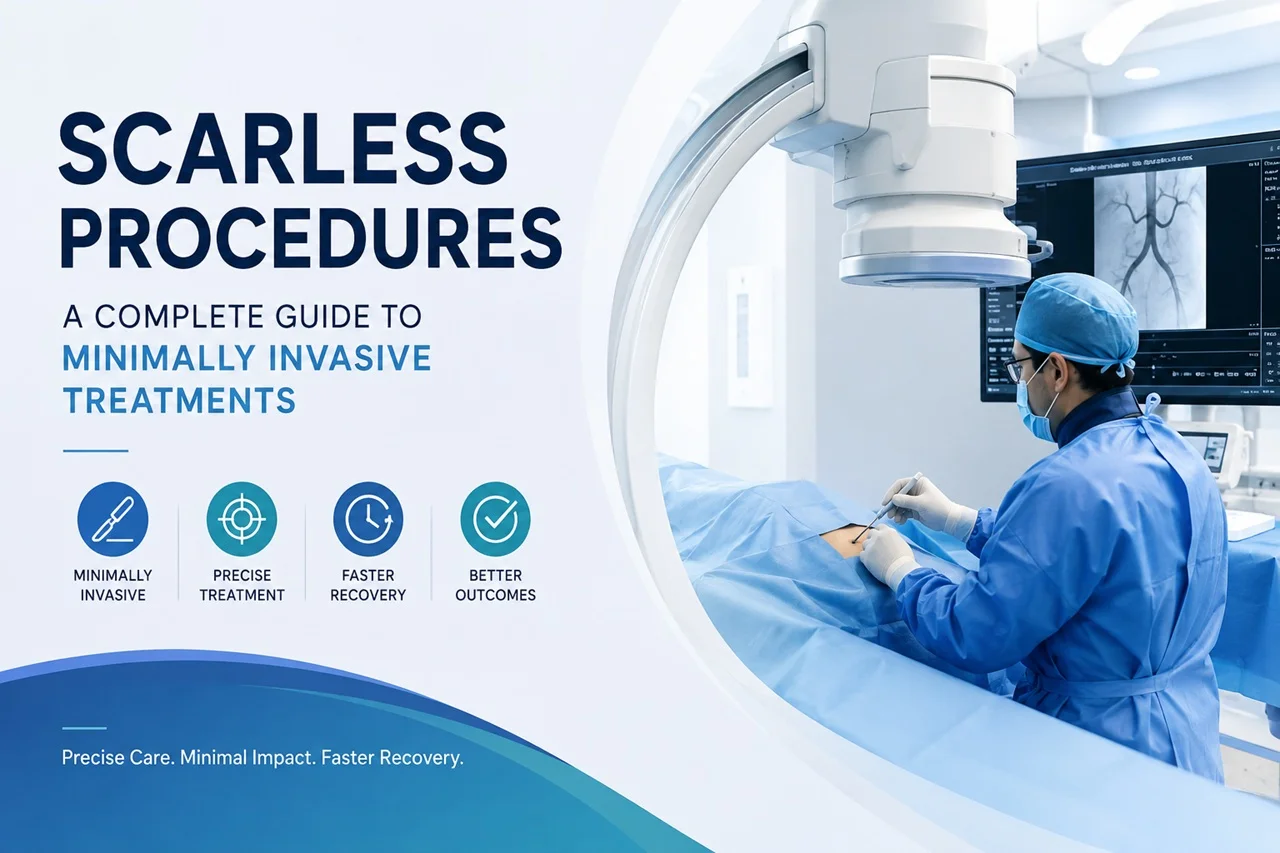
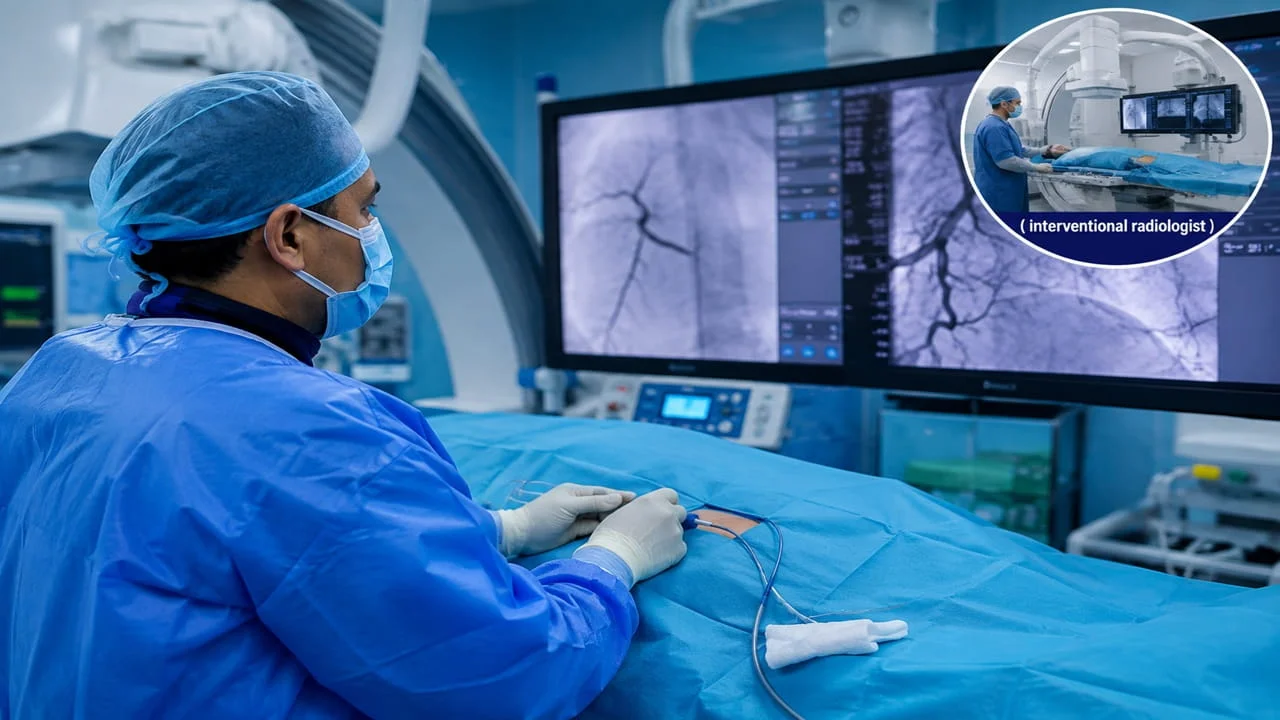
An interventional radiologist which is what I am treats many of the same conditions using imaging guidance instead of open surgery. Instead of an incision, we use a catheter or needle guided through a tiny entry point, watching the entire procedure on a live imaging screen. For a growing number of vascular conditions, this approach gets patients the same result with a fraction of the recovery time.
Neither approach is universally "better." The honest answer is that it depends entirely on your specific condition, and a good specialist regardless of which of these two backgrounds they come from should tell you honestly which approach actually fits your case, rather than defaulting to whichever procedure they personally prefer to perform.
The Question Most Patients Actually Need Answered First
Before choosing a specific doctor, it helps to get clear on what's actually happening in your body. This sounds obvious, but a surprising number of patients book an appointment based on a vague symptom description rather than getting a proper diagnostic picture first.
For most vascular concerns, this starts with something simple a physical examination and, very often, a Doppler ultrasound. This is a completely painless test that uses sound waves to map how blood is actually flowing through your vessels, and where exactly things aren't working the way they should. It tells us, concretely, whether we're dealing with a valve problem, a blockage, a clot, or something else entirely.
I bring this up because the right specialist for you often becomes obvious once this information is in hand rather than trying to guess based on symptoms alone.
What to Actually Look For in a Vascular Specialist in Delhi
Having sat across the table from thousands of patients over the years, here's what I'd genuinely tell a family member trying to choose:
Look for someone with focused experience, not general practice. A doctor who treats vascular conditions as part of a broader general practice will have a different depth of pattern recognition than someone whose entire practice is built around blood vessel disorders specifically.
Ask what diagnostic tools are available on-site. A proper vascular evaluation usually needs Doppler ultrasound, and sometimes CT or MRI angiography. If a clinic can't do this evaluation directly, you'll end up bouncing between locations before even getting a diagnosis.
Find out whether both surgical and minimally invasive options are genuinely on the table. If every patient walks out with the same recommended procedure regardless of their specific findings, that's worth noticing. A good specialist tailors the approach to what the ultrasound actually shows, not to what they're most comfortable performing.
Check their specific training and affiliations. Vascular medicine is a technical field, and the depth of a doctor's training genuinely affects both diagnostic accuracy and procedural outcomes. Institutional training, subspecialty certification, and active involvement in professional vascular societies are all reasonable things to ask about.
Notice how they explain things. This might sound like a soft point, but it isn't. If a specialist can't explain, in plain language, what's actually happening in your blood vessels and why they're recommending a specific approach, that's a real gap not just a communication style issue.
Common Conditions That Bring Patients to a Vascular Specialist
It helps to know what actually falls under this umbrella, since a lot of patients don't realize their specific issue qualifies:
- Varicose veins bulging, twisted veins usually in the legs, caused by valve failure and blood pooling
- Peripheral artery disease narrowed leg arteries causing pain with walking that eases with rest
- Deep vein thrombosis (DVT) blood clots in the deep veins, often in the leg, which can be a medical emergency
- Varicocele enlarged veins in the scrotum that can affect fertility
- Dialysis fistula problems complications with the vascular access used for kidney dialysis
- Vascular malformations abnormal blood vessel clusters present from birth
Each of these has a genuinely different underlying mechanism, which is exactly why a proper evaluation matters more than a quick guess based on symptoms alone.
What a First Consultation Should Actually Look Like
If you're seeing a vascular specialist for the first time, here's a realistic picture of what should happen not a sales pitch, an actual clinical process.
You'll be asked about your symptoms in detail when they started, what makes them better or worse, and your family and medical history. A physical examination follows, often including looking at your legs while standing, since gravity affects how veins and circulation problems present.
If further evaluation is needed, this is where imaging comes in usually a Doppler ultrasound, sometimes more detailed imaging depending on the suspected condition. Only after this information is gathered should a treatment conversation actually begin, and it should include the range of options genuinely available to you, along with honest trade-offs for each.
If a doctor recommends a specific procedure before any imaging has been done, that's worth pausing on. A confident recommendation without diagnostic backing isn't a good sign, however experienced the doctor claims to be.
My Own Approach, for What It's Worth
I run a vascular and interventional clinic at BLK-MAX Superspeciality Hospital in New Delhi, where I see patients dealing with exactly the range of conditions described above. My approach is built around getting the diagnosis right before recommending anything using on-site ultrasound to actually see what's happening rather than guessing from symptoms, and being upfront when a minimally invasive option genuinely fits, and equally upfront when it doesn't.
I bring this up not as a pitch, but because I think it's a reasonable standard to expect from any vascular specialist you're considering, wherever you end up going.
The Bottom Line
If you've been putting off seeing someone about leg pain, visible veins, swelling, or any of the conditions mentioned above the confusion about "who do I even see" shouldn't be the reason you keep waiting. Start with a proper evaluation. The right next step usually becomes clear once you actually know what's going on inside the vessel, rather than trying to work backward from a symptom that could mean several different things.
About Author
Dr. Akash Bansal is a Consultant Interventional Radiologist and Vascular Specialist at BLK-MAX Superspeciality Hospital, New Delhi, treating vascular conditions through image-guided, minimally invasive procedures.