Sign up with Google
 Sign in with Zoho
Imagine an employee using an AI tool to prepare a customer report. The report looks professional, the figures appear convincing, and the deadline is approaching. But some of the information is wrong. Without checking the output, the employee sends it to a client.
This is one of the everyday problems businesses can face when employees use artificial intelligence without understanding its limitations.
AI tools are now part of marketing, recruitment, customer service, software development and many other business activities. Giving employees access to these tools is relatively easy. Helping them use the tools responsibly requires more thought.
That is where AI literacy comes in.
Article 4 of the European Union's AI Act addresses AI literacy for providers and deployers of AI systems. For businesses operating in Europe, understanding this provision is a useful starting point for building responsible AI practices.
What Is AI Literacy, and Why Does It Matter?
AI literacy is the knowledge and understanding people need to work with AI systems appropriately. It includes recognising what a system can do, understanding its limitations and knowing when its output needs to be checked.
The level of knowledge required depends on the person's role. An employee using an AI writing assistant does not need the same technical expertise as an engineer developing an AI model. Both, however, need to understand the risks relevant to their work.
Consider three common workplace situations.
A marketing team uses generative AI to create website content. Employees need to check facts, review sources and ensure that confidential information is not shared with unapproved tools.
An HR department uses AI-assisted recruitment software. Staff need to understand the system's role in the recruitment process, its limitations and the importance of appropriate human review.
A software team integrates an AI model into a business application. Developers may need a deeper understanding of testing, system behaviour, security and potential failure points.
These examples show why AI literacy should be connected to real workplace activities rather than treated as a general introduction to artificial intelligence.
What Does Article 4 of the EU AI Act Say?
Article 4 of Regulation (EU) 2024/1689 requires providers and deployers of AI systems to take measures to ensure, to the best extent possible, a sufficient level of AI literacy among their staff and other people dealing with the operation and use of AI systems on their behalf.
The provision calls for consideration of several factors, including technical knowledge, experience, education, training and the context in which the AI systems are used. Organisations should also consider the people or groups affected by those systems.
In practical terms, businesses should look at how AI is being used and what the people involved need to know.
There is no single training course that will suit every organisation. The learning measures appropriate for a small business using AI writing tools may differ considerably from those needed by a company developing AI systems for sensitive applications.
Employers should also avoid assuming that a single introductory session automatically addresses every relevant learning need. The focus should remain on whether the measures are appropriate to the organisation's circumstances.
For a closer look at the requirement and practical implementation considerations, see this guide to AI literacy training under Article 4 of the EU AI Act.
Which Employees Need AI Literacy Guidance?
AI literacy is not only a concern for IT departments. Employees in different parts of a business may interact with AI directly or rely on its outputs.
The relevant groups will depend on the systems an organisation provides or deploys and how those systems are used.
- Management teams may need to understand AI-related responsibilities, organisational risks and the limits of automated recommendations.
- HR professionals may need guidance on AI-assisted recruitment, screening and workforce management.
- Marketing teams may need practical rules for reviewing generated content, checking factual claims and protecting business information.
- IT and engineering teams may need technical knowledge about system integration, testing, security and limitations.
- Legal, compliance and risk teams may need to understand how AI use connects with internal policies and applicable regulatory obligations.
- Operational employees may need to recognise unreliable outputs and know when to ask for human review.
People outside the organisation may also be relevant where they operate or use AI systems on a provider's or deployer's behalf.
The key is to identify who interacts with the systems, what they do with them and what knowledge would help them perform their responsibilities appropriately.
How Can a Business Build a Practical AI Literacy Programme?
A useful programme does not have to begin with a large training budget. It can start with a clear understanding of the AI tools already being used across the business.
1. Find out where AI is being used
Start by speaking with department heads and employees. Ask which AI applications they use, what tasks they perform with them and whether AI features are built into existing software.
This step matters because AI use is not always formally documented. An employee may use an AI writing assistant for routine work, while another department relies on an AI feature within its customer relationship management software.
A basic inventory of AI systems can help the organisation understand the scale and purpose of its AI use.
2. Match guidance to people's roles
Once the organisation understands its AI use, it can identify what employees need to learn.
A marketing employee might benefit from examples showing how to verify generated information. A developer may need technical guidance on testing and system limitations. A manager may need to understand when an AI-supported process requires additional review.
Avoid making every employee complete the same material simply because it is easier to organise. Some common guidance may be useful, but role-specific learning can address risks that a general presentation might miss.
3. Use examples employees recognise
People are more likely to understand AI risks when they can connect them to their daily work.
For instance, a business could show how an AI assistant produces an incorrect answer, then demonstrate how to verify the information before using it. Another exercise could explain why personal or confidential information should not be entered into an unapproved AI tool.
Other useful topics include bias, information security, responsible use, human oversight and internal procedures for reporting problems.
The aim is not to make employees afraid of AI. It is to help them recognise when a tool is useful, when caution is needed and when they should seek assistance.
4. Choose learning methods that fit the business
Classroom training is one option, but it is not the only way to develop AI literacy.
Depending on employees' needs, an organisation could use short workshops, practical demonstrations, written instructions, team discussions or role-specific learning materials.
A business introducing a new AI application might provide a demonstration before employees begin using it. A team that already uses AI regularly might benefit more from guidance on a specific issue, such as checking outputs or handling sensitive information.
The European Commission's AI literacy guidance recognises that appropriate measures depend on the circumstances. Organisations should choose methods that address their actual needs rather than assume that one format works for everyone.
5. Revisit the programme when things change
AI literacy should not be treated as a task that is completed once and forgotten.
A business may introduce new tools, change an existing workflow or give employees new responsibilities. These changes can create learning needs that were not present when the original programme was developed.
Review the guidance when significant changes occur. Employee feedback can also reveal where instructions are unclear or where additional support would be useful.
What Records Should Employers Keep?
Documentation can help a business understand what it has done to support AI literacy and identify areas that need further attention.
Article 4 does not prescribe a universal AI literacy certificate or one mandatory training-record format. The appropriate records will depend on the organisation's circumstances and the measures it takes.
A business may find it useful to record:
- Which AI systems or activities were covered.
- Which employee groups received guidance.
- The topics addressed during training or other learning activities.
- Relevant training materials and internal instructions.
- Dates and attendance details, where appropriate.
- Any identified learning gaps and planned follow-up activities.
- Changes made to the programme after a review.
These records should reflect what actually happened. An attendance sheet alone does not show whether the guidance was relevant to the AI systems employees use.
It is also important to distinguish AI literacy records from other compliance documentation. Depending on the systems involved, an organisation may have separate obligations concerning risk management, technical documentation, data protection or human oversight.
Mistakes That Can Weaken an AI Literacy Programme
Even well-intentioned initiatives can fall short if they focus more on completing administrative tasks than helping employees understand AI.
Treating training as a formality. A short presentation may introduce the subject, but organisations should consider whether the information addresses employees' actual responsibilities.
Assuming everyone needs the same knowledge. Different roles interact with AI in different ways. A tailored approach can make the guidance more relevant.
Ignoring informal AI use. Employees may use AI features that are already built into workplace applications. Businesses should look beyond the tools formally purchased by their IT teams.
Focusing only on technology. Responsible AI use also involves privacy, security, accuracy, potential bias and human judgement.
Keeping records without reviewing the underlying activities. Documentation is useful when it helps the organisation understand its actions and identify gaps. It should not become a substitute for appropriate learning measures.
Failing to update internal guidance. When tools and workflows change, existing instructions may no longer address the risks employees face.
How AI Literacy Fits Into Wider AI Governance
AI literacy works best when it is connected to the organisation's wider approach to AI governance.
For example, an inventory of AI systems can help identify which teams need guidance. A risk assessment can highlight issues employees should understand before using a system. Internal policies can explain which tools are approved, how outputs should be checked and where concerns should be reported.
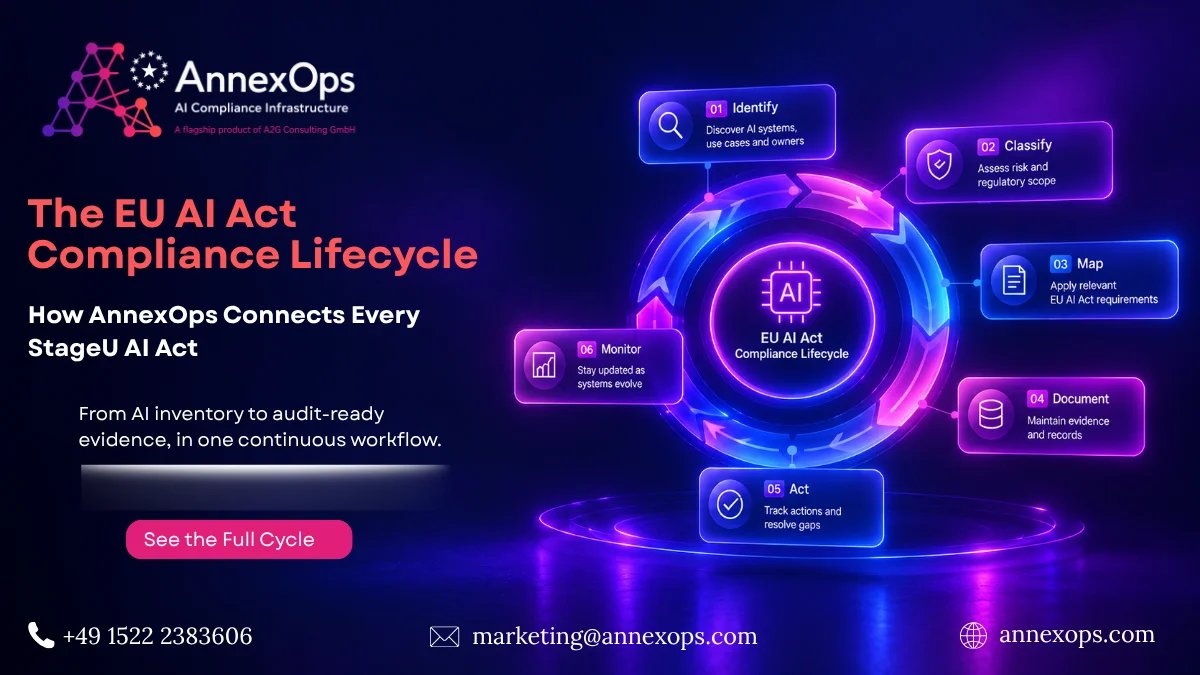
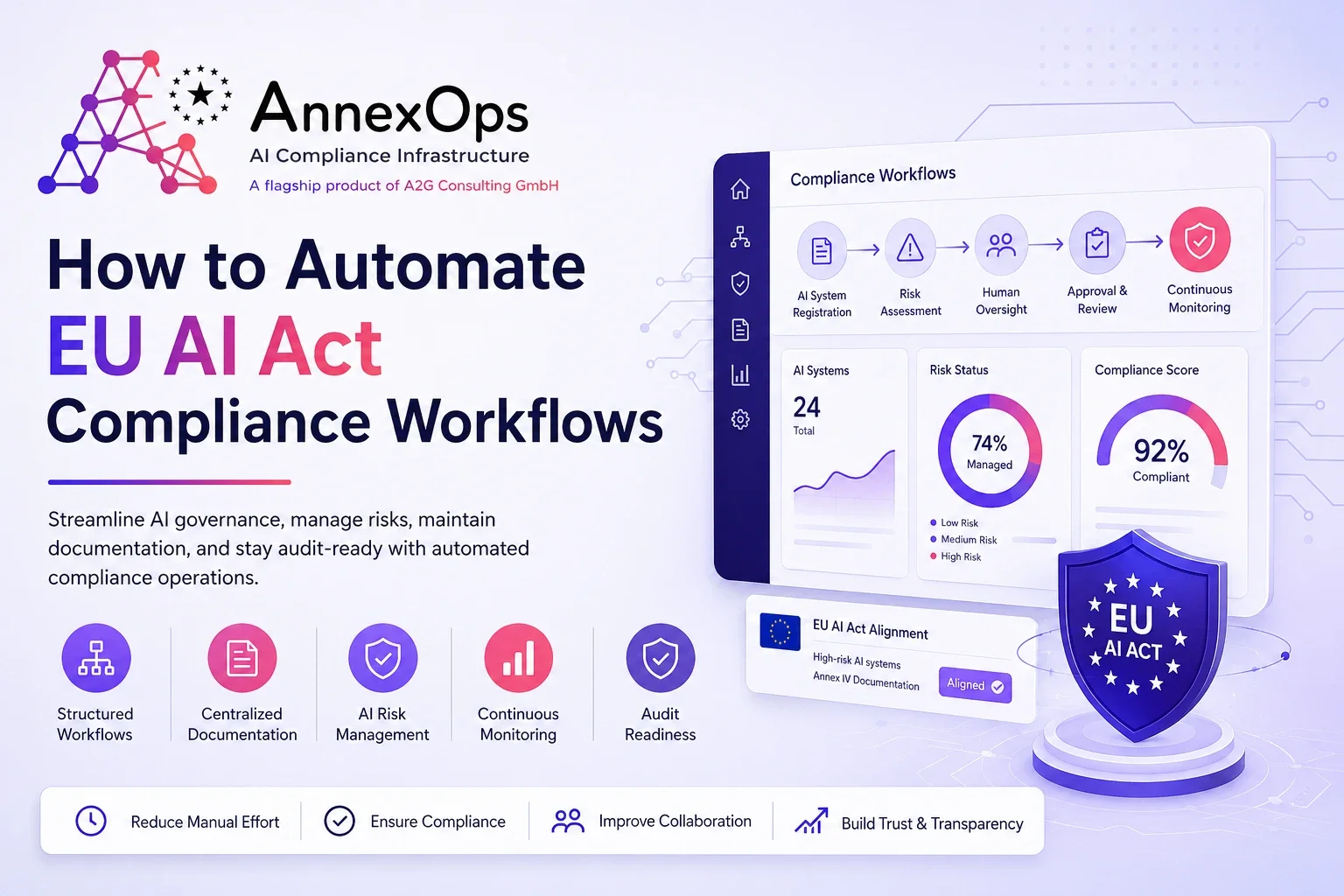
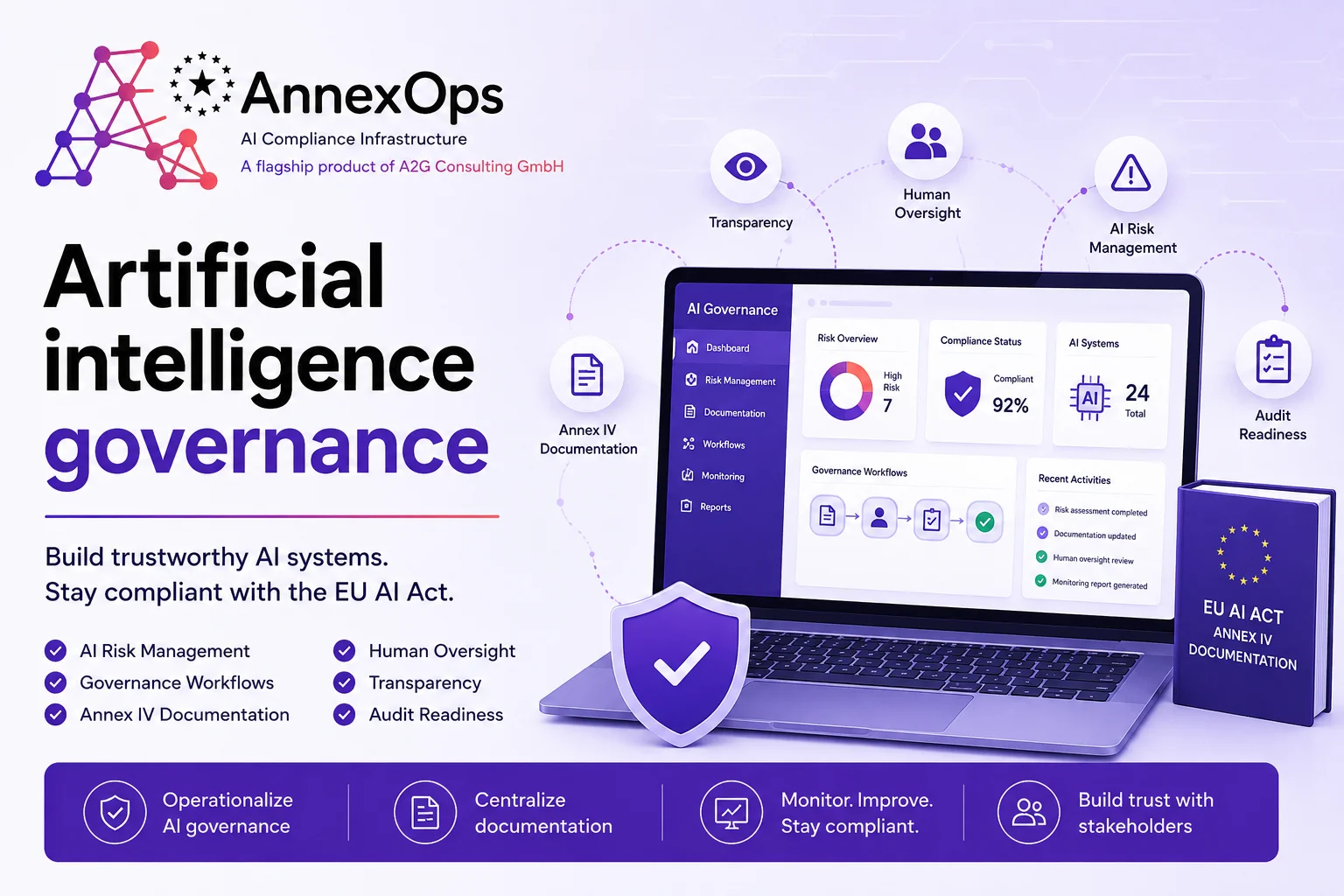
Businesses managing multiple AI systems may find that AI compliance software helps organise system information, risk classification, documentation and evidence. These tools can support a more structured workflow, but they do not replace appropriate employee learning, human judgement or legal advice where needed.
AnnexOps provides AI compliance software designed to support EU AI Act and AI governance operations. Its capabilities include AI system inventory, risk classification, documentation workflows and evidence management, alongside an AI Literacy & Training Tracker.
The value of connecting these activities is straightforward: an organisation can consider employee learning as part of its wider governance work instead of treating it as a separate administrative exercise.
Making AI Literacy Part of Everyday Work
AI literacy begins with a simple question: do people understand the AI systems they use well enough to recognise their limitations and act responsibly?
Article 4 gives this question regulatory significance for providers and deployers of AI systems. Businesses should examine their AI use, identify relevant learning needs, choose suitable measures and keep records that accurately reflect their activities.
The approach does not need to be complicated to be useful. Clear instructions, practical examples and reviews when circumstances change can help employees make better decisions when working with AI.
Organisations looking for more detailed implementation guidance can read the article on AI literacy training under Article 4 of the EU AI Act.
About AnnexOps: AnnexOps develops AI compliance software to support organisations with EU AI Act-related workflows, risk classification, documentation and AI governance activities.
Disclaimer: This article is for general informational purposes and does not constitute legal advice.