Sign up with Google
 Sign in with Zoho

Artificial intelligence is becoming part of everyday business operations. Companies are using AI for customer service, recruitment, analytics, automation, content creation, software development, and decision support.
But there is an important question that often gets overlooked:
How risky is the AI system your organization is actually using?
This matters because AI systems do not all carry the same regulatory implications. An AI tool used for a simple productivity task is very different from a system that can influence someone's employment, access to services, or other important opportunities.
For organizations operating in or serving the European market, AI risk classification is therefore becoming an important part of AI governance.
The challenge is that classification should not be based simply on whether a company uses AI. The intended purpose, deployment context, potential impact, and role of the system all need to be considered.
What Is AI Risk Classification?
AI risk classification is the process of assessing an AI system to understand its regulatory risk and determine what governance and compliance activities may apply.
A useful starting point is to look beyond the technology itself.
Two organizations might use similar AI technology but have very different risk profiles because they use it for different purposes.
For example, an AI system used internally to help employees summarise documents may require a different governance approach from an AI system used to support decisions affecting people's employment.
This is why use case matters.
Organizations need to understand what an AI system is designed to do, where it is being used, who is affected, and what role the AI plays in the process.
Start With an AI Inventory
Before an organization can classify its AI systems, it needs to know what systems exist.
This sounds straightforward, but AI adoption can happen across departments without a central process. Employees may introduce AI tools independently, while existing business software may also contain AI-powered functionality.
An AI inventory provides a central view of the organization's AI landscape.
Useful information can include:
- AI system name
- Intended purpose
- Business owner
- Provider
- Department
- Users
- Data involved
- Deployment context
- Risk classification
- Governance status
Once this information is collected, organizations have a stronger foundation for applying a consistent classification process.
What Should Organizations Look At?
1. Intended Purpose
The first question should be:
What is the AI system actually being used for?
A broad description such as "AI analytics" isn't enough.
Organizations should document the specific function of the system.
Is it recommending candidates? Evaluating applications? Supporting decisions? Interacting with customers? Analysing biometric information?
The more clearly the intended purpose is documented, the easier it becomes to assess the system's regulatory position.
2. Deployment Context
Where and how an AI system is used can also influence its risk profile.
An AI model used for internal productivity may have a very different context from one used in employment, education, healthcare, or another sensitive area.
This means classification should consider the complete operating environment rather than looking at the model in isolation.
3. Potential Impact
Organizations should consider who could be affected by the AI system.
A system that automates a routine administrative task may have limited consequences if something goes wrong.
A system whose output can influence someone's employment, access to services, education, safety, or another important opportunity requires much closer attention.
Understanding potential impact is therefore an important part of AI risk management.
4. Role of Human Oversight
Another useful question is:
What role does the AI play in the final process?
Is the system simply providing information for a person to review?
Does it recommend an outcome?
Or does it play a much more significant role in a decision?
Organizations should document how humans interact with the system and where human oversight takes place.
Why Manual Classification Becomes Difficult
A spreadsheet may be perfectly adequate when an organization has only a few AI systems.
The situation changes when AI adoption expands.
Multiple teams may maintain separate records. Risk assessments can become outdated. Different people may classify similar systems differently. Supporting evidence may also end up scattered across shared folders and emails.
Over time, the organization can lose a clear view of:
- Which AI systems are currently in use
- Who owns them
- How they were classified
- Why a particular classification was made
- Whether the system has changed
- What compliance activities are associated with it
This is where AI governance becomes an operational challenge rather than simply a policy exercise.
Connecting AI Risk Classification With AI Governance
Risk classification should not be treated as the final step.
A stronger approach connects it with the wider AI governance lifecycle:
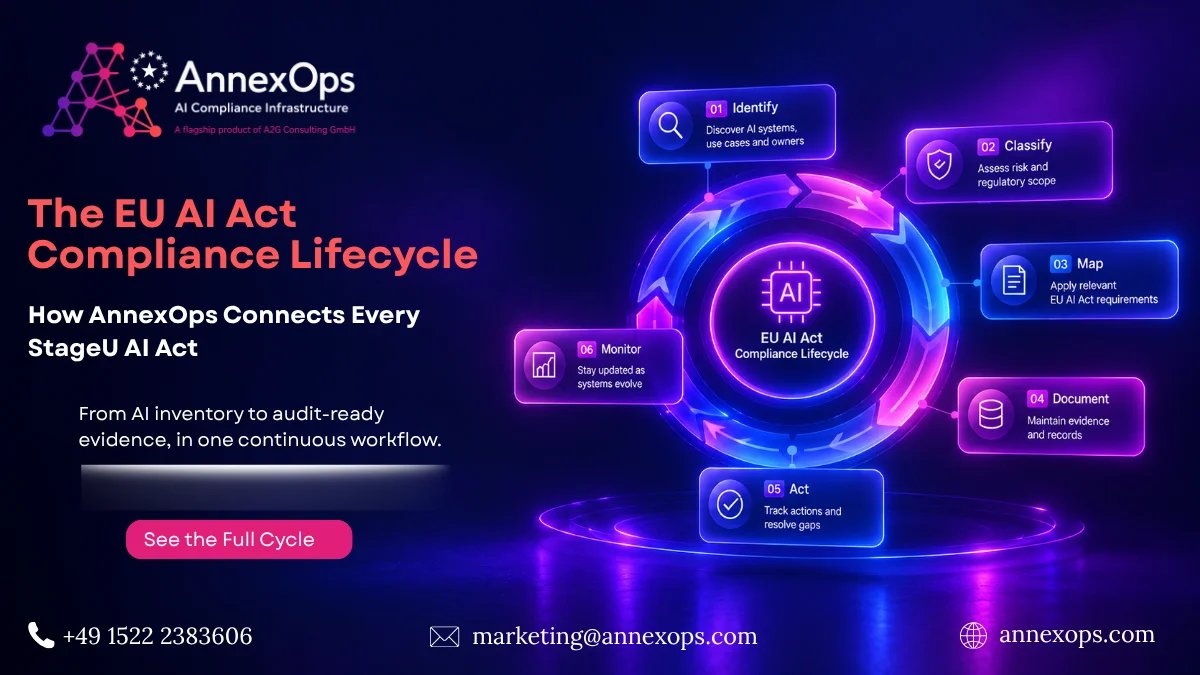
Discover → Classify → Assess → Govern → Monitor → Review
First, identify the organization's AI systems.
Next, classify them according to the applicable criteria.
Then assess the risks and determine which governance activities are needed.
From there, organizations can establish appropriate documentation, ownership, controls, human oversight, and monitoring.
Finally, classifications should be reviewed when the AI system, its purpose, or its operating environment changes.
This creates a continuous process instead of a one-time compliance exercise.
What Happens When an AI System Is Considered High Risk?
Identifying a high-risk AI system is only the beginning.
Depending on the applicable requirements, organizations may need to address areas such as risk management, data governance, technical documentation, logging and traceability, human oversight, monitoring, and compliance evidence.
This is an important reason to get classification right.
The classification can influence the compliance path that follows.
Organizations therefore need more than a label such as "high risk." They need a documented understanding of why the system was classified that way and what actions should follow.
Why Documentation Matters
AI risk classification and documentation go hand in hand.
When a classification decision is made, organizations should be able to explain the reasoning behind it. They should also be able to connect that decision with relevant governance activities.
As AI portfolios grow, keeping this information in disconnected documents can become difficult.
This is one reason AI documentation SaaS is becoming useful for organizations managing AI at scale.
An AI documentation SaaS platform can provide a structured environment for centralizing AI system information, documentation, risk assessments, governance records, and compliance evidence.
Rather than treating documentation as something created only when an audit is approaching, organizations can make it part of their normal AI lifecycle.
Common AI Risk Classification Mistakes
Assuming Every AI System Is High Risk
Using AI in a regulated industry does not automatically mean every AI system is high risk. The specific use case and applicable regulatory criteria need to be considered.
Treating Classification as a One-Time Exercise
AI systems change. Their functionality, purpose, users, or deployment environment can change as well.
A classification that was appropriate when a system was launched may need to be reviewed later.
Ignoring AI Used Outside Central IT
Employees may adopt AI tools independently. Without an AI inventory, these systems can remain outside the organization's governance process.
Failing to Document the Decision
Simply recording "high risk" or "low risk" isn't enough for a mature governance process.
Organizations should maintain the reasoning and relevant information supporting the classification.
Separating Classification From Compliance
Risk classification should lead to action.
Once the risk is understood, organizations need to connect it with documentation, risk management, oversight, monitoring, and other relevant governance activities.
How Technology Can Help
As organizations move from a handful of AI tools to larger AI portfolios, managing risk classification manually can become increasingly difficult.
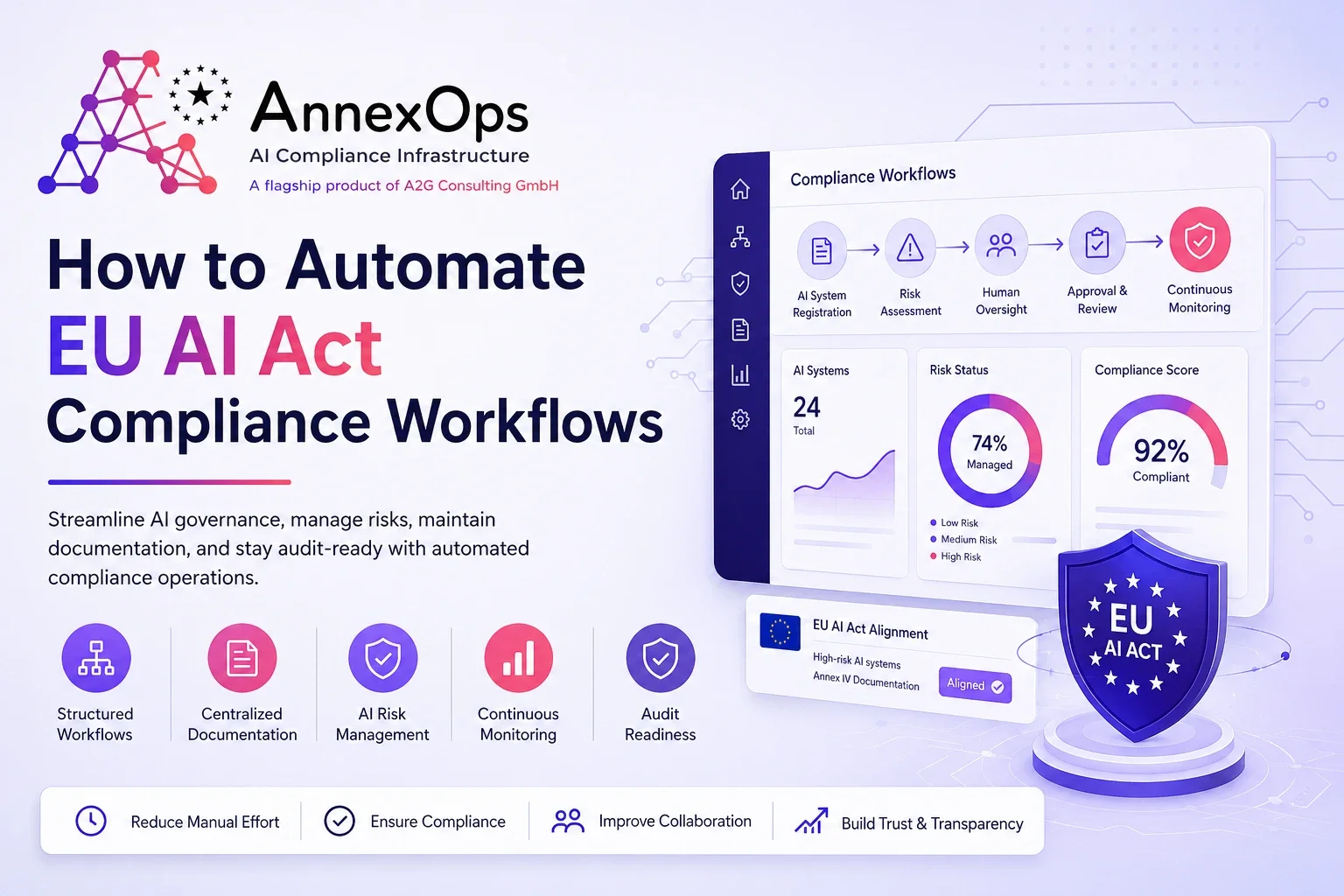
An AI governance platform can help centralize AI system information and connect risk classification with wider compliance workflows.
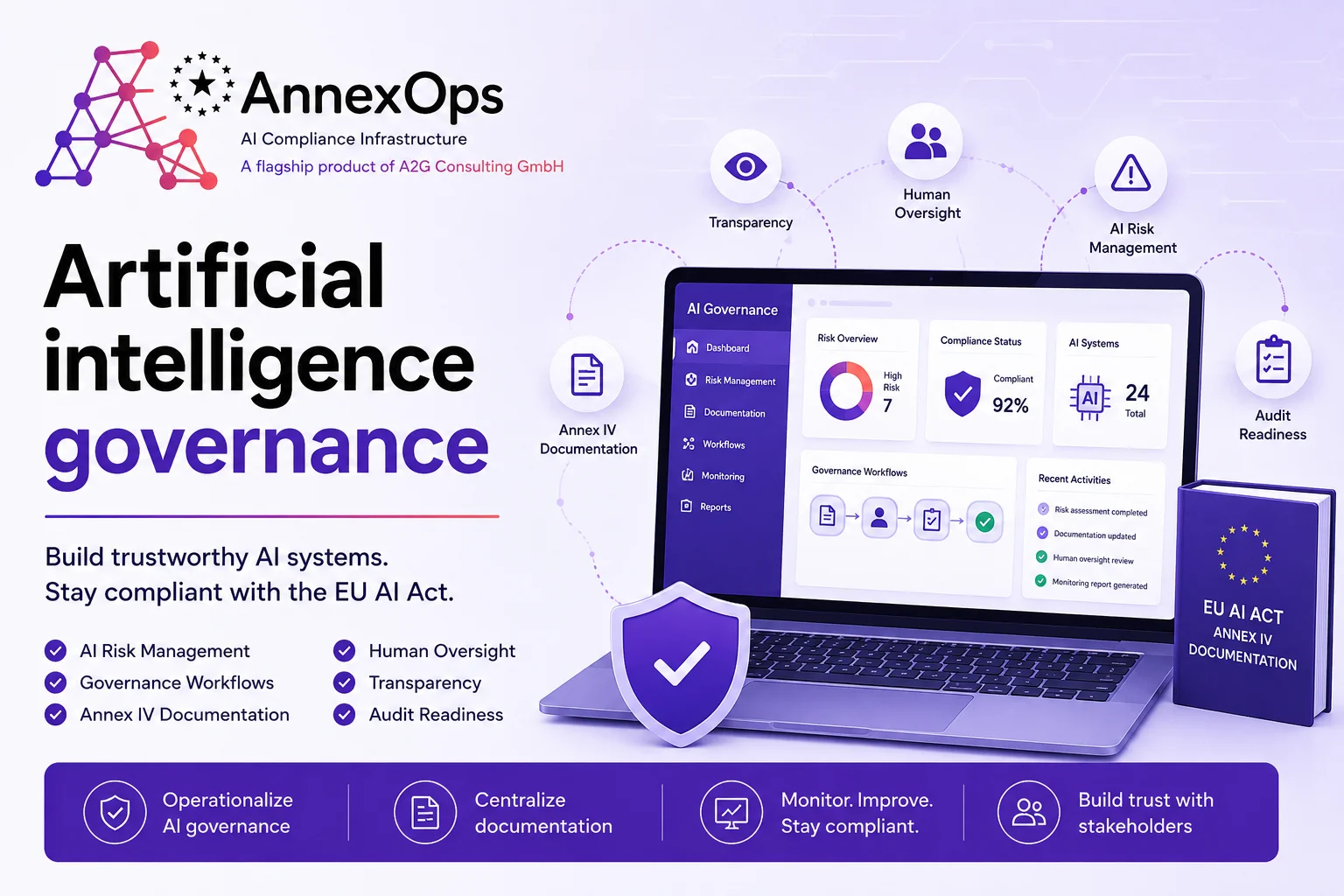
AnnexOps takes this operational approach to AI governance and EU AI Act compliance. The platform helps organizations discover AI systems, classify regulatory risk, manage compliance activities, maintain documentation, and prepare for audits.
For organizations that also need structured documentation, an AI documentation SaaS approach can help bring system information, risk assessments, technical documentation, governance records, and compliance evidence into a more organized workflow. AnnexOps describes this approach as a way to centralize documentation and support AI governance throughout the AI lifecycle.
A Practical Approach to AI Risk Classification
Organizations don't need to make the process unnecessarily complicated.
A practical starting point is:
1. Discover Create an inventory of AI systems.
2. Understand Document each system's intended purpose, users, data, and deployment context.
3. Classify Assess the system against the applicable regulatory criteria.
4. Document Record the classification decision and supporting information.
5. Govern Connect the classification with relevant controls, ownership, documentation, and oversight.
6. Monitor Keep track of changes and emerging risks.
7. Review Reassess the classification when the system or its use changes.
This approach gives organizations a clearer way to move from simply knowing that they use AI to actually understanding and managing the risks associated with it.
Final Thoughts
AI risk classification is not just a regulatory checkbox.
It provides the foundation for understanding how an organization should govern its AI systems.
The most useful approach is to start with visibility, understand the intended purpose and context of each system, document classification decisions, and connect those decisions to ongoing governance.
As AI adoption grows, organizations that build this process early can avoid the confusion that comes from scattered inventories, outdated assessments, and disconnected compliance records.
And when the number of AI systems grows beyond what spreadsheets can comfortably handle, dedicated governance and AI documentation SaaS tools can provide a more structured way to manage the process.
For organizations looking to build a more operational approach to AI risk classification and EU AI Act compliance, AnnexOps provides a platform for connecting AI discovery, risk classification, documentation, governance, and compliance activities.