Sign up with Google
 Sign in with Zoho

Artificial intelligence is changing healthcare faster than ever before. From helping doctors detect diseases earlier to supporting clinical decisions and improving patient care, AI is becoming a core part of modern healthcare. Hospitals, medical device companies, digital health startups, and research organizations are all investing in AI to improve outcomes, streamline operations, and deliver more personalized care.
But creating an AI model that performs well is only part of the challenge.
As AI begins to influence clinical decisions and patient care, healthcare organizations are expected to prove that these systems are reliable, transparent, and used responsibly. Patients, healthcare providers, regulators, and enterprise customers all want to know that AI isn't just effective—it can also be trusted.
This is where AI Governance becomes critical.
Unfortunately, many organizations still think of governance as something to worry about later. It often turns into a last-minute scramble before an audit, customer assessment, or regulatory review. Teams rush to gather documents, track down approvals, and piece together evidence from different departments.
While documentation is certainly important, it shouldn't be the starting point.
Organizations that successfully scale AI take a different approach. Instead of asking, "What documents do we need for compliance?" they ask, "How do we build governance into the way we develop and manage AI from day one?"
That small shift in thinking makes a big difference.
When governance is part of the entire AI lifecycle—not just an audit checklist—organizations spend less time chasing paperwork and more time building AI systems they can confidently deploy, manage, and improve over time.
Why Healthcare AI Needs More Than Just Great Technology
Healthcare is one of the most highly regulated industries in the world, and for good reason. AI systems used in healthcare can directly affect patient safety, treatment decisions, and clinical outcomes. That means the stakes are much higher than they are for AI applications used in areas like marketing or product recommendations.
Think about the types of AI being used today:
- Detecting cancer from medical images
- Supporting clinicians with treatment recommendations
- Identifying patients who may be at risk of deterioration
- Prioritizing emergency cases through AI-powered triage
- Powering medical devices that assist with diagnosis
These technologies have enormous potential to improve healthcare, but they also introduce important questions.
- Was the model trained using reliable and representative data?
- Who approved it before deployment?
- How is its performance monitored over time?
- What happens if the model begins producing different results?
- Who is responsible for decisions made with AI support?
These aren't documentation questions—they're governance questions.
Without a structured governance process, answering them consistently becomes difficult. That creates unnecessary risk, not only during regulatory reviews but also when working with enterprise customers, healthcare providers, and internal stakeholders who expect accountability and transparency.
Governance Is More Than Regulatory Compliance
One of the biggest misconceptions surrounding healthcare AI is that governance exists solely to satisfy regulators.
In reality, governance serves a much broader purpose.
Effective AI Governance creates confidence across the entire organization by establishing clear responsibilities, repeatable processes, and continuous oversight.
A mature governance framework helps organizations:
- Understand where AI is being used.
- Identify high-risk AI systems.
- Assign ownership and accountability.
- Monitor model performance over time.
- Document important lifecycle decisions.
- Demonstrate transparency to stakeholders.
- Prepare for audits without last-minute effort.
Notice that documentation is only one outcome of governance, not the governance process itself.
Organizations with strong governance rarely need to scramble before an audit because evidence is generated continuously through everyday operational activities.
Why Paperwork Alone Doesn't Solve the Problem
Many organizations still treat compliance as a project that begins shortly before an assessment.
The process often looks something like this:
Development teams search through code repositories.
Compliance teams gather policy documents.
Legal departments review approvals.
Product managers collect deployment histories.
Security teams compile monitoring reports.
Every department contributes information independently, often using different tools and documentation standards.
This fragmented approach creates several problems.
First, it consumes valuable time.
Second, important evidence may be incomplete or inconsistent.
Third, organizations struggle to demonstrate that governance activities actually occurred throughout the AI lifecycle.
Preparing documentation after deployment cannot replace governance that should have existed from the beginning.
Instead of asking teams to reconstruct history, organizations should establish operational processes that generate evidence automatically as AI systems evolve.
This is where a structured AI Compliance Operation becomes valuable.
Rather than relying on isolated documentation exercises, an operational approach embeds governance into day-to-day workflows, ensuring compliance activities become part of normal business operations instead of exceptional projects.
Governance Should Begin Before AI Is Deployed
Many healthcare organizations invest significant resources in model development but postpone governance discussions until deployment.
This approach creates unnecessary challenges later.
Governance should begin during the earliest planning stages of every AI initiative.
Before a model reaches production, organizations should already understand:
- The intended clinical purpose.
- Expected benefits.
- Potential risks.
- Data sources.
- Validation methodology.
- Human oversight responsibilities.
- Monitoring requirements.
- Documentation expectations.
Addressing these questions early makes deployment smoother while reducing future compliance burdens.
More importantly, it creates a repeatable process that can be applied across every AI project rather than reinventing governance for each new system.
Building AI Governance Into Daily Operations
Effective governance is not a collection of isolated policies stored in shared folders.
Instead, it should function as an operational capability integrated into everyday AI development and deployment activities.
Organizations that successfully implement AI Governance often establish standardized workflows covering the complete AI lifecycle.
These workflows typically include:
AI System Inventory
Healthcare organizations frequently deploy multiple AI applications across different departments.
Without a centralized inventory, teams may not even know how many AI systems are currently operating.
Maintaining visibility helps organizations understand ownership, purpose, deployment status, and associated risks for every AI application.
Risk Classification
Not every AI system carries the same level of risk.
Administrative automation tools require different governance controls than AI supporting clinical diagnoses or treatment recommendations.
A structured risk assessment process enables organizations to prioritize governance resources where they are needed most.
Human Oversight
Healthcare professionals remain responsible for patient care, even when AI provides recommendations.
Clearly defining when human review is required strengthens accountability while supporting safer clinical decision-making.
Continuous Monitoring
Healthcare environments change constantly.
Patient populations evolve.
Clinical practices improve.
Models receive updates.
Performance characteristics shift over time.
Governance cannot remain static.
Continuous monitoring ensures organizations identify changes before they become larger operational or compliance concerns.
This ongoing oversight forms the foundation of an effective AI Compliance Operation, allowing governance activities to continue throughout the entire lifecycle instead of ending after deployment.
Technology Supports Governance, It Doesn't Replace It
As AI adoption grows, manual governance processes become increasingly difficult to maintain.
Spreadsheets, disconnected documentation, and email-based approvals may work for one or two AI projects, but they rarely scale across an enterprise healthcare environment.
Many organizations are therefore investing in dedicated AI Compliance Software to support governance activities.
Rather than replacing governance expertise, these platforms help organizations centralize AI inventories, automate evidence collection, standardize workflows, and improve visibility across AI systems.
Technology should support governance, not become governance itself.
When implemented correctly, AI Compliance Software enables organizations to reduce administrative effort while strengthening transparency, accountability, and operational consistency across the AI lifecycle.
Building AI for Healthcare? Start with Governance, Not Paperwork
Common Challenges Healthcare Organizations Face
Many healthcare organizations recognize the importance of responsible AI but struggle when it comes to implementing governance consistently across multiple teams and AI systems.
Some of the most common challenges include:
Lack of Visibility
AI projects often begin within individual departments before expanding across the organization. Over time, different teams may adopt various AI solutions without a centralized inventory or standardized governance process.
As a result, leadership may not have a complete understanding of:
- Which AI systems are currently in use
- What purpose each system serves
- Which models present higher risks
- Who is responsible for governance and oversight
Without visibility, managing AI responsibly becomes significantly more difficult.
Fragmented Documentation
Technical documentation, validation reports, approvals, and monitoring records are often stored in different locations.
Engineering teams may use one platform.
Compliance teams use another.
Legal, security, and quality assurance departments maintain their own documentation separately.
When evidence is scattered across multiple systems, preparing for audits or customer assessments becomes both time-consuming and stressful.
Governance That Starts Too Late
Another common challenge is treating governance as something that happens only after an AI solution has already been developed.
Organizations frequently discover governance gaps during:
- Regulatory assessments
- Enterprise procurement reviews
- Internal audits
- Customer due diligence processes
Addressing governance after deployment usually requires significantly more effort than incorporating it during development.
The Business Benefits of Operational AI Governance
Governance is often viewed as a regulatory obligation, but organizations that embed governance into daily operations quickly realize it also delivers measurable business value.
Improved Organizational Transparency
Decision-makers gain a clearer understanding of how AI is being used across the organization.
Instead of relying on individual teams for updates, leadership has access to centralized information about AI systems, ownership, risk levels, and governance status.
This improves strategic planning while supporting better resource allocation.
Faster Enterprise Procurement
Enterprise customers increasingly evaluate AI vendors based on governance capabilities.
Healthcare providers want confidence that AI solutions are developed responsibly and supported by transparent operational processes.
Organizations that demonstrate mature AI Governance often find it easier to respond to vendor questionnaires, security reviews, and procurement requirements.
Reduced Operational Risk
Governance helps organizations identify issues before they become larger operational or regulatory problems.
Continuous monitoring enables teams to detect changes in model performance, documentation completeness, or governance responsibilities early enough to take corrective action.
This proactive approach supports both patient safety and organizational resilience.
Better Cross-Functional Collaboration
Healthcare AI involves multiple stakeholders, including:
- Data scientists
- Software engineers
- Clinical specialists
- Compliance teams
- Risk managers
- Security professionals
- Product managers
- Executive leadership
Operational governance creates shared processes that improve collaboration rather than leaving each department to manage AI independently.
AI Compliance Is an Ongoing Process
One of the biggest shifts organizations are experiencing is recognizing that compliance is no longer a one-time activity.
Healthcare AI systems evolve continuously.
Models receive updates.
Clinical workflows change.
New datasets become available.
Risks change over time.
Because of this, organizations need an effective AI Compliance Operation that supports continuous oversight instead of periodic documentation exercises.
An operational compliance approach typically includes:
- Regular risk reviews
- Governance checkpoints
- Model monitoring
- Documentation updates
- Approval workflows
- Evidence collection
- Continuous improvement activities
These activities become part of everyday operations rather than isolated compliance projects.
The Role of AI Compliance Software
As healthcare organizations expand their AI portfolios, manual governance becomes increasingly difficult to manage.
Many organizations are now implementing dedicated AI Compliance Software to support operational governance.
Modern governance platforms help organizations:
- Maintain centralized AI inventories
- Document governance activities
- Standardize approval workflows
- Track risk assessments
- Monitor AI systems throughout their lifecycle
- Collect evidence for internal reviews and external audits
Rather than replacing governance teams, AI Compliance Software enables them to work more efficiently while improving consistency across multiple AI initiatives.
Technology becomes an enabler of governance rather than simply another documentation repository.
Building a Governance-First Culture
Technology alone cannot create responsible AI.
Successful organizations also invest in governance culture.
This means ensuring that governance responsibilities are understood across technical, clinical, operational, and executive teams.
Organizations that build governance into their culture typically encourage:
- Clear accountability
- Cross-functional collaboration
- Transparent decision-making
- Continuous learning
- Responsible innovation
- Ongoing risk awareness
When governance becomes part of organizational culture, compliance naturally becomes easier because teams understand their responsibilities throughout the AI lifecycle.
Practical Steps to Strengthen Healthcare AI Governance
Organizations beginning their governance journey do not need to transform every process overnight.
A practical roadmap may include:
Identify Existing AI Systems
Create a centralized inventory of all AI applications currently used across the organization.
Define Governance Responsibilities
Assign clear ownership for governance activities, risk reviews, documentation, and ongoing monitoring.
Classify AI Risks
Determine which systems require enhanced oversight based on their intended use and potential impact.
Standardize Governance Processes
Develop repeatable workflows for approvals, documentation, monitoring, and change management.
Automate Where Appropriate
Use technology to reduce manual administrative work while improving governance consistency.
These incremental improvements create a strong foundation for long-term operational maturity.
Moving Beyond Documentation
Healthcare organizations no longer have the luxury of treating governance as a project completed shortly before an audit.
As AI adoption continues to accelerate, governance must become part of everyday operations.
Organizations that integrate governance early benefit from:
- Better transparency
- Greater operational efficiency
- Stronger stakeholder confidence
- Improved regulatory readiness
- More scalable AI programs
Governance is not about slowing innovation.
It enables innovation by creating repeatable, trustworthy processes that support responsible AI development.
A Practical Approach to Operational AI Governance
For organizations looking to move beyond manual documentation and disconnected governance processes, operational platforms can provide a more structured approach.
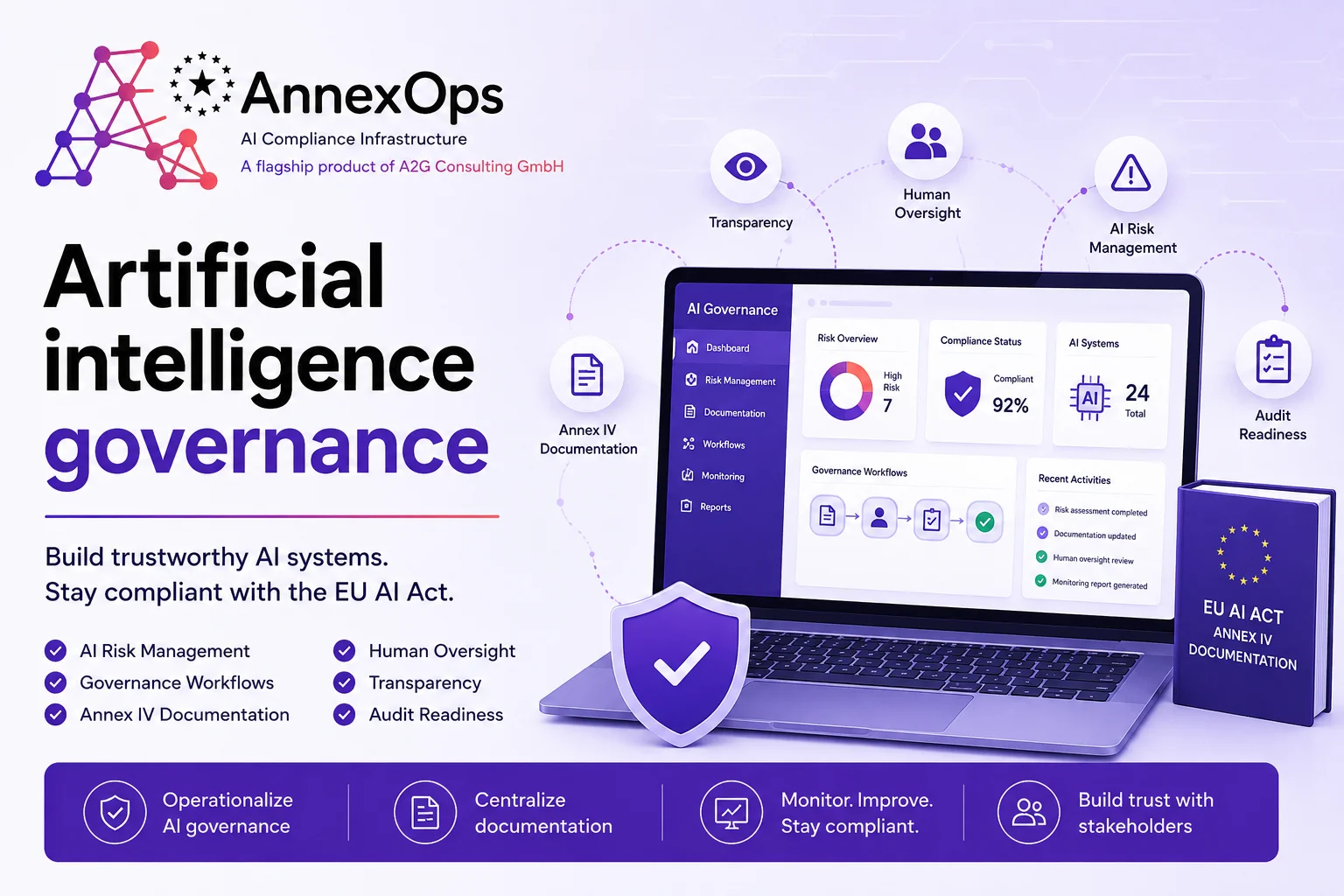
Solutions such as AnnexOps help healthcare organizations establish AI Governance by supporting centralized AI inventories, governance workflows, risk classification, continuous monitoring, and automated evidence collection throughout the AI lifecycle. Instead of treating compliance as a last-minute documentation exercise, organizations can build an effective AI Compliance Operation supported by purpose-built AI Compliance Software that keeps governance active from development through deployment and ongoing monitoring.
Learn more about operational AI governance for healthcare:https://annexops.com/ai-governance-for-healthcare/
Final Thoughts
Healthcare AI has the potential to improve patient outcomes, enhance clinical decision-making, and transform healthcare delivery. But innovation alone is no longer enough.
Organizations must also demonstrate that their AI systems are transparent, accountable, and responsibly managed.
The most successful healthcare organizations will not be those with the most documentation, they will be those with the strongest operational governance.
By embedding AI Governance into everyday workflows, establishing a continuous AI Compliance Operation, and leveraging modern AI Compliance Software, healthcare organizations can reduce risk, simplify compliance, strengthen stakeholder trust, and confidently scale AI initiatives.
Ultimately, governance should not be viewed as paperwork created for an audit. It should be recognized as the operational foundation that enables responsible, trustworthy, and sustainable AI in healthcare.