Sign up with Google
 Sign in with Zoho

Introduction
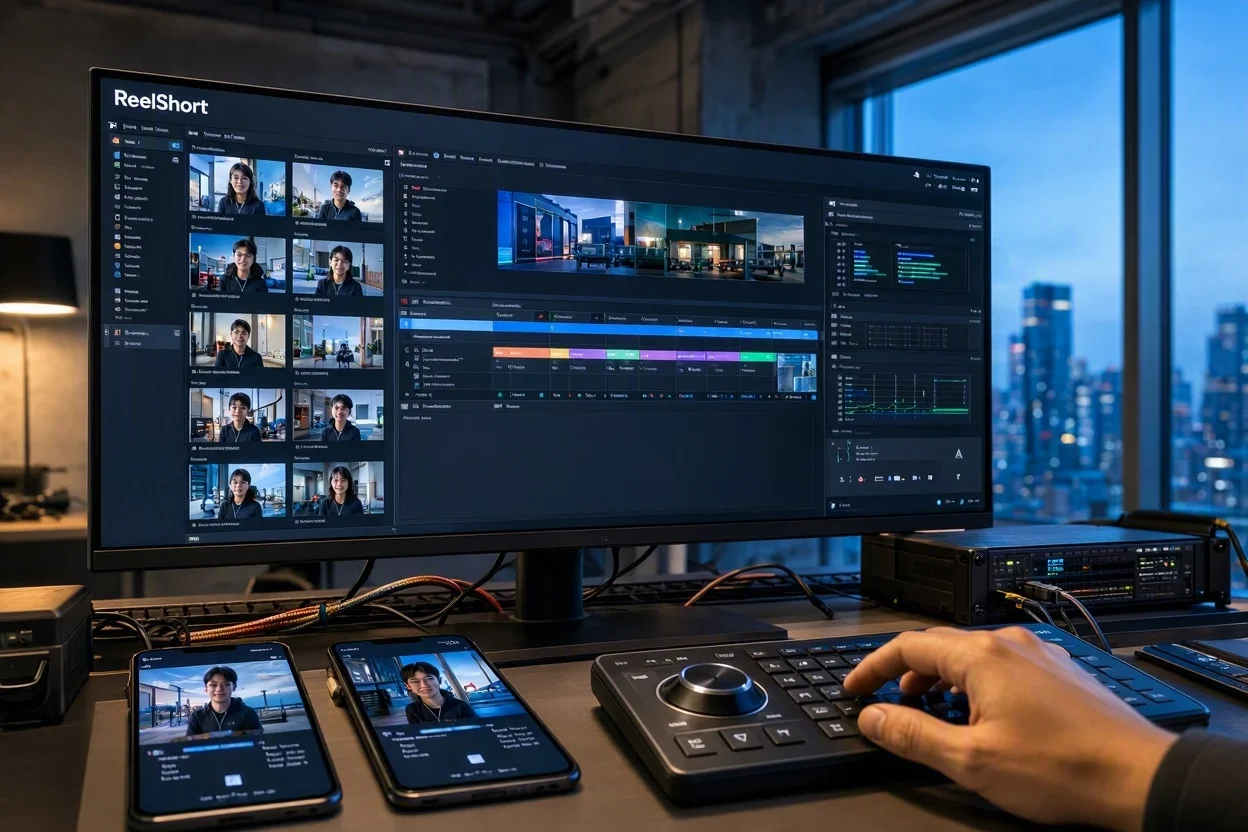
The growth of short-form entertainment has changed how audiences consume scripted video. Instead of watching a full-length movie or traditional television episode, viewers increasingly prefer compact episodes that can be consumed quickly through mobile applications. Businesses entering this market may therefore explore how to Build an app like ReelShort, but creating such a platform requires much more than developing a vertical video interface.
A successful short-form streaming service needs content management, video processing, recommendations, user accounts, analytics, monetization, and reliable delivery. For companies that also want to operate scheduled channels or distribute promotional programming, broadcast playout software can become an important part of the broader media infrastructure.
Understanding the ReelShort-Style Model
Short Episodes and Continuous Discovery
A short-form entertainment platform typically organizes content into brief episodes that encourage viewers to continue watching. The application should make discovering the next episode simple, while the backend needs to understand relationships between series, seasons, episodes, characters, and other metadata.
This creates a different workflow from conventional television. The content is still professionally produced, but the viewing experience is optimized for rapid consumption and mobile interaction.
Building the Content Experience
To Build an app like ReelShort, developers need a content architecture capable of presenting personalized recommendations, episode information, artwork, categories, and viewing progress. The interface can then retrieve these elements through APIs rather than storing the entire catalog inside the application.
Video Infrastructure
Uploading and Processing Content
Video enters the platform through an ingest and content-management workflow. Files should be validated, stored securely, and transcoded into appropriate streaming formats.
Multiple renditions can support adaptive playback across different network conditions and devices.
Delivering Episodes Efficiently
Short-form viewers are particularly sensitive to delays. If an episode takes too long to begin, users may leave before engaging with the content.
A CDN, optimized playback architecture, efficient thumbnails, and carefully designed preloading can therefore contribute significantly to the viewing experience.
The Role of Broadcast Playout Software
Managing Scheduled Programming
While short-form applications are primarily on-demand experiences, a media company may also operate linear digital channels featuring selected episodes, trailers, interviews, or other programming.
This is where broadcast playout software can connect the on-demand content library with scheduled television-style distribution.
The software can execute predefined schedules and play programs automatically according to specific timings.
Combining On-Demand and Linear Streaming
A company does not necessarily have to choose between a short-video application and a linear channel. The same content library can support both models.
The mobile application can provide personalized episode discovery, while a scheduled channel can provide continuous programming through connected-TV platforms or other streaming destinations.
Recommendation Technology
Personalizing the Feed
Recommendations are central to a short-form streaming platform. The system can use viewing behavior, completed episodes, skips, searches, favorites, and other appropriate signals to determine what content should appear next.
Series-Level Recommendations
The system should understand that episodes belong to larger stories. If a viewer starts a particular series, the platform can prioritize subsequent episodes while still presenting relevant alternative content.
This can encourage longer sessions without forcing users to manually search for every episode.
Monetization
Subscription and Premium Content
A short-form entertainment platform can use subscriptions, premium episodes, advertising, or a combination of monetization approaches depending on its business model.
Premium access can be integrated into the account and entitlement system.
Advertising
For free or hybrid services, advertising can provide another revenue stream. Advertisements may be incorporated into appropriate playback and streaming workflows.
For linear channels, scheduled advertising opportunities can also be coordinated through the playout environment.
Application Development
Mobile-First Design
The application should be designed around portrait-oriented viewing, touch interaction, quick navigation, and simple content discovery.
A viewer should be able to move between episodes without navigating through complicated menus.
Cross-Platform Expansion
Once the mobile product is stable, the service can expand to web browsers, tablets, smart TVs, and streaming devices.
The backend should therefore remain independent from any individual client application.
Analytics
Measuring Viewer Behavior
Analytics can reveal which series attract viewers and where audiences stop watching.
Metrics such as completion rates, viewing duration, episode starts, and returning users can help the content and product teams make better decisions.
Improving Programming
These insights can also influence linear channel scheduling. Popular series can be assigned strategic programming positions, while less successful content can be rotated differently.
Content Protection and Security
Protecting Premium Video
Professionally produced short-form series represent valuable intellectual property. The streaming infrastructure should therefore incorporate appropriate access controls and content-protection measures.
User accounts and APIs should also be secured against unauthorized access.
Rights Management
Content rights can vary by country, platform, and time period. The backend should maintain information about where and when a particular program can be distributed.
Conclusion
Businesses looking to Build an app like ReelShort need to think beyond the visible application interface. The real product is a complete short-form media ecosystem that combines content management, video processing, recommendations, streaming delivery, analytics, user management, monetization, and security.
At the same time, broadcast playout software can extend the value of the content library by enabling scheduled programming. Instead of using the library exclusively for on-demand viewing, a business can create linear digital channels featuring selected episodes and related programming.
This combination creates a flexible distribution strategy. Viewers who prefer personalized mobile viewing can use the application, while audiences seeking a television-style experience can watch scheduled programming through supported streaming platforms.
The strongest architecture keeps these experiences connected through a centralized backend. Content metadata, media assets, user information, analytics, and scheduling data can be managed systematically while individual applications provide platform-specific experiences.
With a scalable video pipeline, reliable playout, intelligent recommendations, and a carefully designed user experience, a short-form streaming business can develop beyond a simple video application and establish a broader entertainment platform capable of supporting multiple devices, distribution models, and future content strategies