Sign up with Google
 Sign in with Zoho

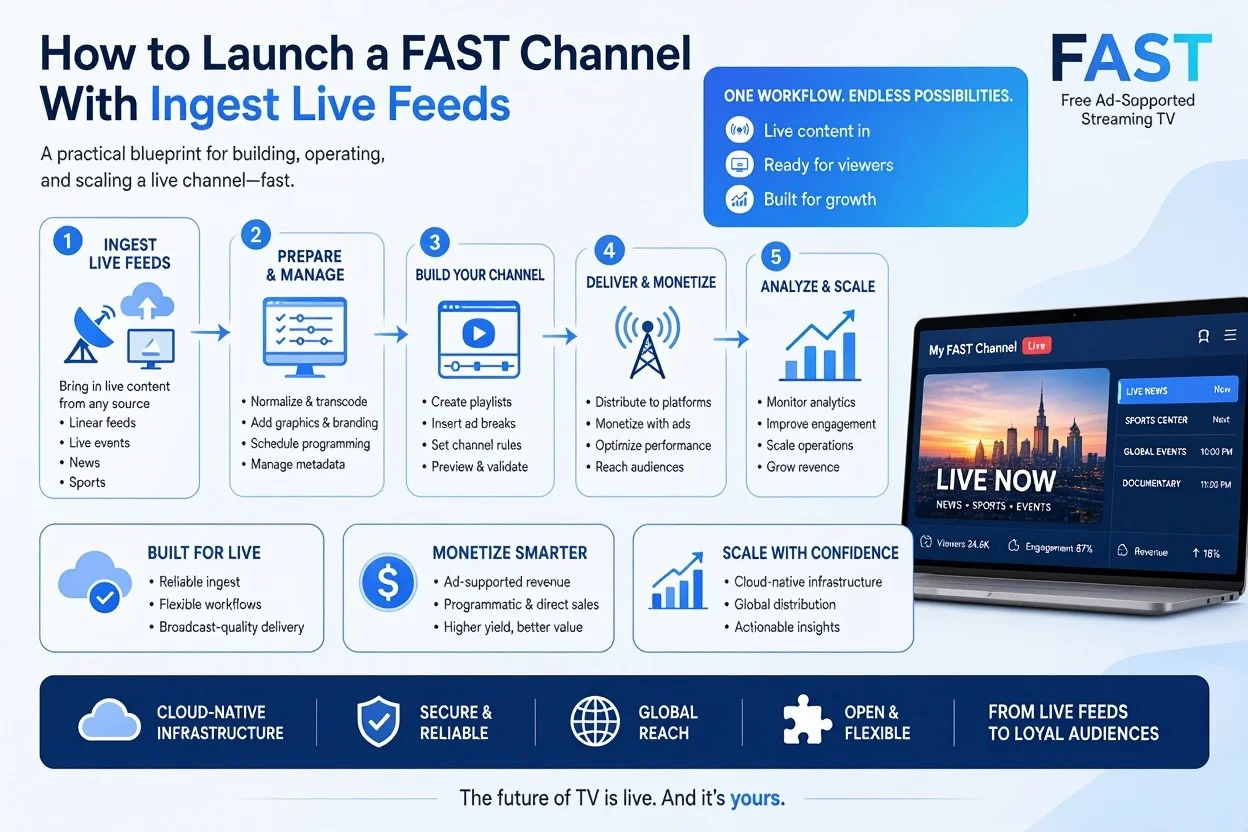
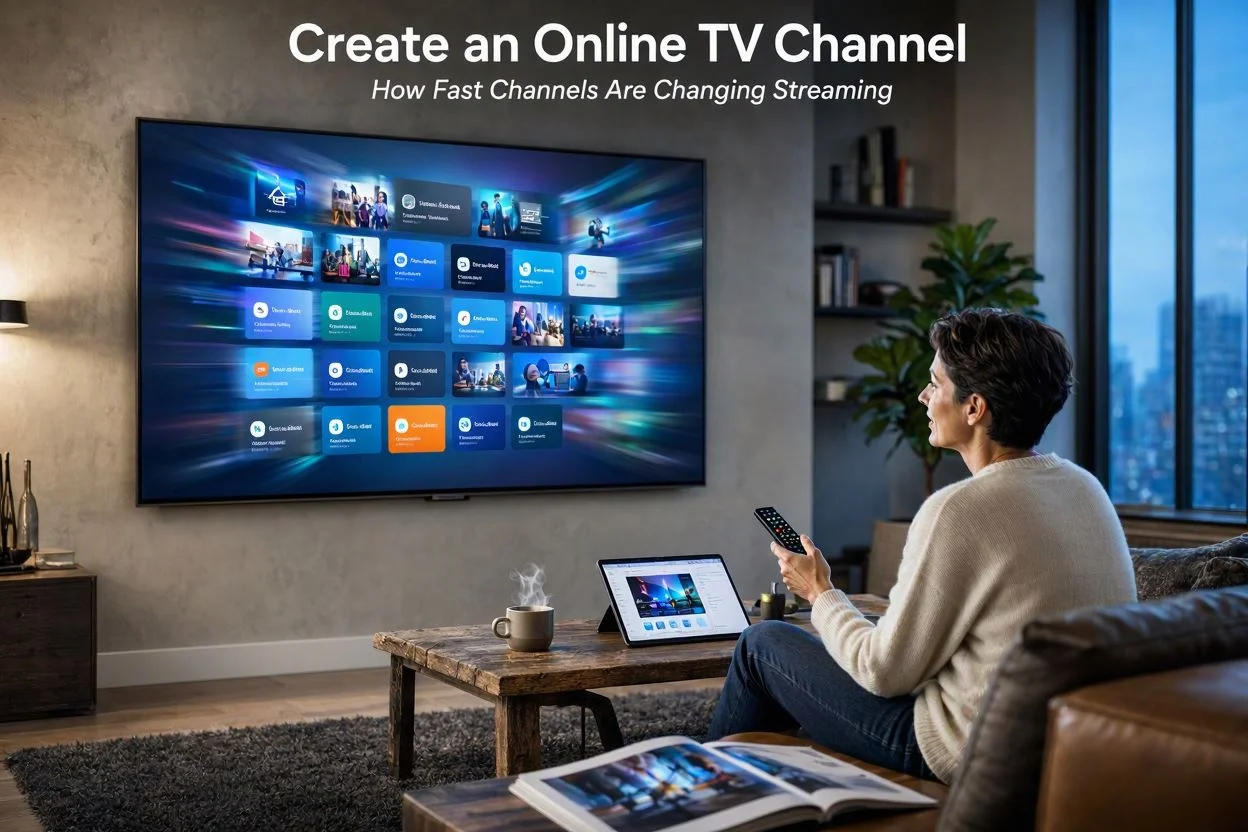
Free Ad-Supported Streaming Television, commonly known as FAST, allows viewers to watch scheduled streaming channels without paying a direct subscription fee. Advertising supports the service, while content owners can use the model to distribute programming and reach new audiences.
Launching a FAST channel requires more than selecting a collection of shows. The channel needs a programming schedule, reliable playback, a distribution workflow, and a plan for live content. Ingest live feeds becomes especially important when the channel includes events, interviews, news, or other real-time programming.
Define the Channel’s Content Strategy
Start by identifying the audience and the type of programming the channel will offer. FAST channels may focus on movies, entertainment, lifestyle, sports, news, or niche interests.
A clear format helps guide content selection and scheduling. It also makes the channel easier to promote and can help attract advertisers.
Build a programming grid that includes show titles, durations, broadcast times, and advertising breaks. Decide which programs will be live and which will be prerecorded.
Prepare the Content Library
A FAST channel needs a collection of media assets that can be scheduled reliably. Each program should have accurate metadata, including title, description, duration, category, and relevant rights information.
Check media files for compatibility with the playout system. Consistent naming and organization can reduce scheduling errors and simplify content management.
If the channel relies on licensed content, confirm that the distribution rights cover the intended platforms and territories.
Understand Live Feed Ingestion
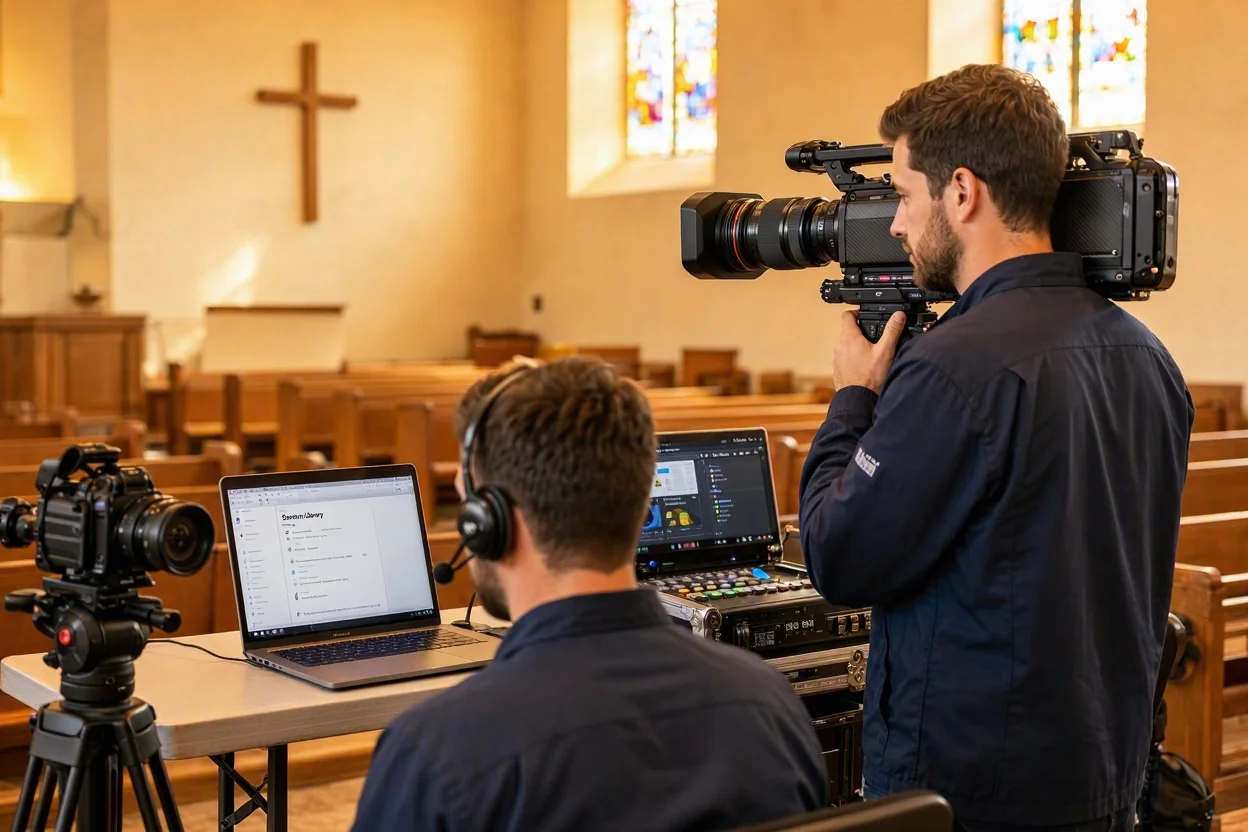
To ingest live feeds means to receive incoming media signals and bring them into a system for processing, routing, or distribution. The source may be a camera, remote contributor, production facility, event venue, or external broadcaster.
A FAST channel may use live feeds for:
- Sports events and competitions
- News coverage and interviews
- Live performances
- Special events and conferences
- Real-time studio programming
The ingest workflow should be tested before the event. Confirm connection stability, format compatibility, audio quality, and the destination for the incoming feed.
Connect Live Feeds to Channel Playout
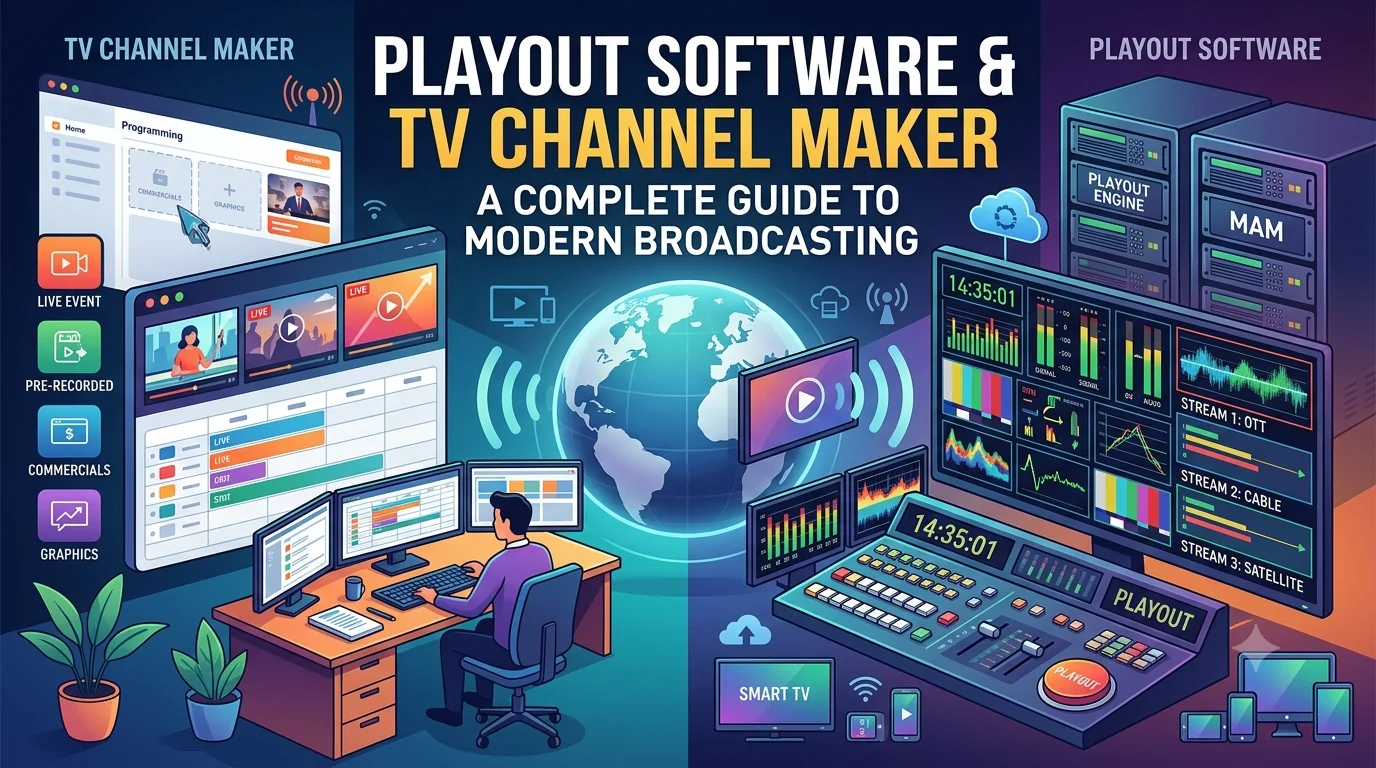
A FAST channel may combine live programming with scheduled prerecorded content. The playout system determines when a live source enters the channel and how the schedule continues afterward.
For example, a channel may broadcast a live event during a planned time slot and return to its regular programming once the event ends. If the event runs long, the schedule may need to shift.
Prepare a fallback plan for feed interruptions. The channel could switch to a backup source, a promotional loop, or prerecorded programming rather than leaving the output blank.
Choose a Distribution Workflow
A FAST channel may be distributed through connected TV platforms, streaming applications, or other supported services. The technical workflow can include encoding, packaging, content delivery, and platform-specific integrations.
Confirm the requirements of each distribution destination. Check supported formats, metadata, channel information, advertising processes, and operational expectations.
Test the final stream on the devices used by the target audience.
Monetize and Improve the Channel
Advertising is a central revenue model for FAST. Depending on the distribution platform, advertising may be managed through scheduled breaks or integrated ad technology.
Track audience behavior, program performance, and stream quality where analytics are available. Use this information to improve the schedule and make the channel more relevant to viewers.
Conclusion
Launching a FAST channel requires a focused programming strategy, reliable playout, and a distribution workflow suited to the target platforms. The ability to ingest live feeds makes it possible to include real-time events alongside scheduled content. With proper testing, fallback planning, and audience development, a FAST channel can deliver a consistent and engaging viewing experience.