Sign up with Google
 Sign in with Zoho

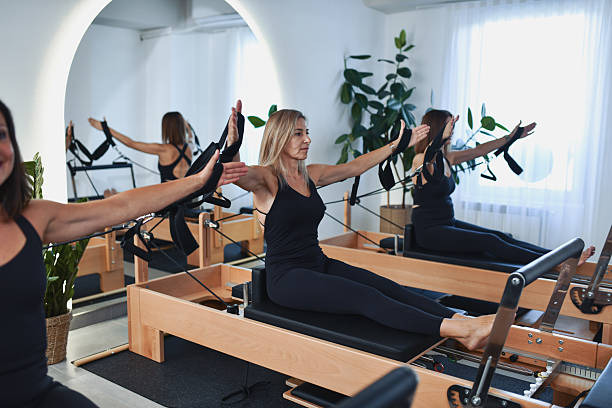
If you have ever peeked into a fitness studio and seen a row of sliding carriages, springs, and pulleys, you have likely spotted a Reformer. It looks a bit like a medieval contraption, but it is actually one of the most versatile pieces of exercise equipment ever designed. While traditional mat classes are fantastic, jumping onto a Reformer takes your movement to a whole new level.
Many people first try Reformer Pilates to tone their midsection or fix a nagging back ache. But when you commit to a regular routine, something incredible happens. You start noticing shifts in how you walk, how you breathe, and how your body handles daily stress. It turns out the perks go far deeper than just building a strong core.
Let’s take a look at five surprising full-body benefits of making the Reformer a regular part of your weekly routine.
1. It Switches On Those Hidden Stabiliser Muscles
When we lift heavy weights at the gym or go for a run, we mostly rely on our large mover muscles—like our quads, hamstrings, and glutes. These muscles do the heavy lifting, but they need a solid support crew. That support comes from smaller stabiliser muscles deep within the body.
The Reformer’s signature sliding carriage creates an unstable surface. Because the base moves underneath you, your body is forced to fire up these tiny, deep muscle groups just to keep you steady.
Why This Matters for Daily Life
Think about slipping on a wet footpath or reaching up to grab a heavy box from the top shelf. Your large muscles give you the power to reach, but your deep stabilisers keep your joints stable so you don’t pull a muscle. Training on the springs means you are building a built-in safety net for your joints.
2. You Get Stronger While Getting Longer
A common complaint with heavy strength training is that it can leave you feeling tight, stiff, and bulky. On the flip side, focusing purely on stretching can leave your joints hyper-mobile and prone to injury. Reformer Pilates offers the best of both worlds by focusing on eccentric muscle contractions.
An eccentric contraction happens when a muscle lengthens under a load. For example, when you slowly control the Reformer carriage as it returns to the platform against the resistance of the springs, your muscles are working hard while being stretched.
· The Result: You develop long, lean muscle tone and serious functional strength.
· The Feeling: Instead of feeling tight and sore the next day, you wake up feeling like you have more space in your joints and a better overall range of motion.
3. It Automatically Corrects Your Posture and Alignment
Most of us spend our days hunched over steering wheels, looking down at phones, or slumped in office chairs. Over time, our bodies adapt to these poor positions. One side of the body becomes tighter, while the other becomes weaker.
What makes the Reformer unique is its symmetry. Because you are often lying down on a structured carriage, using straps that provide equal resistance to both sides, you cannot hide your imbalances. If your right leg is doing all the work, the carriage will let you know. If your left shoulder is tight, you will feel it immediately in the straps.
Regular sessions act like a wheel alignment for your body. The exercises gently nudge your bones and muscles back into their proper positions, helping you stand taller without having to constantly remind yourself to pull your shoulders back.
4. It Builds Incredible Foot and Ankle Strength
We rarely think about our feet until they start hurting, yet they are the literal foundation for everything we do. If your ankles are weak or your arches are collapsed, that instability travels right up your legs, causing issues in your knees, hips, and lower back.
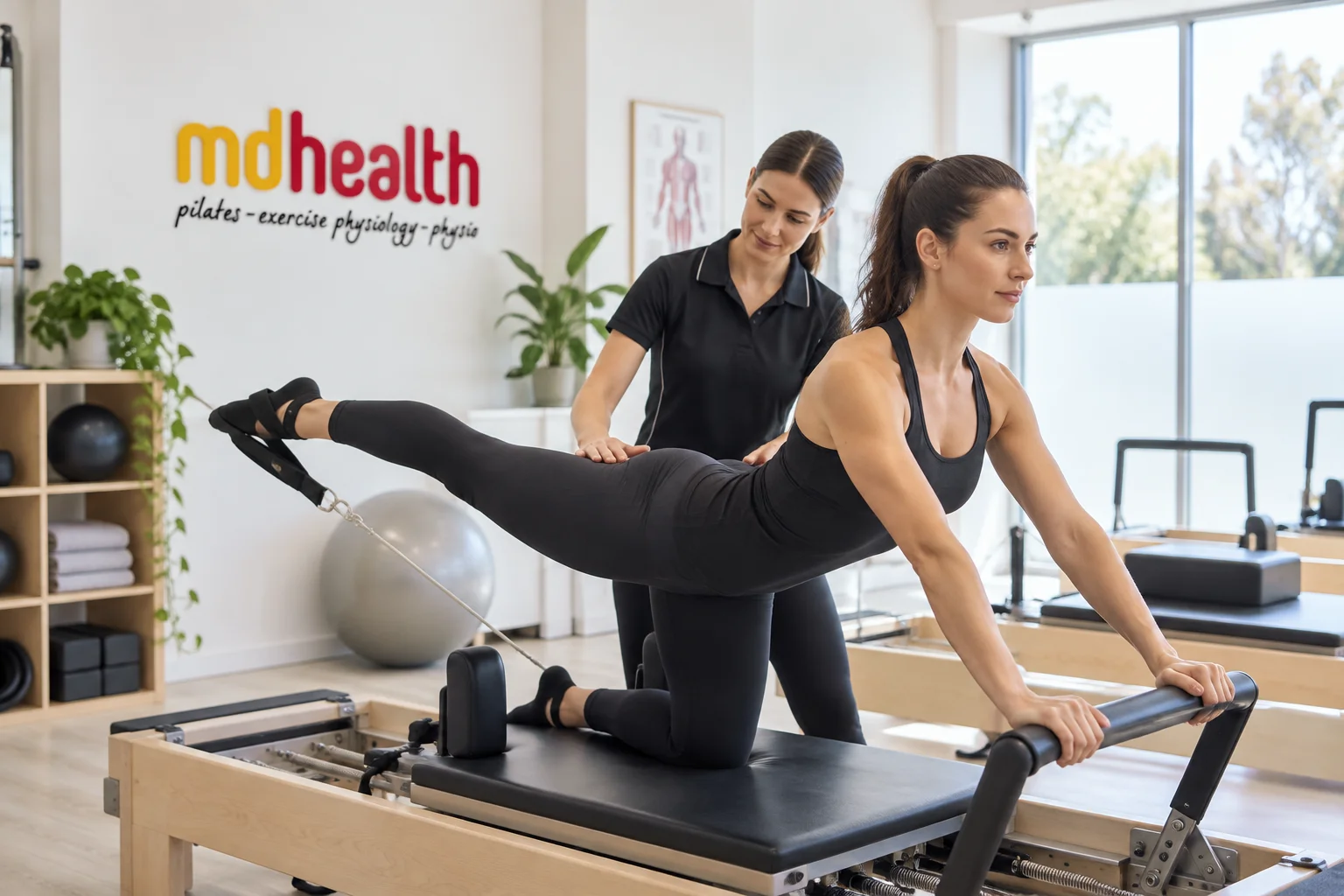
Almost every Reformer class kicks off with "footwork." By pressing against the solid footbar while resisting the spring tension, you actively strengthen the arches of your feet, your ankles, and your calves.
The Real-World Impact
Improving foot mechanics does wonders for your balance. If you love running, hiking, or playing weekend sports, stronger feet and ankles mean better agility, more power when you push off the ground, and a much lower risk of rolled ankles.
5. It is a Highly Effective Way to Decompress the Mind
Exercise is known for busting stress, but the Reformer offers a very specific type of mental calm. Because the machine requires coordination, balance, and breath control, you cannot easily drift off or think about your grocery list while on it.
If you lose focus, the carriage might slam, or you might lose your balance. This forces you into a state of total presence. For 45 to 60 minutes, your brain gets a complete break from the digital noise and daily worries.
Furthermore, the deep, rhythmic breathing taught in class helps trigger your parasympathetic nervous system. This is the system responsible for resting and digesting, meaning you will leave the studio feeling calm, grounded, and clear-headed.
Practical Tips for Your First Reformer Journey
If you are ready to give it a go, keep these simple tips in mind to get the most out of your sessions:
· Wear Grip Socks: Standard socks will have you sliding all over the vinyl carriage. Grab a pair of grip socks with rubber dots on the bottom to keep you secure.
· Focus on the Resistance, Not the Weight: Don’t worry about how many springs you have on. Sometimes, a lighter spring setting makes an exercise much harder because your core has to do all the stabilizing work.
· Listen to Your Instructor: Form is everything. Moving slowly with correct alignment beats rushing through repetitions every single time.
Conclusion
Committing to Reformer Pilates is about so much more than just a great workout. It is an investment in how your body moves, feels, and ages. By targeting hidden muscles, balancing out structural alignment, and giving your mind a mindful break, it delivers a genuinely well-rounded approach to physical health. Whether you are looking to recover from an injury, improve your sporting performance, or simply move without aches and pains, the moving carriage might just be exactly what your body needs.
Frequently Asked Questions
Is Reformer Pilates harder than mat Pilates? It isn't necessarily harder, but it is quite different. The mat relies entirely on your own body weight for resistance, while the Reformer uses adjustable springs. The machine can make exercises more challenging by adding weight, but it can also support your body, making certain movements easier to learn than on the floor.
How many times a week should I do it to see results? Consistency is key to seeing real changes. Going two to three times a week is generally the sweet spot for noticing improvements in your posture, core strength, and flexibility within a month or two.
Can I do Reformer Pilates if I have a bad back? Yes, it is often recommended for back care. Because many exercises are done while lying down, the pressure is taken off your spine. This allows you to safely strengthen the abdominal and pelvic muscles that support your lower back without straining it.
Will I lose weight doing Reformer Pilates? While it burns calories and builds lean muscle tissue—which helps boost your overall metabolic rate—it is primarily a strength, alignment, and mobility workout. For weight loss, it works best when combined with balanced nutrition and regular cardiovascular exercise.
Do I need to be flexible to start? Not at all. You don't need to be flexible to start; rather, you do Pilates to improve your flexibility. The machine can be adjusted to match your current reaching abilities, helping you safely increase your range of movement over time.









 (1) (1).webp)