Sign up with Google
 Sign in with Zoho

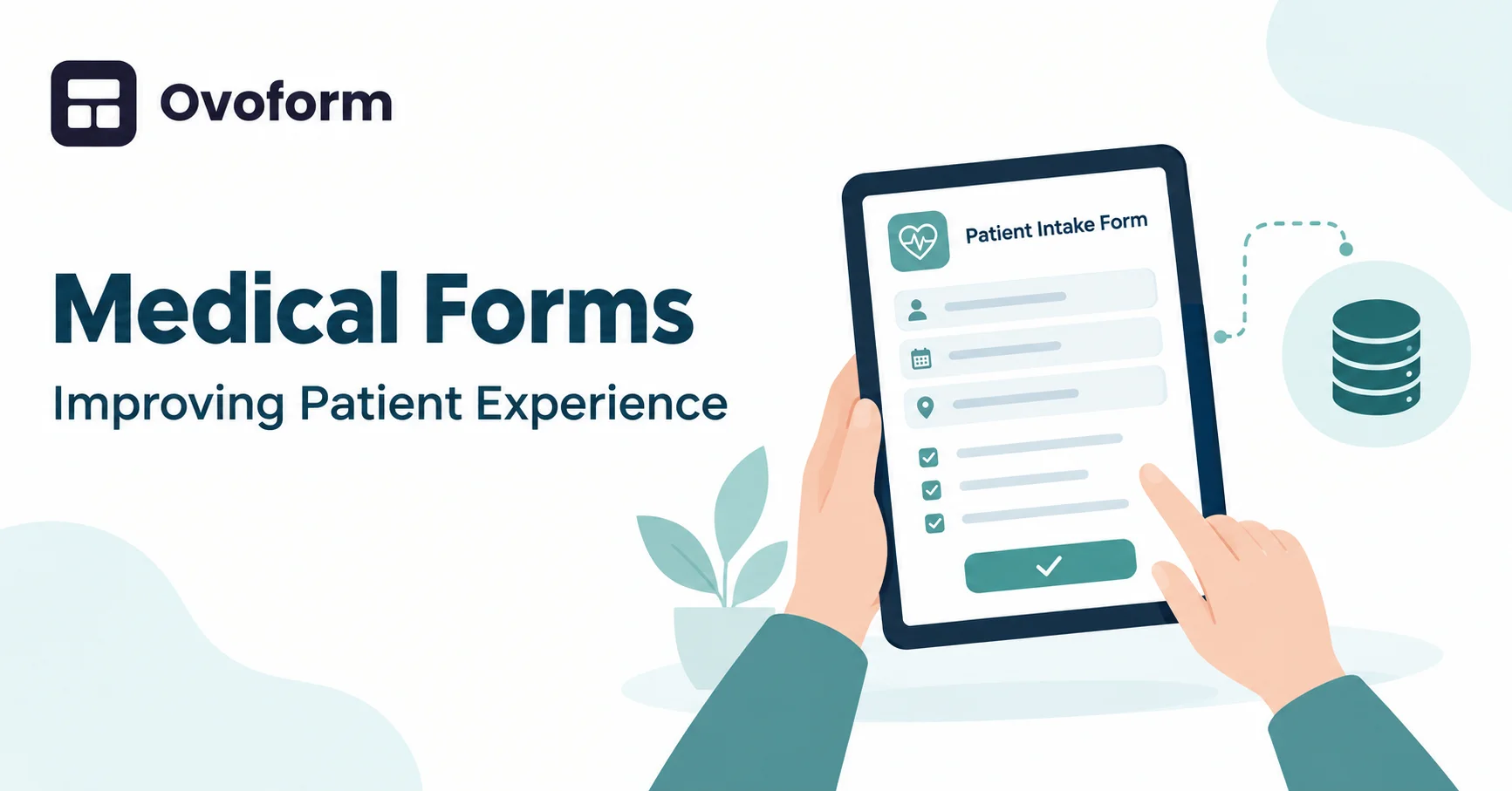
Anyone who has sat in a waiting room filling out a clipboard of medical history knows the frustration. Illegible handwriting, repeated questions across different forms, and information that has to be manually re-entered into a system once the visit is over. For patients, it is tedious. For healthcare providers, it is a quiet but constant source of error.
Medical forms carry more weight than most other business forms. A missed allergy, an outdated medication list, or an illegible field is not just an inconvenience, it can directly affect patient care. That makes the design and accuracy of these forms a genuine operational priority, not just an administrative detail.
Why medical forms are harder to get right
Unlike a typical intake or feedback form, medical forms have to balance several things at once: legal and compliance requirements, sensitive personal health information, and the reality that many patients filling them out are stressed, unwell, or unfamiliar with medical terminology. A form that is too long or confusing does not just slow things down, it increases the odds of incomplete or inaccurate answers exactly where accuracy matters most.
Common problems with traditional medical forms
- Paper forms that get lost, damaged, or require manual re-entry into electronic health records
- Repeated questions across different forms within the same visit or organization
- No conditional logic, so every patient answers questions that may not apply to them
- Handwriting that is difficult to read, leading to transcription errors
- No clear explanation of how sensitive information will be stored or used, which understandably makes patients hesitant to answer fully
What better medical form design actually looks like
- Digital-first intake. Forms filled out on a tablet or phone before an appointment reduce waiting room time and eliminate transcription errors from paper.
- Conditional questioning. A patient with no history of a specific condition should not need to answer five follow-up questions about it. Relevant branching keeps forms shorter without leaving out anything that matters.
- Direct integration with records systems. Data collected on an intake form should flow directly into the patient's record, not require manual entry afterward.
- Clear, plain-language questions. Medical terminology should be explained or simplified where possible, since not every patient is familiar with clinical phrasing.
- Visible privacy and consent information. Patients answer more completely and honestly when they understand exactly how their information will be used and protected.
The bigger impact of getting this right
Well-designed medical forms do more than save administrative time, though that benefit alone is significant. They reduce the chance of a critical detail being missed, they make the patient experience noticeably less stressful, and they give healthcare staff more accurate information to work with from the very first interaction.
This is increasingly why healthcare providers are moving away from static paper forms and generic digital templates toward tools that let them build adaptive, conditional forms without needing a developer for every change. Platforms like Ovoform allow non-technical staff to build forms with logic-based branching and direct system integrations, which matters in healthcare specifically because patient intake needs change often, whether due to new compliance requirements or simply a new type of visit being offered.
Final thought
A medical form is often a patient's first real interaction with a healthcare provider's system, before they have even met a clinician. Getting it right is not just about efficiency. It is about making sure the information that guides someone's care is accurate, complete, and collected in a way that respects both their time and their trust.