Sign up with Google
 Sign in with Zoho

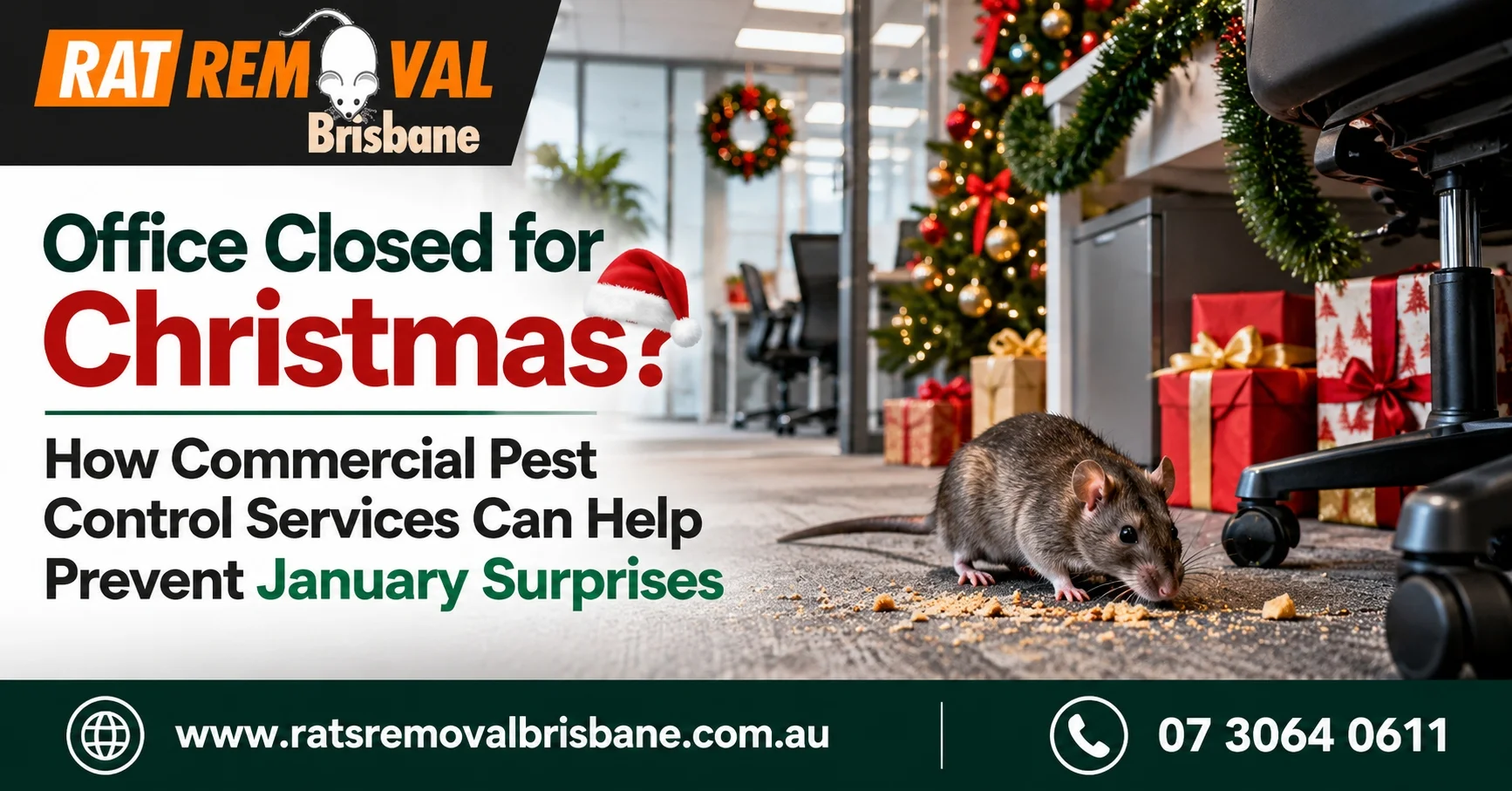
The last thing your team needs in January is a rat problem that's been going on since the office was empty over the Christmas break. All the usual stuff that leads to a rat infestation (overflowing bins, leftover food, small entry points, existing rat activity) can go completely unobserved for days or even weeks whilst the office is closed.
For Brisbane businesses, the act of preparing an office for the shutdown over the holidays is much more than just turning off the computers and locking the doors. A few simple checks can go a long way to reduce pest ingress, protect your workplace equipment and make the re-opening process far easier.
Here's what to check before you close your office for Christmas and what to do if you spot any signs of rats or mice in January.
Book commercial pest control services if things get out of hand.
Why Can Pest Problems Go Completely Unnoticed During the Christmas Break?
When the staff goes off for the holidays, the normal cleaning, waste removal and building checks will either cease or at least be significantly reduced. If rats or mice already have access to the building, they will presumably continue to move through the storage areas, wall cavities, ceiling spaces, and kitchenettes undetected.
The closure itself doesn't in any way automatically lead to an infestation. The real issue is that with fewer people around, there will be far more opportunity for rodents to have access to food, water, shelter, and means of entry.
Several conditions can increase the risk:
● Leftover food: Biscuits, snacks, crumbs and food stored in desk drawers will all attract rodents.
● Unemptied bins: Food waste and packaging could well be within easy reach of food.
● Quiet storage areas: Cardboard boxes, unused rooms and clutter.
● Unnoticed entry gaps: Gaps around pipes, doors, vents and utility lines can all provide an ingress for rodents.
● Existing activity: Rats or mice already present prior to the shutdown may continue to be nesting/feeding.
The issue isn't confined to the kitchen. A mouse in a storage cupboard or a rat travelling through a ceiling cavity can leave evidence which goes completely unnoticed until the staff come back.
Office Pest Problems That May Be Missed Until January
1. Food Left in Desks and Kitchenettes
Leaving food in desks or kitchenettes can lead to problems. It attracts pests, creates unpleasant smells, and can make shared spaces dirty. Please store your food in sealed containers and clean up after eating. This helps keep our office clean and comfortable for everyone.
Office kitchens are the obvious place to look, but food will often be in less obvious places. Staff will leave snack packets in drawers, crumbs under desks, and open food containers in meeting rooms.
Before you close, remove the perishables, put any suitable dry goods in airtight containers and clean the food prep areas. Ask staff to clear their desks and empty their own bins.
2. Rodent droppings and contaminated surfaces
Small droppings behind cupboards, under sinks or near stored supplies can easily go unnoticed if the room isn't used on a regular basis. Rodents can also contaminate surfaces and packaging via their urine, droppings and by contact with their bodies.
If you do find droppings, then don't sweep or vacuum them whilst dry. Restrict access to the area and arrange for cleaning in accordance with recognised safety guidance. Where the contamination is significant or is in a hard-to-access area, then seek professional advice.
3. Damaged packaging and stored supplies
Rats and mice can gnaw through packaging as they're searching for food or for materials to build their nest. This can obviously have an impact on your pantries, your cardboard boxes, your paper goods and your cupboards.
Check the stockrooms, the stationery cupboards and the delivery areas prior to the break. On re-opening, check any packaging that appears to be torn, chewed or otherwise contaminated, and don't use any food or supplies that may have been exposed to rodents.
If you think there's a carcass hidden in the building, a dead rat removal service may be able to locate and remove it (where accessible). They can be of great assistance if the source is inaccessible or if there's also a need to deal with contamination.
Your Pre-Christmas Office Pest Prevention Checklist
Just do these checks before you lock up for the holidays.
● Clear food: Get rid of the perishables, seal the dry food and clean the kitchen surfaces.
● Empty the rubbish bins: Arrange the waste collection prior to the shutdown and check the outdoor bins are secure.
● Reduce clutter: Store the boxes and supplies neatly and leave areas clear for inspection and cleaning.
● Review any existing pest issues: Report any sightings, any scratching noises and any previous rodent activity prior to staff leaving.
● Plan for building access: Ensure that someone is in a position to arrange an inspection should an urgent issue come to light.
These steps will help eliminate the usual attractants and make the early warning signs much easier to detect. They will not guarantee a pest-free building, particularly if rodents are already established within the building or are getting in from the surrounding area.
What Should You Do If You Find Rats Or Mice In January?
Finding droppings, gnawed packaging, or a live rodent doesn't necessarily tell you how big the problem is. Begin by securing the area in question and then check whether there's any further sign of activity.
Follow these steps:
● Restrict access: keep staff away from visibly contaminated areas and prevent contact with rodent waste.
● Record what you find: note the location, the type of damage, any odd smells, and any sightings that have been reported.
● Protect food and supplies: isolate any potentially contaminated items and follow the appropriate workplace cleaning and disposal procedures.
Make Your January Reopening Easier
Before the staff returns, check the kitchens, storage rooms, the bins, the delivery areas and any other areas where there could be rodent activity lurking. Look for fresh droppings, damaged packaging, any odd smells and any signs that the entry points have been tampered with.
If there is any evidence of rats or mice, then don't disturb the contaminated areas until appropriate cleaning or professional advice can be obtained. Log the issue, protect staff and stock, and deal with the conditions which have allowed the rodents to get in.
A planned inspection, expert mouse removal services nearby, and some practical preventative measures can go a long way to ensuring your business doesn't get caught with a surprise at the start of the year. If you have any suspicions of rodent activity in your Brisbane office, get in touch with Rat Removal Brisbane to talk it over and find out what your options are in terms of an inspection or removal.
Frequently Asked Questions
Should an office pest inspection be part of the building handover?
It can be useful where responsibility for cleaning, maintenance or pest control passes from one party to another (i.e. from tenant to landlord or from tenant to facilities).
Can pest control records be of any use during a workplace audit?
Yes, records can be used to show what was inspected/treated, when the work was carried out, and what follow-up actions were recommended. Food businesses should keep records which meet their relevant requirements.
Who is responsible for pest control in a leased office?
Responsibility will of course depend on the lease, the nature of the problem and the nature of the work required. The tenant and the owner should both look at the lease, report any evidence of pests as soon as possible, and agree on access for any inspection or necessary work.