Sign up with Google
 Sign in with Zoho

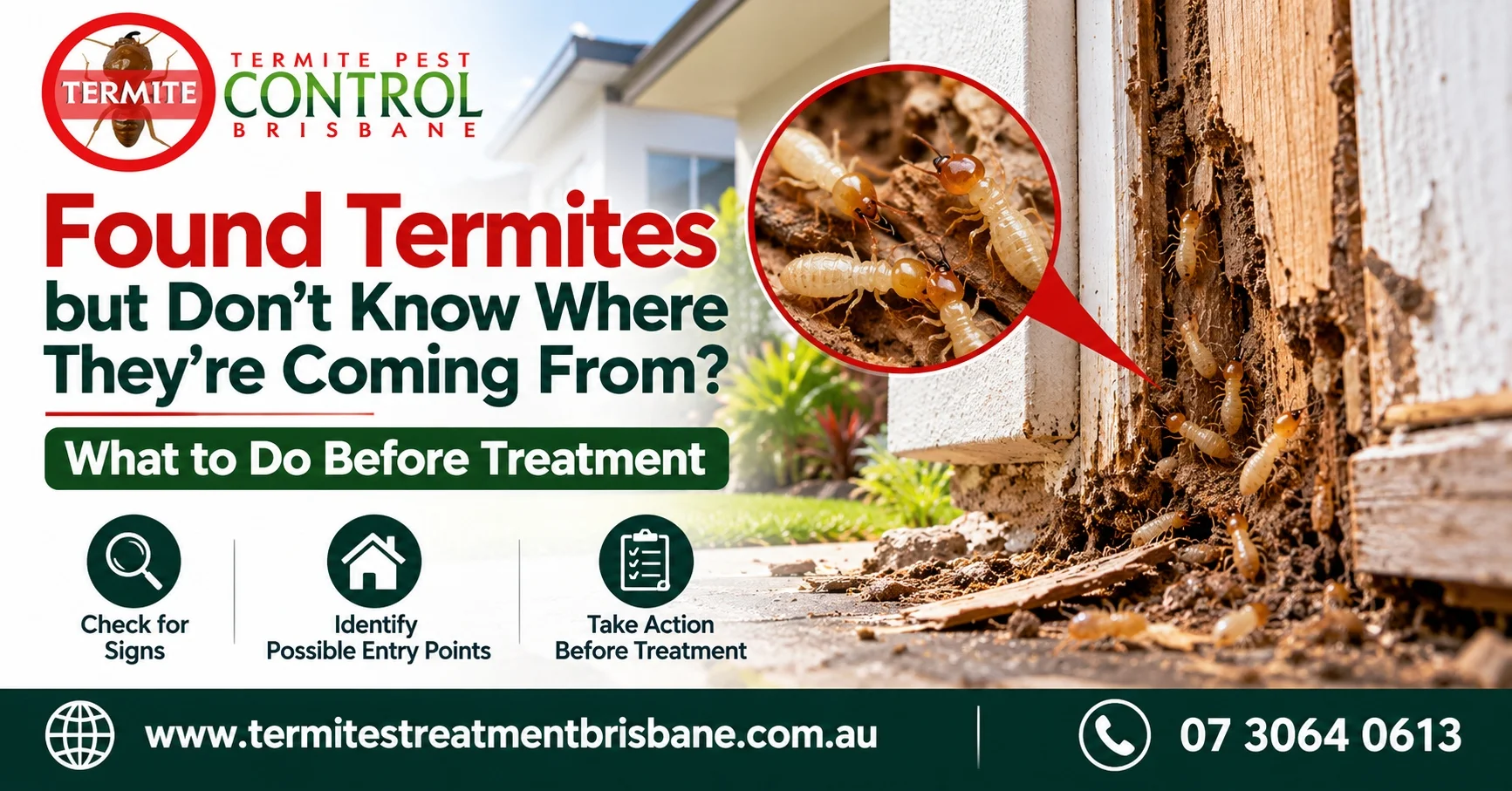
You see the termites crawling along the wall, you find a mud trail right up against a door frame, you see the timber has been damaged but you've no idea where the termites got in. Do you break the trail, do you spray the termites or do you go looking for the nest?
The safest thing to do initially is to leave the evidence alone and get a professional termite inspection. Termites you can see don't necessarily tell you where the colony is or the full extent of the damage. Knowing how they're getting in is going to be key to the inspector being able to assess the situation and recommend appropriate termite treatment nearby.
For Brisbane homeowners, landlords and business owners, acting early will go a long way to limiting further damage and enabling a more informed treatment decision.
Why are Termites Appearing in All These Odd Places?
Termites can travel through the soil, through narrow gaps and through all the hidden bits of a building before they get to the timber. The place you find them may therefore not be the point of entry.
Subterranean termites (the ones we're most likely to come across in Australia) will build mud shelter tubes to travel from the soil to their food source whilst keeping themselves moist.
Several conditions may help explain their presence:
● Gaps around the foundations: Small gaps around service pipes, slab edges and at building joints can provide concealed access.
● Damp areas: Leaking pipes, wet soil and poor drainage.
● Timber touching the ground (garden sleepers, untreated timber, stored wood) could provide access to food or a route into the building.
● Hidden structural spaces (termites can be behind the wall linings, underneath the floors and in all sorts of other places that are hard to get at).
The key point is that a visible trail indicates termite activity; it doesn't necessarily mean that the nest is located there. A proper professional inspection is what will allow you to link the various signs to potential entry points.
What Should You Do Before Termite Treatment?
Prior to treatment commencing, your priority should be evidence preservation and giving the inspector a clear picture of what you've found.
1. Leave mud tubes and live termites alone.
Don't break open mud tubes, don't dig around suspected nests and don't remove the infested timber. Disturbing the active termites in this way can cause them to retreat from the area you've disturbed and make their movement much more difficult to assess.
Don't use household insect spray or any other unauthorised chemical treatments. They may get rid of the insects you can see but will not in any way get to the root of the problem.
2. Photograph the signs you have found
Take clear photos of the termites themselves (if visible), the mud tubes, any damaged timber, any discarded wings and any associated moisture problems. Note the date and location of each sighting.
For instance, if you come across a mud tube by a laundry door and damaged timber adjacent to a bathroom, you would record both of those locations. That information would then assist the inspector in determining which of the associated areas would require a more detailed inspection.
3. Check for moisture without disturbing the evidence
Look out for leaking taps, damp patches, gutters that are overflowing and water collecting at the base of the external walls. Record any issues you come across but don't go to the extent of taking down walls or moving any substantial structural elements.
Repairing a leak may go some way to reducing the excess moisture but will not in any way eradicate an existing termite problem. Let the inspector know if there have been any recent plumbing repairs, any flooding or any drainage issues.
4. Check your existing termite protection records
Look at any previous inspection reports, treatment invoices, barrier documentation and any termite management notice that may have come with the property.
These records may well go some way towards establishing what protection was fitted, when it was fitted and whether maintenance is due. You mustn't simply assume that an old barrier is still effective because there is some paperwork to that effect.
5. Arrange a professional inspection
Get in touch with a licensed pest management professional and tell them precisely what you've seen. Be clear as to whether the activity is occurring inside the building, outside near the foundations, or around a fence, deck, or garden structure.
If you're looking for commercial termite inspections in Brisbane, pick a company that will actually inspect the property, tell you what they find, and then recommend a treatment that is appropriate to the evidence rather than just doing a quick surface application.
Where Will an Inspector Look for the Entry Point?
A thorough inspection considers the building and its surroundings, not just the first place where termites appeared.
The inspection findings will be dependent on the construction of the property and the areas that can be safely accessed. Some termite activity will obviously remain hidden, and so a visual inspection will not necessarily reveal every instance of concealed infestation.
Why the Right Inspection Matters Before Treatment
Treating the first visible trail without investigating the wider issue may well mean that other active areas are missed. An inspection will establish whether the signs are indicative of active termites, previous damage or some other issue entirely.
Depending on the findings, a professional may recommend a targeted treatment, a suitable termite management system, baiting or further investigation. The right course of action will depend on the species of termite, the extent of the infestation, the building design, the level of existing protection and the site conditions.
For owners looking at termite control in Brisbane, the aim should be to get rid of the termite problem that's there and reduce the risk of future termite entry, rather than just get rid of the termites you can see.
It's also important to separate pest treatment from structural repair. If the timber is obviously compromised, then a qualified builder or structural engineer may well need to look at it.
When Should Brisbane Property Owners Be Looking to Engage a Professional?
Don't wait for obvious structural damage to trigger an inspection. If you see live termites in the building, fresh mud tubes, timber damage of any kind, or discarded wings (all of which are associated with termite activity), then you should get professional advice as soon as possible.
The same applies to rental and commercial property.
● Homeowners: Report the affected areas and keep the previous treatment records.
● Landlords and property managers: Record the signs and arrange for an appropriate inspection. Inform the relevant owner or responsible party in accordance with the property's management arrangements.
● Commercial property managers: Arrange for access to the affected rooms, service areas, storage areas and so on throughout the building.
● Food businesses and industrial sites: Adhere to site hygiene, safety and operating procedures when arranging for inspection and treatment.
Businesses requiring commercial termite inspections in Brisbane should discuss working hours, access restrictions, any sensitive equipment, and whether there are any requirements around food handling prior to treatment being scheduled.
A good inspection plan will help identify the issue and at the same time allow the business to prepare for any access restrictions or treatment precautions that may be required.
Book an Inspection Before the Problem Spreads
Finding termites doesn't in itself tell you how far the infestation is likely to have spread or which treatment is going to be the right one. The sensible first steps are to leave the evidence alone, record the signs, and then get a professional assessment.
If you've spotted any possible termite activity at your property in Brisbane, then get in touch with Termite Treatment Brisbane to arrange an inspection and discuss what comes next. Ask for a full explanation of the findings, what treatment is recommended, and what the follow-up and/or maintenance requirements are prior to committing to anything.
Frequently Asked Questions
Can termites get into a property via a neighbour's yard?
Yes, subterranean termites can forage through the soil and get to adjacent structures. The presence of activity in a neighbour's yard doesn't necessarily mean that your building is infested.
Does a brick house require termite inspections?
Yes, brickwork doesn't make a property termite-proof as termites can still get in through the gaps, joints and service penetrations. The timber and the termite protection system on the property still need to be looked at.
Can I stay in my home during the termite treatment?
That will vary depending on the treatment product, the method of application and the areas being treated. You'll need to ask the pest management professional for the specific preparation, ventilation and re-entry requirements prior to the treatment commencing.