Sign up with Google
 Sign in with Zoho

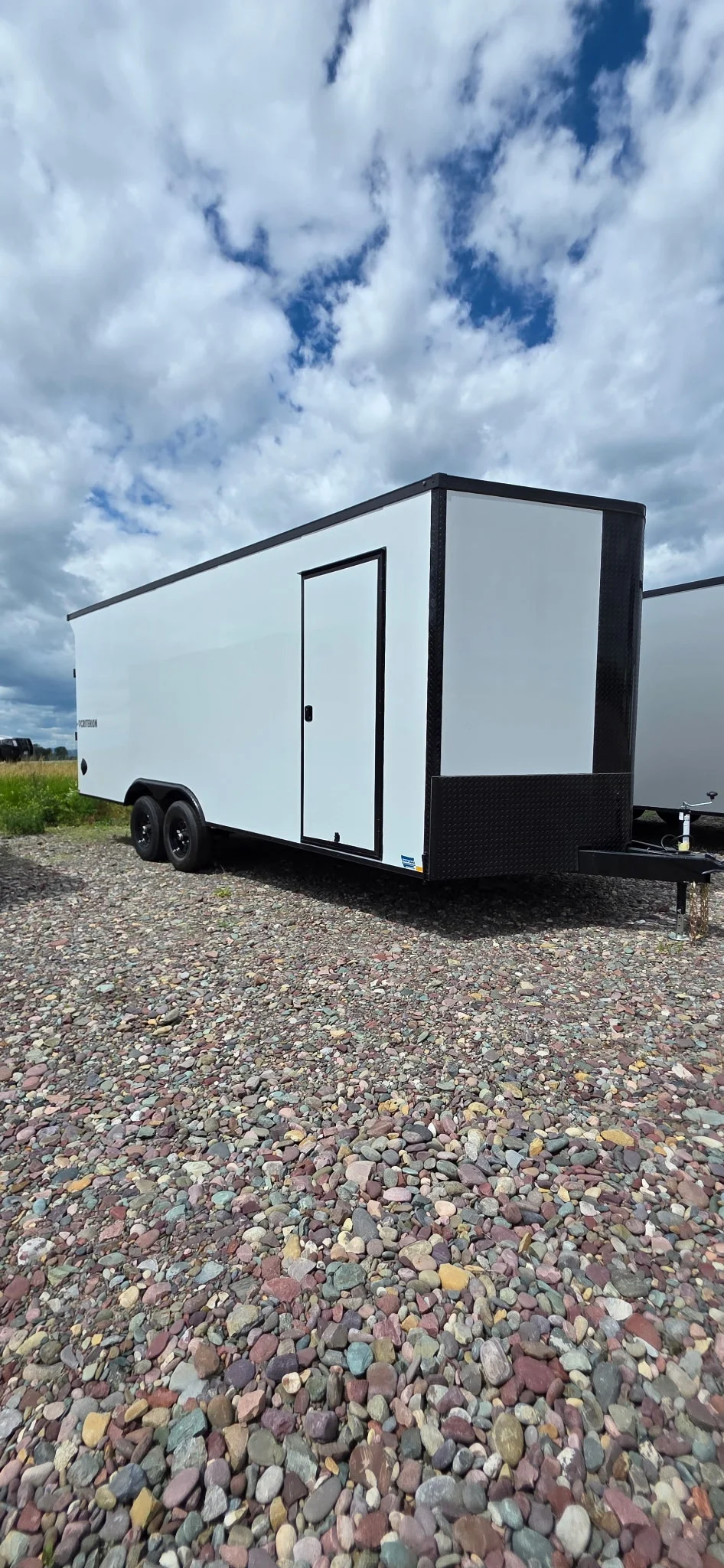
Cargo trailers give you a way to haul tools, equipment, furniture, business supplies, or recreational gear without worrying about the weather ruining everything inside. That's really the difference between these and a plain open utility trailer — walls, a roof, lockable doors. Rain, snow, road dust, theft — none of it gets to your cargo the same way.
Montana adds its own wrinkle to the equation. Long stretches of highway, gravel roads, towing through snow and cold — it's not the gentlest environment for a trailer. So when you're shopping for cargo trailers in Montana, dependable tires, solid suspension, doors that actually seal, and real weather protection aren't optional extras. They're the whole point.
How Does a Cargo Trailer Work?
No engine here — the trailer's entirely dependent on whatever's pulling it. A hitch system connects the two, and the tow vehicle supplies all the power while the trailer's own axles and wheels carry the load.
The coupler locks onto a hitch ball mounted on the tow vehicle, and safety chains back that connection up in case the coupler ever lets go. Bigger trailers usually need electric brakes too, which work together with a brake controller installed in the vehicle doing the towing.
Every move the driver makes — turning, braking, accelerating — the trailer follows. And because a loaded trailer adds both weight and length, you need more room. More space to stop, to turn, to park, to change lanes.
Weight distribution matters more than people think. Load too much toward the back, and the trailer starts to sway. Load too much up front, and you're putting extra strain on the hitch and the tow vehicle's rear suspension.
Common Uses of Cargo Trailers
These things get used in more ways than people expect, mostly because the enclosed design protects whatever needs protecting.
Contractors lean on them for power tools, generators, ladders, building materials, safety gear — basically everything that would otherwise eat up loading time every single morning. Keep it all in one dedicated trailer, and mornings go a lot faster.
Landscapers do something similar with mowers, trimmers, blowers, fuel containers. A rear ramp door makes a real difference here — rolling wheeled equipment in and out beats lifting it every time.
Small businesses turn these into mobile setups — deliveries, event gear, inventory, catering supplies, repair services. Add shelves, cabinets, outlets, a workbench, and suddenly it's a workspace on wheels.
Homeowners use them for moving, renovation projects, furniture, seasonal storage, big shopping runs. And outdoor enthusiasts load up motorcycles, bikes, camping gear, hunting equipment — whatever the season calls for.
Choose the Right Trailer Size
Size is where a lot of buyers get it wrong. Too small, and everything feels cramped. Too large, and now you're dealing with a trailer that's a pain to tow and store.
Start simple — list out what you're actually planning to haul. Measure the big stuff. Height, width, length, all of it, and make sure it clears the door with room left for safe loading.
Sizes run from small single-axle setups all the way up to large tandem-axle trailers. Household goods or light business use? A compact model probably works fine. Construction equipment, motorcycles, landscaping machinery, commercial inventory? You'll likely need something bigger.
Worth thinking ahead too. Growing business, expanding equipment collection — a little extra space now can save you from buying a second trailer down the road. Just don't overdo it. Too much unused space just burns fuel and makes towing harder than it needs to be.
Check the Payload Capacity
Payload capacity is how much cargo the trailer can safely carry — not the same thing as GVWR, or gross vehicle weight rating.
GVWR covers the trailer plus everything in it, total. Subtract the trailer's empty weight from that number, and you've got your rough payload capacity.
Say a trailer's GVWR is 7,000 pounds and it weighs 2,200 pounds empty — you're looking at roughly 4,800 pounds of payload. And that includes shelves, cabinets, tools, spare tires — anything you've added counts toward the total.
Don't eyeball cargo weight. Equipment and building materials are almost always heavier than they look, and overloading wrecks tires, axles, brakes, suspension — the whole frame, really.
Match the Trailer to the Tow Vehicle
Before you buy anything, check what your tow vehicle can actually handle — and that means the full loaded weight of the trailer, not just what it weighs empty.
Pull up the owner's manual or manufacturer specs. Towing capacity, hitch rating, tongue weight, axle ratings, gross combined weight rating — all of it matters here.
The hitch itself needs to be rated properly too. Different classes support different weight ranges, and the ball size has to match the coupler exactly.
Larger trailers often need a brake controller — a device that sends power from the tow vehicle straight to the trailer's brakes. Makes a real difference in emergency stops, honestly.
Select the Best Door Style
Door choice affects how fast and how safely you can load and unload. Most cargo trailers come with ramp doors, barn-style doors, or side entry doors.
Ramp doors are the go-to for motorcycles, mowers, carts — anything with wheels that can just roll up an incline.
Barn doors swing outward from the center, which works well loading from a dock, or anywhere a ramp would eat up too much space behind the trailer.
A side door gets you quick access to tools stored near the front, no need to open the whole rear door for something small.
Think through how you'll actually be loading. Contractors usually want fast tool access. Equipment owners need a ramp that's rated for the weight they're rolling up it.
Load Cargo Safely
Good loading keeps the trailer stable and your equipment intact. Heavy items go low, near the axle — that's the general rule.
Avoid piling weight at the back. Rear-heavy loads cut into tongue weight and can trigger dangerous sway. Too much up front causes its own problems, overloading the hitch.
Spread cargo evenly side to side. Every large or heavy item needs proper straps, chains, wheel chocks, tie-downs. Shelves and cabinets should be bolted down, not just set in place.
And check everything again after driving a short distance. Straps loosen as equipment settles, especially on rough roads — pull over somewhere safe and retighten before continuing.
Follow Safe Towing Practices
Towing isn't just regular driving with extra weight behind you. Stopping distance changes, handling changes — it all demands more attention.
Keep your speed reasonable, leave more room than usual between you and traffic ahead. Brake earlier. Skip the sudden steering moves.
Take wider turns so the trailer wheels clear curbs, signs, other vehicles. Check your mirrors constantly, and always check blind spots before switching lanes.
Sway happens for a handful of reasons — bad loading, high speeds, wind, sharp steering, getting passed by big vehicles. If it starts, stay calm, ease off the speed gradually, and resist the urge to steer sharply or slam the brakes.
Practice reversing somewhere open before you try it in a busy lot. Small steering adjustments beat big corrections almost every time. Go slow, use a spotter if you can't see well.
Inspect the Trailer Before Every Trip
A quick walk-around before you leave catches problems while they're still small. Here's what to run through:
Coupler locked onto the hitch ball. Safety chains attached and crossed underneath. Electrical plug connected, lights tested. Breakaway cable checked, if your trailer has electric brakes. Tire pressure, tread, sidewalls inspected. Doors, ramp, and latches secured. Cargo balanced and tied down properly. Trailer jack raised and locked. Brakes tested before merging into regular traffic.
Takes a few minutes, saves you from breakdowns, cargo damage, or worse out on the road.
Maintain Cargo Trailers Regularly
Routine maintenance keeps a trailer running well and lasting longer. Tires need checking regularly — even if the trailer's been sitting unused for a while.
Tires age whether they're moving or not. Watch for cracks, bulges, uneven wear, low pressure. Keep a properly inflated spare on hand, along with whatever tools you'd need to swap it.
Wheel bearings need periodic checks and lubrication — dry or damaged bearings overheat fast and can lead to wheel failure. Brake components deserve the same attention, serviced on whatever schedule the manufacturer recommends.
Check the roof, seams, doors, and seals for leaks too. Water getting in can ruin flooring, tools, boxes, anything electrical. Small leaks are easy to fix — bigger structural damage isn't.
Clean up after hauling anything muddy, wet, or corrosive. And in winter, get the road salt off the frame and undercarriage whenever you can.
Improve Security and Organization
A trailer full of expensive equipment needs a real security plan. Strong locks on the coupler, the rear doors, the side doors — all of it.
Park somewhere visible and well-lit when you have the option. Wheel locks, hitch locks, alarms, GPS trackers — all worth considering for extra protection.
Interior organization plays into security too. Shelves, bins, hooks, wall-mounted racks — keeping tools locked in place stops them from sliding around while the trailer's moving.
Keep frequently used items near the side door or rear entrance. Store anything heavy low, near the floor, and label containers so you're not digging around looking for supplies.
Final Thoughts
Cargo trailers earn their keep for homeowners, contractors, outdoor enthusiasts, and businesses that are still growing. Secure transport, weather protection, organized storage — and the flexibility to haul just about anything.
The right trailer comes down to matching the load, the tow vehicle, the working conditions, and how much storage space you actually have. Compare size, payload capacity, axle setup, door style, build quality, and accessories carefully before deciding.
And once you've bought it, safe loading, careful driving, regular inspections, and consistent maintenance keep everything running the way it should. Get those habits right, and a trailer will serve you reliably for years.
MT Trailer Sales works with customers exploring cargo trailer options for work, business, travel, and personal use. Talking through your expected load and towing setup with someone who knows trailers inside and out makes it a lot easier to land on the right model for your day-to-day needs.