Sign up with Google
 Sign in with Zoho
A workplace can have good salaries, modern offices, and strong benefits, but employees still want something that cannot always be measured on a payslip: appreciation.
People want to know when their work has made a difference.
In a small team, recognizing employees can happen naturally. A manager can thank someone after a successful project, or the whole team can celebrate an achievement during a meeting.
As the organization grows, however, these small moments can become harder to maintain.
Different teams may have different managers, priorities, and working styles. Some employees may receive recognition regularly, while others may rarely hear that their work is appreciated.
This is where rewards and recognition software can be useful.
A digital recognition platform gives organizations a more organized way to appreciate employees and keep recognition programs running across different teams.
What Is Employee Rewards and Recognition Software?
Employee rewards and recognition software is designed to help companies manage employee appreciation and reward programs through a digital platform.
The exact features depend on the software, but organizations may use these systems for manager recognition, peer-to-peer appreciation, employee milestones, achievement badges, points, and rewards.
For example, an employee who helps solve an important customer problem could receive recognition from their manager.
Another employee who consistently supports colleagues could be appreciated by members of their own team.
These small moments can add up over time.
Why Consistent Recognition Matters
Recognition should not only happen when someone wins an award or completes a major project.
There are many everyday contributions that deserve attention.
Someone may stay late to help a colleague. Another employee may suggest a simple improvement that saves the team time. Someone else may handle a difficult customer conversation particularly well.
These contributions are easy to overlook.
A structured recognition system can make it easier for employees and managers to acknowledge this kind of work.
It also gives organizations an opportunity to make recognition more consistent.
Rewards and Recognition Are Different
The terms "rewards" and "recognition" are often used together, but they are slightly different.
Recognition is about acknowledging someone's effort or achievement.
A reward is something given to an employee as a result of an achievement or contribution.
Some organizations may use points that employees can redeem for rewards. Others may prefer certificates, gifts, public appreciation, or milestone celebrations.
There is no universal formula.
The program should match the company's culture and what employees actually value.
Keeping Recognition Genuine
This is probably the most important part.
Recognition should feel personal.
If every achievement receives the same automated message, employees may eventually stop paying attention.
Managers should explain what the employee did well and why it mattered.
That small amount of context can make recognition feel much more genuine.
Technology can make the process easier, but the human element still matters.
Helping Managers and HR Teams
A recognition platform can also reduce some of the administrative work involved in managing employee reward programs.
HR teams can have a central place to manage recognition activities, while managers can use the system to acknowledge employees without relying on separate spreadsheets or messages.
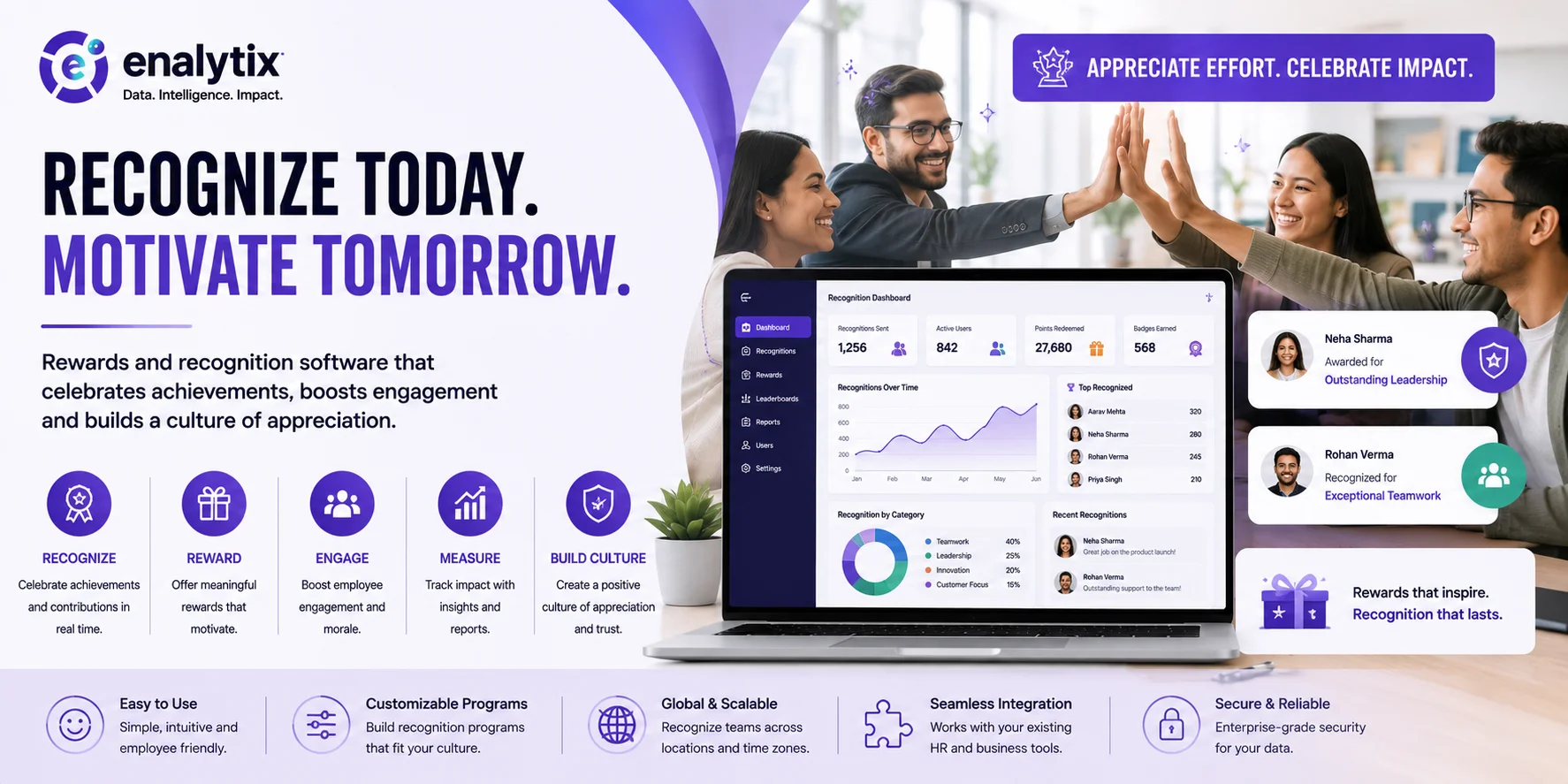
Organizations can also create recognition categories based on their priorities, such as teamwork, innovation, customer service, leadership, or performance.
Platforms such as Enalytix provide technology solutions for workplace and operational environments.
As companies grow, having a structured way to recognize employees can become increasingly useful.
Building Recognition Into Everyday Culture
A recognition program works best when it becomes part of normal workplace behavior.
Employees should be encouraged to appreciate colleagues, managers should participate regularly, and rewards should be connected to meaningful contributions.
Rewards and recognition software can provide the structure behind this process.
But ultimately, the value comes from the people using it.
A platform can make recognition easier to give and easier to track. It cannot replace a genuine thank-you.
For organizations trying to improve employee experience, that distinction is worth remembering.
The goal is not to create another HR process.
The goal is to create a workplace where good work is noticed more often and employees know that their contribution matters.