Sign up with Google
 Sign in with Zoho

Salt Spray Chamber - Setup, Operation & Buying Guide
So every coating supplier eventually gets the dreaded call, “The parts are rusting.” A good salt spray chamber keeps you from hearing about weak finishes from an irate customer, rather than in your own lab.
What is Salt Spray Chamber?
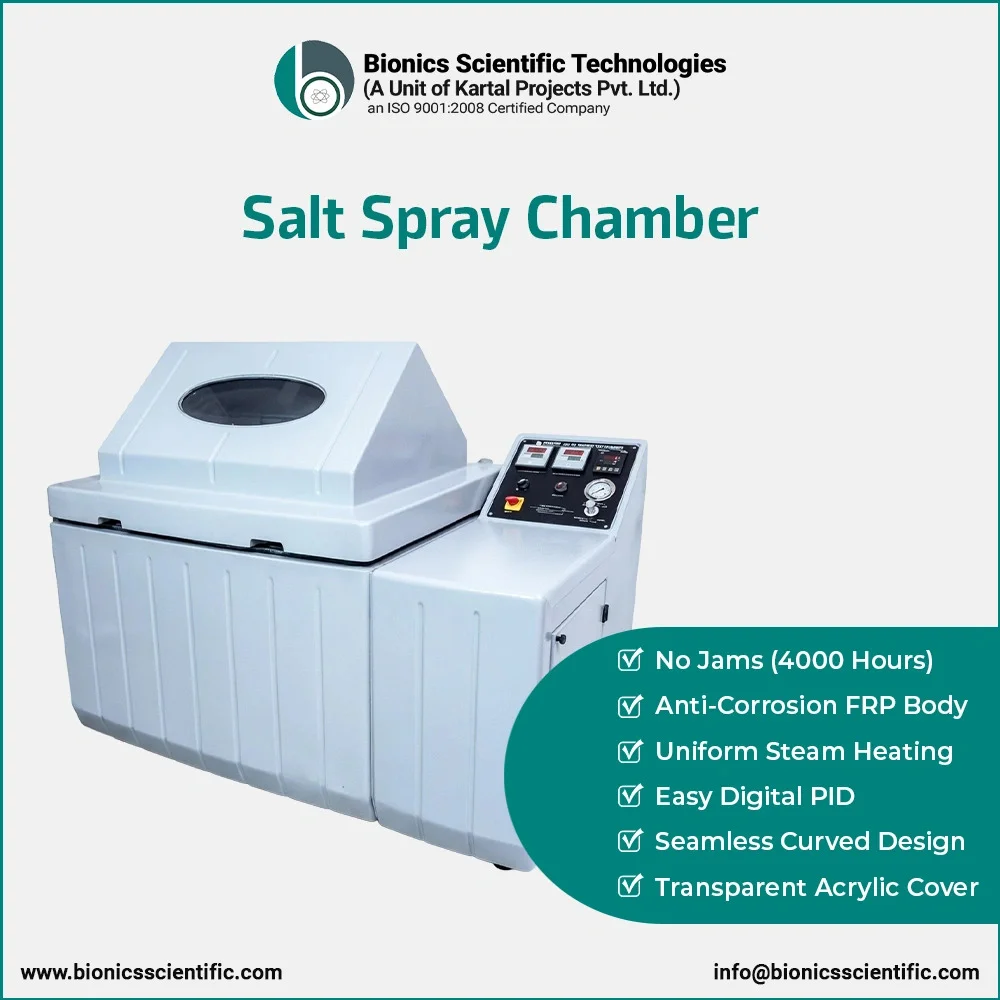
A salt spray cabinet is a closed cabinet that subjects samples to a fine fog of salt water at a constant temperature, speeding up corrosion so you can make quick comparisons of finishes. It does not predict specific service-life years. What it really does is rank coatings, platings, and suppliers under the same, repeatable conditions.
Running a Test Step by Step
1. First, prepare your samples. Remove oil and fingerprints and seal cut edges with tape or wax. Then mix the solution with 5% sodium chloride by weight in deionized water having pH between 6.5 and 7.2. Place panels in a careful angle, about 15 to 30 degrees from vertical. Samples should not touch one another. Set the cabinet for 35°C and operate the air saturator hotter to humidify the air. Monitor temperature, pH and fallout rate during the run. One of my bench habits: don’t open the lid unless the standard says to. Each opening disrupts humidity and fog pattern, and the chamber needs time to recover.
How to Interpret the Results
Metals fail in different ways. Zinc will form white corrosion products first , bare steel will turn red . Painted panels may blister or crawl outward if the scratch is intentional. Photograph samples at regular intervals and grade them on standard scales, e.g. ASTM D610 for rust grade or ASTM D1654 for scribe creepage. And when you have consistent records, it makes your report so much more convincing.
Types of Salt Spray Test Chambers
Neutral salt spray models are the standard choice for general coatings tests. The cyclic corrosion chambers are closer to real weather conditions, alternating between spray, drying and humidity stages. Walk-in rooms can hold large assemblies, while benchtop versions are good for small parts and budgets.
Shopping Checklist
Choose a capacity that allows plenty of room around your largest sample. Look for PVC or fiberglass liners that won’t corrode themselves. Stable temperature control is more important than fancy displays. A system of automatic re-filling prevents interruption overnight of long tests. Last, check compatibility with ASTM B117 or ISO 9227.
Troubleshooting Common Issues
If the fog output is diminished, salt crystals have probably clogged the nozzle. Flush the nozzle and filter the solution. The uneven fallout is often due to a poor sample location or unstable air pressure. Low water in the saturator is a frequent source of temperature drift. Fix those early because one bad run wastes days.
Last Thoughts
A good salt spray chamber is only as reliable as the discipline that goes with it. Cleanly prepare samples, control your solution, document everything, and keep nozzle and saturator in good condition. Do that and your corrosion data will stand up to any audit or customer review.