Sign up with Google
 Sign in with Zoho

Ask most marketing managers in Dubai what their social media strategy is, and you'll usually get a shrug followed by "we post a few times a week and boost the good ones." That used to be enough. It isn't anymore. Between the volume of brands fighting for the same feed space and audiences who've gotten noticeably better at ignoring anything that feels like an ad, a strategy built on gut feeling and a content calendar just doesn't hold up the way it did even two years ago.
This isn't another checklist of best practices you've already skimmed a dozen times. It's a practical look at what's actually working for businesses in the UAE right now, and a few habits worth building before the rest of the market catches up.
Why "Just Posting" Stopped Working
A documented social media strategy beats reactive posting for one simple reason: it forces every piece of content to answer to a goal. Without that, teams end up producing content that looks fine, gets a decent number of likes, and does absolutely nothing for the business behind it.
The businesses pulling ahead in 2026 treat social as one arm of a wider digital marketing strategy, not a side project run by whoever has an afternoon free. That shift changes a few things in practice:
● Every post ties back to something measurable, not just "staying active"
● Brand voice stays consistent whether someone lands on Instagram, TikTok, or LinkedIn
● Budget conversations get easier, because you can actually show what's working and what isn't
● Teams stop guessing and start testing, which compounds over time
Start With a Goal You Can Actually Measure
"Grow engagement" isn't a goal. It's a vibe. Real strategy starts with something you can put a number on: more qualified leads, more direct sales through shoppable posts, stronger visibility for a new market entry, or better retention among existing customers.
If your target is vague, your social media campaign planning will be too. Something like "a 20% increase in qualified leads from social within the quarter" gives everyone on the team a finish line to work toward, instead of a general sense that things should be going better.
Figure Out Where Your Audience Actually Spends Time
Not every platform deserves your attention. The most popular social media platforms among UAE audiences skew toward Instagram, TikTok, and Snapchat, with LinkedIn picking up real traction for B2B brands, but the right combination depends entirely on who you're selling to.
Before committing to a platform, it's worth checking a few things honestly:
● Where competitors are getting real engagement, not just follower counts
● Which platforms actually convert for your specific product or service
● Language and cultural nuance across the UAE's genuinely diverse resident base
● Whether your team can realistically maintain quality across every channel you pick
Three platforms done well will always beat five done halfway.
Build a Framework, Not Just a Calendar
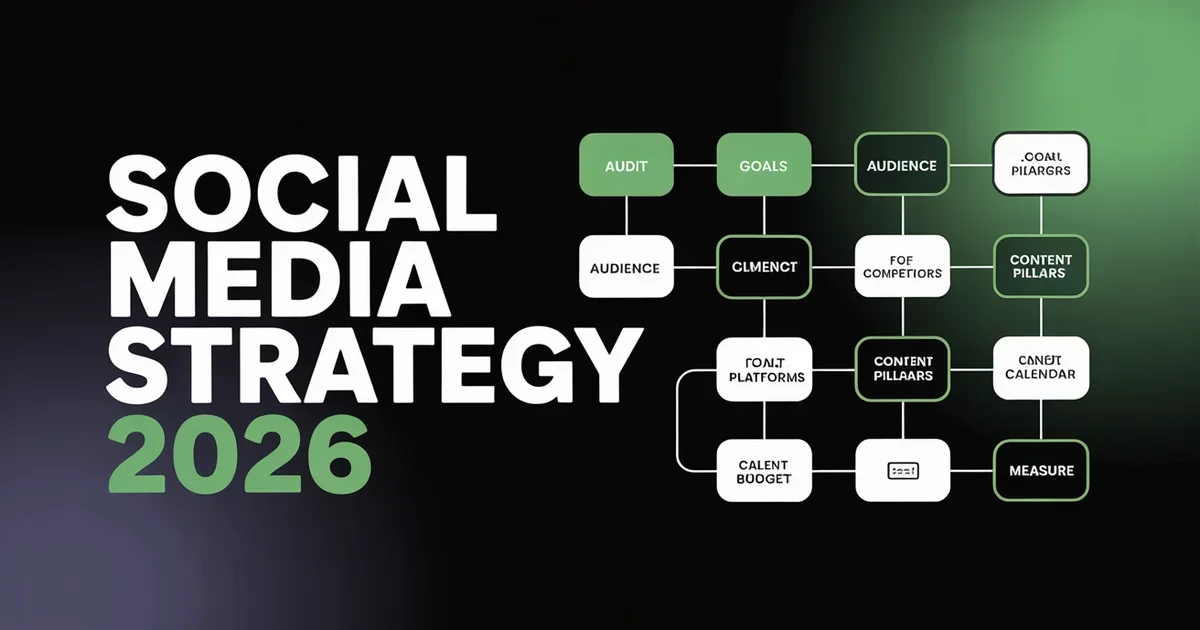
A calendar tells you when to post. It doesn't tell you why. A stronger content marketing strategy organizes everything around a handful of consistent pillars, education, behind-the-scenes, product spotlights, and content from real customers, so your social media content feels cohesive instead of scattered.
This is also where social media branding either holds together or falls apart. The tone, visuals, and message need to feel like the same brand whether someone sees you on Instagram or LinkedIn. Inconsistency here is one of the fastest ways to lose trust in a market as visually crowded as the UAE.
Use Tools That Let You Scale Without Losing Quality
Manual posting works fine until it doesn't. The right social media tools let a small team plan, schedule, and analyze without burning out or letting quality slip. A workable stack usually includes:
● A scheduling platform to keep publishing consistent across channels
● Design tools that let you produce on-brand creative quickly
● Social media monitoring tools that track mentions, sentiment, and competitor activity in real time
● A reporting setup that connects social numbers to actual marketing outcomes
Monitoring in particular is underused here. Knowing what's being said about your brand, or a competitor's, while it's happening gives you a real window to respond before something turns into a bigger problem.
Let Paid and Organic Actually Work Together
Organic social media presence builds trust slowly. Paid media is what takes that trust and puts it in front of people who've never heard of you. The strongest approaches in 2026 don't treat these as separate budgets:
● Organic content builds community and demonstrates expertise over time
● Paid campaigns extend your best-performing organic content to cold audiences
● Retargeting brings warm audiences back through the funnel toward an actual purchase
This overlap also feeds your seo service work more than most teams realize. Search engines increasingly pick up on brand signals from social engagement, and showing up consistently across channels shapes how people perceive you before they've even clicked through to your site.
Track What Actually Matters
Follower count feels good to look at and tells you almost nothing about business impact. The metrics worth reviewing every month, not just at the end of a campaign, are:
● Engagement rate relative to reach, not the raw number
● Click-through rate from social posts to your site or landing pages
● Conversion rate on social-driven traffic
● Cost per lead or cost per acquisition from paid campaigns
● Sentiment trends picked up through monitoring tools
Real social media analytics is a monthly habit, not a quarterly report you skim before a meeting.
Keep an Eye on What's Shifting
Social media trends move faster than most internal marketing calendars can keep pace with. What performed on Instagram in 2024 can already feel stale by 2026. Brands that stay ahead tend to do a few things consistently:
● Test new formats early instead of waiting for them to go mainstream
● Pay attention to regional cultural moments and build content around them
● Watch how social media engagement tactics are evolving among competitors and global brands
● Revisit the strategy every quarter instead of treating it as a document you write once a year
A Better Way to Run the Loop
Instead of planning once a year and hoping it holds, some of the sharper teams in this market have shifted to something closer to a 30-day feedback loop: plan, publish, monitor, analyze, adjust, repeat. It treats monitoring and analytics as live inputs shaping next month's content, not just numbers for a slide deck. It's a more agile way to run social media marketing, closer to how performance teams already operate, and it tends to beat a strategy that only gets reviewed once a quarter.
The Bottom Line
A social media strategy that actually grows a business in 2026 isn't built on posting more often or chasing every new trend. It comes from clear goals, the right platform choices, consistent branding, decent tooling, paid and organic working together, and an honest monthly look at what the data is actually saying. Brands that treat social as genuinely connected to their broader digital marketing strategy, rather than a task handed to whoever has time, are the ones seeing real growth instead of just activity.
Where This Could Go Next
● Pull in a real, even if lightly anonymized, UAE client result. Specific numbers from an actual campaign do more for credibility than any general claim.
● Turn the framework into a downloadable planning worksheet. A content pillar template or a 30-day feedback loop tracker gives readers a reason to hand over an email address.
● Split sections four through seven into their own articles. A tools comparison, a deeper analytics piece, and a paid-versus-organic budget breakdown would each capture their own search traffic and build out the topic properly.