Sign up with Google
 Sign in with Zoho

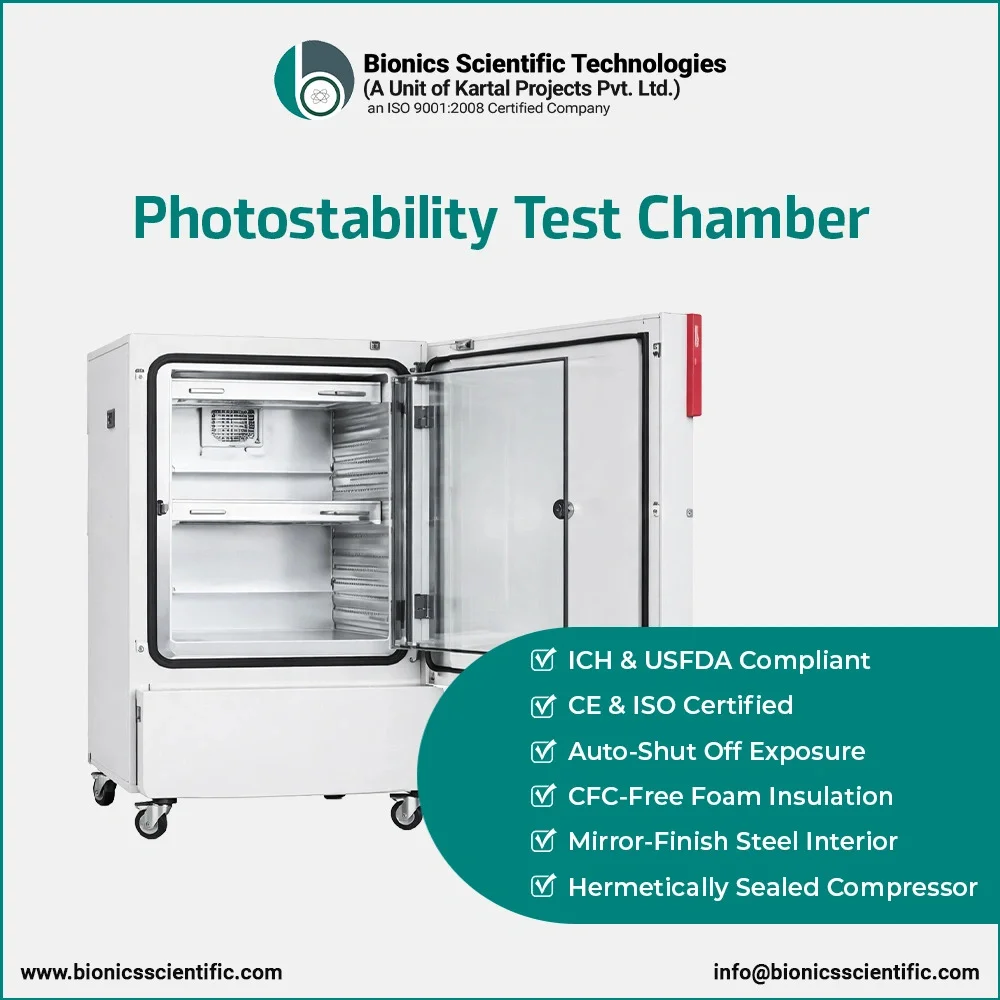
Photostability Test Chambers: Your Guide to Using Them Effectively for Pharma and Materials Testing
What Is a Photostability Test Chamber?
Light stability testing chambers are devices used in laboratories to expose medicines, preparations, packaging, and other materials to certain light levels to determine whether these materials are going through any changes under the influence of light. The light can be responsible for degrading active agents, altering color of the material, creating impurities, and deteriorating packaging. In this way, instead of attempting to predict what is happening with the product on the shelf of a pharmacy or in consumer’s household, one can simply recreate light exposure in a matter of days.
The Importance of Photostability Testing
While one’s tablet may look fine in laboratory conditions, exposure to sunlight or even indoor lights when stored may lead to degradation. This may result in reduced potency and, in other instances, the formation of undesirable by-products. Regulatory bodies require manufacturers to provide proof that the drug will remain stable in the presence of light. This is outlined in the ICH Q1B guideline, which is the reference for most pharmaceutical companies. Photostability test chambers can assist you in gathering the required information.
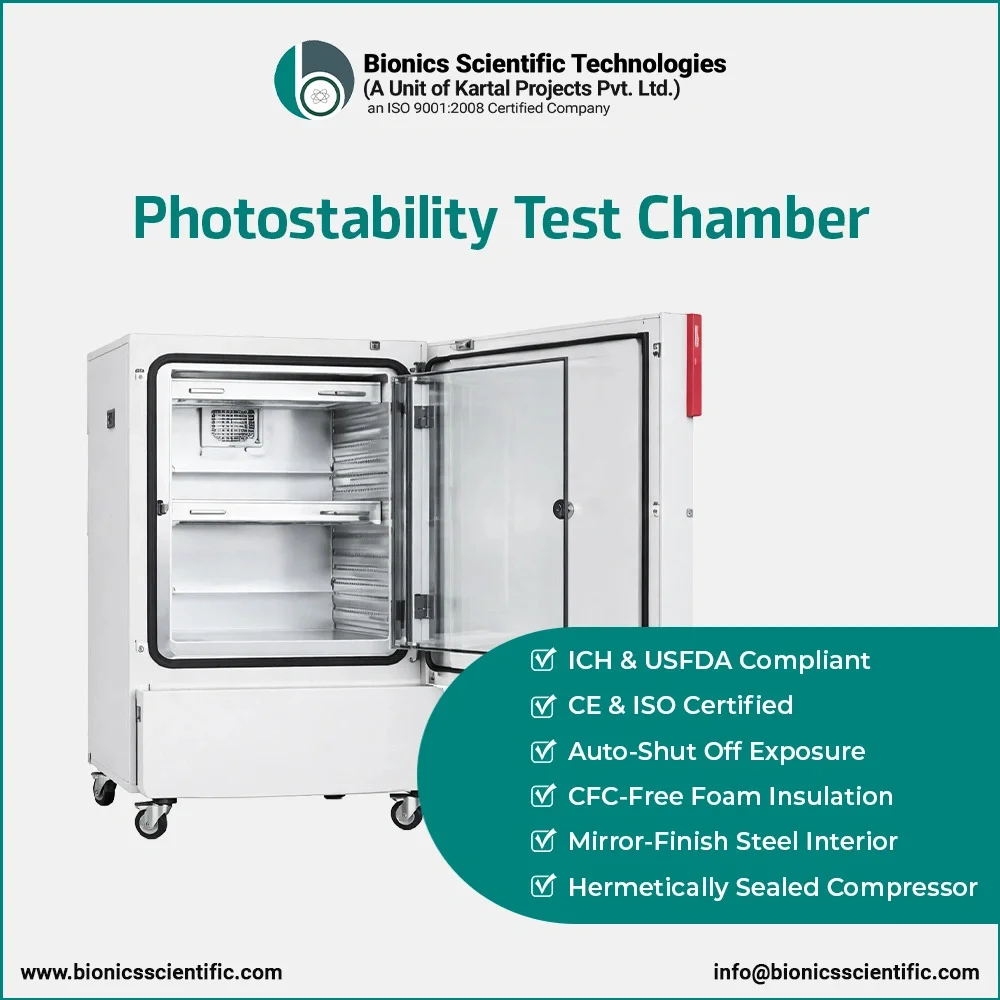
How They Function
Light Sources
According to ICH Q1B, the samples must be illuminated for at least 1.2 million lux hours and receive a dose of near-ultraviolet energy of at least 200 watt hours per square meter. This is done through the use of either a light source that approximates daylight, or both cool white fluorescent and near-UV light sources.
Monitoring and Control
Internal monitors, also known as lux and UV meters, monitor the dose received by the sample. Some of these photostability testing chambers will regulate temperature because heat can affect the tests by giving false results as a result of thermal degradation of the samples which is independent of light.
Important Features to Look Out for Prior to Purchase
Make sure that dose accuracy and consistency are present since inconsistencies in light distribution throughout the irradiation surface make comparative studies meaningless. Inquire regarding the type of lamp used, the estimated lifespan of lamps, and their ease of replacement. Make sure that the chamber keeps track of dose exposure and that audit trails are possible. Consider calibration certifications, the size of the shelf, and the possibility of placing dark controls next to illuminated samples. A good controller cuts down on human error.
Conducting a Reliability Study
Samples should be prepared in proper containers and controls, which are covered in aluminum foil, should be included in every experiment so that it is possible to distinguish between the effect of illumination and heat. Even distribution without any shadows and consistent thickness of the layer are key factors. The beginning and ending times, dose, and temperature for each run should be documented. Afterwards, samples should be tested for appearance, assay, and degradation products.
Maintenance and Calibration
Lamps wear out and the output of light decreases. Replace the lamps periodically and perform calibration for the light sensors using traceable standards. Make sure that reflecting surfaces are clean to prevent dust, which interferes with the exposure. Keep a maintenance record book since it will be required by the auditors.
Comparing Quotes
Ask all the suppliers to provide a written specification sheet because it provides you with the means of comparing the quotes. Consider the temperature range, uniformity, humidity range, light source, number of shelves, and the controllers. Find out the warranty coverage and duration of these as well as the availability of local technical assistance. Higher quotes that come with good local technical support would be better than low-cost units which provide delayed technical support.
Ways of Managing Your Budget
Determine the necessary requirements prior to seeking quotations, distinguishing these from the optional requirements. If all you need is the germination process only, then CO2 control might be unnecessary for you. Consider the use of institutional facilities if the unit is to be used on a sporadic basis only. Ensure coordination between the purchase of your unit with the grants period and discounts of suppliers. You may consider negotiating for packages such as shelving, among others.
Workflow for Obtaining Clean Data
Firstly, draft your procedure prior to engaging with the device: sample form, sample containment, exposure target, and acceptance criteria. Ensure that the samples are placed in a uniform arrangement to prevent shadow formation. Use dark controls covered with aluminum foil together with the exposed samples to separate thermal effects from those of light. Record the start time of exposure, end time of exposure, the dose measured, and chamber temperature. Following exposure, assess the appearance, analysis, and degradation products.
Maintenance of the Chamber
Lighting capacity of the lamps decreases slowly over time, thus, replace them and do not wait until they fail. Calibration of the sensors with traceable standards should be done consistently and reflective surfaces should be cleaned to ensure that dust does not interfere with the dose measured. Record all the maintenance performed on the instrument in a logbook. During an audit, the true story will come out regarding the equipment.
Conclusion
The photostability test chambers provide the documentation needed for protecting the quality of products and satisfying regulatory bodies. Pick up a test chamber, which has reliable light exposure and temperature control, and conduct experiments in a methodical manner.