Sign up with Google
 Sign in with Zoho

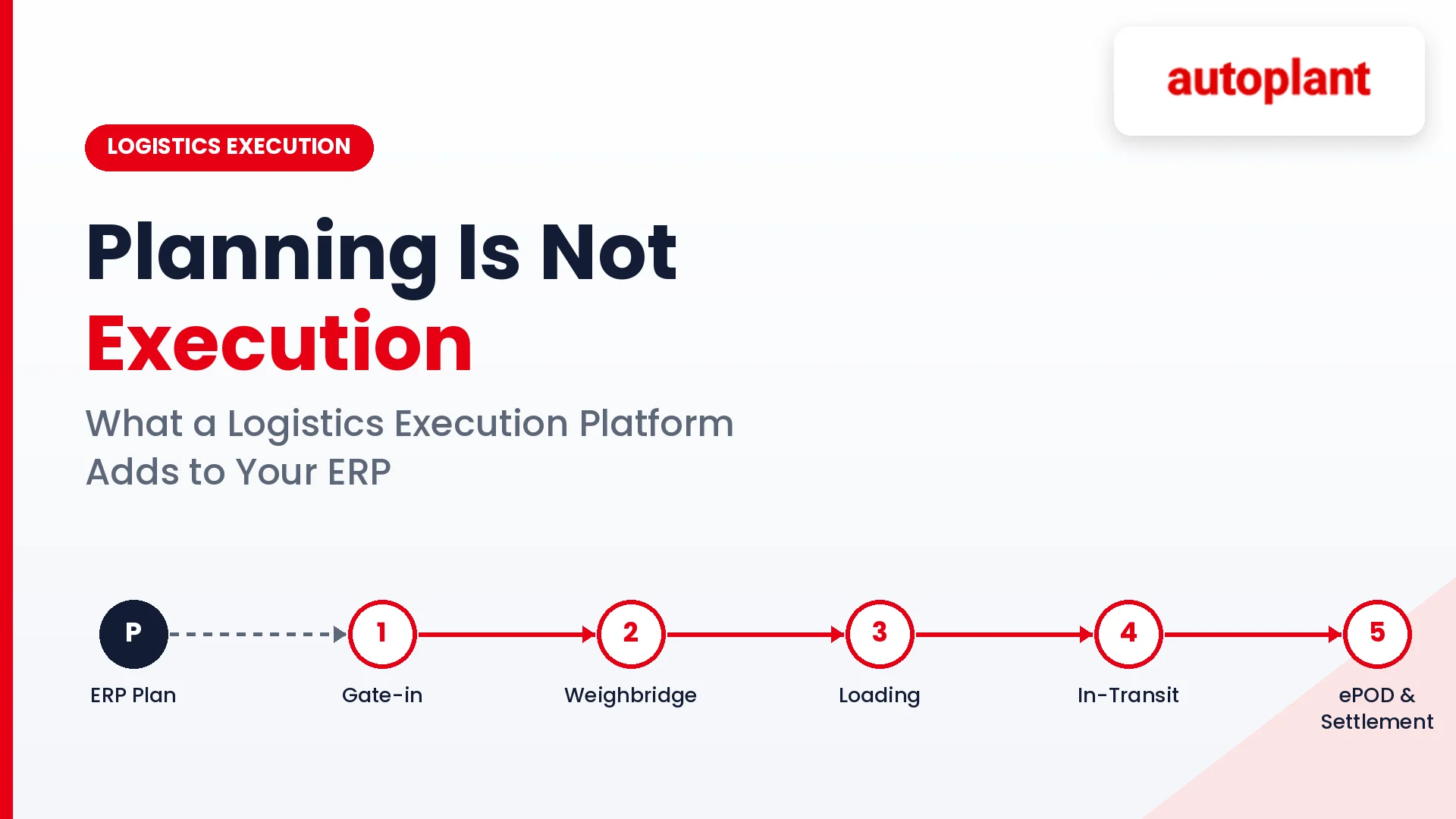
Your ERP is excellent at planning. It knows the orders, the stock and the dispatch schedule. But it cannot see the truck stuck at the gate or the queue at the weighbridge.
A Logistics Execution Platform closes that gap. It runs the physical work, from gate-in to freight settlement, and sends live data back to your ERP.
In this post, you'll learn where plans break down, which modules matter, how integration works and what to track in your first 90 days.
Where the ERP Plan Breaks Down on the Shop Floor
ERP systems record transactions. They were never built to watch trucks, cameras or loading bays in real time.
In cement, steel, chemical and FMCG plants, the gap shows up every day:
- Trucks wait for hours because nobody manages slots or yard space.
- Weighbridge readings get written by hand and keyed in later.
- Loaders work from paper slips, so wrong or short loads go out.
- Nobody knows where a shipment is until the customer calls.
The plan says one thing. The yard does another. And the ERP learns the truth days later, if at all.
How a Logistics Execution Platform Works With Your ERP
Think of your ERP as the brain that decides. A Logistics Execution Platform is the hands that act on those decisions.
It captures each event as it happens, using GPS, cameras, sensors and connected weighbridges. Then it applies your rules automatically. This is Paperless Factory Automation in practice: fewer forms, fewer manual entries and fewer disputes.
It also brings Process Compliance Automation. A truck can't move to loading until checks are complete. A dispatch can't close without matching documents.
Modules That Cover the Journey From Order to Settlement
Freight Sourcing and Vendor Collaboration
Orders from the ERP become loads. The platform assigns them to transporters, records their acceptance and can run reverse auctions for fair freight rates.
Gate, Yard and Weighbridge
Number-plate recognition logs every vehicle at entry. Automated weighbridges capture weights without manual typing. A live yard view shows which truck is where, so loading bays don't sit idle.
Smart Loading and Document Checks
Load plans match each order to the right vehicle. Cameras can count bags and check safety gear. Shipping documents are verified before the truck leaves.
En-Route Tracking and Alerts
GPS tracking flags route deviations, over-speeding, long idling and arrival at destination. For temperature-sensitive goods, cold chain monitoring adds another layer of control.
Proof of Delivery and Freight Settlement
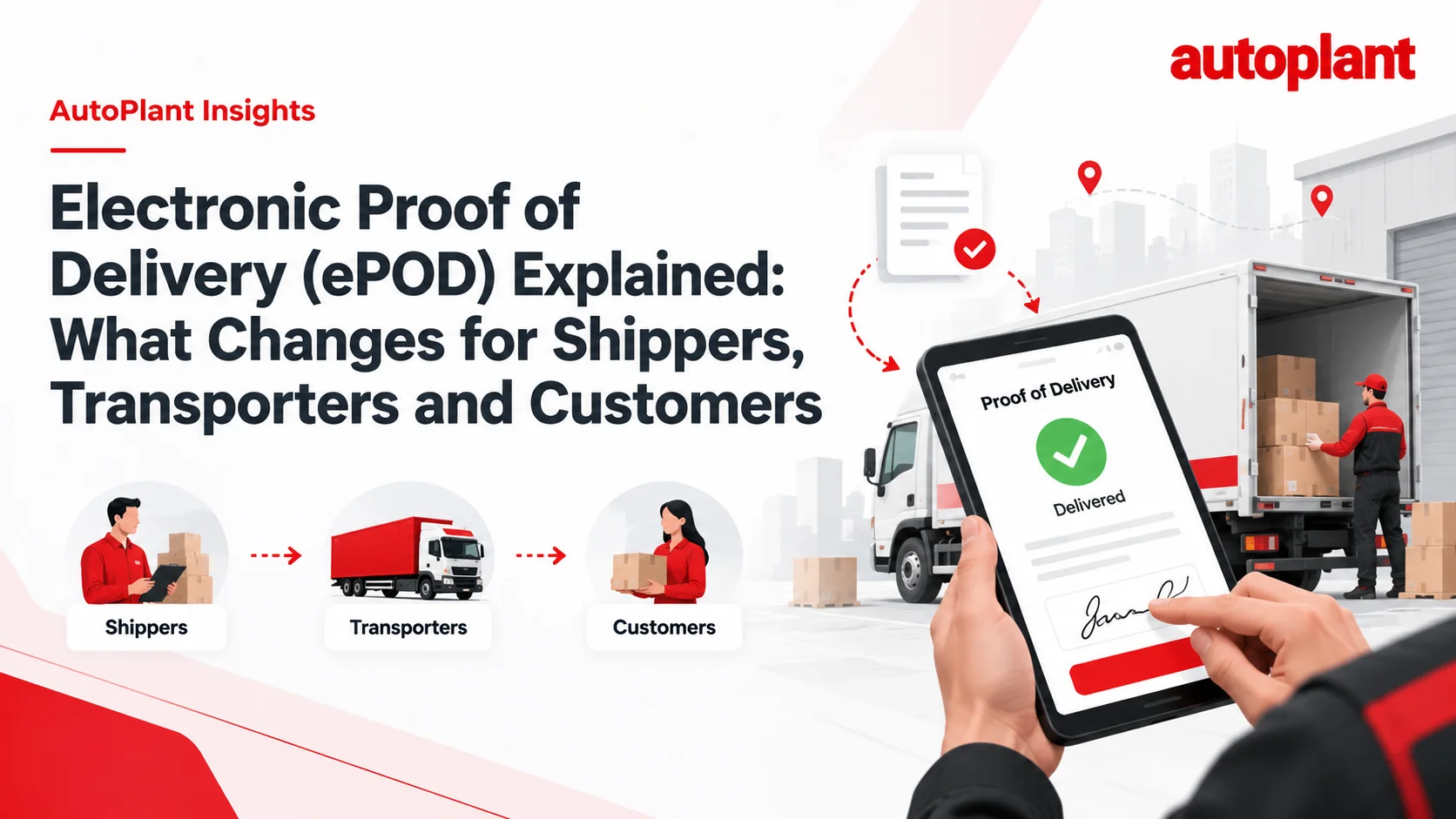
Electronic proof of delivery (ePOD) captures photos and approvals at the customer site. Freight bills are then checked against actual trips. This is what Paperless Supply Chain Operations look like end to end.
Integration Basics Your IT Team Should Get Right
A Logistics Execution Platform does not replace your ERP. It connects to it. Keep these basics in mind:
- Master data flows down. Customers, materials, plants and sales orders come from the ERP.
- Execution data flows up. Gate times, weights, dispatch quantities and POD status go back.
- APIs do the work. APIs are simple software connectors that remove manual uploads.
- One source of truth. Decide which system owns each data field before go-live.
- Start small. Pilot one plant or one lane, then scale.
What to Measure in Your First Quarter
Record a baseline before go-live. Then track these numbers every month:
- Truck turnaround time from gate-in to gate-out
- Waiting time at the gate and weighbridge
- Dispatch errors, such as wrong or short loads
- On-time delivery rate
- Days taken to receive proof of delivery
- Freight bill settlement cycle time
If these numbers improve, your Logistics Execution Platform is paying off. If they don't, check user adoption first. Paper habits die slowly.
Frequently Asked Questions
Is a logistics execution platform the same as a TMS?
Not exactly. A transport management system (TMS) mainly handles freight and transporters. An execution platform also covers in-plant work like the gate, yard, weighbridge and loading. Many include TMS features inside them.
Will it work with SAP or Oracle?
In most cases, yes. Platforms built for Indian manufacturers usually offer ready connectors or APIs for major ERPs. Ask for a live integration demo during evaluation.
Can we keep our existing weighbridges and CCTV cameras?
Often, yes. Many weighbridges and IP cameras can be connected rather than replaced. Share your device makes and models with the vendor early to confirm compatibility.
Who should own a logistics execution platform rollout?
Logistics should lead, with IT, plant security and finance involved from day one. Security runs the gate, finance handles settlement and IT manages the ERP link.
Are these tools only for large plants?
No. Next-Gen Industrial Logistics Optimization Tools for Smart Plants are usually modular. Mid-sized plants can start with gate and weighbridge automation, then add more modules later.
Turn Your ERP Plan Into Daily Execution
Your ERP plans the work. But execution happens at the gate, in the yard and on the road. Closing that gap needs modules from order to settlement, clean integration and clear first-quarter metrics.
AutoPlant offers a Logistics Execution Platform built for this job. It brings together IoT and GPS devices, automated weighbridges, ANPR and AI video analytics, yard automation from gate-in to gate-out, smart loading, freight reverse auctions, 3D load building, en-route alerts, ePOD and freight settlement, all with ERP integration.
Curious how it would fit your plant? Talk to the AutoPlant team and map out your first pilot.
If your blog editor drops the heading styles when you paste, I can give you an HTML version to paste instead.