Sign up with Google
 Sign in with Zoho

Long truck queues at the gate. Slow weighing. Loading delays and piles of paperwork. Most operations heads know the problems well. The harder question is where to begin.
Here’s the short answer on how to automate warehouse and plant logistics: start with an audit, automate the gate and weighbridge first, then loading and documents, and add dashboards last. Each phase builds on the one before.
In this guide, you’ll get a simple four-phase roadmap you can adapt to your own plant.
How to Automate Warehouse and Plant Logistics Without Disruption
Trying to automate everything at once often fails. Budgets stretch, teams get confused and nothing goes live properly.
A phased plan lets you fix the biggest bottleneck first, prove results and then move ahead. It also gives your staff time to adjust. When teams ask how to automate warehouse and plant logistics without disrupting daily work, phasing is the answer.
Phase 1: Audit Your Current Flow
Before buying any tool, understand how trucks and goods actually move through your plant today. Any plan for how to automate warehouse and plant logistics should start with facts, not assumptions.
Track a Truck from Gate-In to Gate-Out
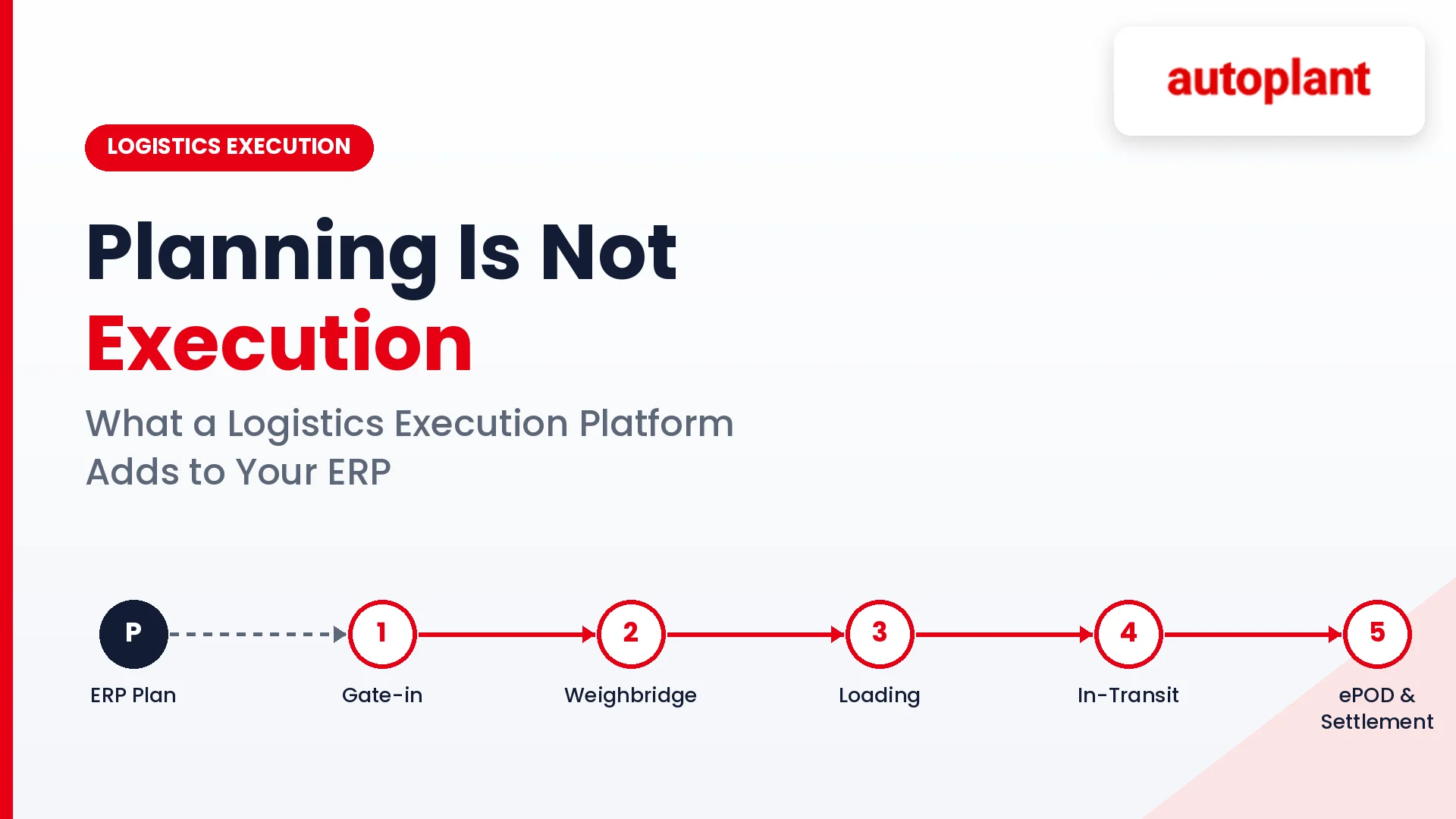
Follow a few trucks through the full cycle: gate entry, parking, weighbridge, loading, document checks and exit. Note how long each step takes and where trucks wait.
This total time is your plant turnaround time, often called TAT. It’s the main number your roadmap should improve.
Find the Biggest Bottlenecks
Look for steps with the longest waits, the most manual entry or the most errors. Talk to gate staff, weighbridge operators and loading supervisors. These bottlenecks decide your priorities.
Phase 2: Automate the Gate and Weighbridge
For most high-volume plants, the gate and weighbridge are the biggest choke points. That’s why this is the smartest first step in learning how to automate warehouse and plant logistics.
Digital Gate Entry and Queuing
Number plate cameras or RFID tags identify trucks as they arrive. A queuing system for plant entry then calls trucks inside in order, based on bay and weighbridge availability.
Drivers wait in a holding area instead of blocking the road. Only expected, verified trucks get in.
Unmanned Weighbridge Operations
An automated weighbridge identifies the truck, records the weight and posts it directly to your ERP. No manual typing means fewer errors and less chance of tampering.
Phase 3: Automate Loading and Documentation
Once trucks move smoothly through the gate, focus on what happens inside the plant.
Smart Loading at the Bay
Trucks are assigned to the right bay automatically. Cameras count bags or units during loading, and discharge stops when the order quantity is reached.
Digital Document Checks
Invoices, e-way bills and delivery documents are generated and verified digitally. Trucks don’t wait at the exit while papers are prepared by hand.
These steps are often the most effective plant turnaround time reduction technology after gate automation.
Phase 4: Add Data and Dashboards
With the gate, weighbridge and loading automated, you now have clean, reliable data. This is the right time to build dashboards.
Real-time in-plant vehicle tracking shows where each truck is and how long it has waited at every stage. Managers can spot delays as they happen and act quickly.
Over time, reports on TAT, bay usage and queue length support plant turnaround optimization. Adding dashboards last ensures they show accurate data, not guesses. This final phase completes the picture of how to automate warehouse and plant logistics, turning raw data into daily decisions.
Frequently Asked Questions
How long does each phase usually take?
It depends on plant size and integration needs. Simple steps like digital gate entry can go live quickly, while full ERP integration and multi-bay loading take longer. Plan each phase with clear milestones.
Can we skip the audit if we already know our problems?
It’s not a good idea. A short audit often reveals hidden delays, such as document checks or parking, that teams overlook. It also gives you a baseline to measure improvement.
Do we need to replace our existing weighbridge?
Usually not. Most existing weighbridges can be upgraded with cameras, RFID readers, sensors and software, as long as the load cells are in good condition.
What should we automate first in a warehouse rather than a plant?
In a warehouse, start with inbound and outbound dock scheduling and vehicle entry. Then add digital proof of delivery and inventory updates linked to dispatch.
Final Thoughts on Your Automation Roadmap
Automating plant logistics is a journey, not a single project. Audit first, fix the gate and weighbridge, automate loading and documents, then add dashboards. Follow these phases and you’ll know exactly how to automate warehouse and plant logistics without disrupting daily operations.
AutoPlant supports each phase with yard and in-plant automation from gate-in to gate-out. Its capabilities include ANPR and AI video analytics, automated weighbridges, smart loading, shipping document verification and ERP integration.
If you’re ready to map your first phase, a conversation with the AutoPlant team is a practical place to start.