Sign up with Google
 Sign in with Zoho

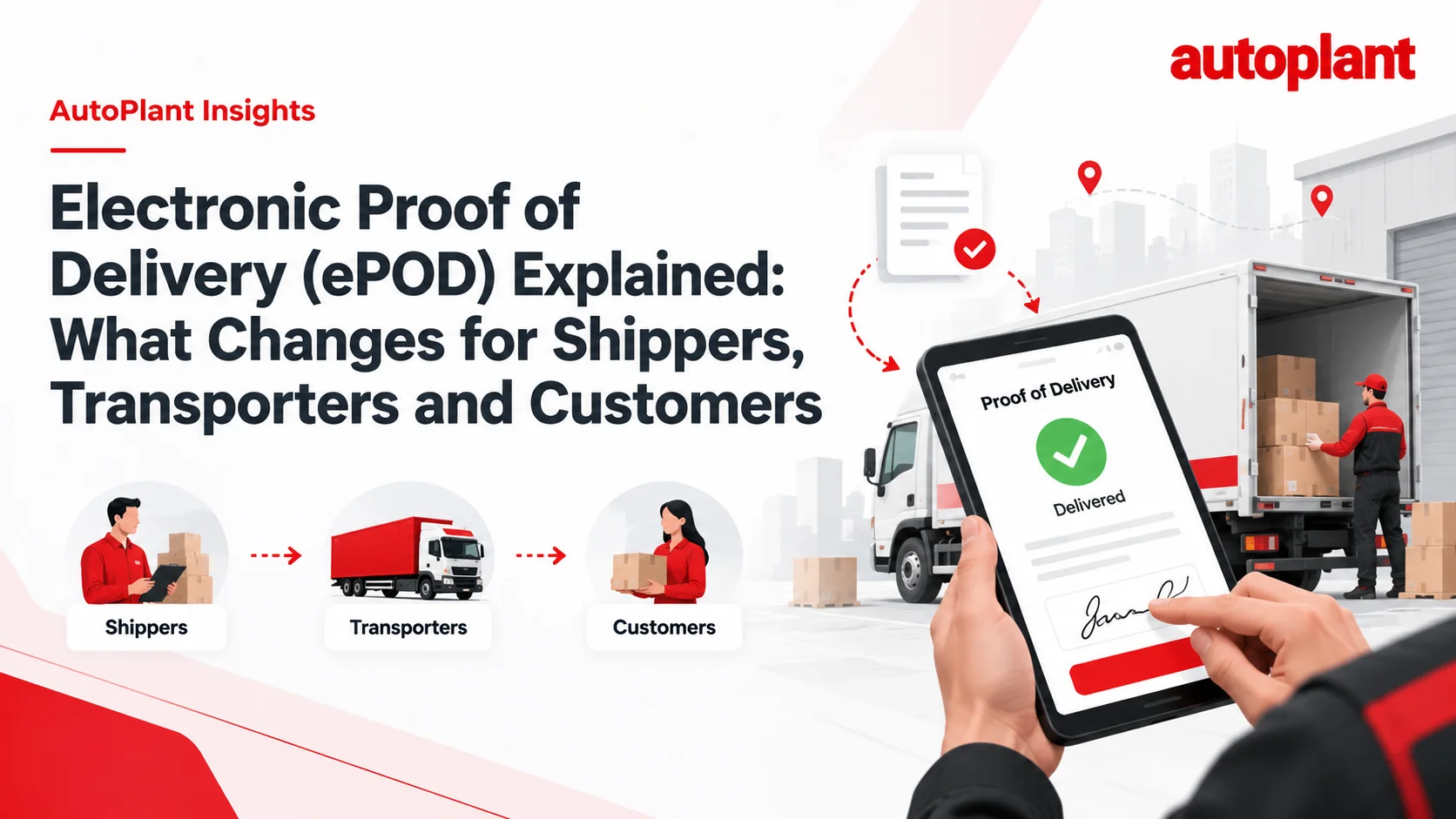
A truck reaches its destination, goods are unloaded, and the customer confirms delivery. But the transporter still needs proof before receiving payment.
Electronic Proof of Delivery (ePOD) replaces paper delivery acknowledgements with digital records that capture delivery details, images, timestamps, location and customer approval.
For manufacturers and transporters, this means fewer missing documents, faster billing and better visibility into completed deliveries.
Let's understand how ePOD works, what changes for each stakeholder and how businesses can introduce it successfully.
What Is Electronic Proof of Delivery (ePOD)?
Electronic Proof of Delivery (ePOD) is a digital method of recording and confirming that goods have reached their intended destination.
Instead of collecting a physical signature on a delivery receipt, drivers capture delivery information through a digital application.
The record can include:
- Delivery date, time and location
- Customer acknowledgement or approval
- Images showing delivered goods
- Delivered quantity and condition
- Remarks about shortages or damage
- Shipment and vehicle reference details
This creates a digital record that logistics, billing and customer-service teams can access when required.
How Does the Digital Delivery Process Work?
The process begins when a shipment reaches the customer's location.
The driver opens the delivery application, selects the shipment and records the necessary delivery details.
The customer verifies the received goods and provides approval. Any delivery differences can be recorded with supporting evidence.
Once submitted, the digital record becomes available for review and further processing, subject to the system's connectivity and approval workflow.
What Changes for Shippers, Transporters and Customers?
Electronic Proof of Delivery (ePOD) improves coordination because everyone works with the same delivery information rather than separate paper records.
For Shippers: Better Control Over Deliveries
Manufacturers dispatch hundreds of shipments, sometimes across multiple plants and warehouses. Tracking physical delivery acknowledgements can become difficult.
With digital confirmation, dispatch teams can check completed deliveries without waiting for documents to return through transporters.
A Delivery Compliance Improvement Tool can also support consistent documentation practices and help identify shipments requiring additional verification.
This helps logistics managers investigate exceptions before they turn into customer complaints or billing delays.
For Transporters: Less Paperwork and Faster Billing
Transporters frequently depend on signed delivery receipts to submit freight invoices.
When drivers lose documents or return them late, billing teams spend additional time collecting the required evidence.
Electronic Proof of Delivery (ePOD) helps transporters submit delivery confirmation promptly and begin invoice preparation earlier.
The actual payment timeline still depends on customer approvals, contractual terms and freight settlement procedures.
For Customers: Clearer Delivery Acknowledgement
Customers can confirm whether the delivered goods match the shipment information.
If packages arrive damaged or quantities differ, the receiving team can record observations and attach supporting images.
This reduces confusion because the delivery record documents what was accepted and what requires further investigation.
Customers also gain a clearer reference when communicating with suppliers about delivery exceptions.
How Does ePOD Improve Freight Billing and Dispute Resolution?
Freight billing often slows down because delivery documents move between drivers, transport offices, manufacturers and finance departments.
Electronic Proof of Delivery (ePOD) reduces dependence on this physical document movement.
Connecting Delivery Confirmation With Invoice Processing
A Digital Delivery Confirmation Platform can help billing teams access approved delivery evidence without requesting scanned paperwork repeatedly.
When freight settlement processes use these records, teams can review shipment completion and supporting documentation more efficiently.
A practical workflow includes:
- Driver records the completed delivery.
- Customer confirms receipt and documents exceptions.
- Transporter submits the required billing information.
- Billing team checks delivery evidence against shipment details.
- Approved invoices move forward for settlement.
This reduces avoidable administrative delays, although commercial disputes may still require manual review.
Resolving Shortages and Damage Claims
Delivery Confirmation with Timestamp and Location provides useful context when questions arise about where and when goods were received.
Images and customer remarks add further evidence when shipment quantities or conditions are disputed.
For Delivery dispute resolution with electronic proof of delivery, teams can review the original acknowledgement instead of relying on conflicting verbal accounts.
These records support investigation but do not automatically determine responsibility for every loss or damage claim.
How Can Manufacturers Introduce ePOD Successfully?
Electronic Proof of Delivery (ePOD) adoption requires more than purchasing software. Drivers, transporters and receiving teams must understand the workflow.
Start With a Limited Pilot
Choose a small group of transporters and regular delivery locations before expanding across the entire network.
Test common situations, including partial deliveries, damaged packages, customer rejection and locations with unreliable mobile connectivity.
Review whether the information captured is sufficient for dispatch, customer-service and billing teams.
Help Transporters Who Resist Mobile Applications
Some drivers may hesitate because they are unfamiliar with mobile applications or worried about additional work.
Keep the process simple and explain how faster document submission can reduce repeated calls from billing teams.
Provide short demonstrations, local-language instructions and assistance during the initial rollout.
Collect driver feedback and remove unnecessary fields wherever possible.
Frequently Asked Questions
Can ePOD work when mobile internet is unavailable?
It depends on the application. Some systems support offline data capture and later synchronization, while others require connectivity.
Confirm offline capabilities before deploying the solution on routes with weak mobile coverage.
Is a digital delivery acknowledgement legally valid?
Digital records may serve as evidence, but acceptance depends on applicable laws, agreements and documentation requirements.
Businesses should confirm relevant compliance obligations before replacing mandatory physical documents.
Can customers reject only part of a shipment?
Yes, if the selected application supports partial acceptance and quantity-level exceptions.
Define how accepted quantities, rejected goods and supporting images must be recorded.
How should companies protect delivery data?
Restrict access by user role and establish clear policies for data retention, customer information and record corrections.
Review the provider's security controls and audit capabilities before implementation.
Conclusion: Making Delivery Confirmation More Reliable
Electronic Proof of Delivery (ePOD) helps businesses reduce paperwork, improve delivery visibility and support faster freight invoice processing.
For manufacturers and transporters, the greatest value comes from accurate records, customer acknowledgement and smoother coordination between departments.
AutoPlant supports these requirements through its Electronic Proof of Delivery (ePOD) solution, offering image capture, customer messages, approval recording and delivery verification. Its broader logistics capabilities also include freight settlement and ERP integration.
Businesses planning digital delivery operations can explore how AutoPlant supports more connected, reliable post-delivery workflows.