Sign up with Google
 Sign in with Zoho

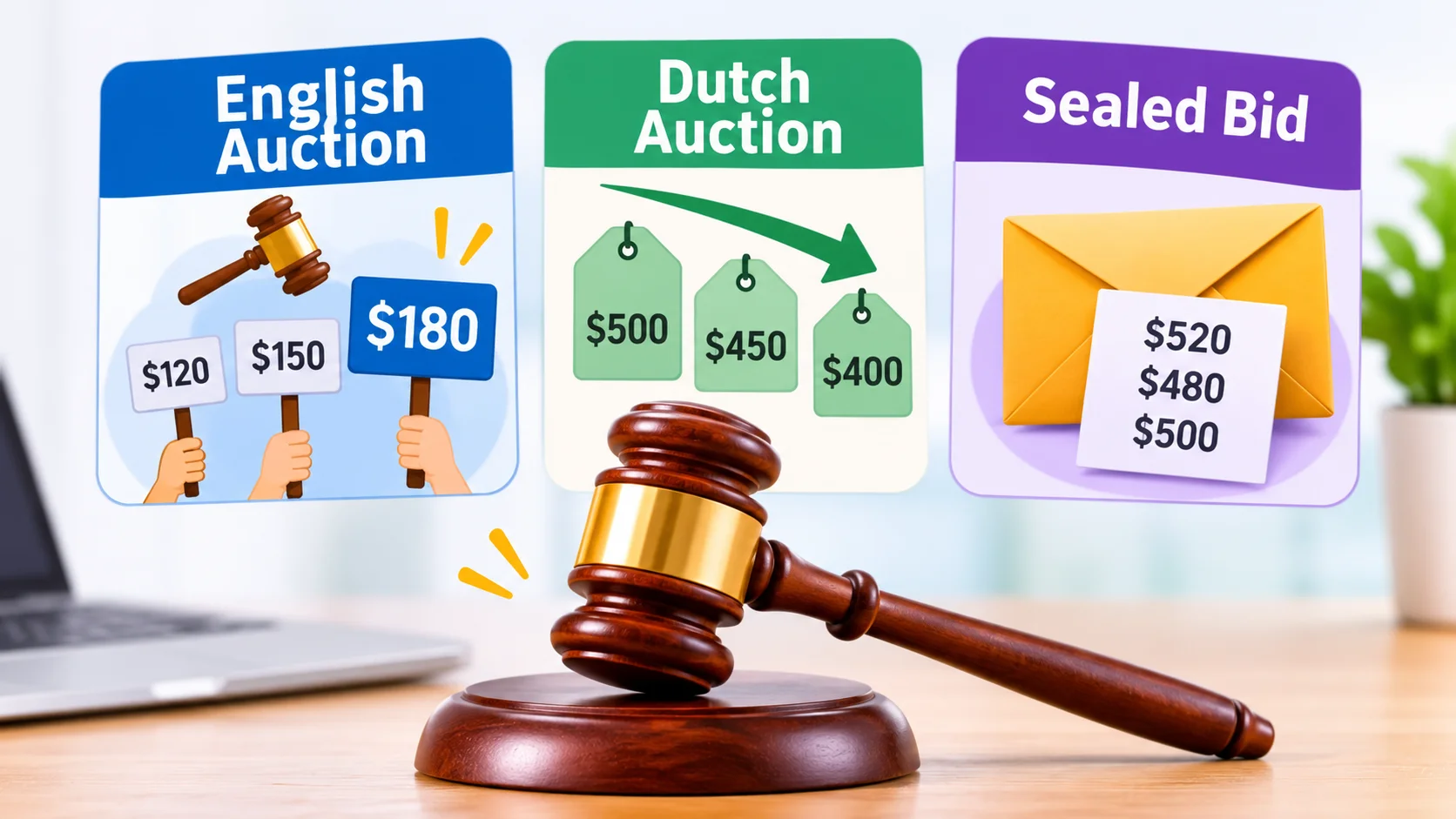
Imagine you are selling an old painting that has been in your family for years. You put it up for auction, and within a few hours, several people start showing interest. One buyer offers $200, another offers $250, and someone else is willing to pay even more. This is how many traditional auctions work.
But what if the price started at $1,000 and gradually dropped until someone agreed to buy it? Or what if every interested buyer submitted a private offer without knowing what the others were offering?
These are not unusual situations. They are examples of three different ways auctions can take place.
If you have ever bought or sold something through an auction, you may have come across English, Dutch, and sealed-bid formats. They all serve the same basic purpose, but the experience can be quite different.
Let's look at how they work, where they are useful, and what sellers should consider before choosing one.
First, Why Do Auctions Have Different Formats?
Not every product attracts buyers in the same way.
Someone selling a rare coin might want buyers to compete openly. A flower seller dealing with products that need to be sold quickly may prefer a faster process. Meanwhile, a company selling commercial property might want interested buyers to submit confidential offers.
Using the same bidding method for all these situations would not always make sense.
That is why different auction formats exist. They give sellers different ways to manage competition, pricing, and the overall selling process.
English Auction: When Buyers Compete by Offering More
If you have ever watched an auction on television, there is a good chance you have seen an English auction.
This is probably the easiest auction format to understand. The seller sets an opening price, and buyers take turns offering higher amounts. The competition continues until nobody wants to increase the current bid.
The person with the highest valid offer wins when the auction closes.
Let's Understand It With an Example
Suppose you want to sell a second-hand camera. You decide to start the auction at $100.
A buyer offers $120. Another person thinks the camera is worth more and offers $140. A third participant comes in with $160.
Now the first buyer has a choice. They can increase their offer or stop participating.
If nobody bids more than $160 before the auction ends, the camera goes to the person who placed that bid.
That is the basic idea behind an English auction.
Why Do Sellers Like This Format?
The biggest advantage is that buyers can see what is happening. They know the current highest offer and can decide whether they want to continue.
This can make auctions more interesting, especially when the item is something people genuinely want.
Think about vintage watches, rare books, paintings, collectible cards, or antique furniture. When several people are interested in the same item, an English auction gives them an opportunity to compete.
Of course, a higher final price is never guaranteed. If only one person is interested, there may not be much competition.
Dutch Auction: The Price Goes Down Instead of Up
A Dutch auction works quite differently.
Instead of starting low and allowing buyers to increase their offers, the seller begins with a high price. That price gradually comes down until someone agrees to purchase the item.
The first buyer to accept the current price wins.
How Does It Work in Real Life?
Imagine a seller has a batch of fresh flowers to sell.
The initial asking price is $500. Nobody accepts it, so the price drops to $450. A little later, it falls to $400.
One buyer decides that $400 is a fair amount and accepts the offer.
The sale is completed at that price, according to the auction rules.
The interesting part is that buyers have to make a decision at the right moment. If they wait too long, another participant might accept the price first.
Where Can Dutch Auctions Be Useful?
This format is particularly useful when speed matters.
For example, flowers and certain agricultural products have limited selling windows. Sellers may not want to spend hours waiting for buyers to compete through increasing offers.
Dutch auctions can also be used in situations involving multiple similar products.
However, there is a downside. Buyers may feel pressured to make quick decisions, and sellers need to choose a sensible starting price and price-reduction schedule.
Sealed-Bid Auction: Everyone Makes a Private Offer
Now consider a situation where several people want to purchase the same property, but none of them can see what the others are offering.
This is where a sealed-bid auction comes into the picture.
Instead of placing visible bids, each participant submits an offer privately. Once the deadline passes, the bids are reviewed and a winner is selected according to the auction conditions.
An Example That Makes It Easier to Understand
Suppose a business is selling a piece of commercial equipment.
Three buyers are interested. One submits $5,000, another offers $5,500, and the third offers $5,200.
In a first-price sealed-bid auction, assuming the highest valid offer wins, the buyer who offered $5,500 becomes the winner and pays that amount.
The other participants do not get an opportunity to see the competing offers before submitting their own.
There is also a second-price sealed-bid format. In that arrangement, the highest bidder wins but pays the second-highest valid bid, according to the auction rules.
Why Would Someone Choose a Sealed-Bid Auction?
Some buyers simply prefer not to compete in a public bidding environment.
They would rather decide what an item is worth to them and submit one private offer.
This approach can be useful for property transactions, business assets, contracts, and certain procurement processes.
The disadvantage is that buyers have to make their decisions without knowing what competitors are willing to pay. A person might offer too much or miss out by offering too little.
English Auction vs Dutch Auction vs Sealed Bid: Which One Is Different?
At first glance, these auction formats may look similar because they all involve buyers competing for something. But the way they handle prices and offers is quite different.
In an English auction, buyers keep increasing their offers until the bidding stops. In a Dutch auction, the price moves downward until somebody accepts it. In a sealed-bid auction, buyers submit private offers and wait for the results.
Think about the buyer's experience.
An English auction gives participants time to observe competing bids and respond. A Dutch auction requires them to decide whether the current price is worth accepting. A sealed-bid auction requires them to make an independent decision without seeing anyone else's offer.
The seller's experience also changes. English auctions can encourage visible competition, Dutch auctions can help speed up sales, and sealed bids can be useful when confidentiality matters.
There is no automatic winner among these three methods. Each has a purpose, and the right choice depends on what is being sold.
Which Auction Should You Choose for Your Business?
This is probably the most practical question for anyone planning to sell products through an auction website.
Before choosing a format, think about your products and the people who are likely to buy them.
When an English Auction Makes More Sense
Let's say you run an online store selling vintage watches, old coins, or collectible items.
These products may attract buyers who are willing to compete because they cannot easily find the same item elsewhere.
An English auction can be a good option in this situation. Buyers can follow the bidding and decide whether they want to increase their offers.
When a Dutch Auction Is Worth Considering
Imagine you have a large quantity of similar products and want to sell them without a lengthy bidding process.
A Dutch auction may be more suitable because the decreasing price encourages buyers to act.
It is especially worth considering when timing plays an important role in the sale.
When You Should Consider Sealed Bidding
Suppose you are selling a commercial property or accepting offers for a business asset.
You may not want participants to see what others are offering. In that case, a sealed-bid format could be more appropriate.
It gives everyone an opportunity to submit an independent offer within the specified deadline.
What Should You Keep in Mind Before Starting an Online Auction?
Choosing the bidding format is only one part of running an auction successfully.
Think about what information buyers will need before placing an offer. Product descriptions should be clear, photographs should accurately represent the item, and important conditions should be easy to understand.
Auction timing also matters. A very short auction may not give enough people an opportunity to participate, while an unnecessarily long one may cause buyers to lose interest.
Payment conditions, delivery arrangements, bid increments, and closing rules should also be explained in advance.
These details may seem small, but they can make a real difference to the buyer's experience.
How Auction Plugin Fits Into Your Online Selling Plans
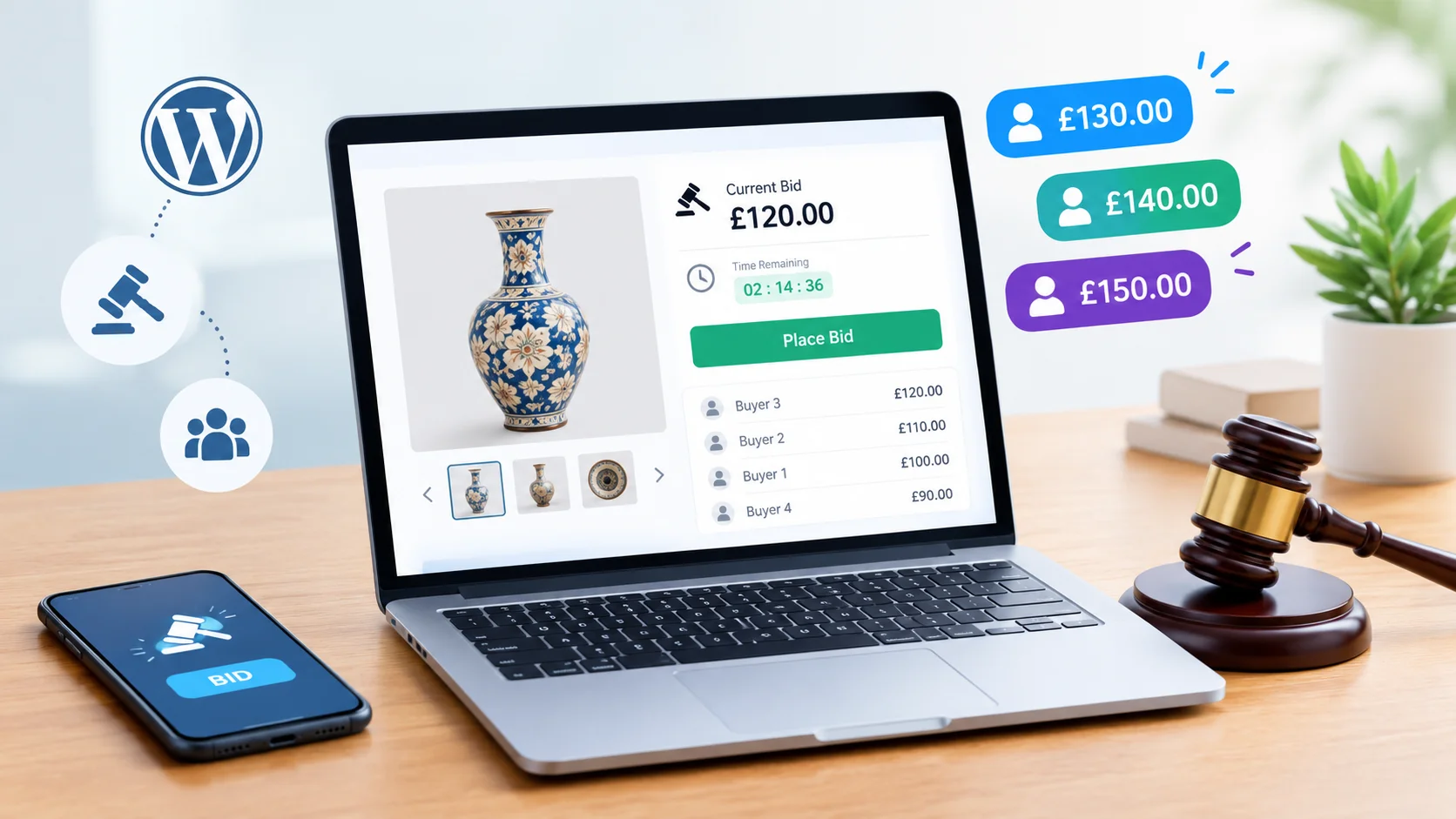
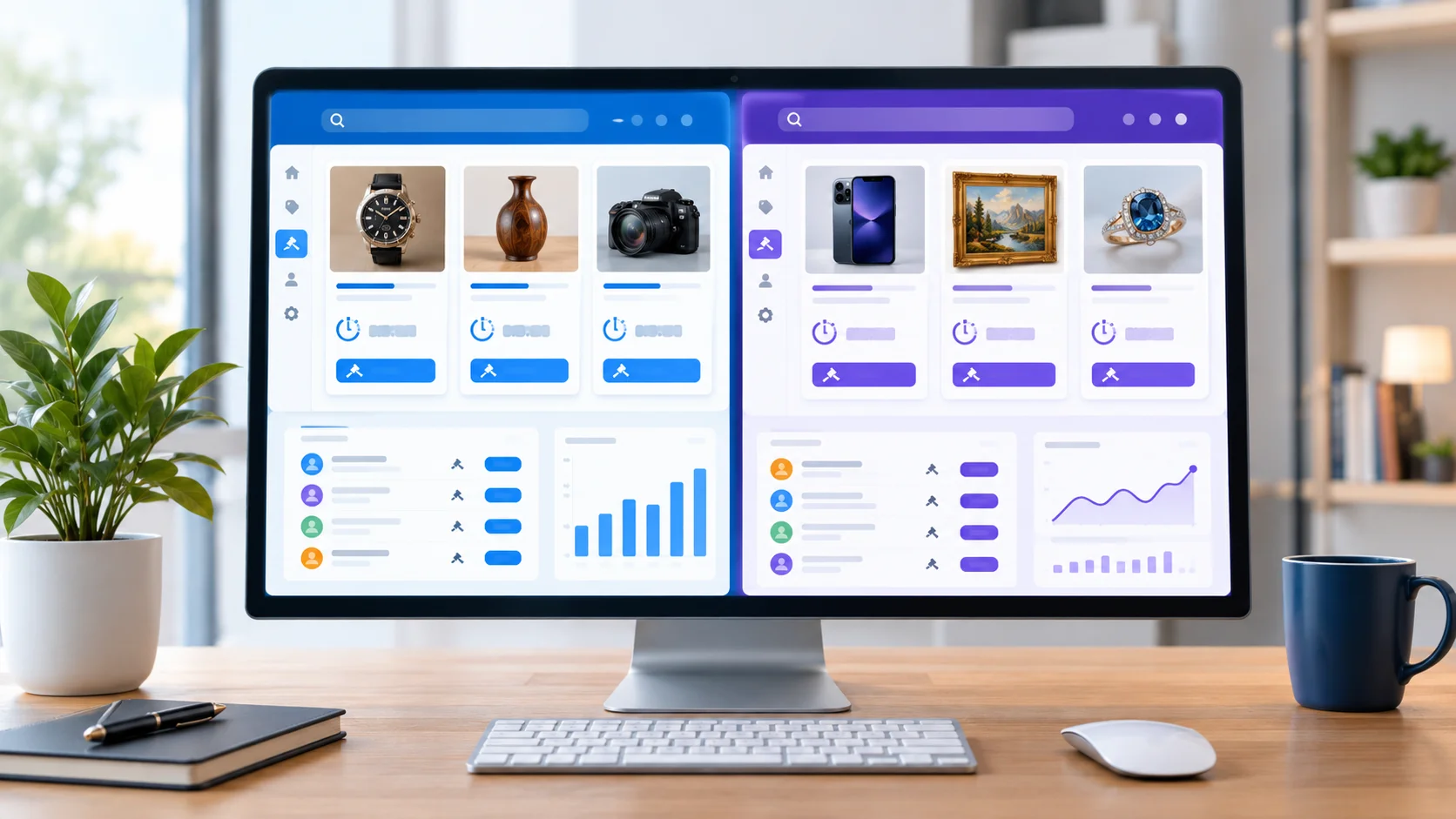
If you are planning to turn a WordPress website into an online auction platform, you will need a suitable way to manage your listings and bidding activities.
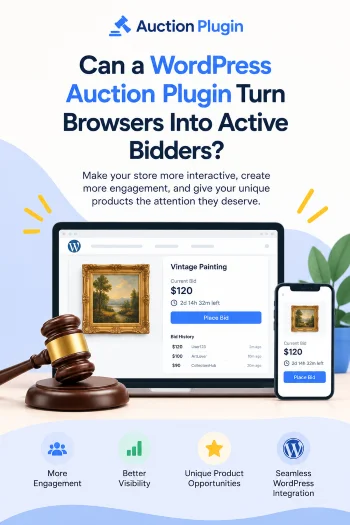
Auction Plugin provides auction functionality for WordPress website owners who want to offer visitors a bidding-based buying experience.
For example, you might want to sell second-hand electronics, collectibles, or other products through your website. Having an organised auction setup can make it easier for visitors to understand how to participate.
Before choosing any plugin, check its actual features and supported bidding options. Not every auction plugin offers every auction format, so it is important to select one that matches your requirements.
You can also explore different English Auction vs Dutch Auction vs Sealed Bid formats to understand how auction methods differ before deciding how to organise your online selling activities.
Frequently Asked Questions
1. Is an English auction the same as a normal auction?
Not exactly, but it is one of the most familiar auction formats. Buyers place increasingly higher offers, and the highest valid bidder wins when the auction closes.
2. Why would a seller use a Dutch auction instead of an English auction?
A Dutch auction can be useful when the seller wants a quicker sale. Rather than waiting for buyers to increase their offers, the price gradually decreases until someone accepts it.
3. Can I see other people's bids in a sealed-bid auction?
Usually, no. Participants submit their offers privately and cannot see competing bids during the submission period.
4. Which auction is better for selling antiques?
An English auction is often a suitable option for antiques because several interested collectors can compete openly. However, the final choice depends on the seller's requirements.
5. Are Dutch auctions only used for flowers?
No. Flowers are a well-known example, but Dutch auctions can also be used in other markets where a quick sale or decreasing-price system is useful.
6. Can a sealed-bid auction have different payment rules?
Yes. First-price and second-price sealed-bid auctions have different payment arrangements. The organiser should clearly explain the applicable rules before participants submit offers.
7. Can I start my own auction website with WordPress?
Yes. You can add auction functionality to a WordPress website using a suitable auction plugin. Check the available features to make sure they meet your business needs.
Final Thoughts
Auctions are not just about finding the person willing to pay the highest amount. The way buyers compete can be just as important as the product itself.
An English auction works well when buyers enjoy competing openly. A Dutch auction can be useful when sellers want to move products quickly. A sealed-bid auction makes sense when private offers are more appropriate.
If you are planning to sell online, take some time to understand these differences before choosing your auction setup.
With Auction Plugin, you can explore ways to introduce auction functionality to your WordPress website. Start with a clear understanding of your products, your customers, and the bidding experience you want to create. That will give you a much better foundation for building an online auction business.