Sign up with Google
 Sign in with Zoho


Buying or selling something at an auction can be exciting. You might be looking for a rare collectable, trying to sell unused equipment, or planning to start an online business. Whatever your reason, one thing matters more than many people realise: understanding how the auction works before you take part.
Not every auction follows the same rules. In some, buyers compete by raising their bids. In others, prices fall until someone agrees to buy, or sellers submit private offers without knowing what their competitors have offered.
Learning about the different Types of Auctions can help you avoid common mistakes and choose a method that suits your needs. If you are planning to sell products through a website, understanding these options is also a useful first step towards creating a better buying experience.
Why Does the Type of Auction Matter?
Imagine selling an old watch that has been in your family for years. You want to find someone who values it, and you hope the final price reflects its worth. Now imagine a business that needs to sell hundreds of products before the end of the month. Both sellers want successful sales, but their priorities are different.
That is where auction formats come in.
The right format can make bidding easier to understand, attract the right buyers, and help sellers manage their expectations. Choosing the wrong one, however, can leave buyers confused or sellers disappointed with the outcome.
Let's look at the main auction types and where each one makes sense.
English Auctions: When Buyers Compete to Win
The English auction is probably the format most people picture when they hear the word "auction." An item starts at an opening price, and buyers place higher bids as the auction continues.
Suppose a vintage camera starts at £50. One person offers £60, another raises the price to £75, and someone else bids £90. If nobody offers more before the auction closes, the highest eligible bidder wins, subject to the auction's terms.
This format is popular because the process is easy to follow. Buyers can see how the price changes and decide whether they want to keep bidding.
It works well for antiques, artwork, collectables, second-hand goods, and online product listings. Sellers should still set a realistic starting price and provide an accurate description of the item. A good auction needs more than competition; buyers also need a reason to trust the seller.
Dutch Auctions: A Different Way to Set the Price
A Dutch auction takes the opposite approach. Instead of increasing the price, it begins at a higher amount and gradually reduces it until a buyer accepts the current price.
Think of a seller who wants to move a batch of seasonal products quickly. Starting at a higher price may attract interest, but lowering it over time gives buyers a reason to watch closely.
The challenge is timing. Accept the price too early, and you might pay more than necessary. Wait too long, and another buyer could take the opportunity.
Dutch auctions are useful in certain markets where speed matters, including some wholesale and commodity settings. They are not suitable for every product, though. Sellers need to consider how quickly prices should change and whether buyers understand the rules.
Sealed-Bid Auctions: When Offers Stay Private
Not every buyer wants to compete in front of everyone else. In a sealed-bid auction, participants submit their offers privately, usually before a fixed deadline.
A company selling a piece of commercial equipment might invite several interested businesses to submit bids. Each business decides what the equipment is worth to them without seeing the other offers.
Once the deadline passes, the bids are reviewed according to the stated rules. In a typical highest-bid-wins format, the highest eligible offer takes the prize. However, some sealed-bid systems use different payment arrangements.
This approach can be useful for property sales, procurement, business assets, and other transactions where confidential offers are preferred.
The main difficulty is that buyers have less information about the competition. They must make their own judgement rather than responding to visible bids.
Reserve Price Auctions: Setting a Minimum You Can Accept
Selling something valuable can be stressful when you are unsure what buyers will offer. A reserve price provides a way to set a minimum amount you are willing to accept under the auction's conditions.
For example, you might list a rare watch with a reserve price of £400. If the highest bid reaches only £350, the reserve has not been met. If bidding reaches £450, the required amount has been exceeded.
This can be helpful when selling expensive collectables, specialist equipment, or items that you would rather keep than sell too cheaply.
However, setting a reserve too high may discourage buyers. It is worth considering the item's condition, current demand, and likely market value before deciding on a minimum.
You should also check how the auction platform handles reserve prices and whether bidders can see if the reserve has been met.
No-Reserve Auctions: Letting the Bidding Decide
A no-reserve auction works without a seller-set minimum sale price. The highest eligible bidder can win even when the final amount is lower than the seller hoped.
Why would anyone choose this option? Sometimes the goal is to attract more interest, clear unwanted stock, or create a straightforward auction with no reserve threshold to meet.
For buyers, knowing that there is no reserve can make the auction appealing. For sellers, however, the risk is real. If only one person bids, the final price may be much lower than expected.
Before choosing this method, think carefully about whether you can accept a low result. It may suit certain stock-clearance sales, but it is not always the best option for valuable or difficult-to-replace items.
Reverse Auctions: When Sellers Compete for Your Business
Reverse auctions are common in business purchasing. Instead of buyers competing to pay more for an item, sellers compete to win a buyer's order.
For example, a restaurant needs a new refrigeration system. It invites several suppliers to make offers. Those suppliers compete by proposing lower prices or more attractive terms.
This can help the restaurant compare options and manage its budget. But the cheapest offer is not automatically the best one. Delivery times, product quality, warranties, and after-sales service can make a big difference.
Reverse auctions are particularly useful when organisations need to compare several suppliers against clearly defined requirements.
Online Auctions: Buying and Selling Without a Physical Venue
Online auctions have changed how people discover products and take part in bidding. Buyers no longer need to travel to an auction room or live near the seller. They can browse listings, check details, and place bids through a website.
For sellers, this creates an opportunity to reach customers in different locations. A small business selling collectables, refurbished goods, or specialist equipment can build an audience without opening a physical auction house.
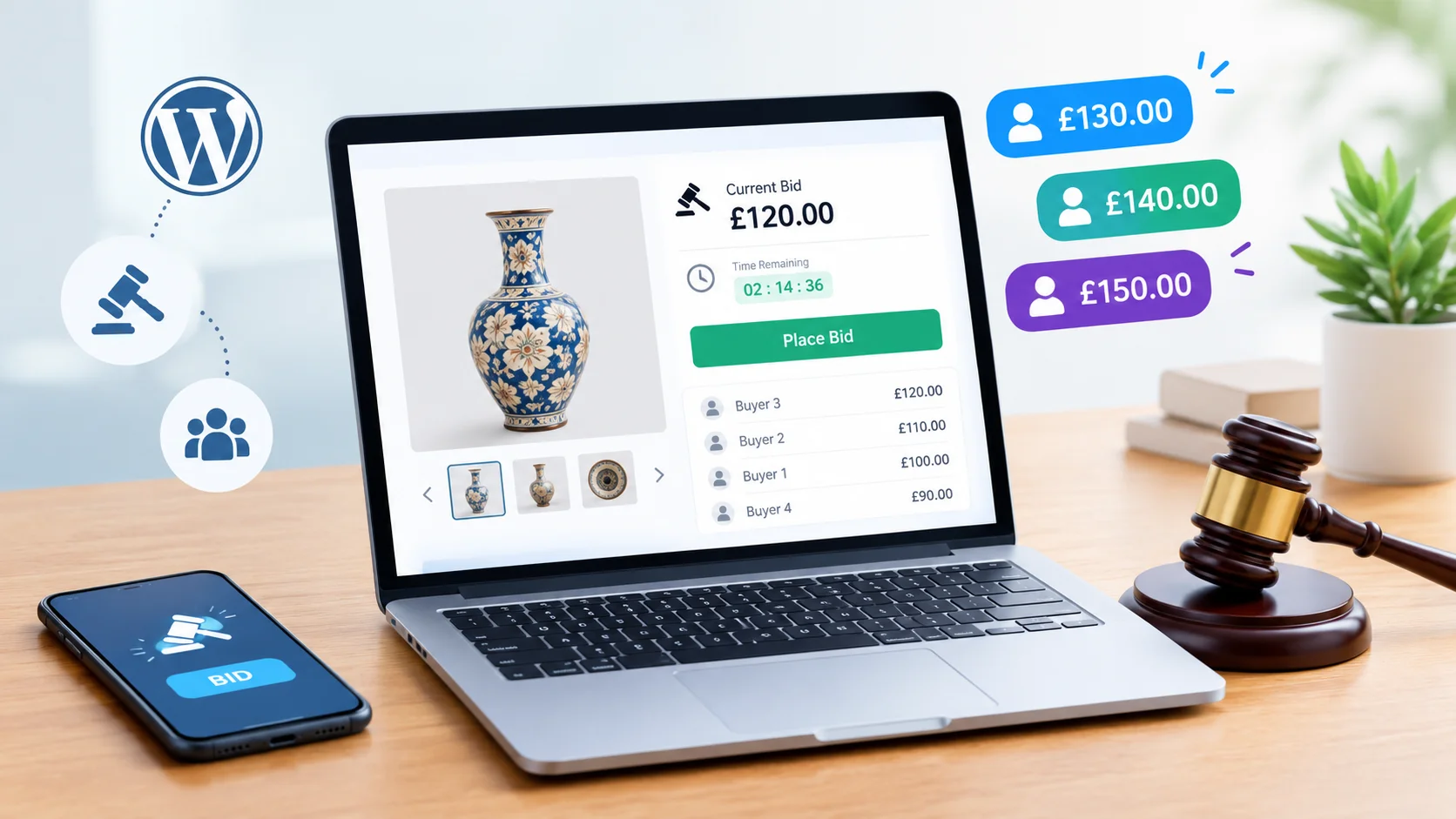
If you want to offer bidding on your own WordPress website, Auction Plugin can help you explore auction functionality suited to your business. Before choosing a solution, consider how it handles bidding, auction deadlines, payments, product listings, and communication with buyers.
The website itself also matters. Clear photographs, honest descriptions, visible terms, and a simple bidding process make it easier for customers to participate with confidence.
How Do You Choose the Right Auction?
Start by asking what you actually want to achieve.
If you want buyers to compete openly, an English auction may be a sensible choice. If you need confidential offers, a sealed-bid auction could be more appropriate. A reserve price may provide extra protection when you cannot accept a low sale price, while a no-reserve format may suit a seller who prioritises selling over reaching a minimum amount.
You should also think about the people taking part. Are they experienced bidders or first-time buyers? Are they purchasing individual products or large quantities? Will they understand the rules without needing extra help?
Whatever format you choose, explain the terms before bidding starts. Include the closing time, payment conditions, delivery costs, and any minimum-price requirements. Clear rules help prevent disputes and give buyers a better experience.
Frequently Asked Questions
1. Which auction type is the most common?
English auctions are among the most familiar formats. Buyers place increasingly higher bids, and the highest eligible bidder generally wins when the auction closes.
2. Which auction is best for selling expensive items?
A reserve price auction may be suitable when you want to establish a minimum acceptable price. The right choice still depends on demand, the item's value, and your willingness to accept different outcomes.
3. Can an item sell below its starting price?
In a standard English auction, bids generally begin at the opening price or an allowed minimum bid. Other auction formats may follow different pricing rules, so buyers and sellers should read the terms carefully.
4. What makes a sealed-bid auction different?
Buyers submit offers privately rather than watching and responding to visible competing bids. The winner is selected according to the auction's rules.
5. Are no-reserve auctions good for beginners?
They can be straightforward to understand, but sellers should be comfortable with the possibility of receiving a lower-than-expected price. Buyers should still check the product details and sale conditions.
6. Can a small business run an online auction?
Yes. A small business can use an appropriate auction platform to list products and manage bidding online. The best setup depends on its products, customers, payment requirements, and preferred auction format.
7. Does every auction award the item to the highest bidder?
No. The result depends on the auction format and its conditions. Reserve requirements, eligibility rules, and other terms can affect whether a sale goes ahead.
Final Thoughts
Auctions are not just about who offers the most money. They are about choosing a process that works for the item, the seller, and the people interested in buying it.
An English auction can encourage competition, a sealed-bid auction keeps offers private, and a reserve price can help protect a seller's minimum expectations. Other formats offer different advantages depending on the situation.
If you are planning to sell through an online auction, take the time to understand your options before launching your listings. Start with clear rules, realistic expectations, and a website that is easy to use.
With the right approach and suitable tools from Auction Plugin, you can make bidding simpler for your customers and build an online auction experience that fits your business.