Sign up with Google
 Sign in with Zoho

You know that feeling when you get a text from a brand and it is just plain boring text no image, no button, nothing to click and you close it before finishing the first line?
That is the problem RCS Messaging is quietly solving.
And most businesses have no idea it exists yet.
Let's Start With What You Already Know
You have been using SMS for decades. A message arrives, you read it, done. Simple. Reliable. But also limited.
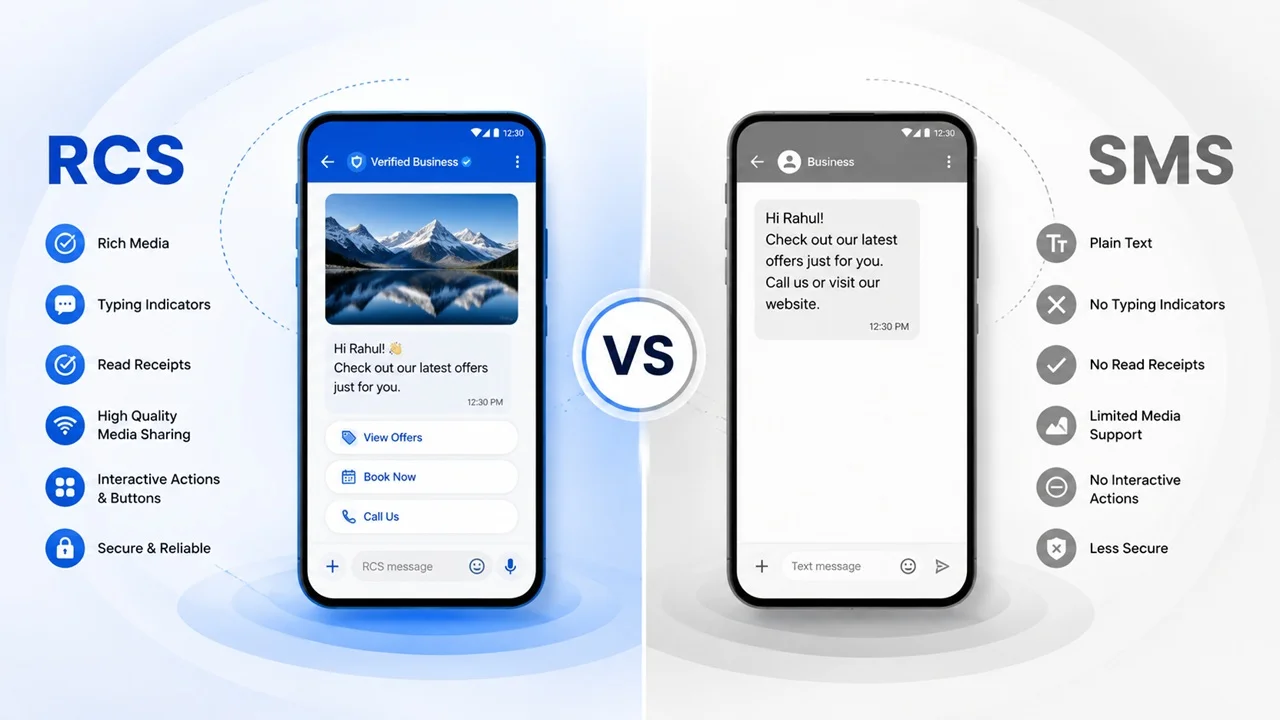
No images. No buttons. No branding. Just text sitting in a plain white bubble that looks the same whether it came from your bank or a random number you do not recognise.
· For customers, that creates a trust problem.
· For businesses, it creates an engagement problem.
· RCS is the answer to both.
So What Actually Is RCS?
RCS stands for Rich Communication Services.
Think of it as SMS but grown up.
It delivers messages inside the same messaging app your customers already use on Android. No new app to download. No link to click before they can see the content. The message just opens and it looks completely different from a regular SMS.
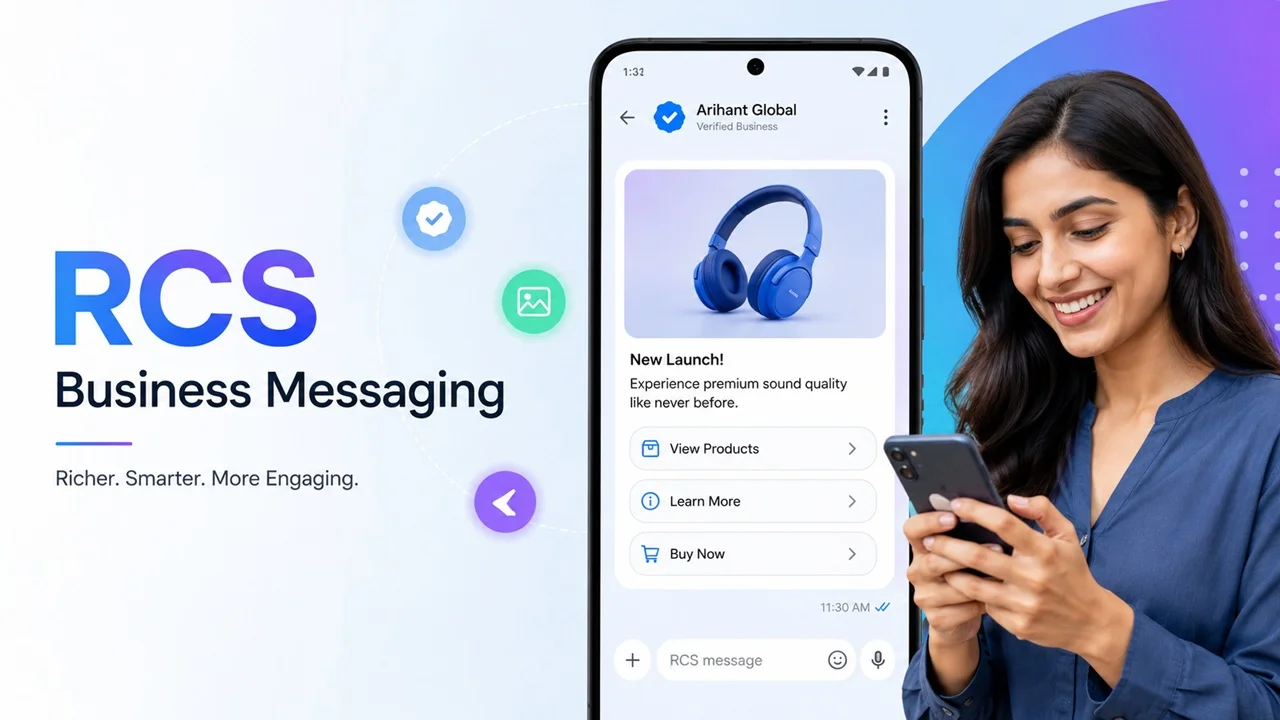
Instead of plain text, your customer sees:
- Your verified business name and logo
- A product image or video
- A carousel of options they can swipe through
- Buttons they can tap directly in the message
- Read receipts so you know the message was seen
It works more like a mini experience than a message. And it all happens inside the native messaging app on their phone.
Here Is the Part That Most People Find Surprising
You do not need your customer to install anything.
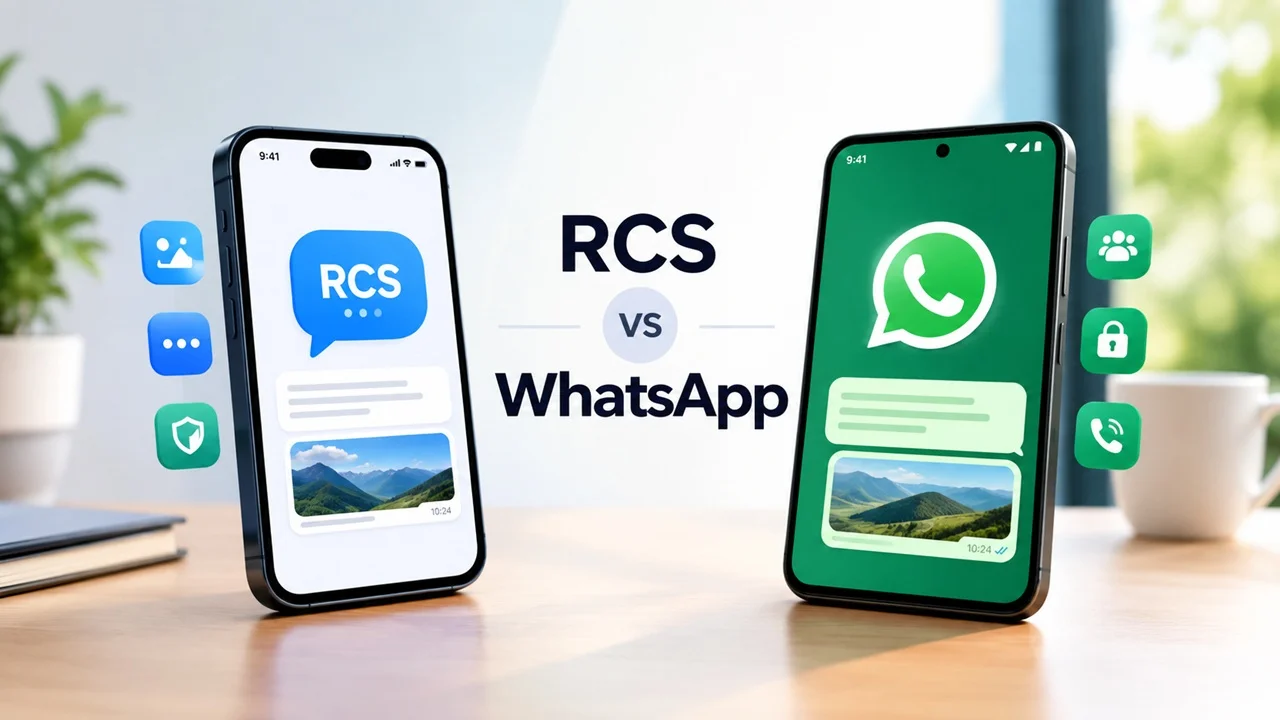
That is the biggest difference between RCS and most other rich messaging tools. WhatsApp needs an account. A branded app needs to be downloaded. Email needs to be opened.
RCS needs nothing from the customer side except an Android phone which, in India alone, covers over 500 million people.
The message just arrives. Looking sharp. Fully branded. Ready to interact with.
How Does RCS Business Messaging Actually Work?
Here is the simple version.
A business registers what is called an RCS agent essentially a verified business profile with your brand name, logo, and contact details. This profile gets verified by Google before it can send messages. That verification is what makes your name show up instead of a random number.
Once the agent is approved, you connect it to an RCS messaging platform. This platform handles the technical side building the message, formatting the rich content, routing it through supported carrier networks, and delivering it to your customer's phone.
The message arrives in the customer's default messaging app.
If their device or network supports RCS which is increasingly common they get the full experience: images, buttons, the lot.
If it does not maybe they have an older device or a network that has not rolled out RCS yet the platform automatically sends a plain SMS instead. This is called fallback, and it means your message still reaches everyone, no matter what.
From a business perspective, you also get something SMS never gave you: read receipts and click tracking. You know when the message was delivered, when it was read, and which button the customer tapped.
What Can Businesses Actually Do With RCS?
This is where it gets interesting.
Product catalogues A retailer can send a swipeable carousel of products directly in a message. The customer browses, sees the price, and taps to buy. No app. No website navigation required.
Order tracking An ecommerce brand can send a real-time delivery update with a live tracking button built right into the message. The customer taps once and knows exactly where their order is.
Appointment reminders A hospital or clinic sends a reminder with the patient's name, appointment time, and two buttons: "Confirm" or "Reschedule." Patient engagement goes up. No-shows go down.
Payment confirmations A bank or fintech app sends a transaction alert with the amount, merchant name, and a button to raise a dispute if something looks wrong. All inside one message.
Real estate A developer launches a new property with high-resolution images, a project overview, and a "Book Site Visit" button. The prospect goes from seeing the message to scheduling a visit without ever opening a browser.
Every single one of these is a real use case happening right now in India.
Why Is Everyone Talking About It Now?
Because the timing has finally aligned.
Google has been building out RCS support aggressively across Android. Indian telecom operators Jio and Airtel have rolled out RCS on their networks. Android's native messaging app, Google Messages, now supports RCS by default for most users.
A few years ago, RCS reach in India was too patchy to rely on. Today, it is large enough that forward-thinking businesses are building it into their communication strategy before their competitors figure it out.
The brands getting in early are the ones building customer relationships that look nothing like a generic text blast.
One Thing Worth Understanding About the Difference From SMS
SMS has no identity layer. Any number can send an SMS claiming to be your bank or your delivery company. This is why SMS phishing is such a persistent problem.
RCS has a verification layer baked in. Your business name and logo only appear if Google has verified that you are actually who you say you are. Customers can see that the message is coming from a verified business not a random number pretending to be one.
That single difference builds a level of trust in the channel that SMS simply cannot offer.
Is RCS Replacing SMS?
Not exactly. Not yet.
SMS still covers every device and every network. RCS covers Android devices on supported networks which is a very large audience but not everyone.
Most businesses that are serious about RCS use both. RCS for the rich experience where it is supported. SMS as the automatic fallback everywhere else.
The result is one campaign that delivers the right experience to every recipient without you having to manage two separate systems.
Is It Complicated to Get Started?
It sounds technical because the acronym is new. But the actual process is manageable.
You need an RCS agent registered and approved. You need a platform that supports RCS campaign management and SMS fallback. You need message templates built for the format.
The businesses that find it easiest are the ones working with a provider who handles the registration and setup process rather than leaving it to a developer to figure out independently.
The Bottom Line
RCS business messaging is what happens when SMS finally catches up to what customers actually want branded, interactive, trustworthy communication that does not require them to open an app or click a suspicious link.
It is not a replacement for every channel you use. It is a smarter version of one of the oldest channels you already rely on.
For businesses in India thinking about where to start, Arihant Global provides RCS messaging infrastructure along with bulk SMS, WhatsApp API, and omnichannel communication tools with managed onboarding so the technical setup does not slow you down.
The businesses reading this in six months and wishing they had started earlier are going to be the same ones who read this today and decided to wait and see.