Sign up with Google
 Sign in with Zoho

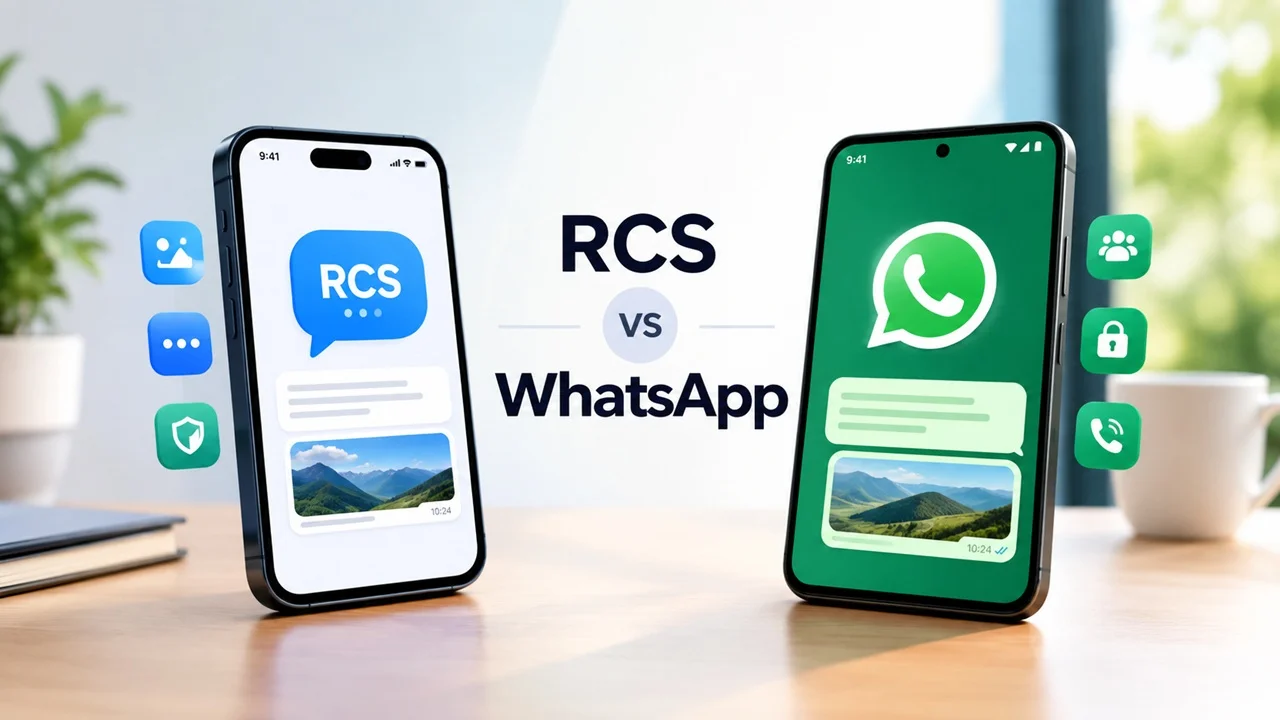
You’ve probably heard both terms thrown around lately RCS and WhatsApp often in the same breath, as if they’re competing for the exact same job. In some ways, they are. Both let businesses send rich, interactive messages instead of plain old text. But they work differently, and the better choice depends on who you’re trying to reach.
What RCS Actually Is
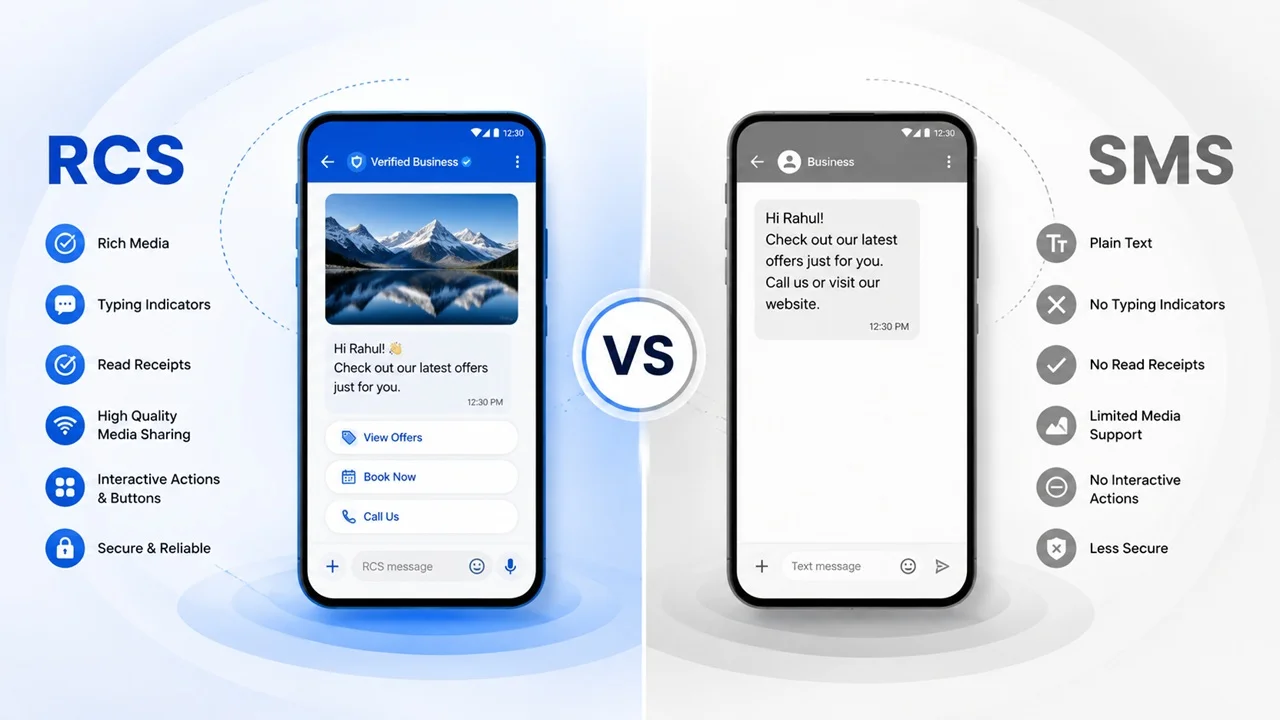
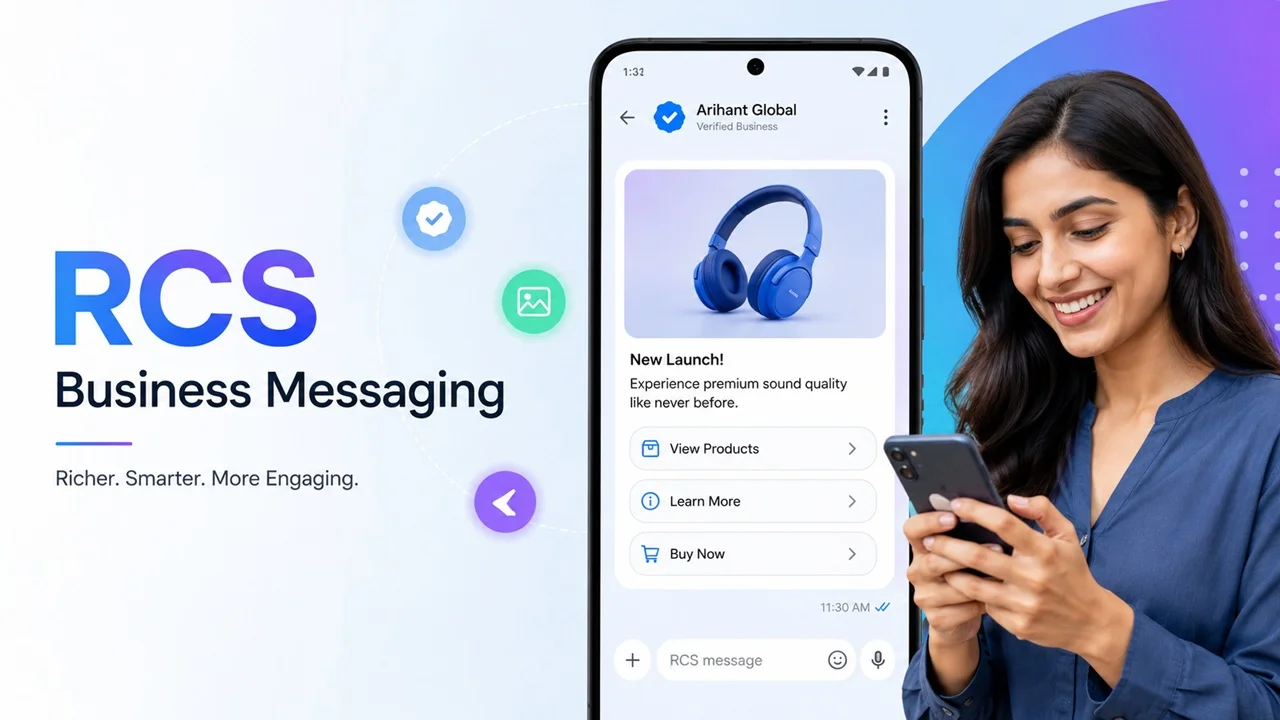
RCS stands for Rich Communication Services. Think of it as an upgraded version of regular text messaging, built directly into a phone’s default messaging app rather than a separate app you have to download. It supports things like read receipts, typing indicators, higher-quality images, and interactive buttons, all inside the same messaging app people already use for texts.
Because it’s built into the phone’s messaging system rather than a separate app, businesses using RCS don’t need customers to install anything new.
What WhatsApp Actually Is
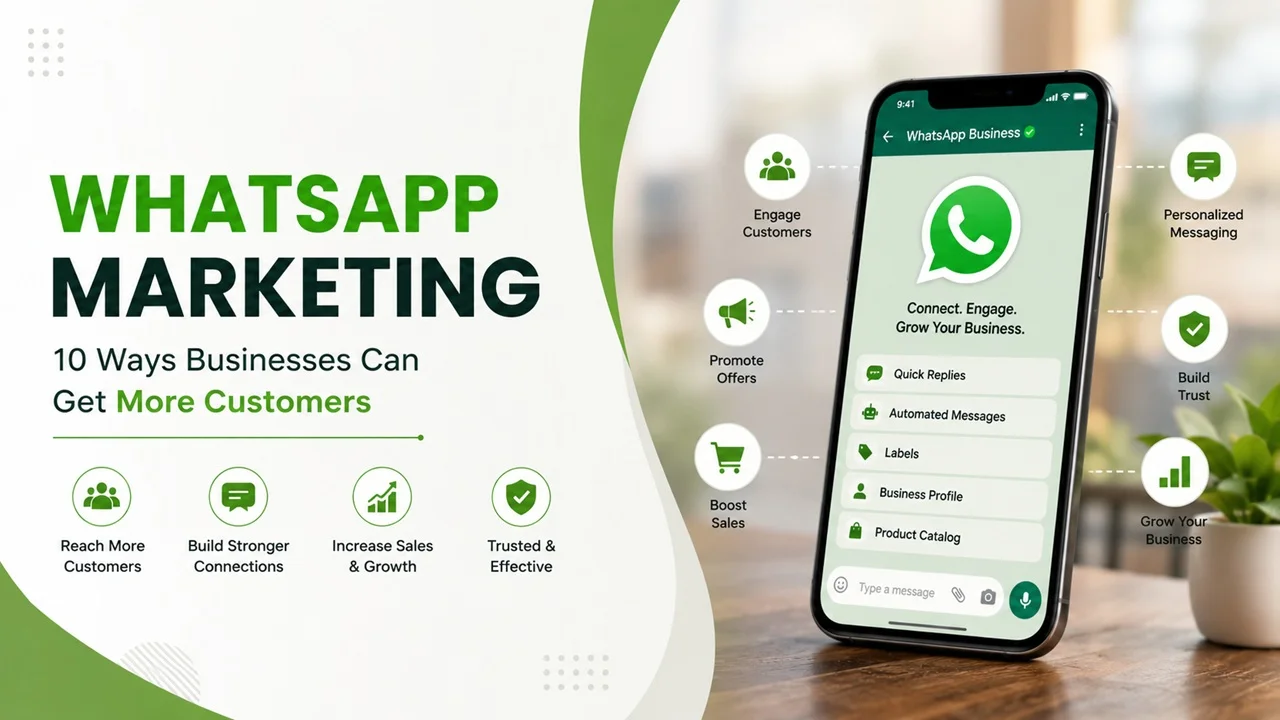
WhatsApp is a standalone messaging app that customers need to have installed and actively use. It supports similar rich features images, videos, buttons, catalogs but requires the recipient to already be a WhatsApp user, which in many countries, including India, is the vast majority of smartphone users.
Reach and Adoption
This is where the comparison gets interesting. WhatsApp has an enormous existing user base in many countries, meaning most people a business wants to reach are very likely already using it daily.
RCS reach depends heavily on the recipient’s phone and messaging app supporting it, which varies by device and carrier. In markets where RCS support is inconsistent, messages may fall back to a plain text message instead of the rich version.
User Experience
Both platforms support similar rich features images, quick-reply buttons, product catalogs, and read receipts. The core difference is where the conversation lives. RCS messages appear directly in the phone’s default messaging app, alongside regular texts. WhatsApp messages appear inside the separate WhatsApp app, which the customer has to open specifically.
For customers who already live inside WhatsApp for both personal and business chats, that separate app isn’t a barrier at all. For customers who rarely use WhatsApp, RCS may actually reach them more naturally, since it doesn’t require a separate app.
Business Use Cases
Both platforms are commonly used for order updates, appointment reminders, customer support, and promotional messages. WhatsApp additionally offers features like detailed product catalogs, group broadcast lists, and a very widely adopted Business API for larger-scale automation.
RCS is often used by businesses that want to reach customers directly through their default messaging app, particularly useful for transactional messages like delivery updates or verification codes, without depending on the recipient having a specific app installed.
Cost Considerations
Costs for both generally depend on message volume and the messaging provider or platform used to send them. Neither is inherently free at scale for businesses, though personal use of WhatsApp remains free for consumers messaging each other directly.
Which One Should a Business Actually Use?
For markets like India, where WhatsApp adoption is extremely high, it often makes sense as the primary channel for customer communication, especially for support, order updates, and catalog-based selling.
RCS becomes more relevant for reaching audiences where WhatsApp isn’t the dominant messaging platform, or for businesses that want to communicate through a channel that doesn’t require the customer to have any specific app installed beyond their phone’s default messenger.
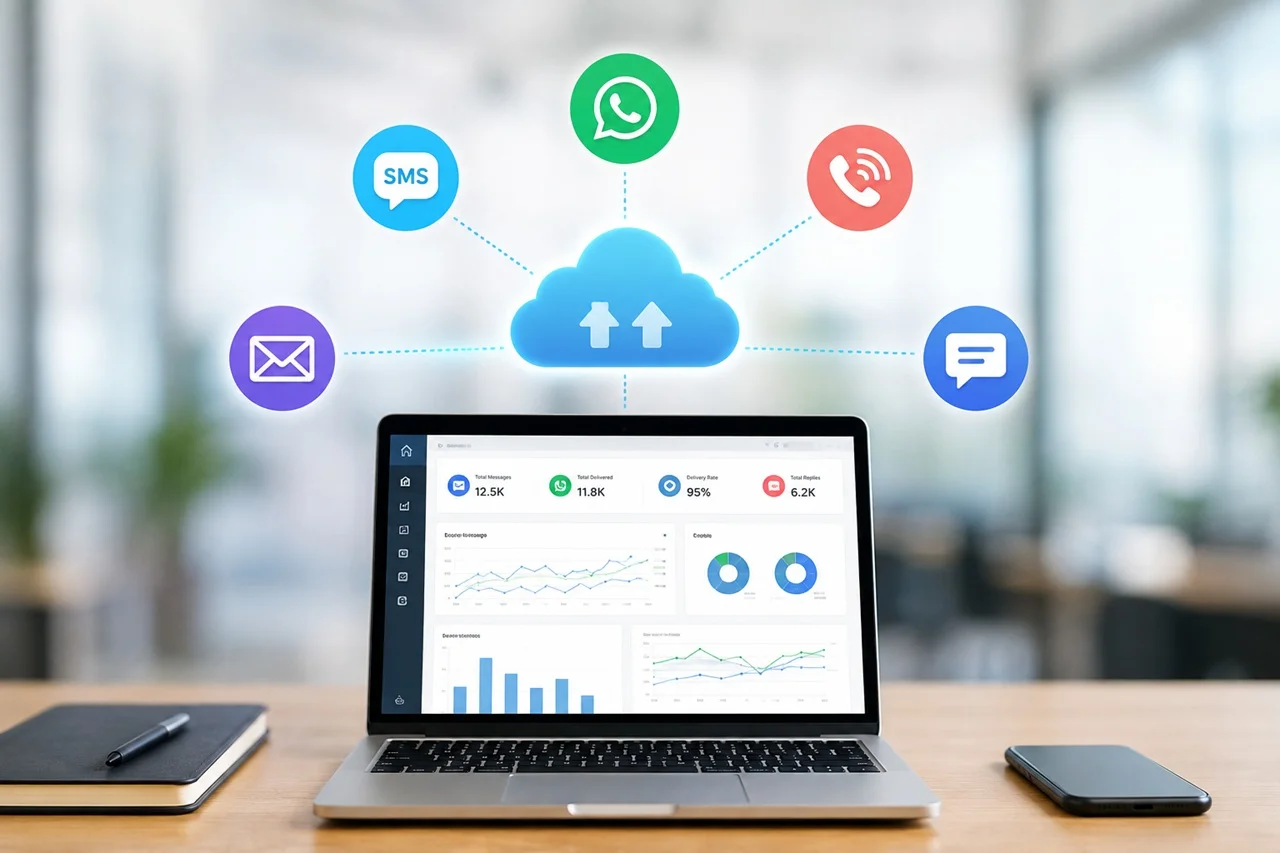
Many larger businesses end up using both, choosing the channel based on which one a specific customer segment is more likely to be active on.
Frequently Asked Questions
Q1. What is the main difference between RCS and WhatsApp?
RCS works through a phone’s built-in default messaging app, while WhatsApp is a separate app that customers need to have installed. Both support rich features like images, buttons, and read receipts, but they reach customers through different channels.
Q2. Is RCS replacing WhatsApp?
Not really. They serve overlapping but different purposes and often coexist. RCS is more of an upgrade to traditional texting, while WhatsApp remains a dominant standalone messaging platform, especially in markets like India.
Q3. Which is more widely used in India, RCS or WhatsApp?
WhatsApp has significantly wider adoption in India, with most smartphone users already active on it daily, making it the more commonly used platform for both personal and business messaging.
Q4. Can businesses use both RCS and WhatsApp together?
Yes, and many do. Businesses often choose the channel based on where a specific customer is more likely to be active, using WhatsApp for markets with high adoption and RCS to reach customers through their default messaging app.
Final Thought
Neither RCS nor WhatsApp is strictly “better” on its own they’re built for slightly different situations. WhatsApp’s advantage is its massive existing user base in markets like India, while RCS’s advantage is reaching people directly through their phone’s built-in messaging app, without requiring a separate download. The right choice comes down to where your specific customers already are.